
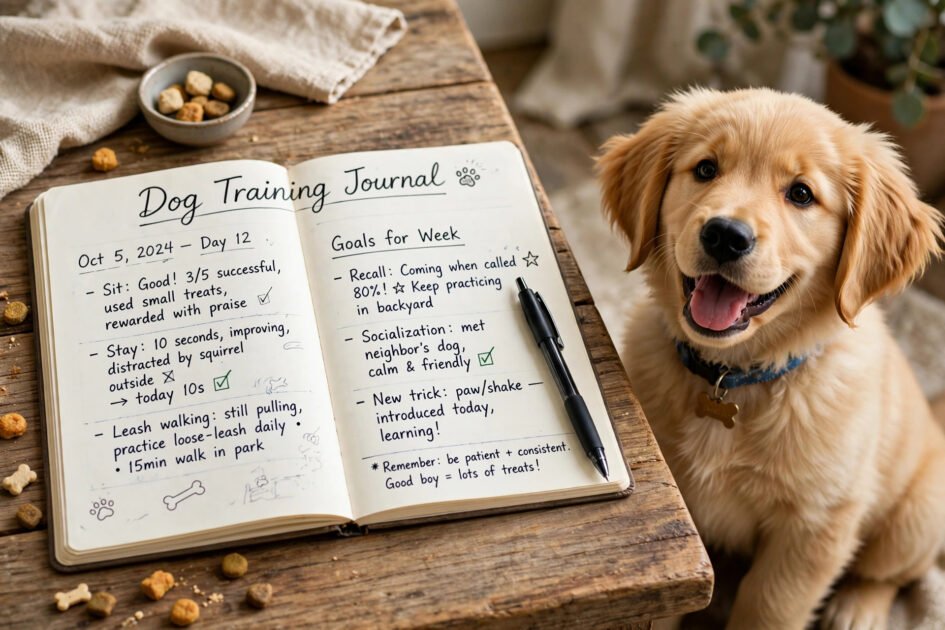

If you’ve ever finished a training session wondering whether your dog actually learned anything, you’re not alone. Most of us train on vibes and hope. A dog training journal changes that completely. It’s simply a notebook, or a set of printables, where you record what you practiced, what worked, and what flopped. Professional trainers swear by them, and once you start, you’ll wonder how you ever trained without one.
Below you’ll find everything you need to build a journaling habit that sticks: why it works, which printables actually matter, and how to organize it all without overcomplicating things.
1. Why Every Trainer Needs a Dog Training Journal

Here’s the problem with training from memory: memory lies. You think your dog “mostly knows” stay, but your journal shows they’ve only nailed it twice in ten tries. Writing things down turns vague feelings into real data, and real data tells you exactly what to practice next.
A journal also keeps you honest about consistency. Dogs learn through repetition, and it’s easy to skip days when nobody’s watching. A dated log makes gaps obvious, which nudges you back on track. Even better, flipping back through old entries shows you how far you’ve come on the days when progress feels invisible.
Start with any notebook you already own. Fancy systems can come later, because the habit matters far more than the stationery. Date your first entry today.
2. Printable Session Logs That Actually Work
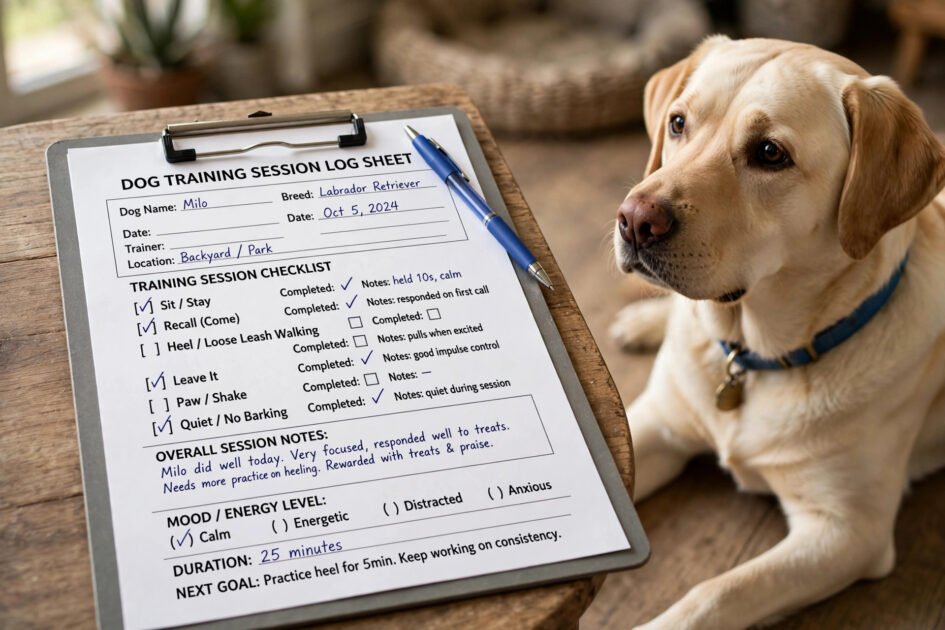
The backbone of any good system is the session log: one page per training session. Keep it simple or you won’t use it. The essentials are the date, the skill you worked on, how many repetitions you did, and your dog’s success rate. A quick 1-to-5 rating for focus and energy helps too.
Print a stack of these and keep them on a clipboard by the door. After each session, spend sixty seconds filling one out while it’s fresh. That tiny habit is worth more than any fancy app, because the best log is the one you actually complete. Over time, these single pages become a detailed training history you can flip through whenever you need to troubleshoot or plan ahead.
Pro tip: print your logs two-sided and punch binder holes right away. A ready stack by the door removes every excuse, and you’ll reach for them before each session.
3. Progress Trackers and Milestone Charts
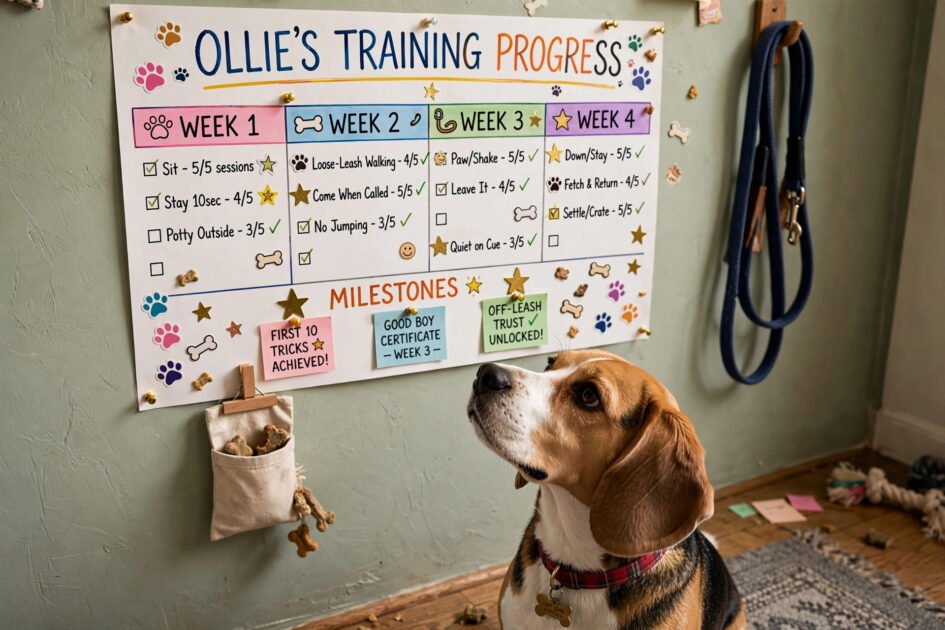
Session logs capture the day-to-day, but progress trackers show the big picture. A simple chart listing each command down the side and the weeks across the top lets you shade in boxes as skills solidify. Watching those boxes fill in is incredibly motivating.
Milestone charts work especially well for puppies. Mark the date your pup first held a 30-second stay, walked past another dog calmly, or came when called from across the yard. These are the moments you’ll forget by next month, and they’re exactly the proof of progress that keeps you going through the rough patches.
Let kids help with the stickers if you have them. Turning milestone tracking into a family activity keeps everyone invested, and children love being the official star-givers.
4. Behavior Notes Templates for Problem-Solving
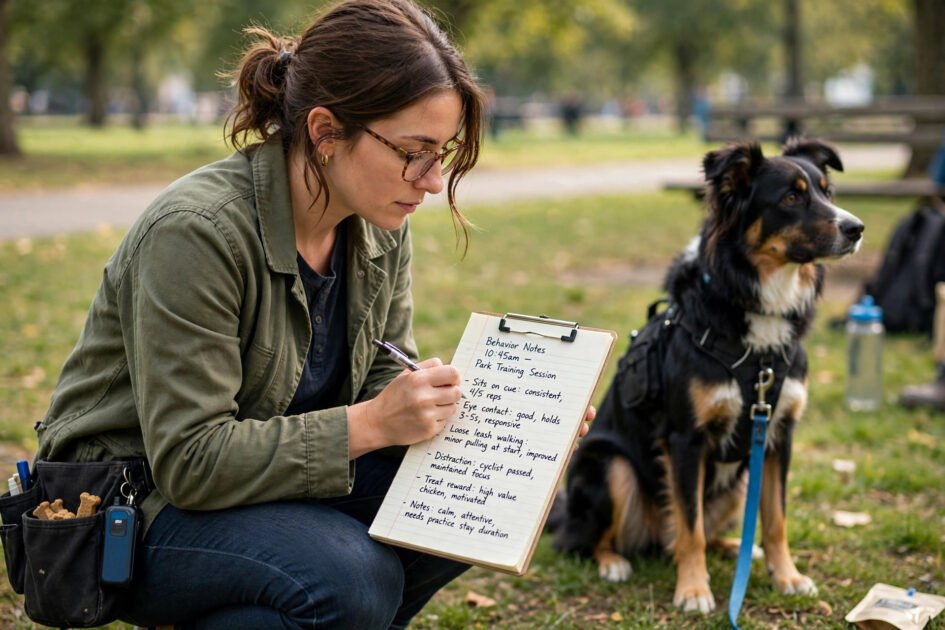
When something goes wrong, like barking at visitors or pulling on leash, guesswork won’t fix it. A behavior notes template helps you play detective. Record what happened right before the behavior, what the behavior looked like, and what happened right after. Trainers call this the ABC method: antecedent, behavior, consequence.
After a week of entries, patterns jump out. Maybe the barking only happens when the doorbell rings twice, or the pulling starts ten minutes into every walk when your dog gets bored. Once you see the pattern, the solution usually becomes obvious. Print a few of these templates and keep them handy for those frustrating phases.
Bring a filled-out behavior template to your vet or trainer if the issue persists. Concrete records of frequency and triggers help professionals diagnose far faster than verbal descriptions.
5. Building Your Training Binder (or Digital Folder)
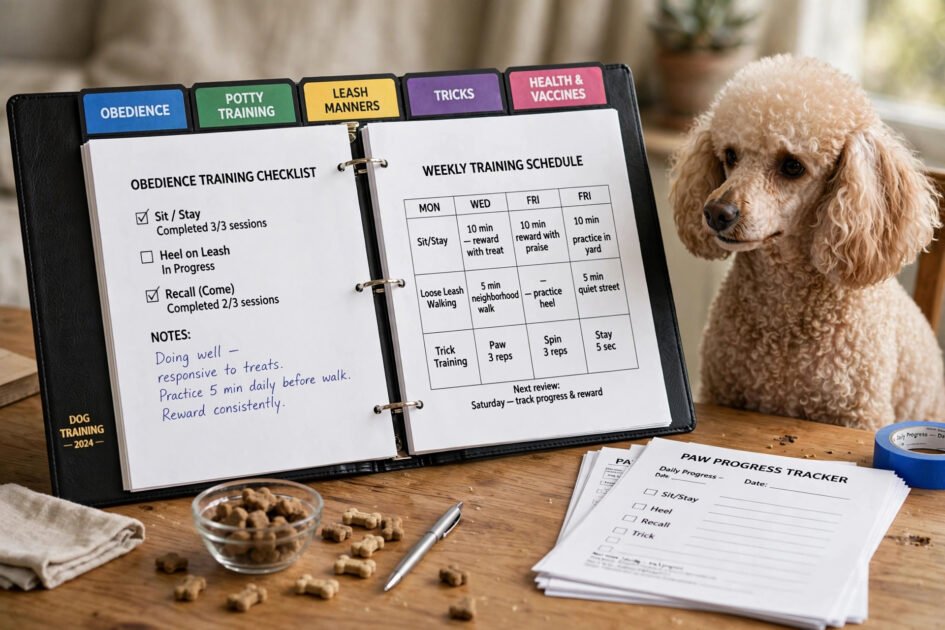
Loose papers get lost, so give your printables a home. A simple three-ring binder with dividers for session logs, progress trackers, behavior notes, and reference sheets works beautifully. Add a pouch for stickers and a pen, and you’ve got a training station.
Prefer digital? A single folder with the same sections works just as well, especially if you like typing on your phone right after sessions. The format doesn’t matter nearly as much as the habit. Pick the system you’ll actually open, and start tonight. Your future self, and your dog, will thank you.
Review your binder once a month with a cup of coffee. Toss outdated sheets, celebrate filled trackers, and set one goal for the coming month. This ritual keeps the system alive.
FAQs
What should I write in a dog training journal?
At minimum: the date, what you practiced, how many repetitions, and your dog’s success rate. Add notes on energy, distractions, and what you’ll try differently next time.
Are printable training logs better than apps?
Neither is objectively better. Printables are faster to fill out and never run out of battery, while apps are easier to search. Use whichever one you’ll actually stick with.
How often should I update my training journal?
After every session, even if it’s just one line. Sessions are short, so the logging should be too. Sixty seconds is plenty.
Can journaling really fix behavior problems?
It won’t fix them alone, but it makes solutions findable. Patterns in your notes reveal triggers and progress that memory misses, which makes your training plan far more effective.
Where can I find free dog training printables?
Many trainer blogs and pet sites offer free session logs and trackers. You can also make your own in minutes with a simple table: date, skill, reps, success rate, notes.
Starting a dog training journal is one of the smallest changes with the biggest payoff in dog training. Print a few logs, grab a binder, and record your next session. In a month, you’ll have a clear map of your dog’s progress, and a much better idea of where you’re headed next.