
Starting a dog training business is exciting, but here is a truth most new trainers learn the hard way: great skills alone do not fill your calendar. Clients choose the trainer whose brand feels right before they ever meet the dogs. That is why smart dog training branding is not decoration, it is your most powerful client-attraction tool.
Branding does not mean an expensive agency or a design degree. It means making deliberate choices about how your business looks, sounds, and feels, then repeating them everywhere. Here are five sources of inspiration to build a brand that turns curious visitors into booked clients.
1. Define Your Brand Personality First
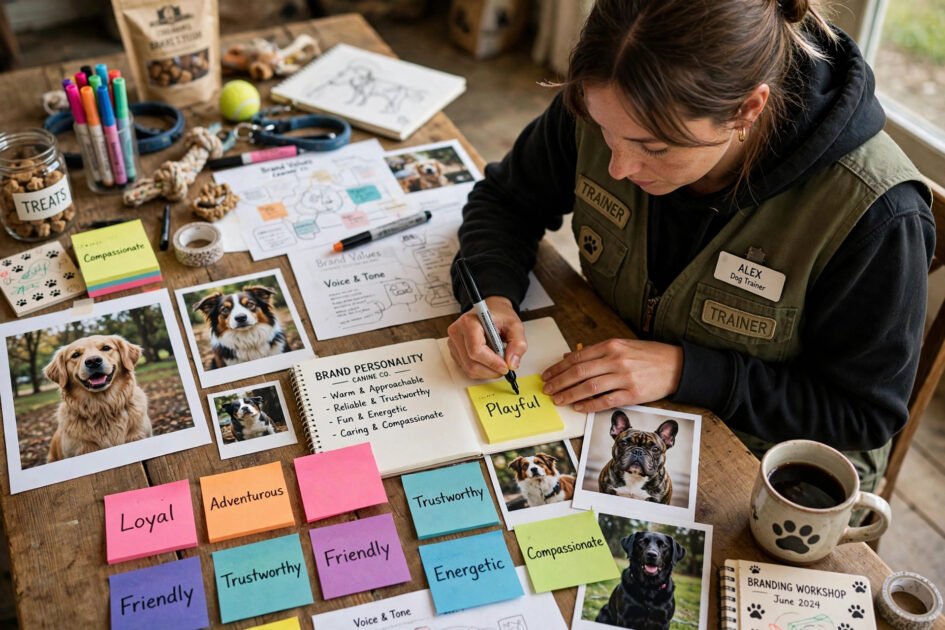
Before you pick a single color, decide who your brand is as a person. Are you the warm, encouraging coach who celebrates every small win? The calm, science-based professional? The energetic adventure buddy? Your personality shapes every design choice that follows, from fonts to photo style to the words on your website.
Try this exercise: write down three adjectives you want clients to feel, then three you never want associated with you. “Patient, modern, fun” leads to very different branding than “elite, disciplined, premium.” When your personality is clear, every later decision gets easier, and clients self-select because they feel an instant connection.
2. Choose a Memorable Name and Tagline

Your business name is the hardest-working word in your brand. The best dog training names are easy to spell, easy to say over the phone, and hint at your specialty. “Harbor City Puppy School” tells a clearer story than a clever pun nobody can spell. Check domain and social handle availability before you fall in love with anything.
Pair the name with a short tagline that promises an outcome, not a process. “Calm dogs, happy homes” beats “balanced training methodology” because clients buy results. Say your name and tagline out loud together. If it sounds confident and clear, you have a winner worth building a brand around.
3. Build a Consistent Color Palette

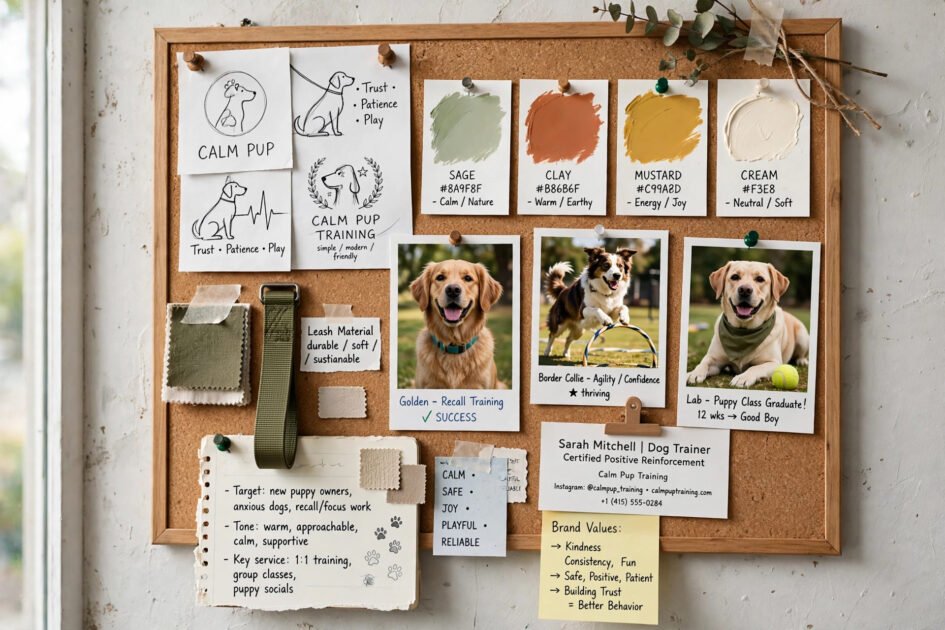
Color is the fastest way to look professional or amateur. Pick two to three core colors and use them everywhere: website, van, uniforms, handouts, social graphics. Earthy greens and warm oranges feel friendly and outdoorsy; navy and gold feel premium and trustworthy; bright teal and coral feel playful and modern.
Test your palette in the real world before committing. Print a flyer, view your website on a phone outdoors, and embroider the colors on a cap. If the combination stays readable and recognizable at every size and in every light, it is a palette you can build a business on for years.
4. Create Branded Templates for Every Touchpoint

Consistency is what turns nice design into a real brand. Create matching templates for the things clients actually see: intake forms, training plans, invoices, email headers, social post graphics, and class handouts. When every document looks like it came from the same confident business, clients trust you more and refer you more.
You do not need to design these from scratch. Start with a simple toolkit: your logo, your colors, one heading font, one body font, and a photo style rule (for example, always bright natural light with happy dogs). Apply that toolkit relentlessly, and even simple Canva templates will look like a cohesive professional brand.
5. Tell Your Story Across Every Channel

People hire trainers they feel they know. Your brand story, why you started training, the first dog who changed everything, the philosophy you will never compromise on, is branding gold. Share it on your About page, in your Instagram bio, in your welcome email, and in short videos.
Keep the story honest and specific. “I retrained my reactive rescue when three trainers gave up on him” is unforgettable; “I love dogs and have always had a passion” is invisible. A genuine story told consistently becomes the emotional core of your brand, the thing clients mention when they refer their friends.
FAQs About Dog Training Branding
How is branding different from just having a logo?
A logo is one piece. Branding is the full system: your colors, fonts, photo style, tone of voice, client experience, and reputation working together. A logo without branding is decoration; branding without consistency is just noise.
How much should a new trainer budget for branding?
You can build a solid DIY foundation for under $500 using quality templates and a freelance logo designer. Plan to invest $1,500 to $3,000 in professional brand identity once you are consistently booked and ready to raise prices.
Should my personal name be part of the brand?
If you are a solo trainer and your reputation drives bookings, yes, a personal brand builds trust faster. If you plan to hire trainers or sell the business one day, a standalone business name gives you more flexibility.
How long does it take to build a recognizable brand?
Expect 6 to 12 months of consistent visibility before your brand starts compounding. Branding rewards patience: every consistent post, uniform, and handout adds up until clients start recognizing you on sight.
What is the biggest branding mistake new trainers make?
Inconsistency. A different logo on Facebook than on the van, random colors on every flyer, a formal website with silly social posts. Pick your brand elements once, then protect them like they are valuable, because they are.
The Bottom Line
Great dog training branding is not about being the flashiest trainer in town. It is about being the most recognizable, most trusted, and most memorable one. Define your personality, lock in your visuals, template everything, and tell your story everywhere. Do that consistently, and your brand will start booking clients while you sleep.