
Your website is your hardest-working employee. It greets visitors at midnight, answers their questions, and either books the consultation or loses them to the trainer down the street. The difference comes down to design choices, and smart dog training website design is less about looking fancy than about making it ridiculously easy to say yes.
You do not need a five-figure custom build. You need a site that loads fast, speaks the client’s language, and guides them to one clear action. Here are five design ideas that turn casual browsers into paying clients.
1. A Hero Section That Answers “Why You” in 5 Seconds
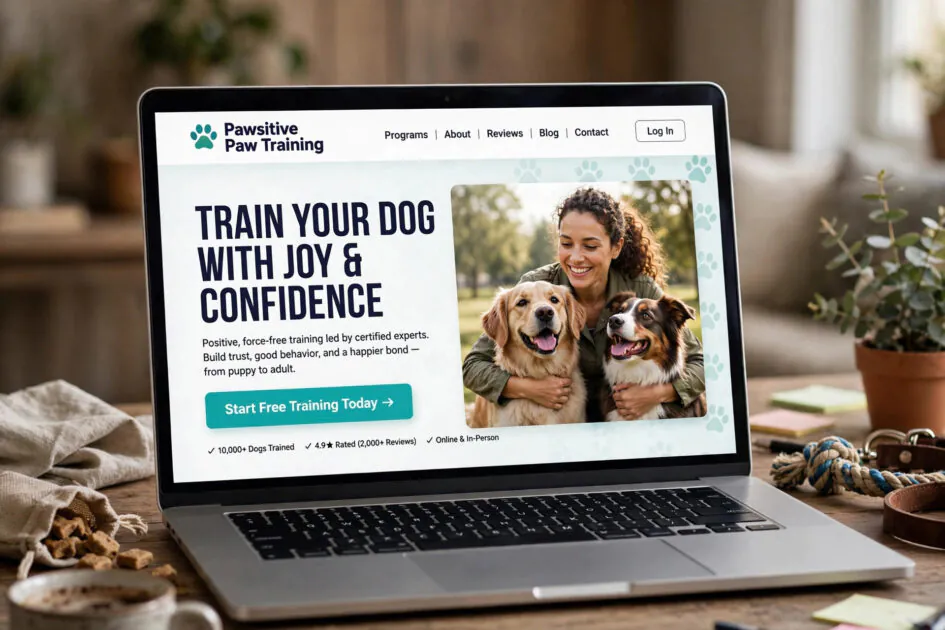
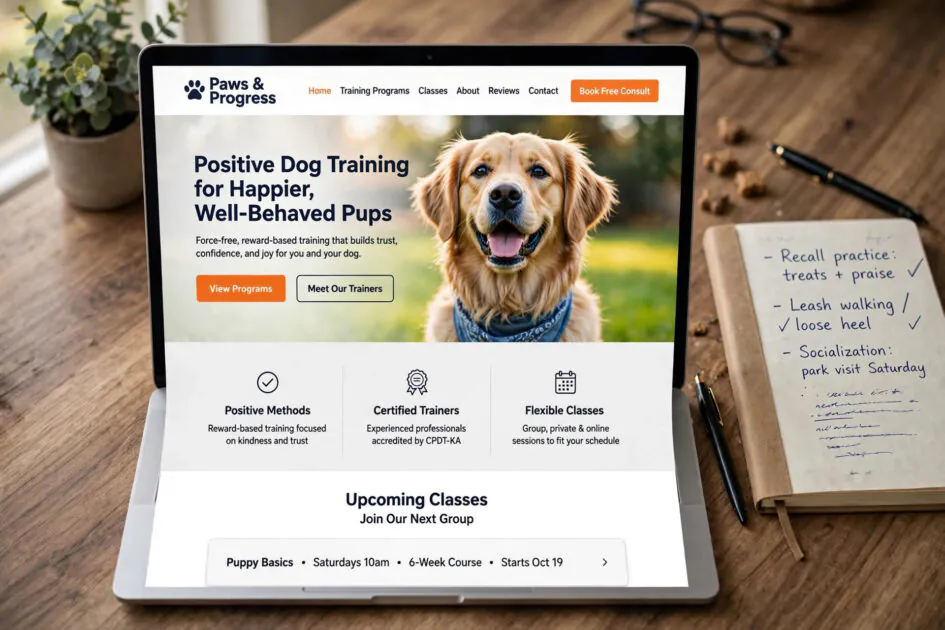
Visitors decide in seconds whether to stay or bounce. Your hero section, the top of your homepage, must instantly answer three questions: what you do, who it is for, and what to do next. A headline like “Puppy Training That Actually Works in Austin” with a photo of a happy client dog and one bold “Book a Free Call” button beats a clever slogan every time.
Use a real photo, not stock. Clients can smell stock photography, and nothing builds trust faster than seeing actual dogs you have trained. Keep navigation minimal up top: Services, About, Reviews, Contact. Every extra menu item is another chance to lose them.
2. Service Pages Built Around Outcomes, Not Jargon

Most trainer websites list services like “Level 2 Obedience” and wonder why nobody inquires. Clients do not buy training levels; they buy a dog who stops jumping on guests. Build each service page around the outcome: the problem, the transformation, what is included, and the price or starting price.
Structure every page the same way for easy scanning: a relatable headline, three to five bullet benefits, a short “how it works” section, one strong testimonial, and a booking button repeated twice. Clear pricing, or at least clear starting prices, dramatically increases inquiries because it removes the fear of an awkward sales call.
3. Trust Builders: Reviews, Credentials, and Real Photos

Dog owners are handing you their beloved family member; trust is everything. Dedicate visible space to proof: Google reviews with real names, before-and-after training videos, your certifications, and photos of you working with actual client dogs. A short “meet your trainer” video where you talk like a human outperforms a wall of credentials.
Place trust signals near every call to action, not buried on a separate page. A booking button sitting directly under three glowing reviews converts far better than one floating alone. Update reviews regularly, because a testimonial page whose newest entry is from 2021 quietly tells visitors you stopped caring.
4. A Friction-Free Booking and Contact Flow
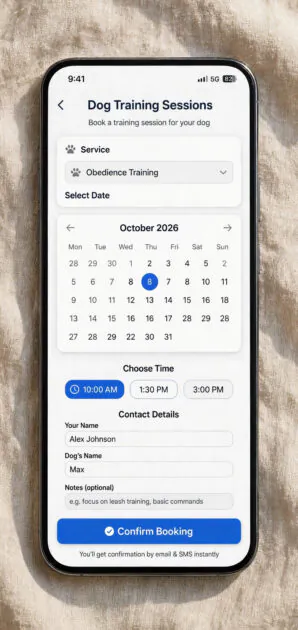
Every extra step between “I want this” and “booked” costs you clients. The gold standard is online booking with real-time availability: pick a service, pick a time, pay a deposit, done. If you prefer discovery calls first, offer a simple scheduler, not a “contact us and we will get back to you” black hole.
Make your phone number clickable on mobile, keep forms to five fields or fewer, and confirm every inquiry within minutes with an automated message. Test the whole flow yourself on your phone monthly. If anything feels clunky to you, it is losing you money every single day.
5. Local SEO Foundations That Bring Clients to You
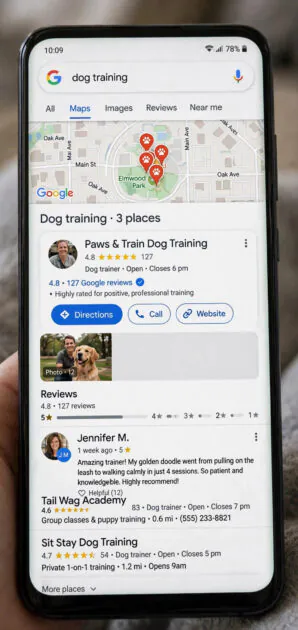
The prettiest website in the world is useless if nobody finds it. Bake local SEO into your design from the start: your city and service areas in page titles and headings, a dedicated page per core service, fast mobile load times, and your business name, address, and phone number consistent everywhere.
Claim and complete your Google Business Profile with great photos and regular posts, and make it easy for happy clients to leave reviews with a direct link. Most dog training clients come from “dog trainer near me” searches, and these foundations put you in the map pack where the bookings happen.
FAQs About Dog Training Website Design
Should I build my site myself or hire a designer?
A solid DIY site on WordPress, Squarespace, or Wix is fine to start, especially using a clean template. Hire a professional once you are consistently booked; a conversion-focused redesign typically pays for itself within a few months.
What pages does a dog training website absolutely need?
Homepage, individual service pages, about page, reviews page, and contact/booking page. That is the core. Add a blog only if you will actually publish; a dead blog hurts more than no blog.
How important is mobile design really?
Critical. Over 70 percent of local service searches happen on phones. If your site is hard to read or book from on a phone, you are invisible to most of your market. Design mobile-first, always.
Should I show my prices on the website?
Yes, or at least starting prices. Hidden pricing creates friction and attracts price-shoppers who waste your time. Transparent pricing pre-qualifies serious clients and builds instant trust.
How often should I update my website?
Review the core pages quarterly and refresh photos and testimonials whenever you have new wins. Small, regular updates also signal to Google that your site is alive, which helps your rankings.
The Bottom Line
Effective dog training website design is not about winning design awards. It is about clarity, trust, and removing every obstacle between a visitor and a booking. Nail your hero section, speak in outcomes, prove your results, make booking effortless, and own your local search. Do those five things and your website becomes a client-generating machine.