

how to keep your dog calm on halloween For many dogs, Halloween night is the most stressful evening of the entire year. The doorbell never stops ringing, strangers in strange costumes keep appearing on the porch, and the air fills with spooky sounds and flashing lights. If your dog hides, barks, paces, or trembles every October 31st, you’re not alone.
Whether you have a nervous rescue, an excitable puppy, or a seasoned senior, these 12 practical tips will keep your dog calm on Halloween night. Think of it as a cozy-evening game plan — one that also protects your dog’s mental health and overall wellbeing.
Tire Them Out Before Dark
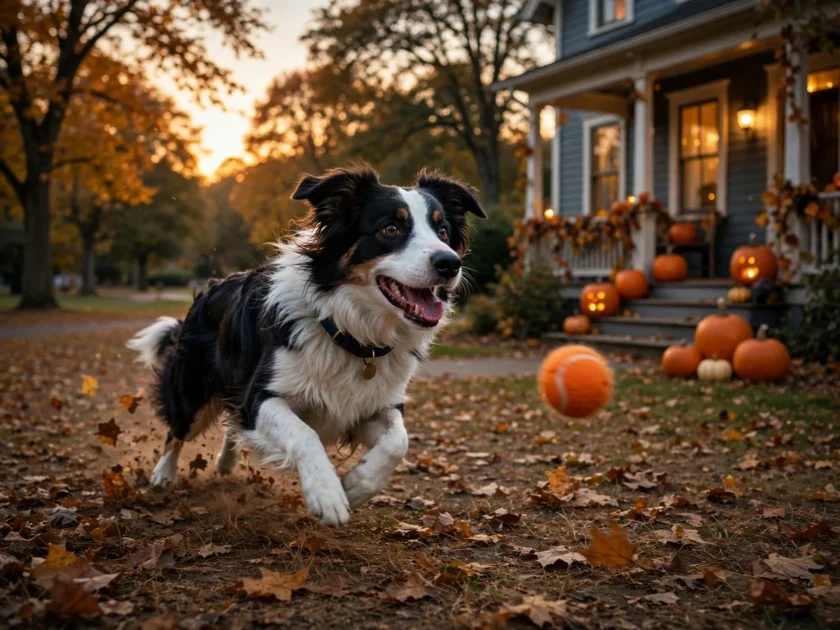
A tired dog is a calm dog. Take your pup for a long walk, a game of fetch, or a rousing tug session before trick-or-treaters hit the streets. Aim for enough activity to leave them pleasantly drowsy by dinner. Exercise burns off nervous energy and helps them settle for the evening. Skip the dog park, though — crowds and costumed kids can overwhelm even in daylight.
Build a Cozy Safe Den
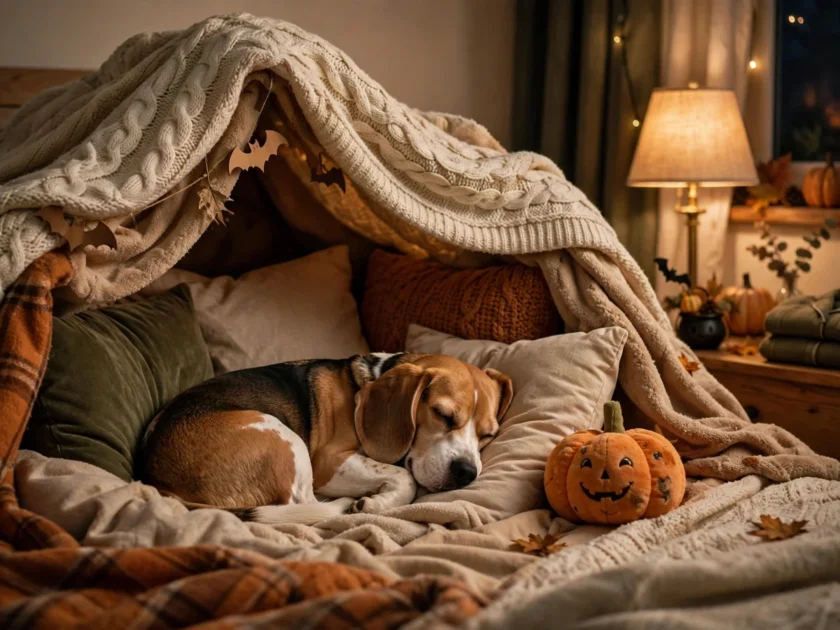
Give your dog a snug hideaway in the quietest room, far from the front door. Drape blankets over a crate or arrange pillows into a little fort, then add their bed, a worn t-shirt that smells like you, and a favorite toy. Dogs instinctively seek small, enclosed spaces when stressed — a familiar den lets them retreat and relax on their own terms.
Use White Noise or Calming Music
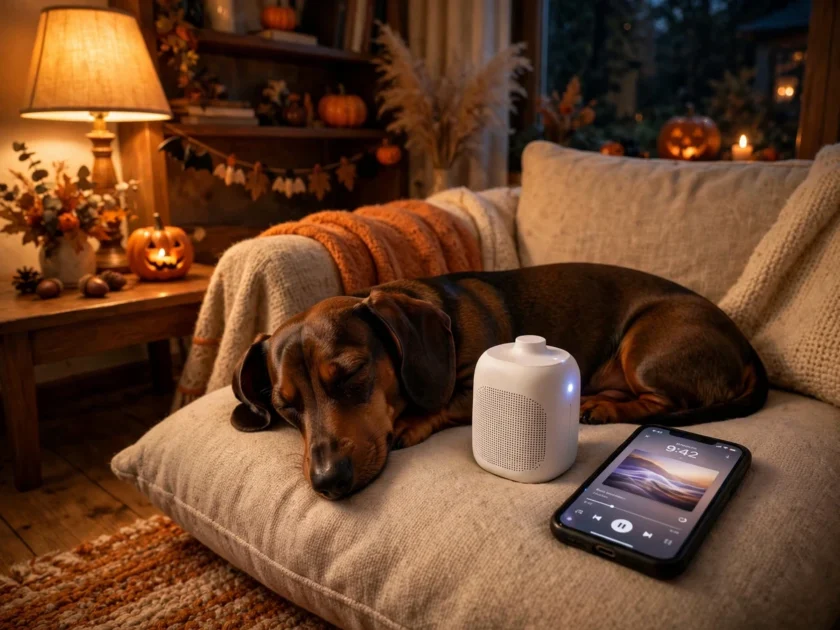
Doorbell dings and cackling decorations lose their power when muffled. Run a white noise machine, a fan, or calming classical music in your dog’s safe room. Dogs relax to soft, steady rhythms. Keep it moderate — loud enough to mask outside sounds, gentle enough to soothe — and start it before the first knock so calm becomes the default.
Keep the Front Door Low-Key
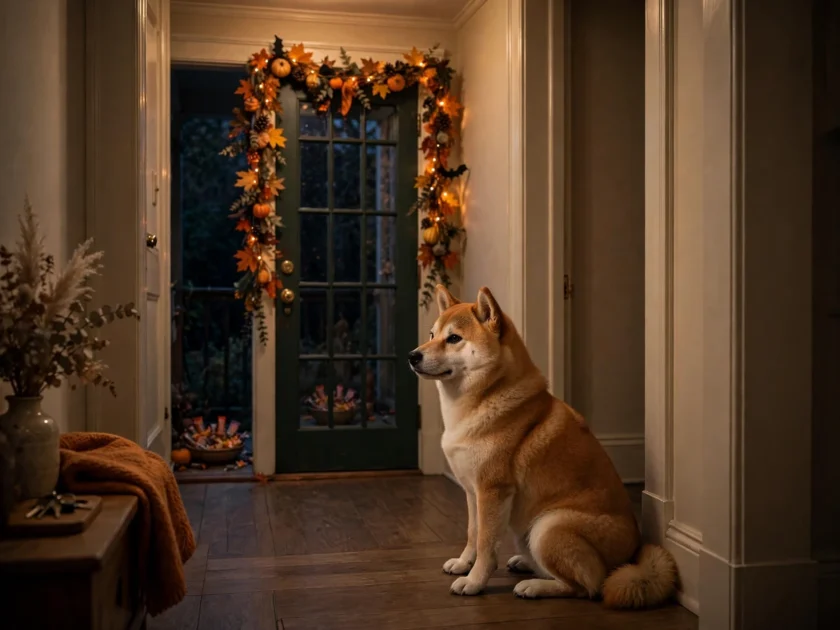
Every ring of the doorbell is a stress spike. Beat it with a candy station on the porch — a bowl and a friendly sign — so trick-or-treaters don’t need to knock at all. If you do answer the door, settle your dog in their safe room first. Switching the doorbell off for the night is fine too; your sanity counts.
Desensitize the Doorbell in Advance
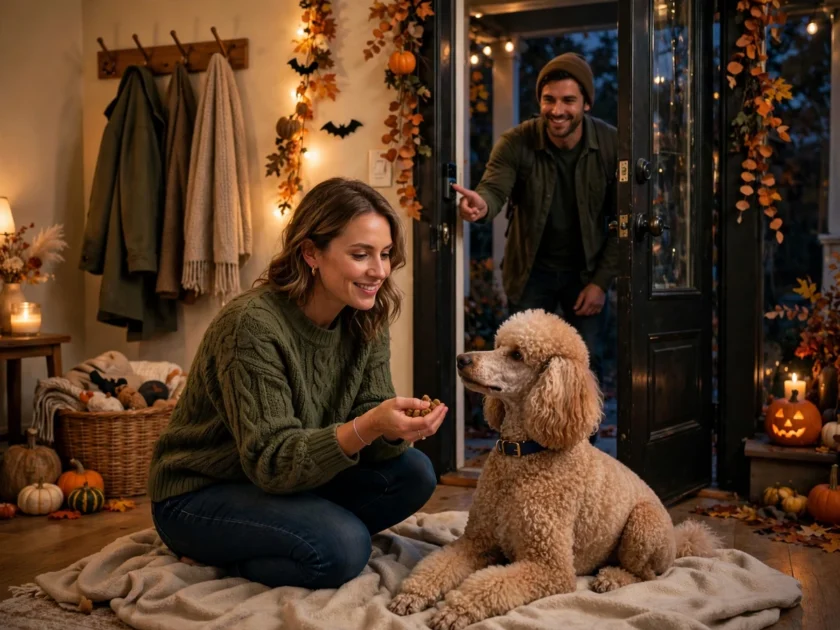
If your dog loses it at every ding-dong, start training a week or two ahead. Play doorbell sounds at low volume on your phone and reward calm behavior with high-value treats, working up to normal volume over time. This simple conditioning turns a trigger into background noise — even three short sessions a week can make a real difference by October 31st.
Break Out Long-Lasting Chews and Puzzle Toys
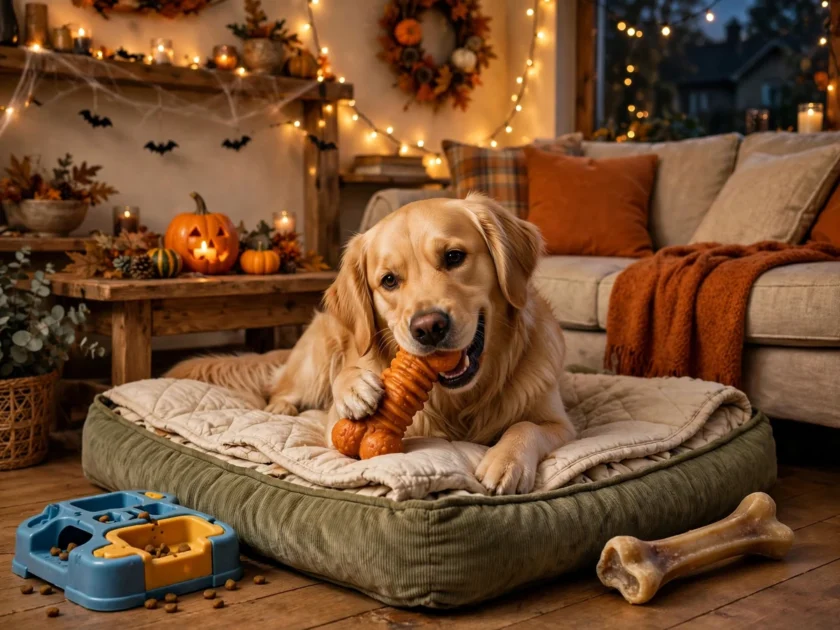
Chewing is a natural stress reliever for dogs. Save your best arsenal for Halloween night: a frozen stuffed Kong, a long-lasting bully stick, or a puzzle feeder loaded with peanut butter. These keep jaws busy and brains occupied for an hour or more. Offer them inside the safe den so your dog associates the retreat with good things.
Try a Calming Wrap
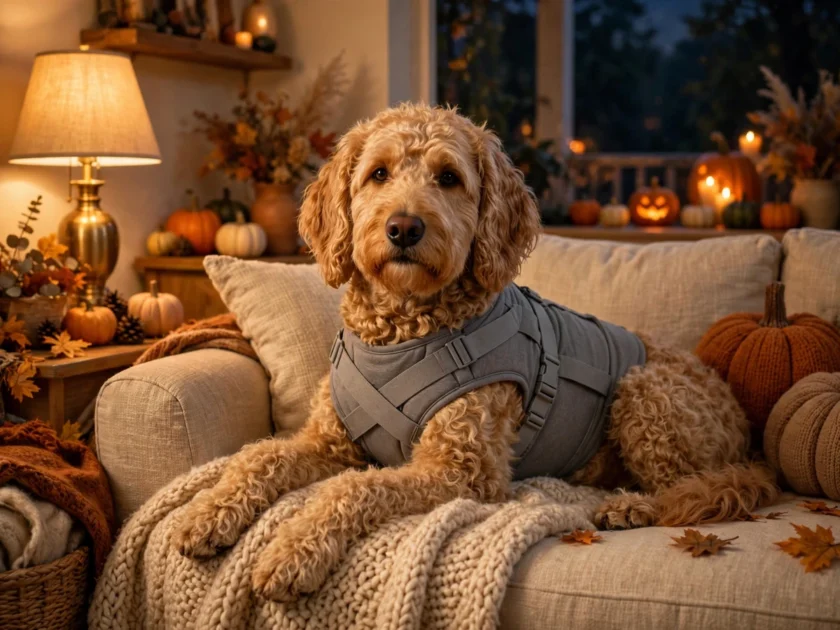
A snug anxiety wrap applies gentle, constant pressure around your dog’s torso — like a reassuring hug that never stops. Many dogs visibly settle once one goes on. Introduce it on a quiet day first, pair it with calm praise and a treat, and it becomes a wearable cue that everything is fine.
Update ID Tags and Microchip Info
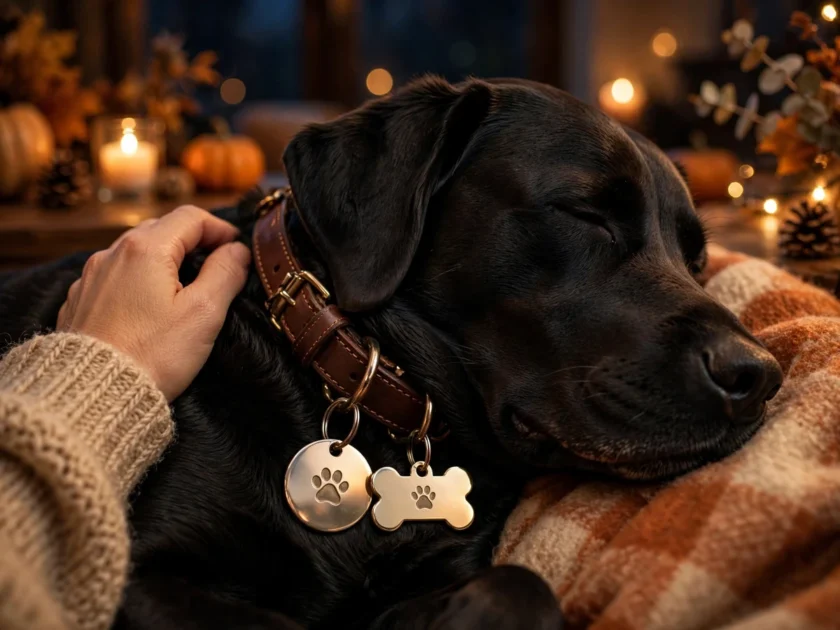
Halloween is one of the top nights of the year for lost dogs — doors swing open, and dogs bolt. Before nightfall, check that the collar fits snugly, the ID tag lists your current number, and your microchip registration is up to date. A same-day photo of your dog helps too. Five minutes of prep can prevent a catastrophe.
Keep Candy and Decorations Out of Reach
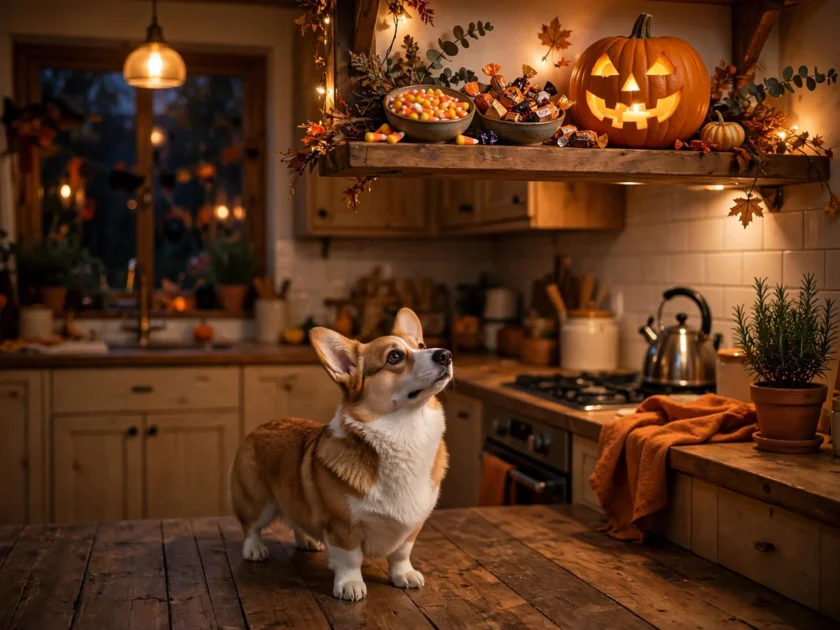
Chocolate, xylitol in sugar-free candy, and wrappers are all dangerous for dogs — and Halloween puts them everywhere. Keep candy bowls on high shelves, secure candles and jack-o’-lanterns beyond wagging-tail range, and remember that fake cobwebs and small costume pieces can choke. A quick sweep of accessible surfaces before evening keeps curiosity from becoming a vet visit.
Stay Calm Yourself
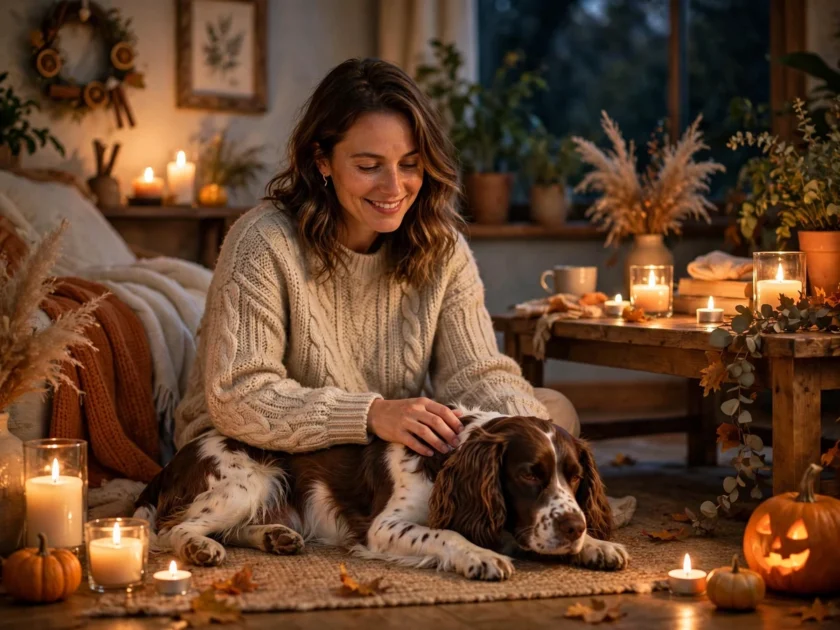
Dogs are emotional sponges — they read your tension faster than you do. If you sigh, pace, or fuss over every knock, your dog decides there’s something to worry about. Keep your voice light and your movements easy. Your composure is the most powerful calming tool you own.
Walk Early, Skip the Late-Night Stroll
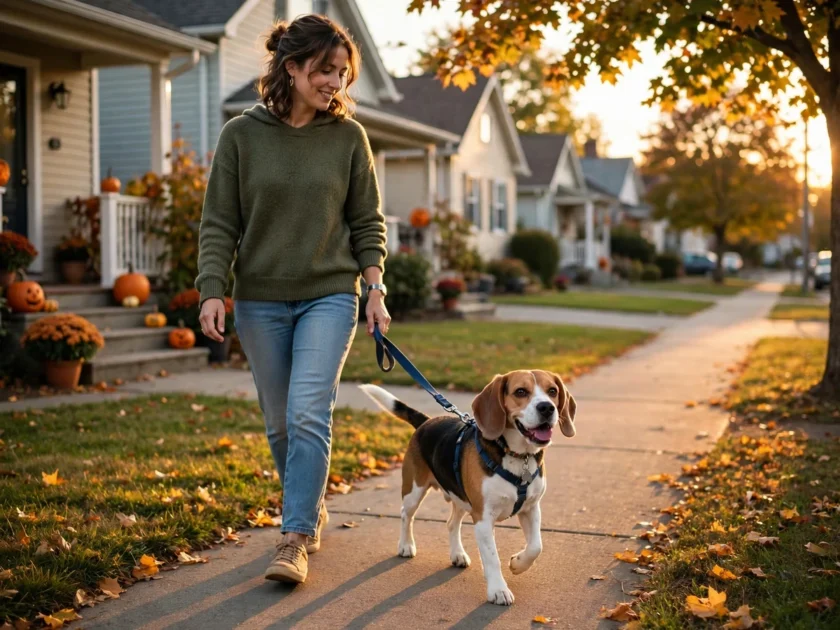
Move the evening walk to late afternoon, while it’s still light and the streets are calm. By the time costumed crowds arrive, your dog should be home and settled. Keep the leash short, avoid groups of kids, and skip new routes. For a last bathroom break, make it quick and close to home — leash on, even in the yard.
Have a Quiet Backup Plan
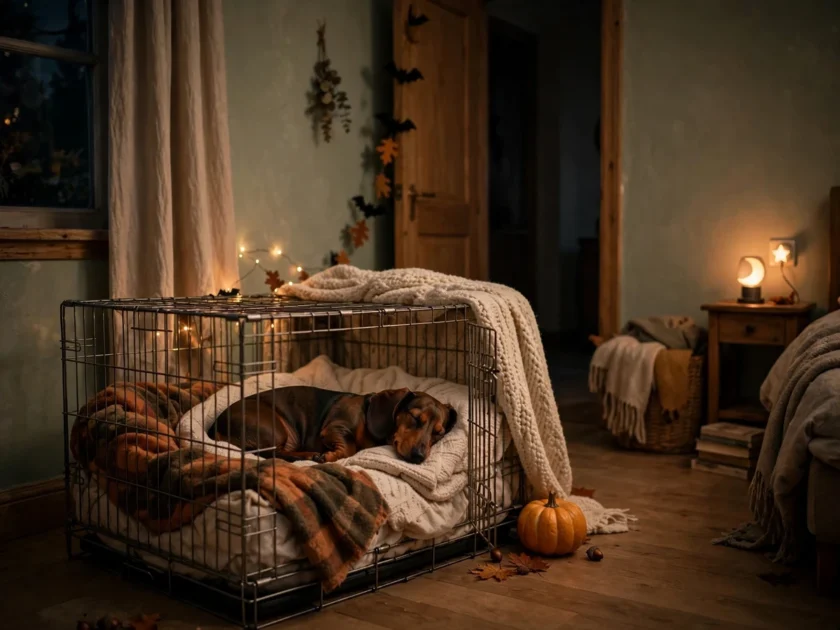
Sometimes a dog panics despite your best efforts — and that’s okay. Have a plan B ready: the calmest, most soundproof room, a trusted neighbor’s quiet home, or the car with the radio on in the garage. A pre-made escape hatch turns a bad night into a manageable one.
With these twelve strategies, Halloween can go from your dog’s worst night of the year to a complete non-event — just another cozy evening at home. When the last trick-or-treater heads home and the porch light goes off, you’ll both be glad you planned ahead. Your dog’s peace of mind is worth a little preparation.
Frequently Asked Questions
Why do dogs get so anxious on Halloween?
The constant doorbell, strangers in costumes, shouting kids, spooky sounds, and flashing decorations create a perfect storm of triggers. Dogs can’t rationalize the chaos, so every surprise feels like a threat. Some dogs are simply more noise-sensitive than others.
Are calming treats safe for my dog?
Most over-the-counter calming chews with chamomile or L-theanine are safe when used as directed. Still, check with your vet first — especially for puppies, seniors, or dogs on medication — and try any new treat before Halloween night.
Should I crate my dog on Halloween night?
Yes, if your dog already loves their crate — it’s a familiar safe space. Never force a dog into a crate they aren’t comfortable with, though; that adds stress instead of relieving it.
When should I call the vet?
If your dog pants excessively, drools heavily, trembles uncontrollably, tries to escape, or refuses food and water for hours, call your vet. For severe anxiety, vets can prescribe fast-acting medication — but that discussion must happen before Halloween, not during it.