
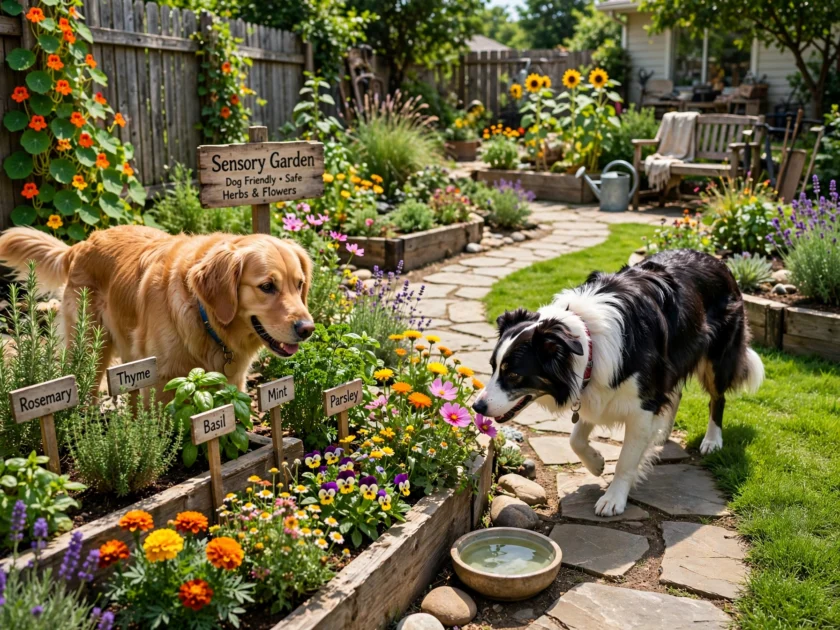

Dog friendly garden ideas If your dog treats every walk like a treasure hunt — nose down, tail up, zigzagging from bush to bush — imagine what they would do with a whole garden designed just for them. Dog garden and sensory garden boards are surging on Pinterest right now, as more owners swap plain, boring lawns for yards that actually engage their dogs’ senses. A sensory garden is not just pretty planting; it is a playground for the nose, the paws, the ears and even the taste buds. Best of all, most of these setups are cheap, renter-friendly and easy to build in a weekend.
You do not need a huge yard or a landscaper’s budget to get started. Pick two or three ideas that suit your dog’s personality — the sniffers, diggers, splashers and snoozers all get their own zone below — and build up from there. Every plant and material in this list was chosen with dog safety in mind, but always double-check anything new against a pet-safe plant list before you buy. Ready to dig in, sometimes literally? Here are ten dog-friendly sensory garden setups to turn your yard into your dog’s favorite place.
1. Sniff Garden with Herbs
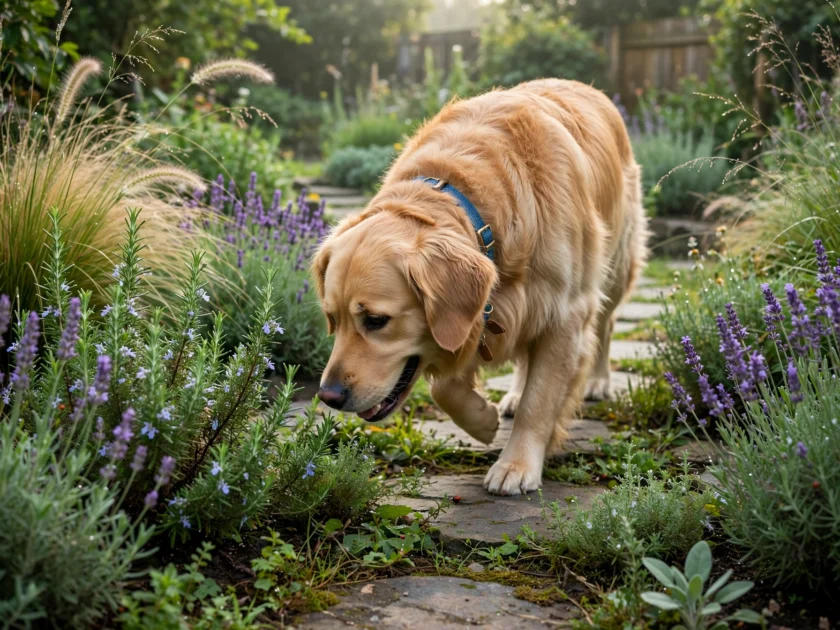
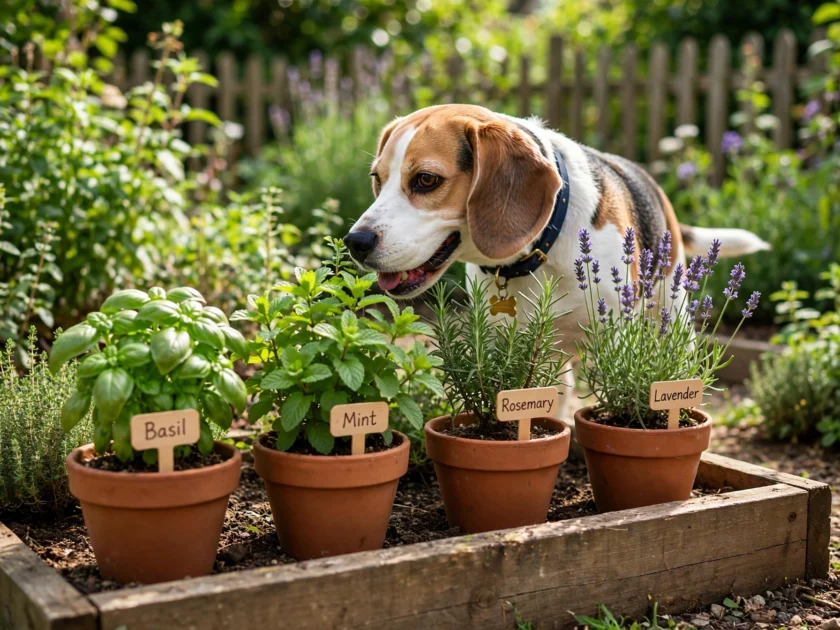
Dog friendly garden ideas Dogs experience the world through scent, so a sniff garden is the beating heart of any sensory setup. Plant dog-safe herbs like rosemary, basil, mint and lavender at nose height in a sunny corner, and keep the mint in pots because it spreads fast. Rotate a few potted plants every week or so, and there will always be brand-new smells for your dog to investigate.
2. Digging Pit Sandbox
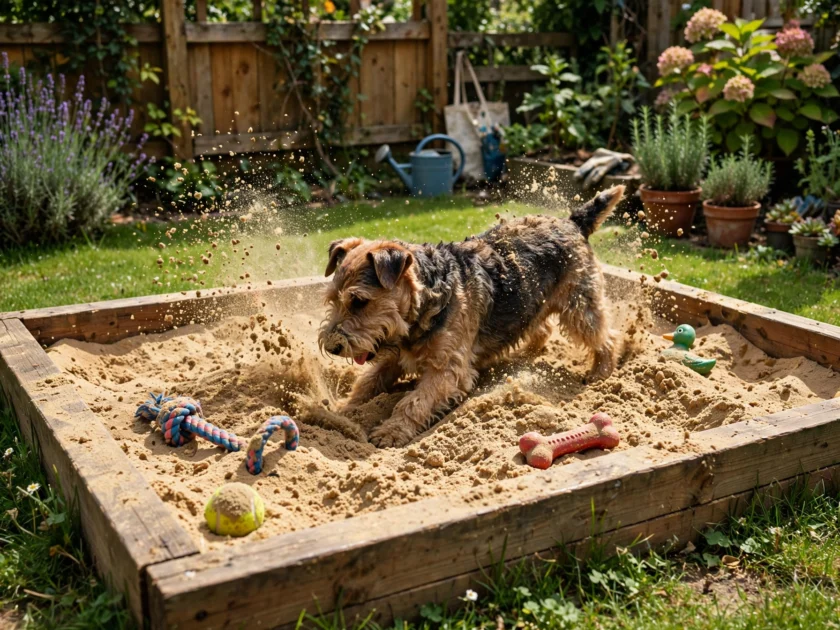
Instead of fighting the digging, give it a legal address. Fill a wooden frame or an old sandpit with clean play sand, bury toys and treats just under the surface, and praise your dog wildly for digging there. Most determined diggers happily switch to their own pit once they learn it is the one place where treasure is guaranteed to hide.
3. Splash Pad Corner
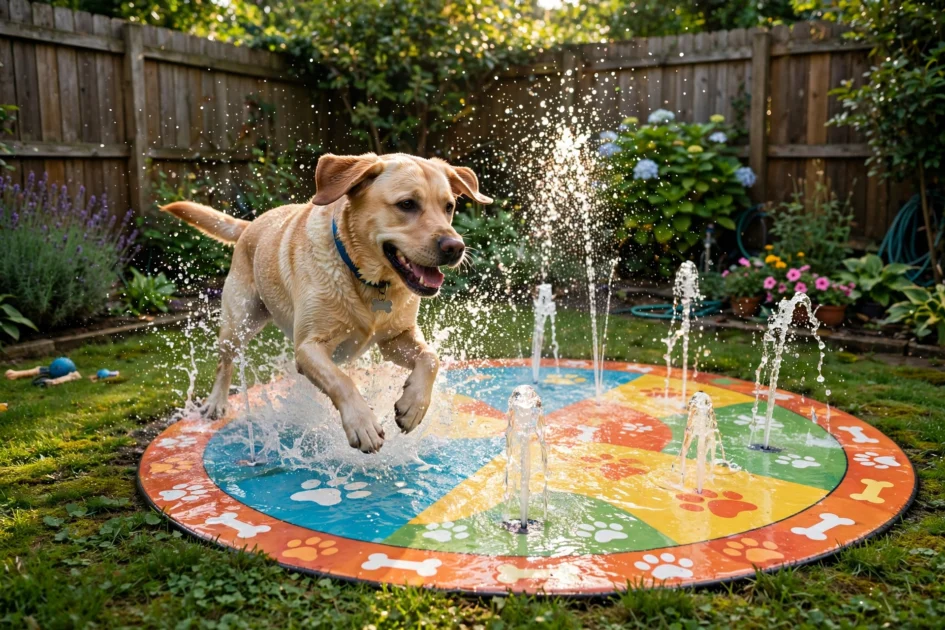
Hot dog? A splash pad corner is pure joy on warm days. A simple sprinkler mat or a shallow paddling pool on a paved corner gives water-loving dogs somewhere to cool off, stomp and splash safely. Toss in a few floating toys, supervise the fun, and empty the water afterwards so it stays fresh and mosquito-free.
4. Shaded Rest Nook
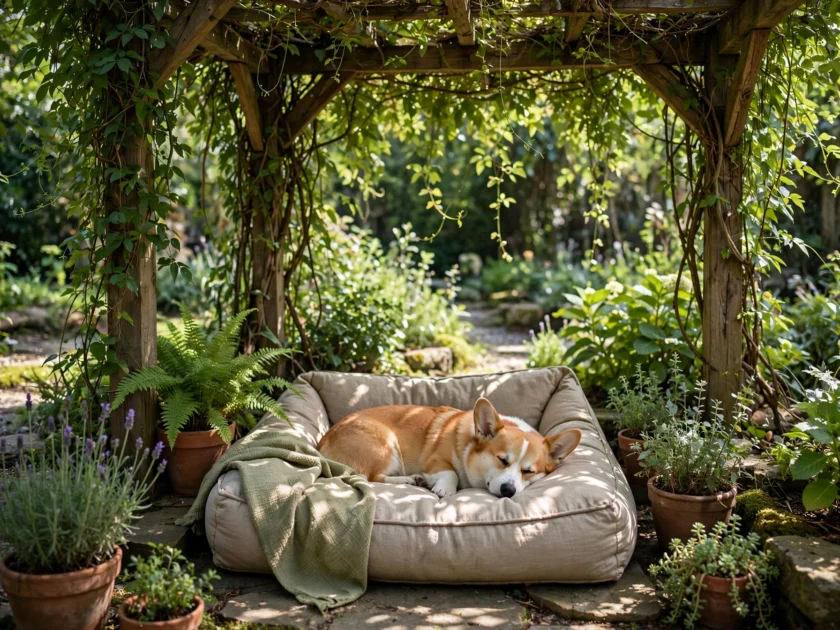
Every adventure garden needs a nap zone. Tuck a washable outdoor dog bed or a raised cooling cot under a tree, a pergola or a shade sail, away from the busiest play areas. Dogs cool down by resting in shade, and a defined, cozy nook quickly becomes their favorite spot to snooze while still watching the world go by.
5. Agility Tunnel Run
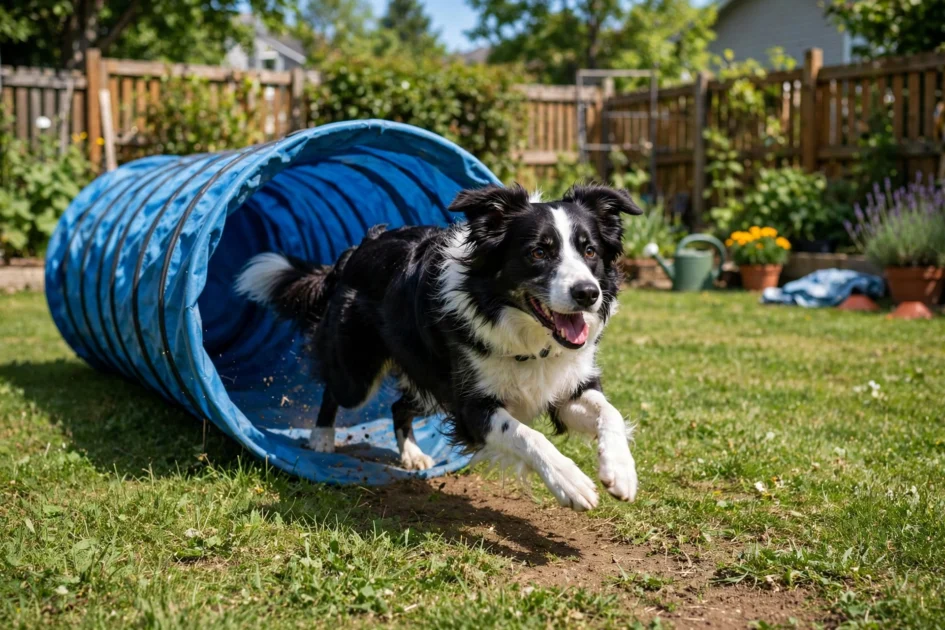
A pop-up agility tunnel turns a plain lawn into a mini adventure course and burns off serious energy. Anchor it securely, reward your dog for every run-through, and add a low jump or weave poles as their confidence grows. For fuller layouts, these dog training yard ideas for structured play show how to plan a course properly.
6. Raised Herb Beds
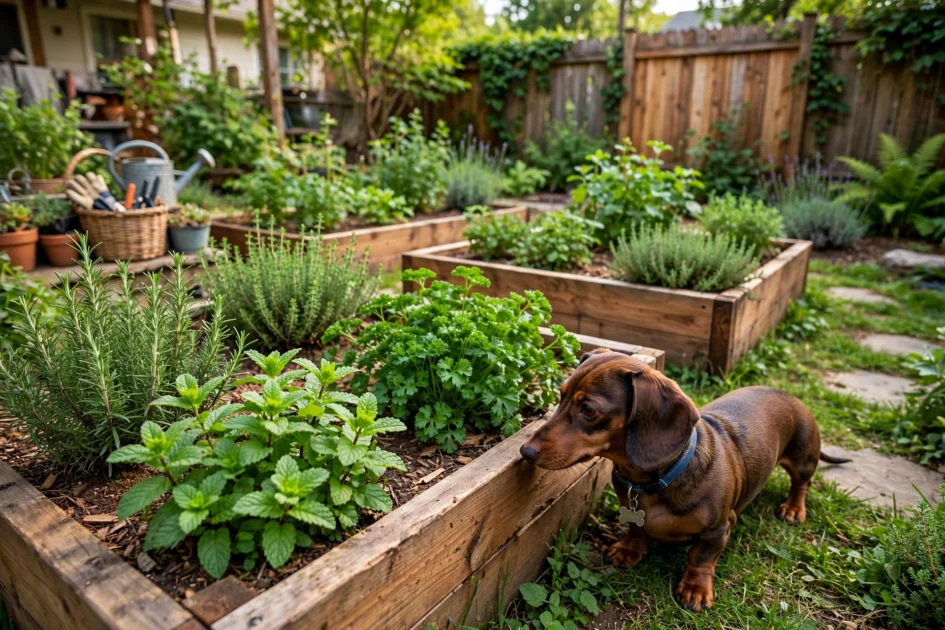
Raised beds lift delicate herbs to perfect sniffing height while protecting their roots from trampling paws. Build or buy cedar beds around knee height and fill them with parsley, thyme, rosemary and dog-safe ornamental grasses. Your dog gets a living scent library to browse daily, and you get fresh herbs for the kitchen — everybody wins.
7. Scent Trail Path
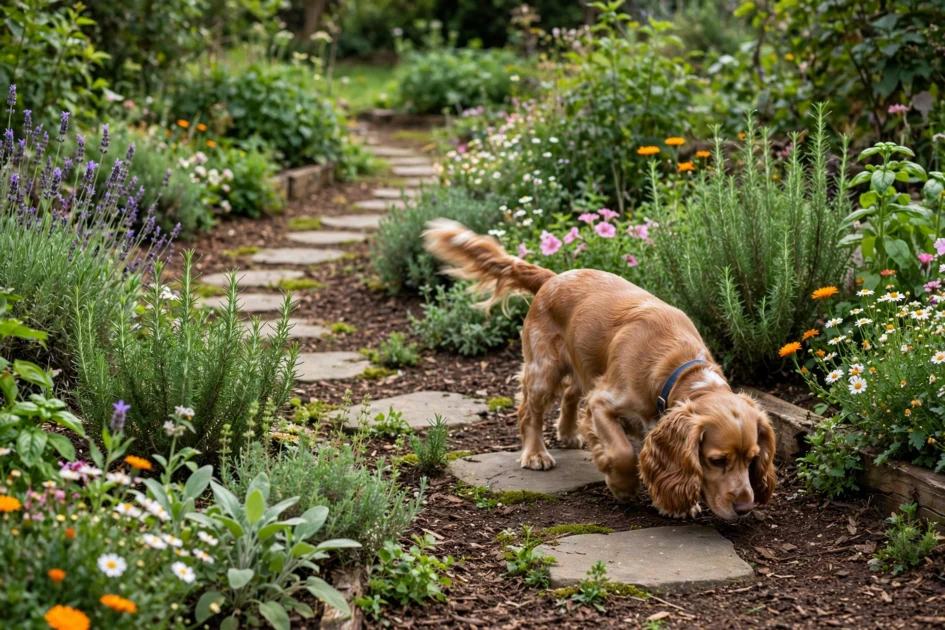
Turn an ordinary garden path into a proper nose game. Drag a treat along stepping stones, hide small treats in the mulch along the edges, then release your dog to follow the trail nose-first. Change the route every few days so the game stays fresh — ten minutes of scent work tires a dog out like a much longer walk.
8. Dog-Safe Flower Border
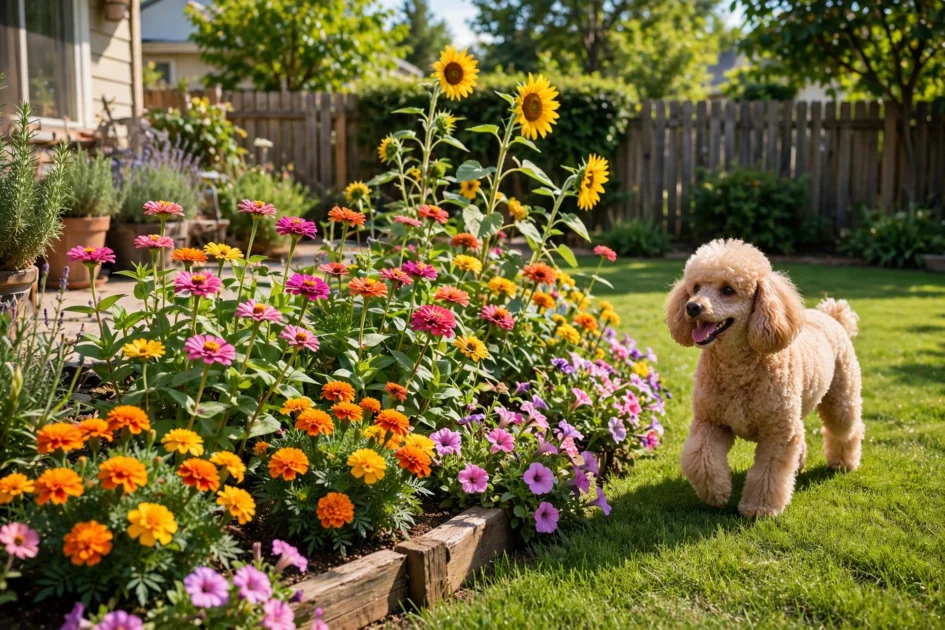
You do not have to choose between a beautiful garden and a safe one. Marigolds, zinnias, sunflowers, snapdragons and petunias are all dog-friendly and deliver months of color for very little effort. Edge the border with a low fence or a row of stones so enthusiastic paws learn to admire the flowers from the path instead of through them.
9. Shaded Hammock Spot
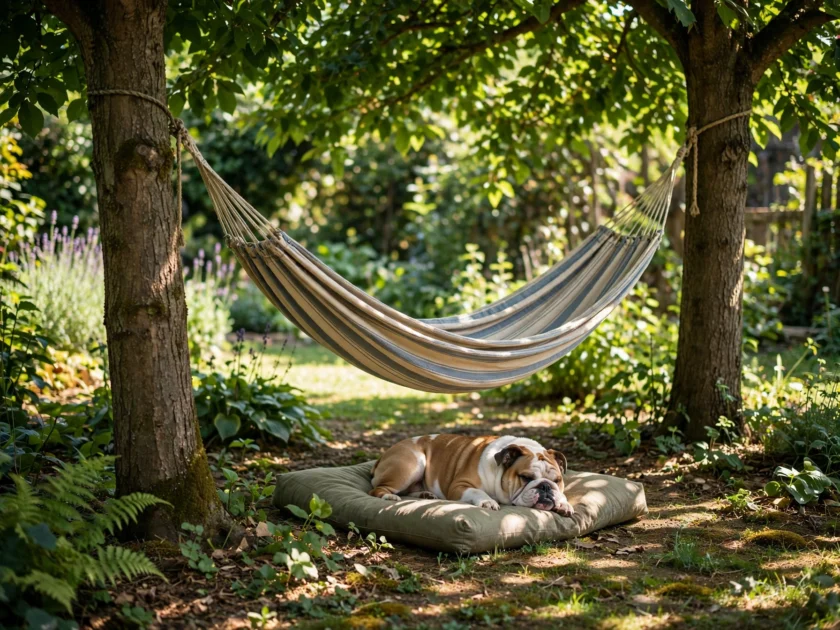
String a hammock between two sturdy trees or posts, then place a dog bed or cooling mat in the dappled shade beneath it. You get the best reading spot in the garden, and your dog gets a breezy hangout right next to their favorite human. Do not be surprised when the under-hammock shade becomes their official summer headquarters.
10. Nighttime Solar-Light Path
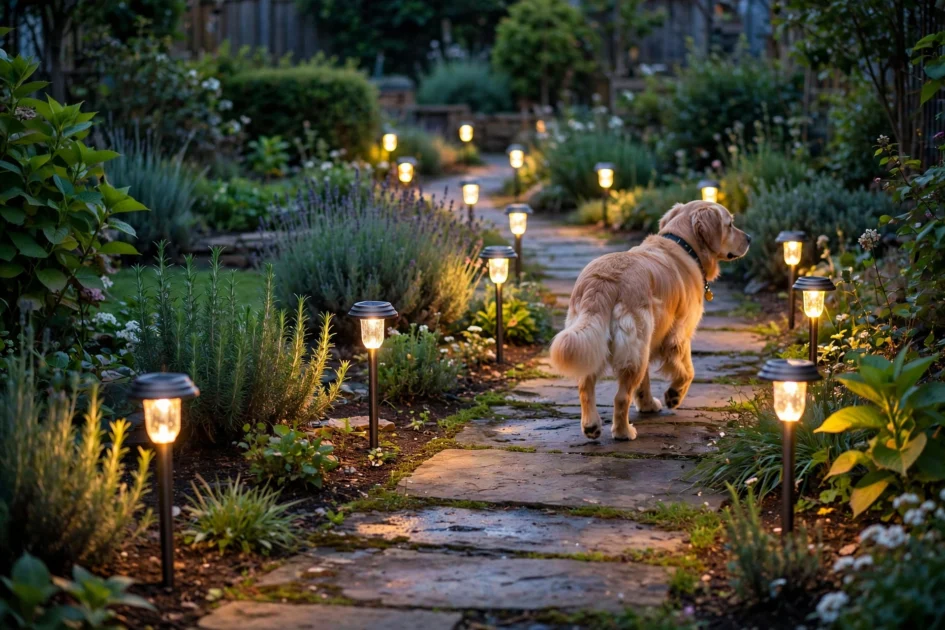
The fun does not have to end at sunset. Line your paths with solar stake lights so evening toilet trips and gentle garden strolls stay safe and a little bit magical. The lights charge all day, switch on automatically at dusk, and genuinely help older dogs with fading eyesight find their way around the yard after dark.
Frequently Asked Questions
What is a sensory garden for dogs?
A sensory garden is a space designed to stimulate a dog’s senses — especially smell — using safe plants, varied textures, gentle sounds and things to explore. It delivers the same mental enrichment as a long sniffy walk, right at home, and it can really help calm anxious or high-energy dogs.
Which plants are safe for a dog sensory garden?
Good dog-safe choices include rosemary, basil, mint, lavender, parsley, marigolds, zinnias, sunflowers and petunias. Always avoid lilies, foxglove, azaleas, oleander and sago palm, which are toxic to dogs. When in doubt, check the plant against a trusted pet-poison list before it goes anywhere near your garden.
How much space do I need for a dog-friendly garden?
Far less than you think. A sniff garden fits in one raised bed, a digging pit needs about a square metre, and even a balcony holds potted herbs. Start with one corner of your outdoor space and expand once you see what your dog loves.
How do I stop my dog digging up the whole garden?
Give digging an approved outlet, like the sandpit in idea two, and bury toys there so it is the most rewarding place to dig. Redirect your dog to the pit every time they start elsewhere, reward them for using it, and most dogs switch their digging habit to the pit within a couple of weeks.
Are sensory gardens good for puppies and senior dogs?
Yes, both benefit hugely. Puppies build confidence exploring new smells and textures, while senior dogs get gentle mental stimulation without straining their joints. Keep paths flat and non-slip, avoid steep obstacles for older dogs, and always supervise puppies around water features and new plants until you know their habits.
A dog-friendly garden does not need to be perfect — it just needs to invite your dog to sniff, dig, splash, play and rest. Start with one or two of these setups, watch which one your dog gravitates towards, and build from there. The idea comes from the sensory garden movement first created for people, adapted for the four-legged family members who use the yard most. A couple of weekends of work buys you years of tail wags — and a dog who comes back inside happily tired, every day.