
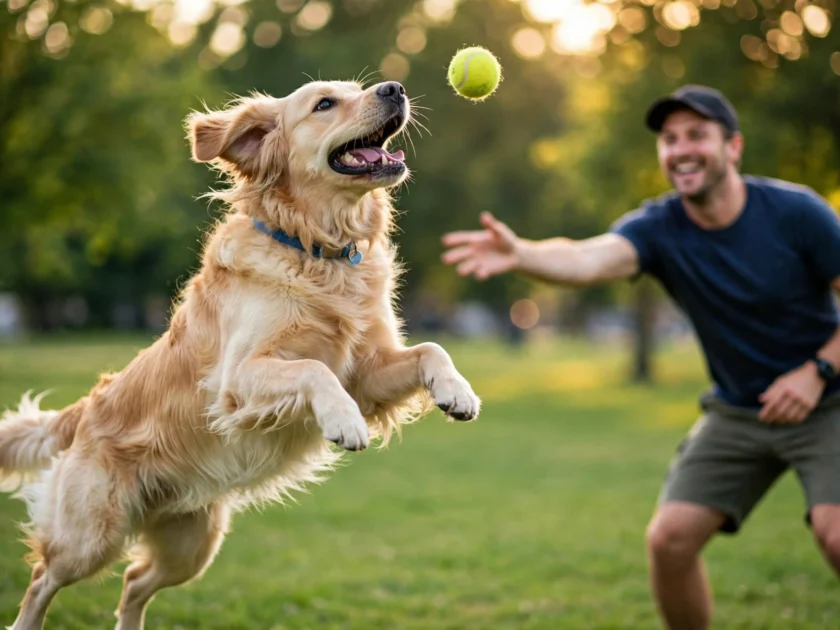

A bored dog is a busy dog — and rarely in a good way. Chewed shoes, dug-up flower beds, and endless barking are usually just a bright brain screaming for something to do. The fastest fix is not another toy to ignore on the floor; it is you, playing games that make your dog think and move.
Interactive enrichment games for dogs burn off physical energy and tire the mind, which is what really settles a restless pup. Every game below needs one key ingredient — you. That is a feature, not a bug: playing together builds focus, obedience, and a bond no solo toy can match.
1. Fetch With a Twist
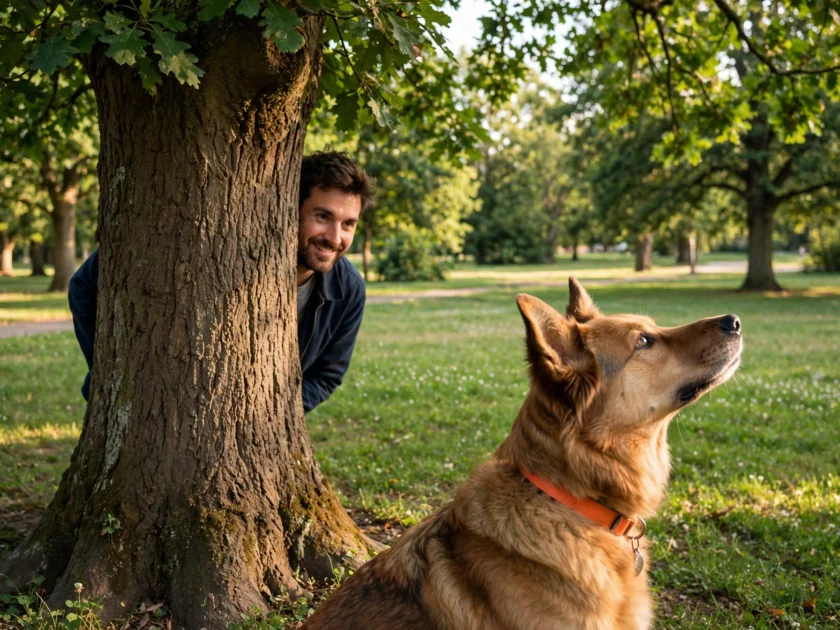
enrichment games for dogs Grab two identical balls. Throw the first, and the moment your dog turns to bring it back, throw the second the other way. Your dog learns to sprint back, drop, and re-launch — chaining recall, release, and chase into one game. The constant change of direction forces split-second decisions, and that mental workout is why dogs nap hard after two-ball fetch. Playing in public? Brush up on these dog park mistakes to avoid first so your game stays safe for everyone.
2. Hide and Seek
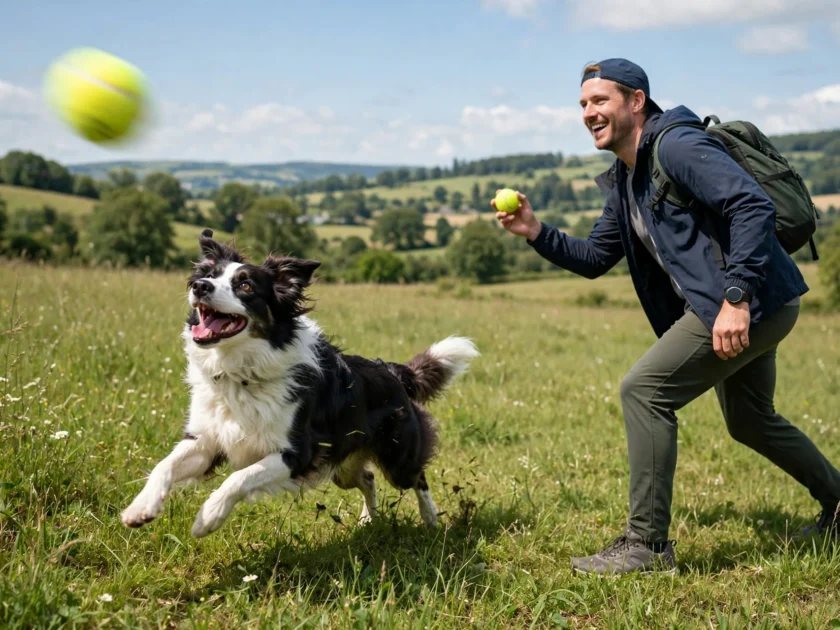
Have your dog wait while you hide behind a tree, a door, or a pile of laundry. Call them once and let them find you. Start easy — behind a curtain in the same room — then get trickier so they learn to use nose and ears instead of eyes. This game builds scent tracking and recall at once, and the joyful reunion at the end is pure dopamine for both of you.
3. Tug-of-War With Rules
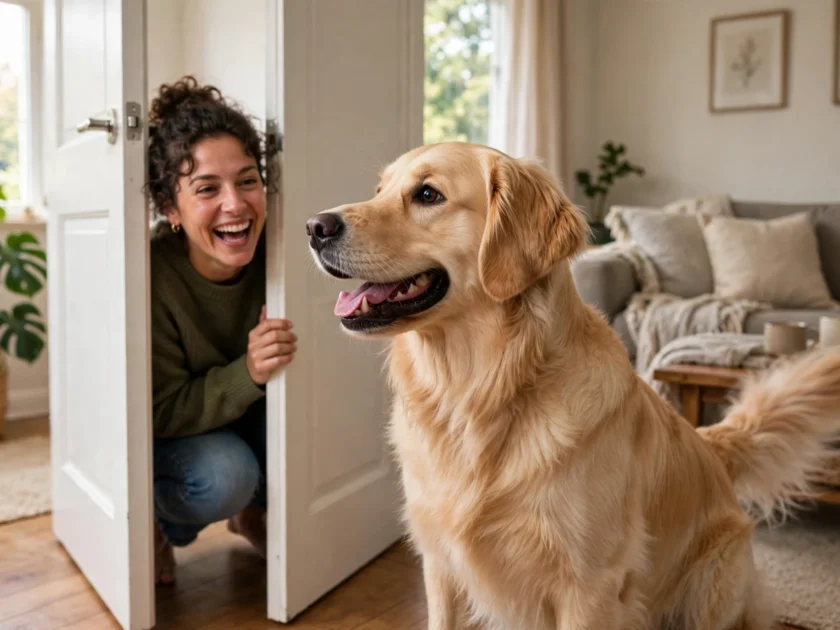
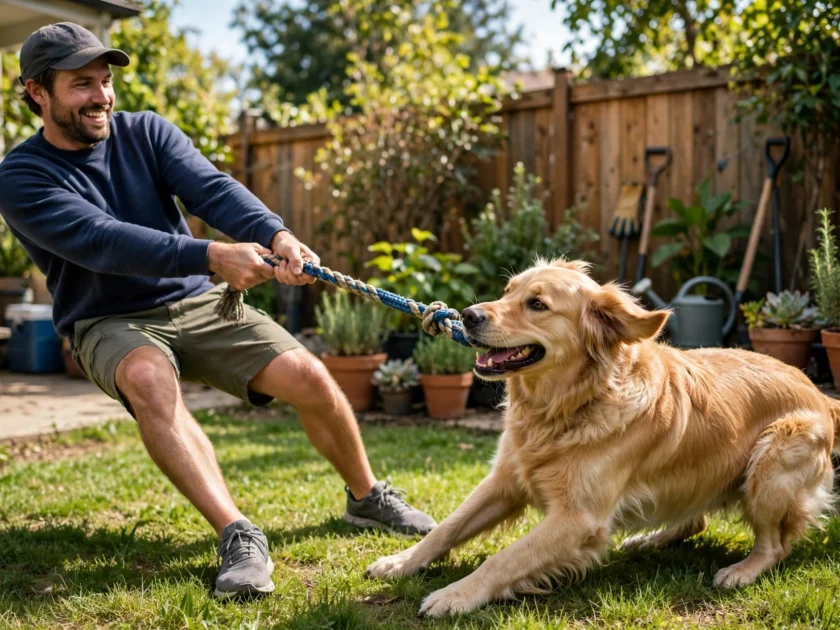
Tug is about impulse control when you add rules. Let your dog grab the rope, tug a few seconds, then freeze and say “drop it.” The instant they release, say “take it” to restart the game. Your dog learns that listening — not clamping down harder — keeps the fun going. The stop-start rhythm teaches frustration tolerance and lightning-fast responses to your cues.
4. Flirt Pole Chase
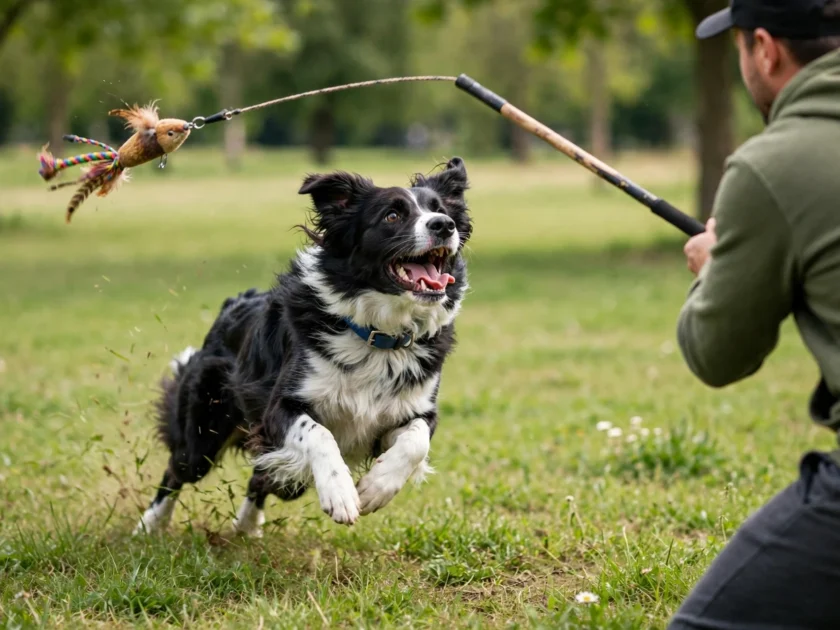
A flirt pole is a long stick with a rope and lure on the end — a giant cat teaser for dogs. Drag the lure in zigzags, let your dog chase, then ask for a sit before letting them “catch” it as the reward. It is a controlled outlet for prey drive that builds self-control through chase-and-wait. Five minutes of this delivers a full-body workout.
5. Backyard Treasure Hunt
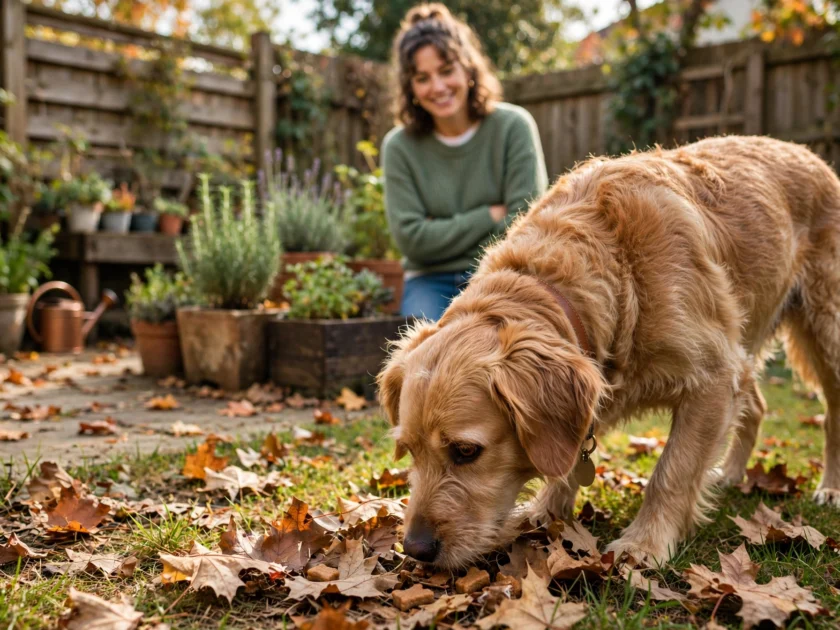
While your dog watches from inside, scatter treats across the yard — under leaves, behind planters, along fence lines. Release them with a “go find” cue and watch their nose take over. Change the hiding spots each time so they cannot just memorize the map. Ten minutes of sniffing tires most dogs like an hour-long walk.
6. Find-It Scent Game
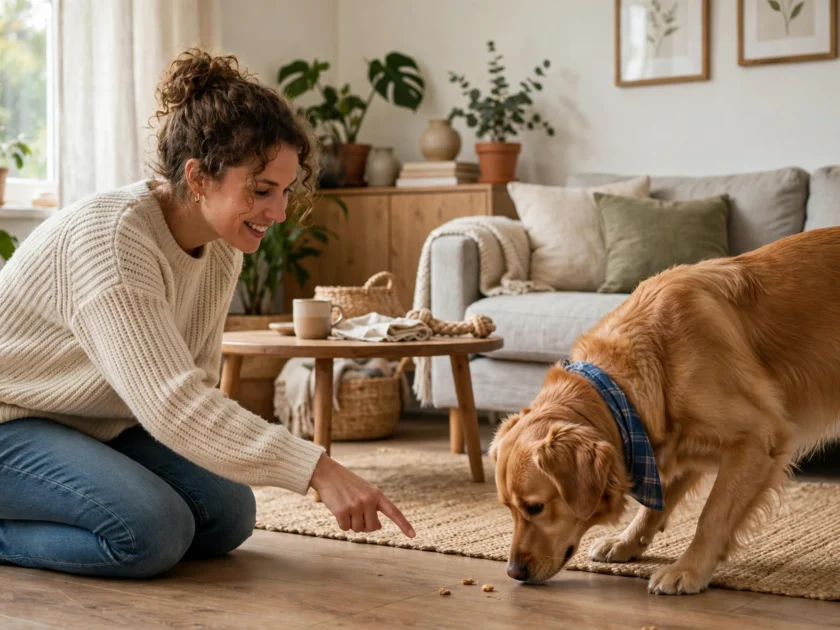
Toss a treat a few feet away and say “find it.” Once your dog gets it, make it harder — treats behind furniture or in another room. Your dog learns to search systematically and trust their nose over their eyes. It is the perfect rainy-day energy burner, and it rewards calm, focused thinking instead of frantic movement.
7. Shell Game With Cups
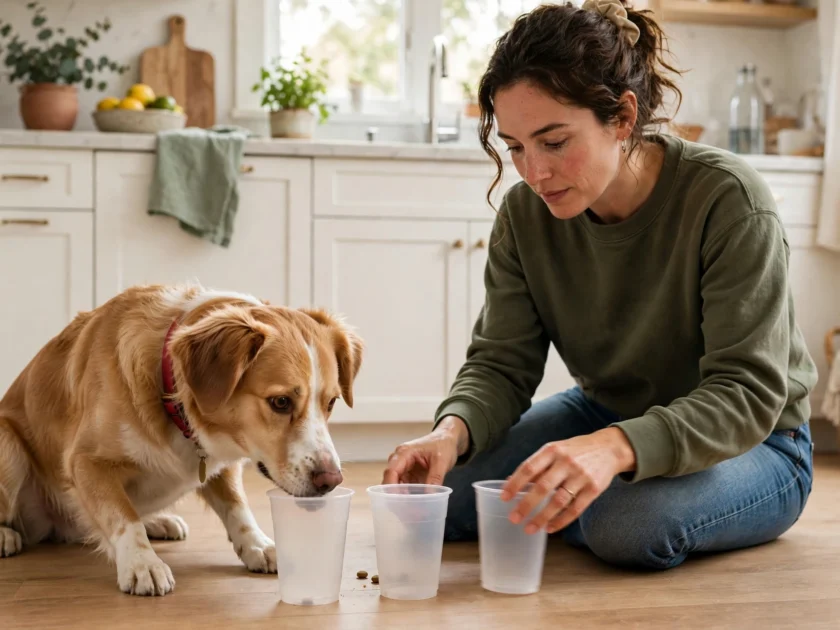
Place a treat under one of three cups while your dog watches, shuffle them, and let your dog nose the right one. Start with the treat visible, then progress to quick shuffles. Your dog must track movement, remember the location, and make a deliberate choice. A tiny game with a big payoff: focused attention and problem-solving in two minutes per round.
8. Beginner Agility
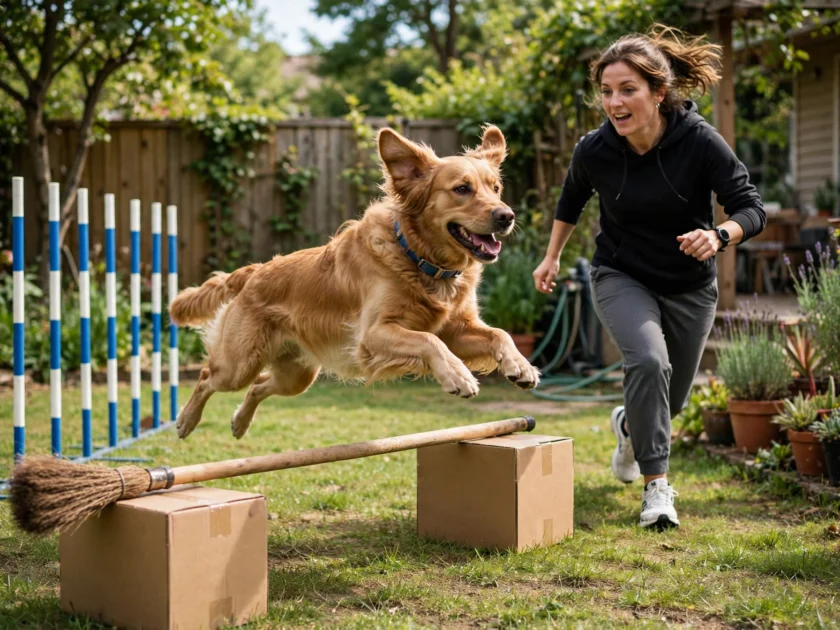
You do not need a course: a broom handle across two boxes makes a jump, and a row of cones makes weave poles. Lure your dog over, through, and around, rewarding each obstacle. Running obstacles in sequence teaches body awareness and listening at speed. Short, upbeat sessions build confidence fast — tired legs plus a thinking brain equals one content dog.
9. 101 Things to Do With a Box
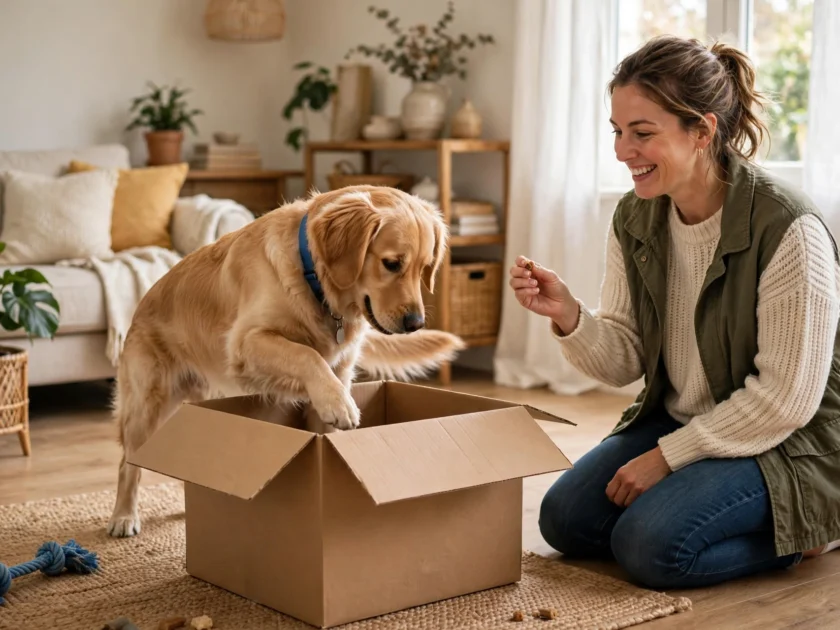
Put a cardboard box on the floor and reward ANY interaction — a glance, a paw touch, a sniff. Then only reward new behaviors: paw in the box, nose in the box, sitting in the box. Your dog starts offering creative behaviors to earn the reward. This shaping game turns your dog into an active thinker, and it is the foundation trick trainers swear by.
10. Water Play and Sprinkler Games
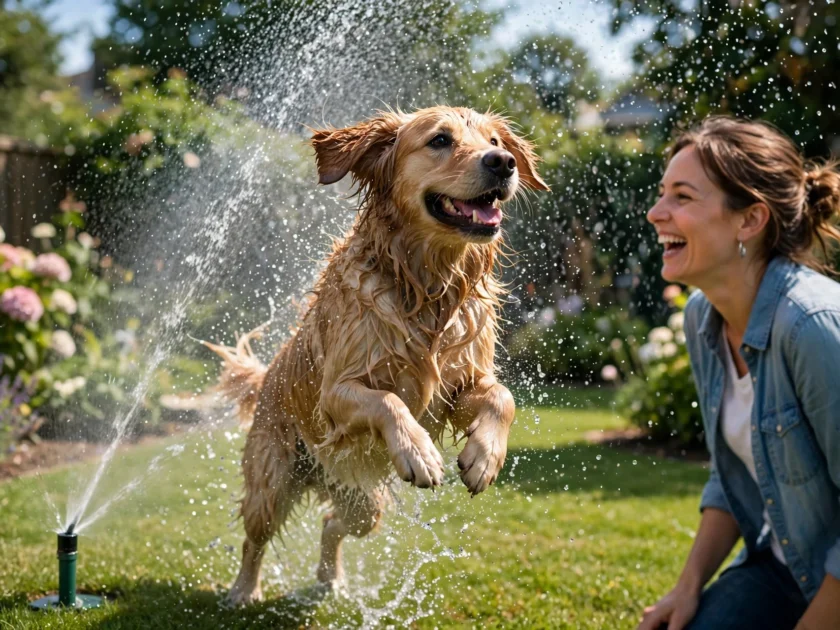
On a warm day, turn on the sprinkler and let your dog chase, bite, and pounce through the spray — or toss floating toys into a kiddie pool for a splashy retrieve. Water adds a whole new sensory layer that keeps dogs engaged far longer than dry-land play. It is joyful, cooling exercise, and the novelty alone gives their brain a serious workout.
11. Chase-and-Recall Game
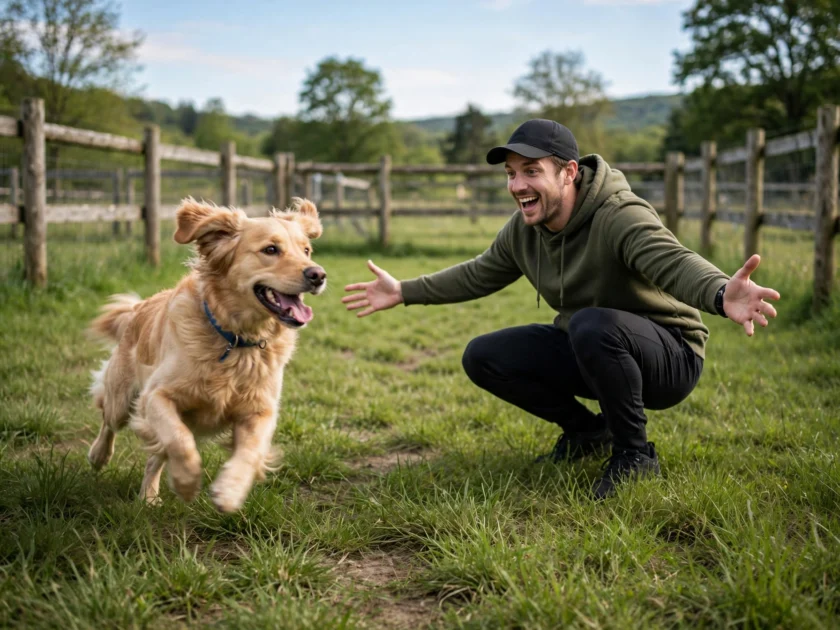
Never chase your dog — let them chase you. In a safe enclosed area, get their attention, then run away calling their name excitedly. When they catch you, throw a party with treats and praise, then do it again. Your dog learns that coming to you starts the best game ever, which builds a bulletproof recall. Keep bursts short to stay thrilling.
12. Indoor Parkour
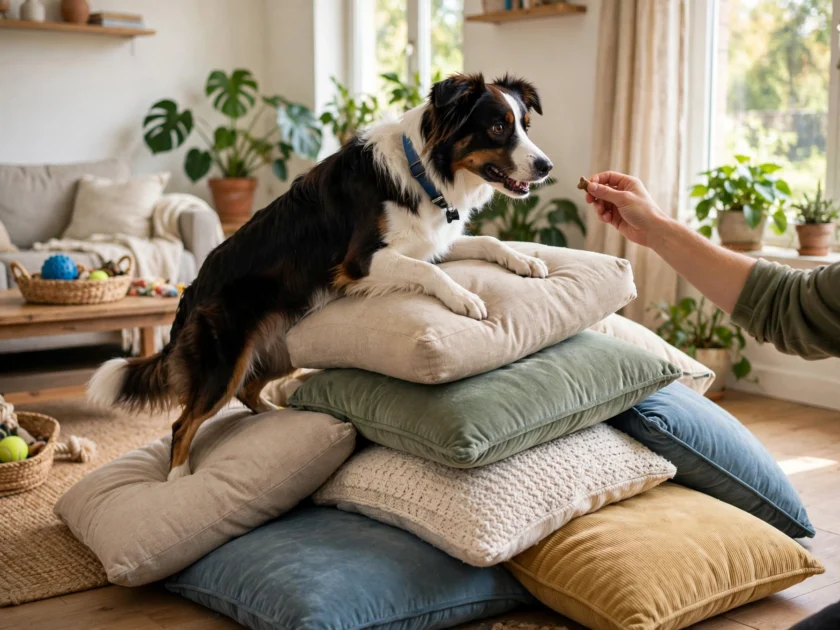
Turn your living room into an obstacle course: couch cushions to climb over, a sturdy ottoman to jump onto, a blanket tunnel between chairs. Guide your dog through with treats, teaching “up,” “over,” and “under” as you go. Navigating new surfaces builds confidence and body awareness. No yard or gear needed — just furniture and imagination.
Frequently Asked Questions
How long should an enrichment game session last?
Ten to fifteen minutes is the sweet spot. Mental games tire dogs faster than physical ones, so stop while your dog is still engaged. You can always play again later in the day.
Can puppies play these enrichment games?
Absolutely — just scale the difficulty down. Puppies love the shell game, easy find-it rounds, and gentle tug with soft toys. Keep sessions short, end on a win, and skip high jumps until their joints mature.
My dog loses interest quickly. What should I do?
Make it easier and more rewarding. Use higher-value treats, shorten the session, and quit while they are still having fun. Interest grows as your dog learns the game always pays off.
Are these games good for anxious dogs?
Many are ideal. Scent games, the box game, and indoor parkour build confidence without the pressure of busy environments. Start in a calm, familiar space and let your dog set the pace.
How are these games different from puzzle toys?
Puzzle toys entertain your dog alone; these games need you as an active partner. Playing together builds communication and lets you adjust difficulty in real time — which is why interactive play tires dogs out more completely.
You do not need expensive gear or hours of free time to beat boredom — just play with your dog on purpose. Rotate two or three of these games through your week and watch destructive habits fade. That is the heart of behavioral enrichment: giving animals meaningful challenges that let them act like the clever creatures they are.