

Introduction
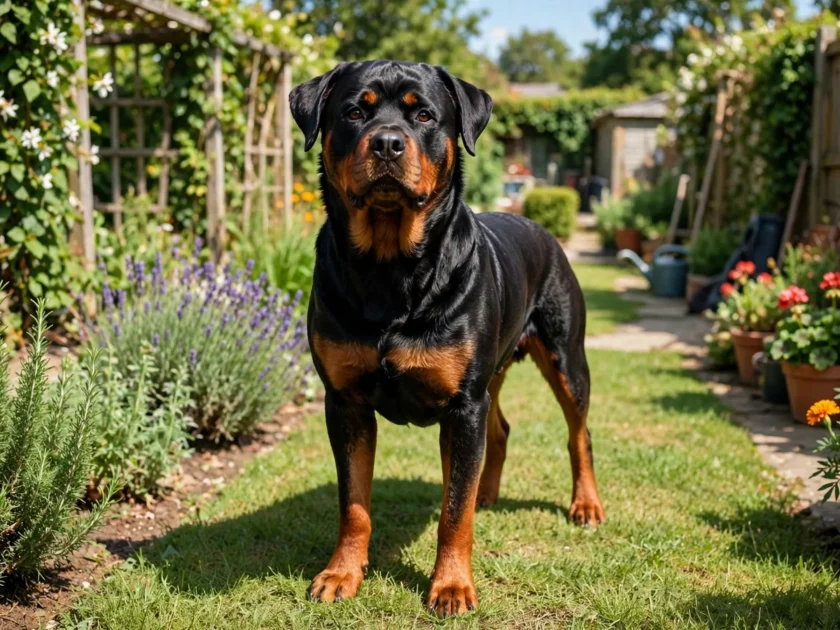
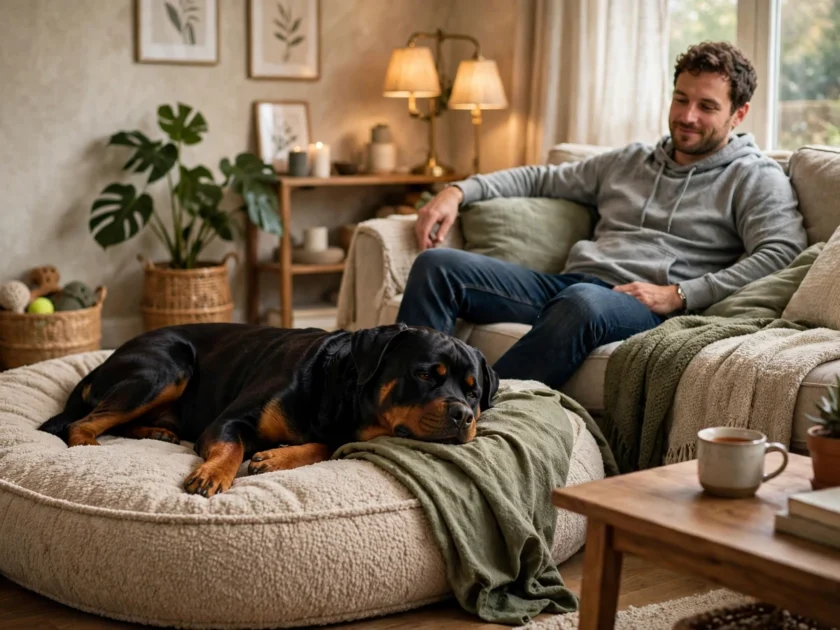
There is a moment every rottweiler owner knows well. You are sitting on the sofa when a huge warm head lands gently in your lap and dark thoughtful eyes look up at you as if to say, I am here, and I have decided you are mine. For all their size and reputation, rottweilers are soft hearted shadows who follow their people from room to room and sigh with satisfaction when they finally get the spot beside you.
Bred in Germany as drovers and cart dogs, rottweilers once moved cattle to market and pulled loads with calm, tireless strength. That working history still shows in their confident bearing and instinct to watch over home and family. The Rottweiler is not a dog for everyone, but for an owner who understands training, boundaries and loyalty, he is one of the most devoted companions a family can have.
Characteristics
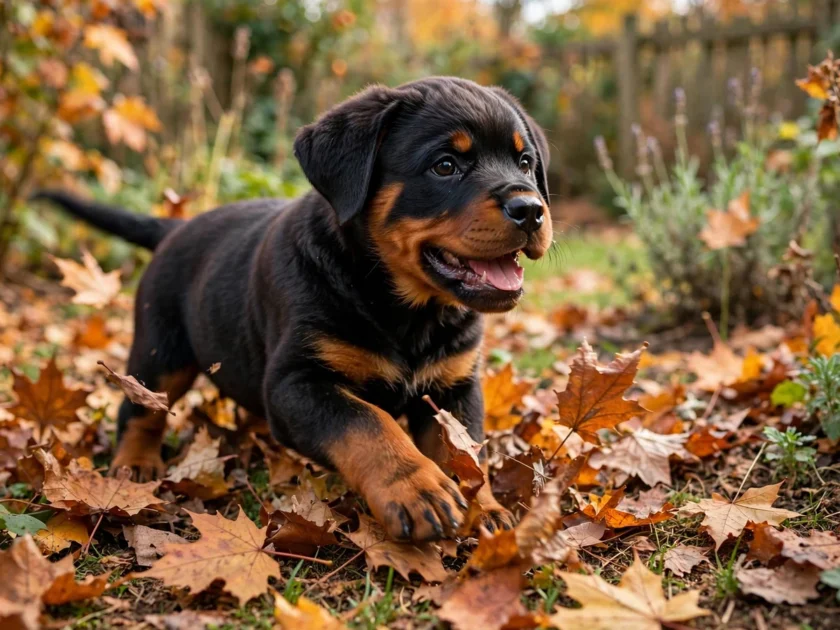
A rottweiler is impossible to miss. Males usually stand twenty-four to twenty-seven inches at the shoulder and weigh between fifty and sixty kilograms, females are a little smaller at thirty-five to forty-eight kilograms, and both carry a broad chest, a strong neck and a short glossy black coat with rich rust markings above the eyes, on the cheeks, chest and legs.
Temperament is calm, confident, loyal and deeply protective, with a quiet self assurance that needs no showing off. Rottweilers are usually reserved with strangers, warm and playful with their own family, and famously patient with children they know well. Their lifespan is nine to ten years, and they belong among the large dog breeds that are loyal and loving when raised with structure and affection. Energy is moderate to high, so he needs purposeful daily exercise and training, or boredom will turn that clever mind towards chewing and digging.
Habits and Behaviour
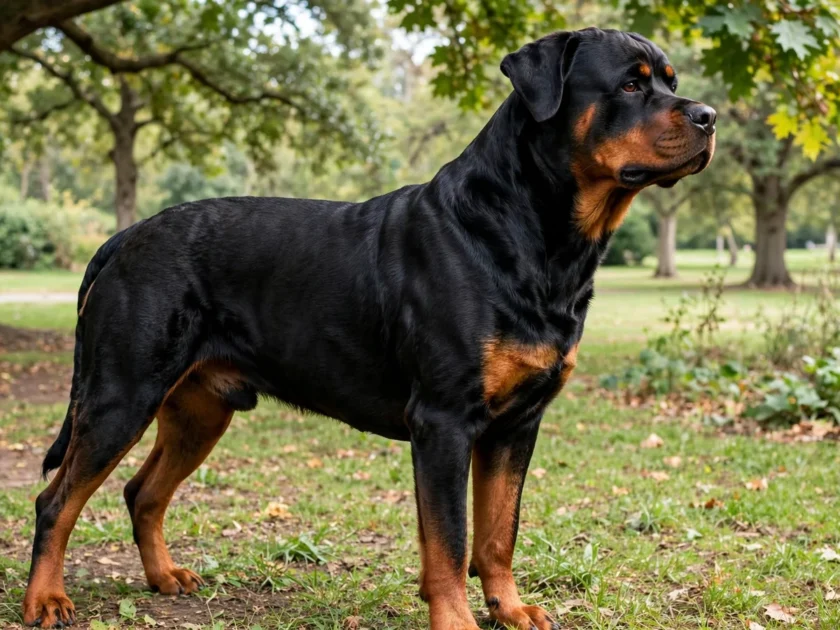
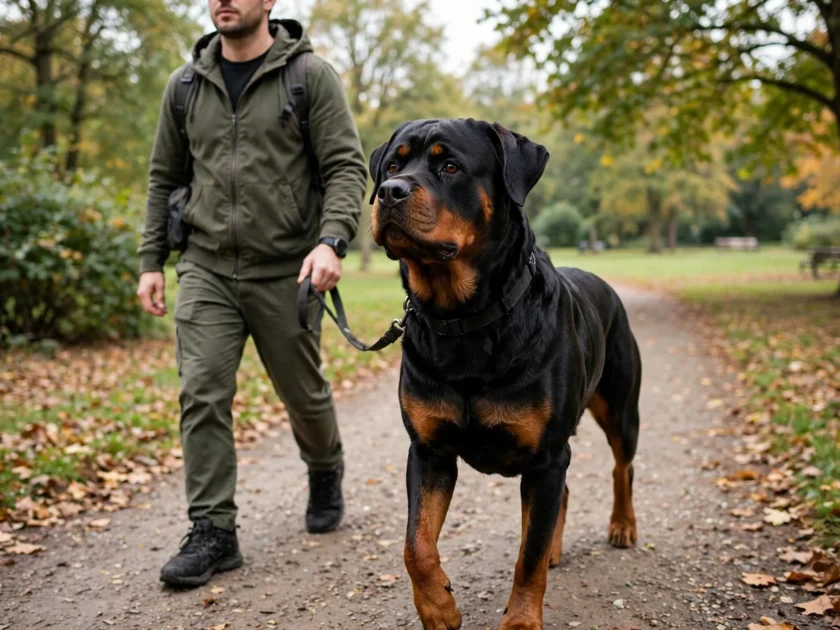
A typical rottweiler day starts with a slow stretch, a thoughtful look out of the window, and then a determined patrol of the garden. Breakfast is taken very seriously, and afterwards comes the best part of the day, a walk with his person, during which he walks proudly at your side and occasionally leans his full weight against your leg just to remind you he is there.
Training a rottweiler is not optional, it is the whole foundation of living happily together. These dogs are intelligent, strong willed and quick to notice inconsistency, so they thrive on calm, consistent leadership, early socialisation and reward based training from puppyhood. With children he is often gentle and watchful, although his size means play should always be supervised. With other dogs he can be selective, so introductions need care.
Common Diseases and Health Problems
Rottweilers are strong dogs, but their size and genetics bring some serious health risks that owners should know about before they ever bring a puppy home. Hip dysplasia and elbow dysplasia are among the most common problems, where the joints do not develop cleanly and can lead to pain, stiffness and arthritis, sometimes from a young age.
Other known issues include osteosarcoma, a serious bone cancer that most often affects the legs, bloat, also called gastric dilatation volvulus, in which the stomach fills with gas and twists and becomes a life threatening emergency, hypothyroidism, which causes weight gain, tiredness and coat changes, and aortic stenosis, a heart condition that narrows the valve leaving the heart. Rottweilers can also develop eye problems and skin allergies. None of this means every rottweiler will become ill, but choosing a breeder who health tests parents is especially important.
Solutions and Prevention
Prevention for a rottweiler begins before you choose the dog. Ask the breeder for hip and elbow scores, heart screening and eye test results for both parents, and walk away from anyone who cannot show them. Once your puppy is home, keep growth steady rather than fast, because rapid weight gain puts extra strain on developing joints. Feed a good quality large breed diet in measured meals, and keep your dog lean enough that you can feel his ribs easily.
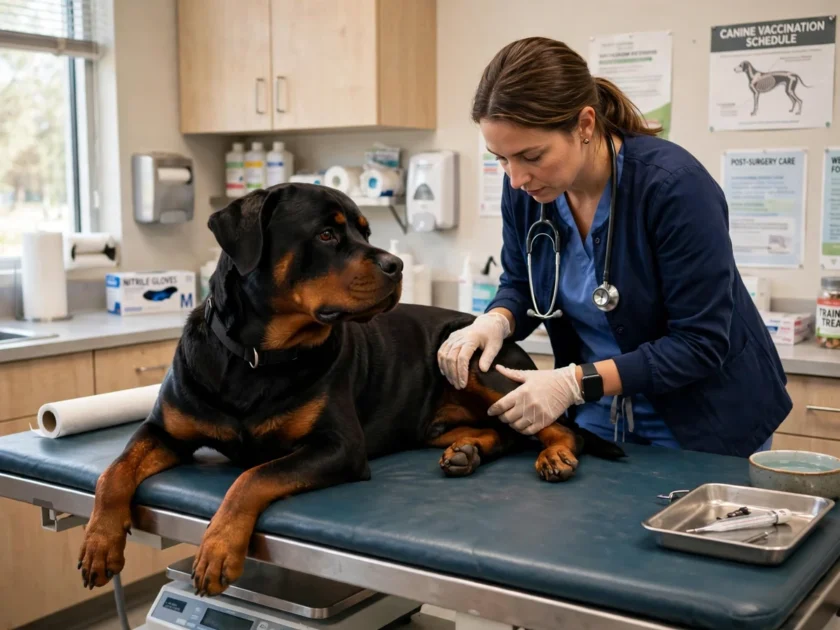
Exercise should be regular but sensible, with daily walks, training and play, and no forced running, jumping or long hikes until the joints have matured at around eighteen months. To reduce the risk of bloat, feed two or three smaller meals a day, use a slow feeder bowl, and avoid vigorous exercise for an hour before and after eating. Learn the warning signs: a swollen tight belly, restlessness, drooling and repeated attempts to vomit. Book vet checks at least once a year, and seek help promptly for limping, a sudden loss of energy, or any collapse.

Grooming and Cleaning
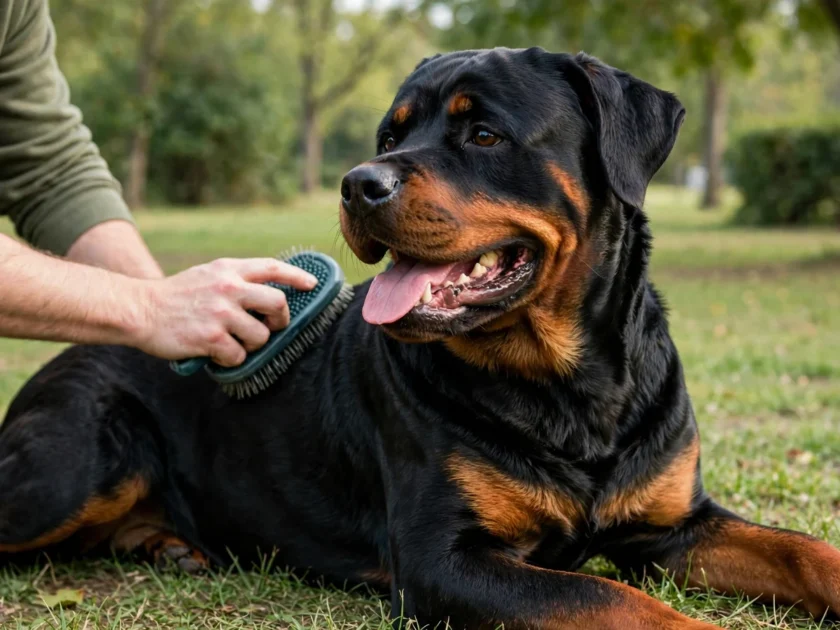
Grooming a rottweiler is refreshingly straightforward, and most enjoy the attention once they realise a brush means a fuss. That short dense double coat needs brushing once or twice a week with a rubber curry brush or slicker, which removes loose hair and keeps the glossy black coat looking its best. Shedding is moderate through the year and heavier in spring and autumn.
Bathing is only needed every month or two, or after a muddy walk, using a gentle dog shampoo and rinsing thoroughly through that thick coat. Check the ears weekly for redness or a bad smell. Nails are strong and grow quickly, so trim them every two to three weeks, and brush the teeth several times a week, because large breeds are just as prone to gum disease as small ones. Done little and often, grooming becomes another quiet bonding moment rather than a chore.
Living With a Rottweiler: Care Tips for Owners
Living well with a rottweiler comes down to three things: training, boundaries and time together. Keep training going throughout his life, not just in puppy class, with short daily sessions, clear rules that everyone in the house follows, and plenty of rewards for calm behaviour. Give him a job, whether that is carrying a backpack on a walk or learning scent games, because a rottweiler with a purpose is a happy rottweiler, and a bored one will find his own purpose, usually involving your garden or your furniture.
Secure fencing, a lead in public and a muzzle trained as a calm, positive skill are sensible precautions for a powerful dog. Never leave a rottweiler alone with small children unsupervised, not because he is untrustworthy but because he is so large and strong. Feed him well, keep him lean, walk him every day, and spend real time with him, because rottweilers do not thrive as kennel dogs or garden ornaments. Give him all of that, and you will have a loyal guardian and a friend who would follow you anywhere.
Frequently Asked Questions
Are rottweilers good family dogs?
Yes, rottweilers can be wonderful family dogs when well bred, socialised early and trained consistently. They are loyal, protective and often gentle with their own children, and they suit confident owners who can give them structure and exercise.
Are rottweilers aggressive?
Rottweilers are not naturally aggressive, but they are protective, powerful and wary of strangers, so poor socialisation, fear or harsh handling can create problems. With early socialisation and calm consistent training, most are steady, confident and well mannered.
How much exercise does a rottweiler need?
An adult rottweiler needs at least an hour to ninety minutes of exercise a day, made up of walks, play and training. Puppies need shorter, gentler exercise while their joints develop.
Do rottweilers shed a lot?
Rottweilers shed moderately all year, with heavier shedding in spring and autumn. Weekly brushing controls most loose hair, although owners should expect some black hairs around the home.
How long do rottweilers live?
Rottweilers usually live for nine to ten years. Keeping them lean, feeding a good quality diet, giving regular exercise, and attending routine vet checks all help support a longer, healthier life.