
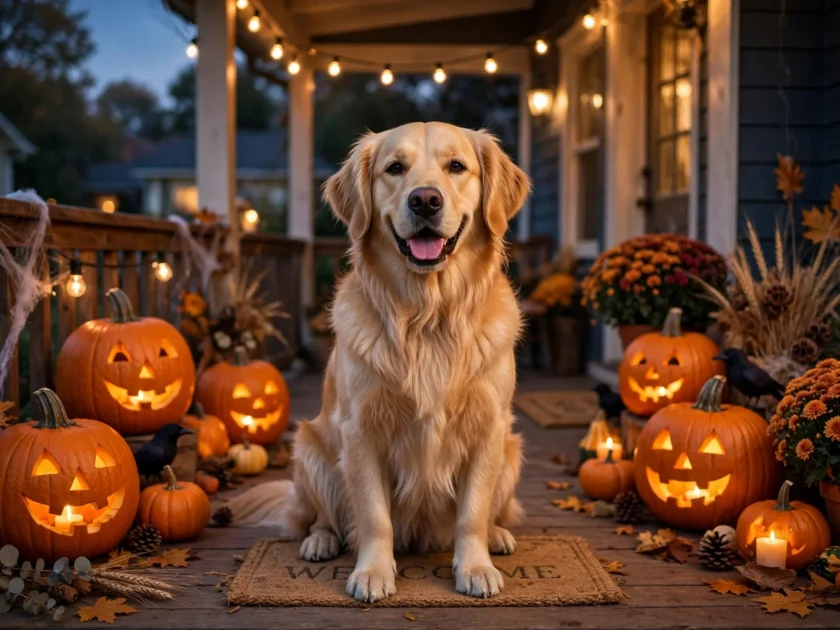

Desensitize Your Dog to Halloween Decorations is a blast for us, but for many dogs it’s a parade of surprises: towering inflatable ghosts, a doorbell ringing every two minutes, and strangers in strange costumes. If your pup barks, hides, or panics on October 31, a little planning goes a long way.
Below are ten practical desensitization tips to help your dog stay calm around Halloween decorations and doorbells.
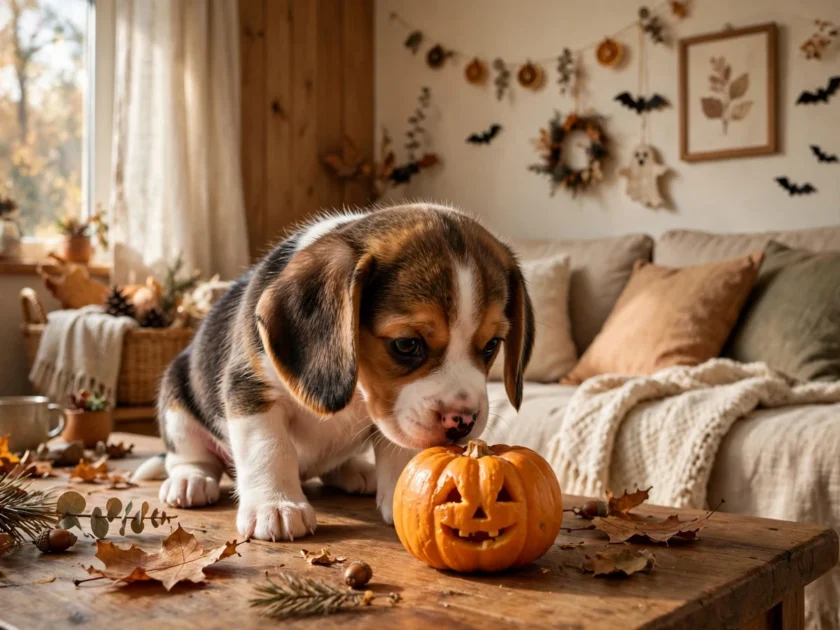
1. Start Decorating Early, One Item at a Time.
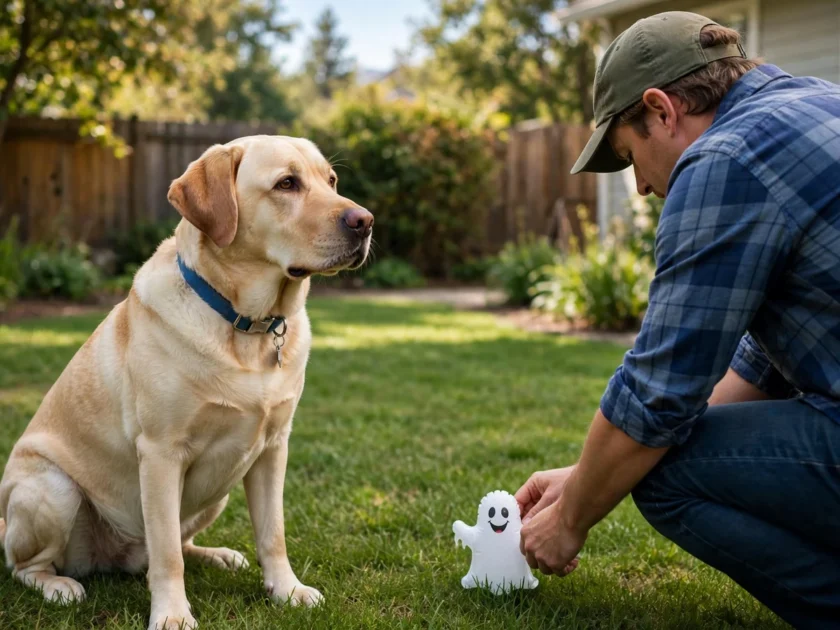
The biggest mistake is decking the halls overnight. A living room that goes from bare to haunted house in one afternoon can overwhelm a sensitive dog.
Introduce one decoration at a time and let your dog sniff it calmly. This slow rollout teaches your dog that new objects appear without drama, so there’s no reason to panic when more show up.
2. Pair Every New Sight With High-Value Treats.
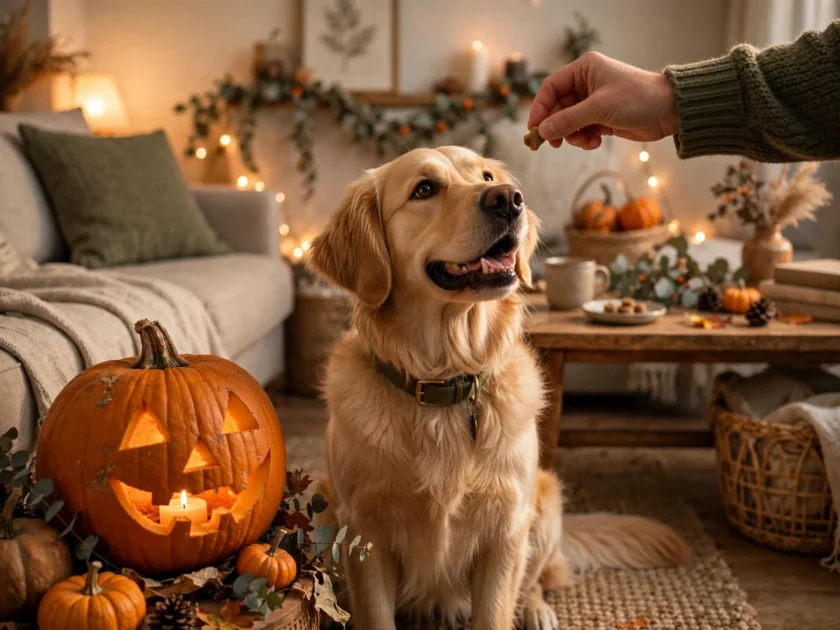
Desensitization works best alongside counter-conditioning: pairing the scary thing with something awesome. Every time your dog notices a new decoration, deliver a jackpot treat like chicken or cheese.
Soon your dog thinks: pumpkin appears, good things happen. Keep treats handy and reward fast, within a second or two of your dog noticing the item.
3. Desensitize the Doorbell at Low Volume First.
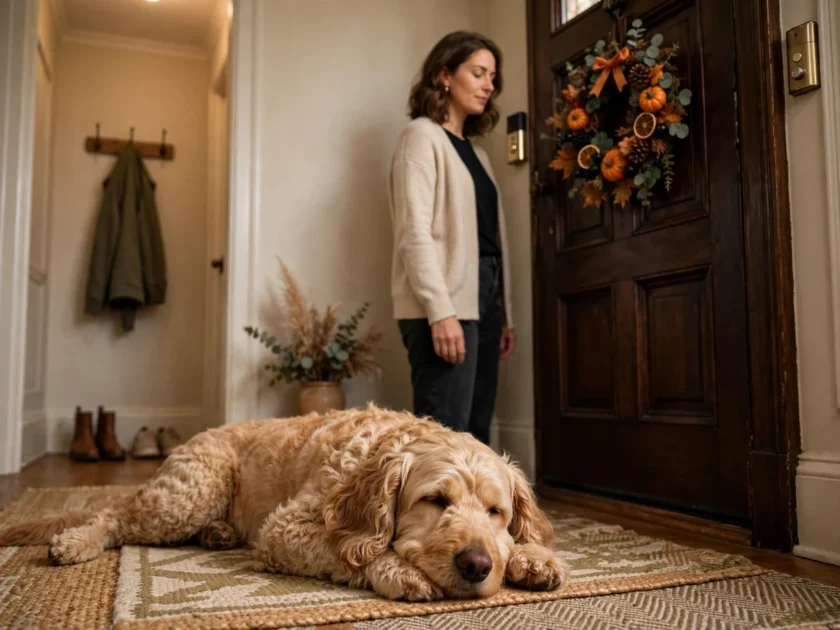
On Halloween night your doorbell might ring dozens of times, so start practicing now. Play a recording at the lowest possible volume while your dog is relaxed, then toss a treat.
Over several short sessions, raise the volume gradually, but only if your dog stays calm. If your dog reacts, you’ve gone too loud, so dial it back. Also practice knock sounds, since trick-or-treaters bring extra doorstep noise.
4. Set Up a Calm, Cozy Safe Space.
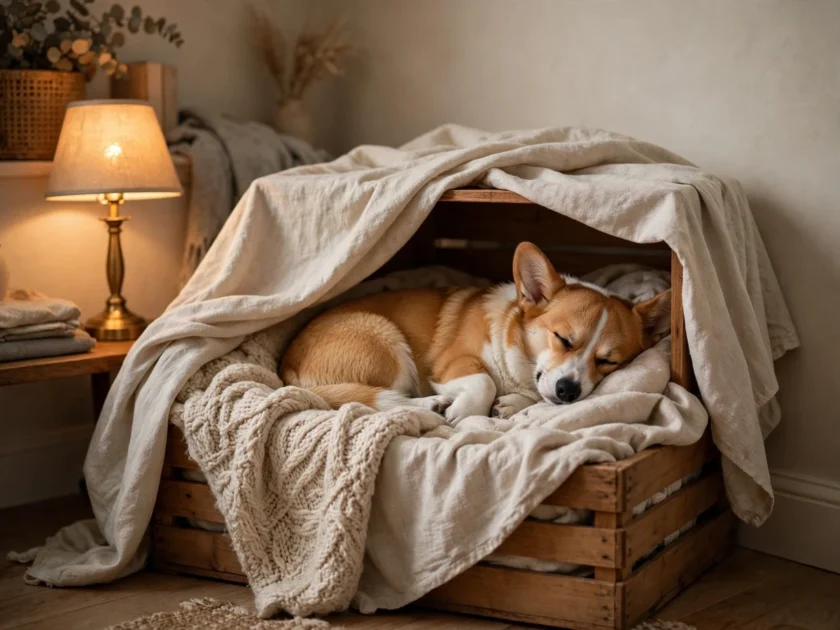
Even well-trained dogs appreciate a retreat on a chaotic night. Choose a quiet room away from the front door, add a comfy crate or bed, a familiar blanket, and a long-lasting chew.
Practice sending your dog there on calm evenings with treats, never as punishment. For a proper setup, this dog training kennel setup guide walks through the details. On the big night, this spot becomes your dog’s peaceful headquarters.
5. Build a Gradual Exposure Plan.
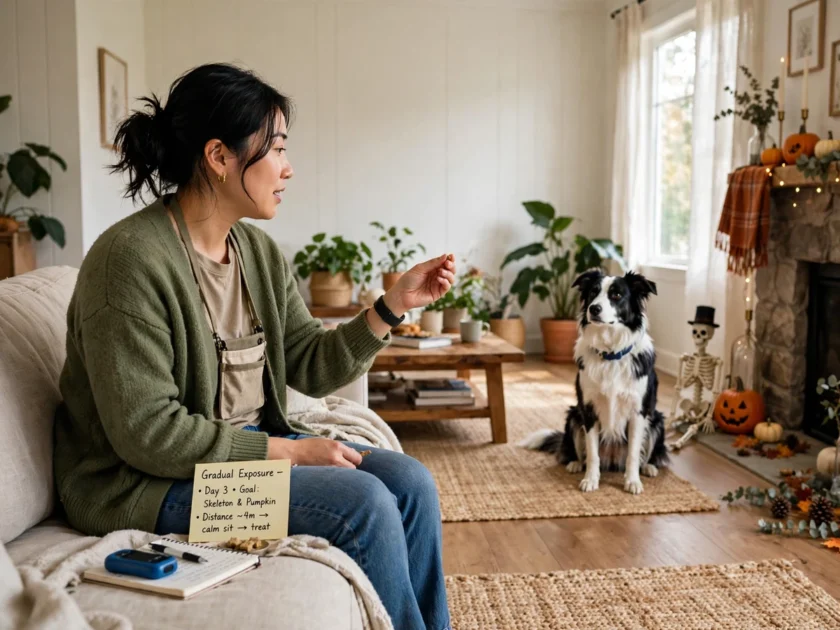
Random training helps, but a written plan helps more. Map out three to four weeks: week one, mild indoor decorations; week two, outdoor decorations seen from a distance; week three, doorbell sounds combined with decorations; week four, a full dress rehearsal.
Only move to a harder step once your dog is relaxed at the current level. Short five-minute sessions beat long stressful ones.
6. Teach Calm Doorbell Greetings Before the Big Night.
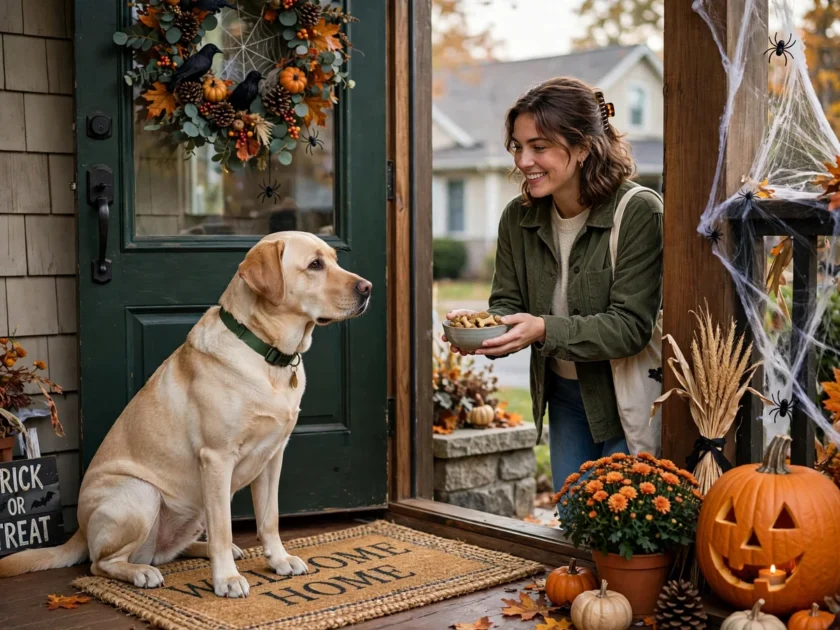
Don’t wait for Halloween to rehearse door answering. Ask a friend to ring the bell while you cue your dog to a mat or bed away from the door, rewarding a solid stay.
Repeat until your dog hears the bell and heads to the mat automatically. This is gold on Halloween, when costumed strangers keep showing up. A dog holding the mat has far less bandwidth left for barking or darting past you.
7. Practice With Costumes and Props.
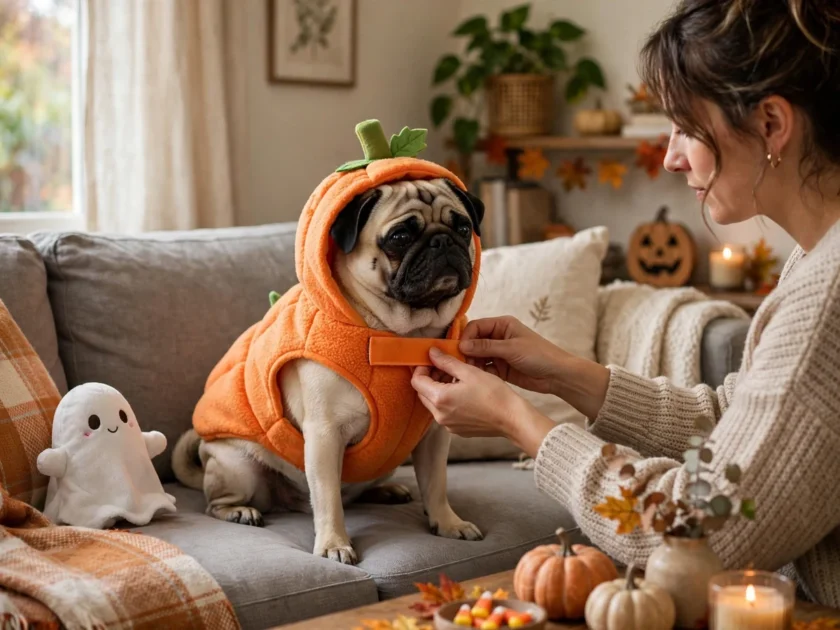
Dogs read body language, and a human in a witch hat looks nothing like normal. Try on masks, hats, and capes in front of your dog for a few minutes at a time, pairing each reveal with treats.
Let your dog sniff the props at their own pace. If your dog will wear a costume too, introduce it piece by piece over days; remove it if your dog freezes or paws at it. Never force it.
8. Involve the Whole Household.
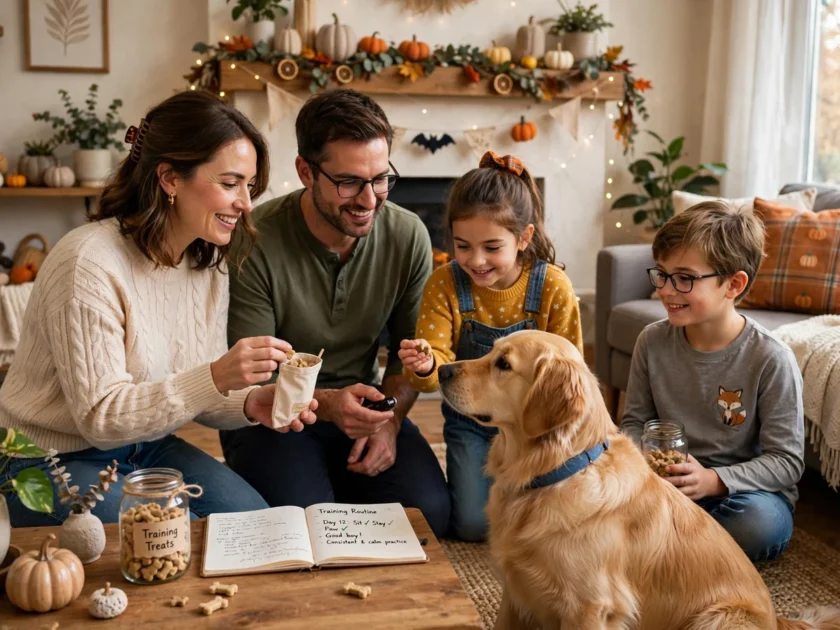
Consistency is everything, and one family member undoing the training can set you back weeks. Get everyone aligned: how to reward calm behavior, where the dog’s safe space is, and who handles the door.
Kids matter most, so make it a game: “who can be the calmest when the bell rings?” A unified household gives your dog a predictable, secure routine.
9. Reward Calm Behavior Every Time.
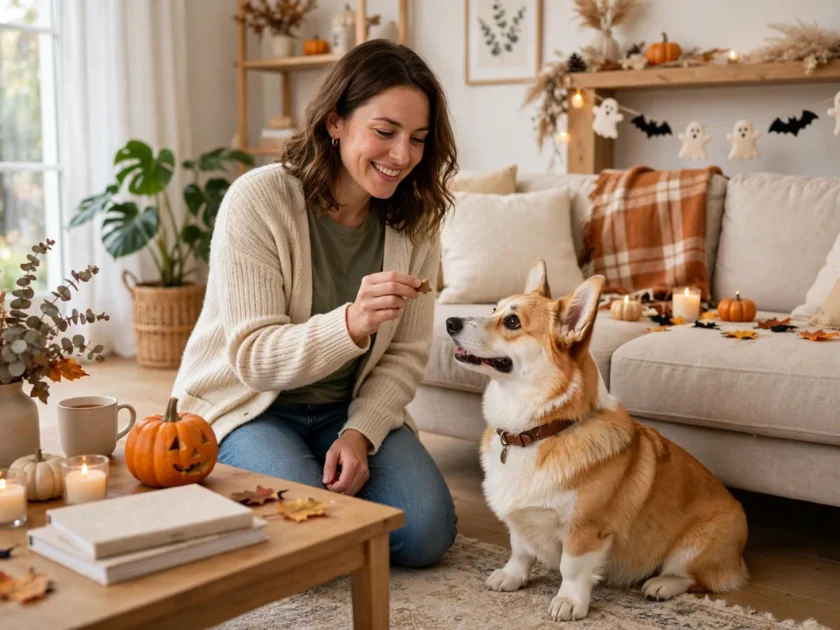
It’s easy to reward only big wins, but quiet moments matter most. Catch your dog noticing a decoration and doing nothing, glancing at the door when the bell rings but staying put, or choosing to settle in the safe space alone. Mark and reward those choices immediately. Dogs repeat what pays off, and over time your dog learns that calm is the most profitable strategy.
10. Know When to Call a Professional Trainer.
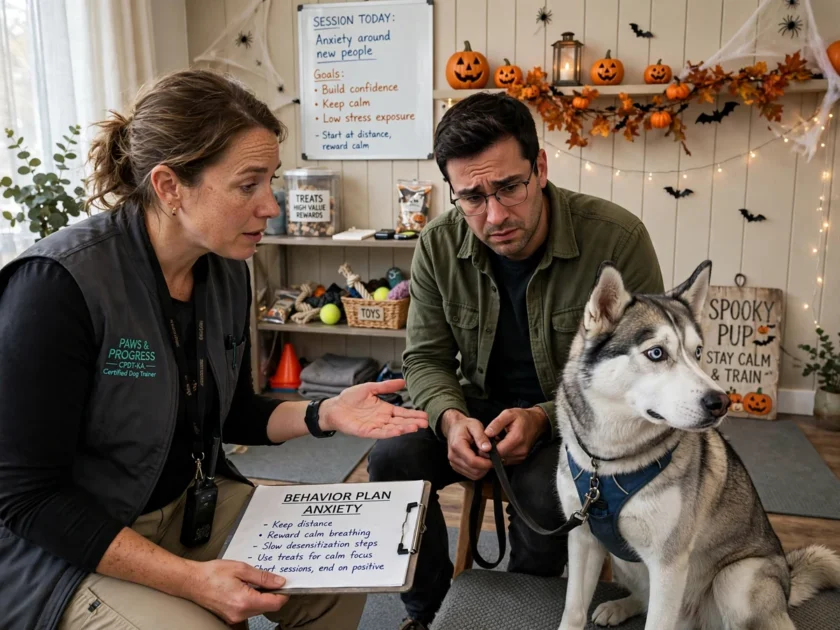
Sometimes, despite your best efforts, a dog’s fear runs deep. If your dog panics to the point of trying to escape, stops eating during sessions, or shows aggression around decorations or the door, bring in a certified professional dog trainer or veterinary behaviorist. There’s no shame in it. A pro can design a customized plan and advise whether calming support might help.
Frequently Asked Questions
How early should I start desensitizing my dog for Halloween?
Three to four weeks before October 31 is ideal, leaving time for decorations, doorbell practice, and calm greetings. Short on time? Focus on the safe space and low-volume doorbell work.
What if my dog is terrified of the doorbell?
Play doorbell recordings at whisper volume while feeding treats, in three-to-five-minute sessions. Only raise the volume once your dog is fully relaxed. Rushing backfires. For severe fear, ask your vet about support.
Should I keep my dog away from the front door on Halloween night?
For most dogs, yes. A closed door and a cozy room with a chew or puzzle toy remove the two biggest stressors at once: the constant bell and the stream of costumed strangers. You can still hand out candy while your dog relaxes in peace.
Can treats really change my dog’s reaction to decorations?
Absolutely, that’s counter-conditioning at work. When something scary is consistently followed by something wonderful, your dog’s emotional response shifts over time from fear to neutral or even positive.
Reward within seconds of your dog noticing the decoration, with treats special enough to compete with the fear.
Is it okay to dress my dog up for Halloween?
Only if your dog is genuinely comfortable. Introduce the costume in pieces over several days, watch for stress signals like lip licking, yawning, or freezing, and keep try-ons short.
If your dog loves it and moves freely, go for it. If not, a festive bandana is a perfectly cute compromise.
A calm Halloween is achievable: start early, train in small steps, and let treats do the heavy lifting. Your dog doesn’t need to love the inflatable ghosts, they just need to feel safe. For a little holiday trivia, Halloween has spooked and delighted people for centuries, so you’re in good company making it pet-friendly.