
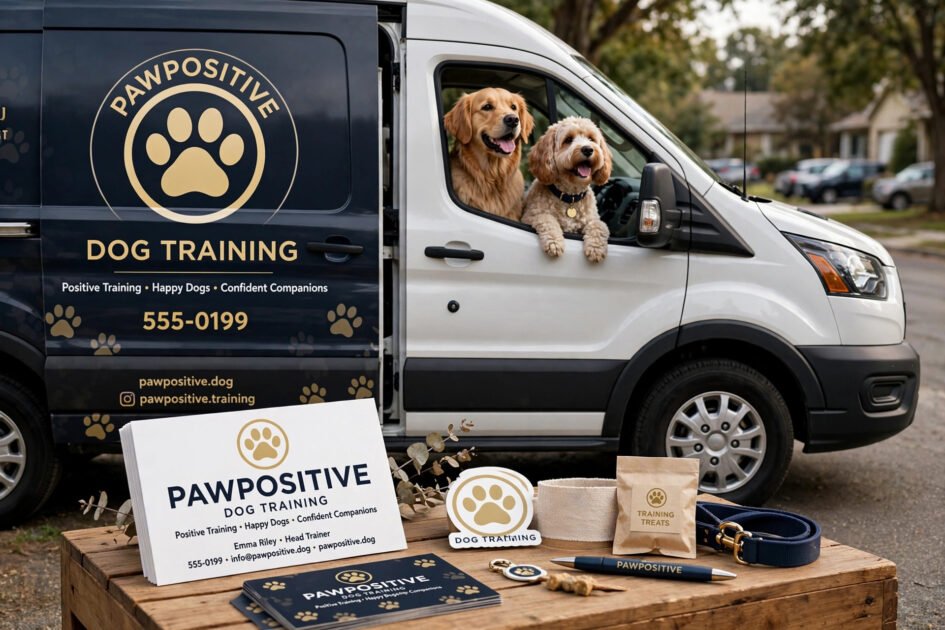

There are a lot of dog trainers out there. So why do some businesses have waitlists while others struggle to fill a single class? More often than not, the difference isn’t skill — it’s branding. Strong dog training business branding makes you memorable, trustworthy, and impossible to confuse with the competition.
Branding isn’t just a pretty logo. It’s the feeling clients get from every touchpoint: your van, your website, your shirts, even your email signature. Here’s how to design a brand that does your training skills justice.
1. Nailing Your Logo: Simple Marks That Stick
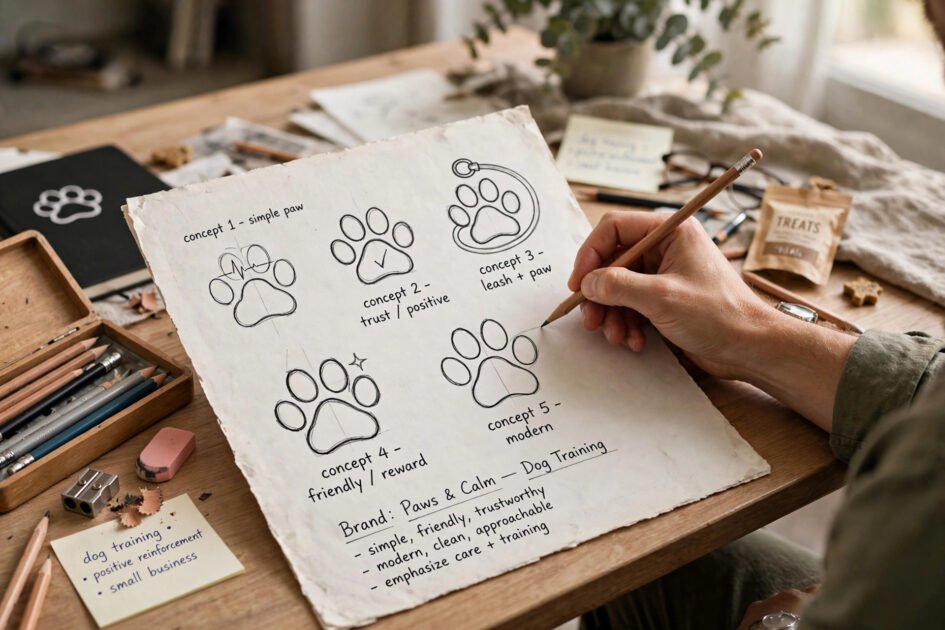
Your logo will live on shirts, vans, websites, and social profiles, so it needs to work everywhere at thumbnail size. The best dog training logos are dead simple: a paw print, a whistle, a leash forming a heart. One strong shape beats a busy illustration every time.
Sketch ideas on paper before touching design software — you’ll think more freely. Test your favorite at one inch wide; if it’s still readable, you’ve got a winner. Avoid clip-art style graphics and trendy effects that’ll look dated in two years. Get your final logo in vector format (SVG or EPS) — you’ll need it for everything from embroidery to van wraps.
2. Brand Colors and Fonts That Feel Trustworthy
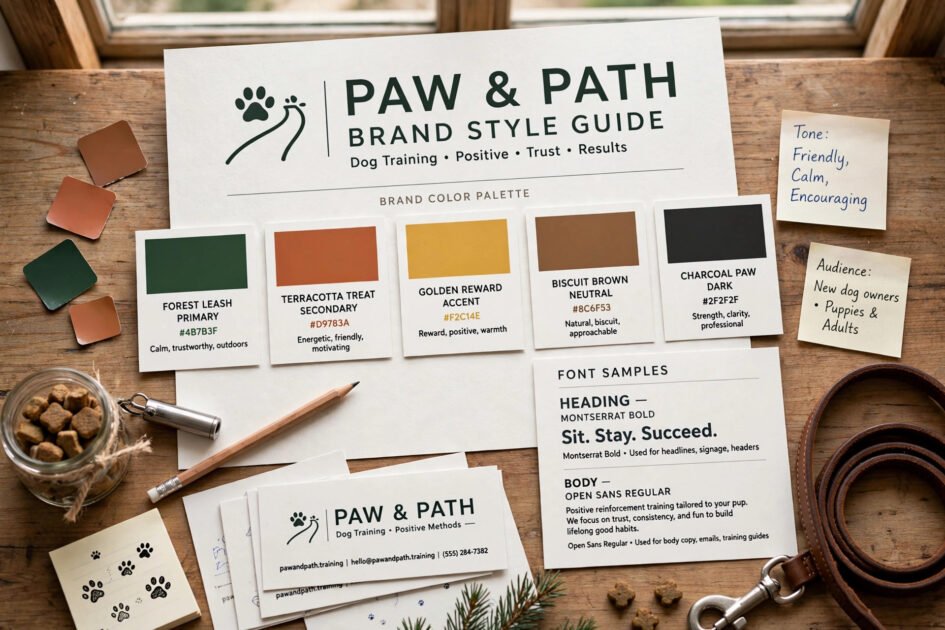
Pick two core colors and stick to them relentlessly. Blues and greens signal calm expertise, which anxious new puppy owners find reassuring. Warm oranges feel playful and energetic — a natural fit for agility or sport trainers. Whatever you choose, make sure it looks good both on screen and embroidered on a shirt.
Fonts matter too. One clean, readable font for headings and one simple font for body text is plenty. Skip anything hard to read or overly cutesy; your brand should feel professional, not like a daycare flyer. Write your color codes and font names in a one-page brand guide so everything stays consistent.
3. Business Cards and Print Materials That Get Kept
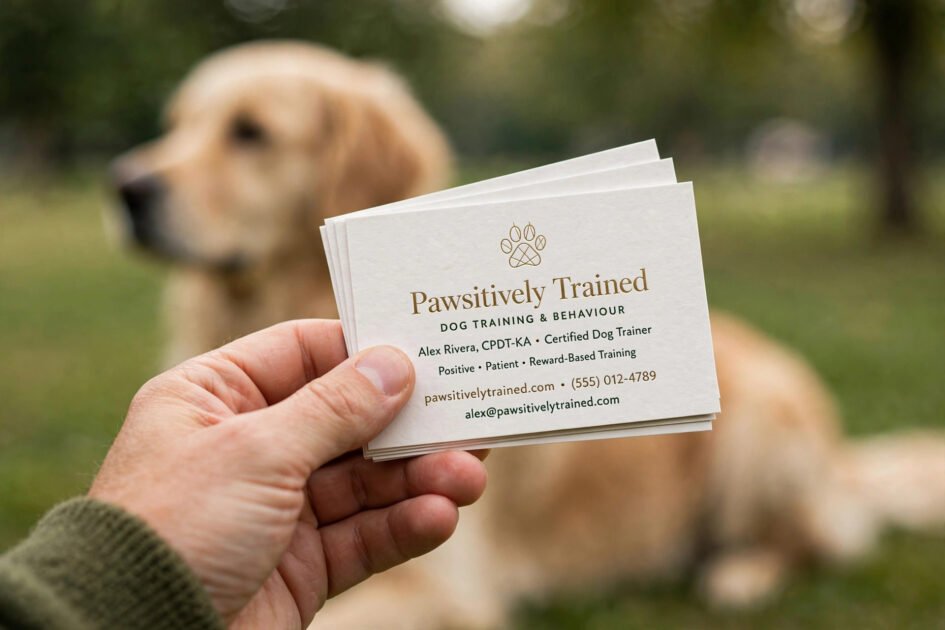
Yes, business cards still work — especially when they’re beautiful. A thick, well-designed card with your logo, services, and a QR code linking to your booking page gets kept, photographed, and shared. Cheap flimsy cards get binned.
Extend the same design to flyers for vet offices, car magnets, and class handouts. Every printed piece should look like it came from the same business: same colors, same fonts, same logo placement. That repetition is what burns your brand into people’s memory.
4. Vehicle Wraps and Signage for Local Visibility

Your car is a billboard that drives itself around town. A partial vehicle wrap with your logo, phone number, and website turns every school run and grocery trip into advertising. Even simple magnetic door signs work — they’re cheap, removable, and surprisingly effective.
If you have a facility, your exterior sign is your handshake. Make it big, lit, and readable from a moving car. Include what you do in plain words — “Dog Training” — because clever business names alone don’t tell drivers anything.
5. Consistent Branding Across Every Touchpoint

Here’s where most trainers drop the ball: the website uses one logo, the shirts another, and the Facebook page still has the old colors. Inconsistency quietly erodes trust. Clients may not articulate it, but mismatched branding feels amateur.
Do a brand audit twice a year. Check your website, social profiles, uniforms, vehicle, print materials, and email signature against your brand guide. Update anything that’s drifted. When every touchpoint matches, your business feels bigger, sharper, and more established than it might actually be — and that’s exactly the point.
FAQs
How much does dog training business branding cost?
A solid DIY brand using templates can cost under $200. A professional logo and brand guide typically runs $500–$2,000. Vehicle wraps range from $1,500–$4,000 depending on coverage.
Can I design my own dog training logo?
Yes, using tools like Canva or Adobe Express. Keep it simple and test it at small sizes. For a truly distinctive mark, hiring a designer is worth the investment.
What colors work best for dog training brands?
Blues and teals convey trust and calm; oranges and yellows feel fun and energetic. Pick two colors and use them consistently across everything.
Do I really need branded print materials?
Quality business cards and vet-office flyers still generate local clients. They work 24/7 in waiting rooms and community boards where your ideal clients already are.
How often should I refresh my branding?
A light refresh every 3–5 years keeps you current. Avoid full rebrands unless your services or audience have fundamentally changed — recognition is valuable.
Conclusion
Memorable dog training business branding isn’t about having the flashiest logo — it’s about showing up consistently everywhere your clients look. Nail the basics, keep every touchpoint aligned, and your brand will start doing your marketing for you.