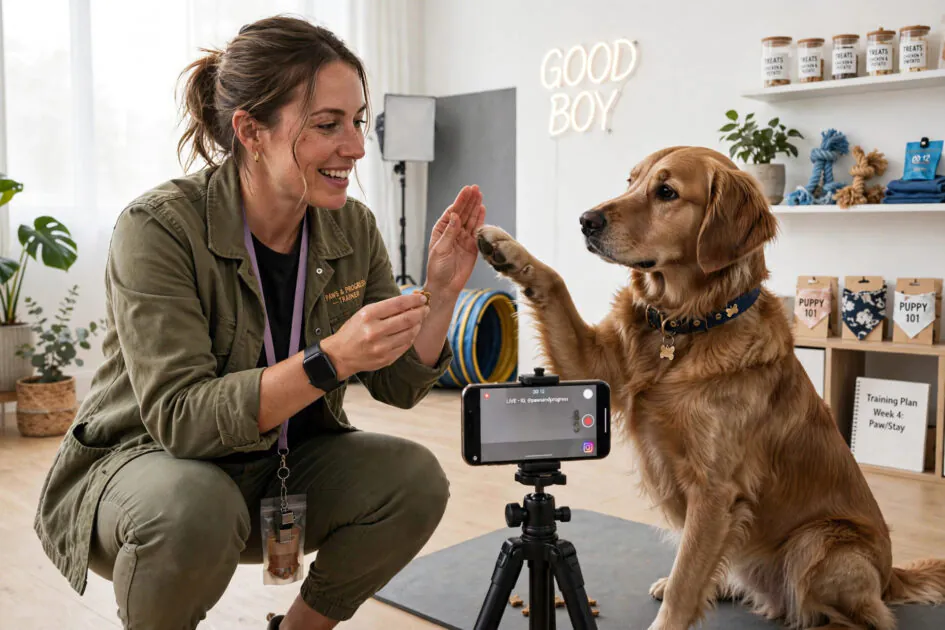

Instagram and Pinterest are where dog owners live online. They scroll for cute pups, save training tips for later, and, crucially, search for local trainers when their new puppy starts chewing the furniture. A smart dog training marketing strategy on these two platforms can fill your classes without a single dollar of ad spend.
The secret is treating each platform differently: Instagram rewards personality and consistency, while Pinterest rewards searchable, saveable content that works for years. Here are five tips that make both platforms pull their weight for your business.
1. Post Before-and-After Transformations
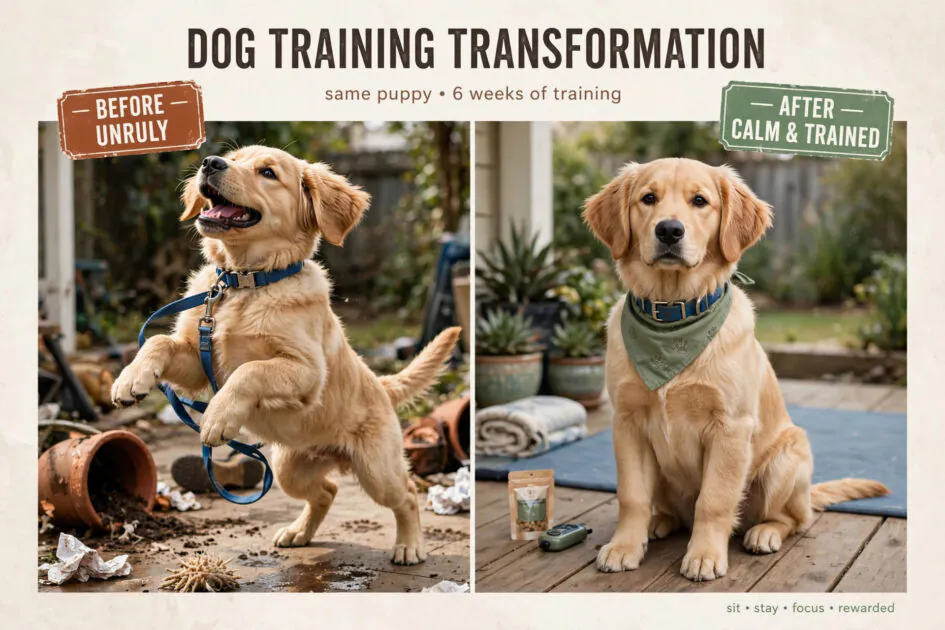
Nothing sells training like visible proof. Before-and-after content, the lunging rescue who now walks politely, the chaotic puppy who now settles on cue, stops the scroll instantly because it promises the exact transformation the viewer wants. Film short clips of day-one behavior next to week-six results for maximum impact.
Always get client permission in writing before posting their dog, and frame the story around the owner’s effort too. “Six weeks of consistent practice” is more inspiring, and more honest, than implying magic. These posts get saved and shared the most, which is exactly what both algorithms reward.
2. Share Quick Training Tips as Reels and Idea Pins
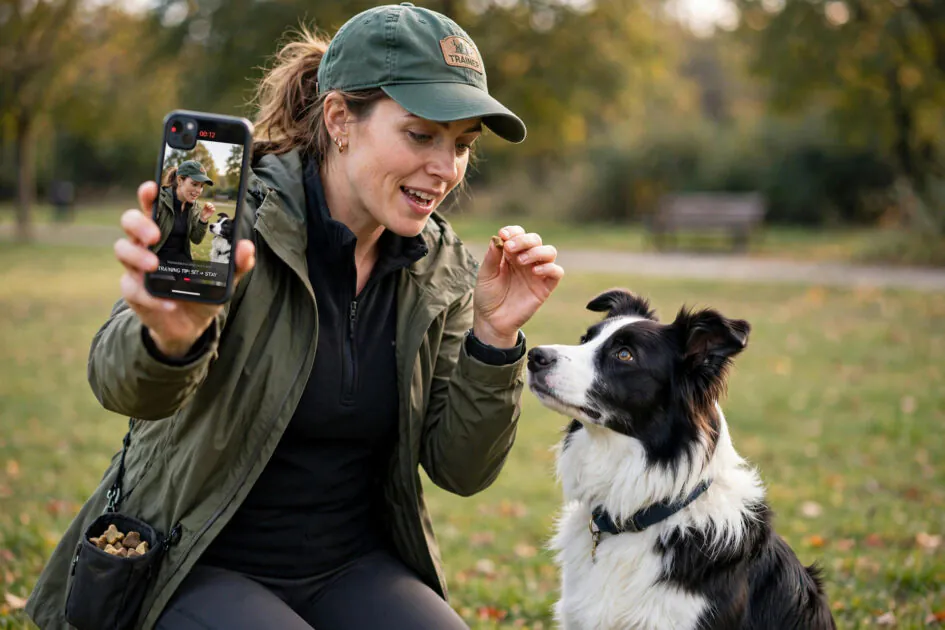
Thirty-second training tips are the perfect format for both platforms. Show one common mistake, demonstrate the fix with a real dog, and end with a clear takeaway. “Stop yelling ‘come’ five times, do this instead” style hooks work because they name the viewer’s exact frustration.
Batch-film these to stay consistent: one afternoon can produce a month of content. On Pinterest, upload the same videos as Idea Pins with keyword-rich titles like “loose leash walking tips” so they surface in search for years. One great tip video can quietly generate leads long after you posted it.
3. Turn Client Testimonials Into Social Proof
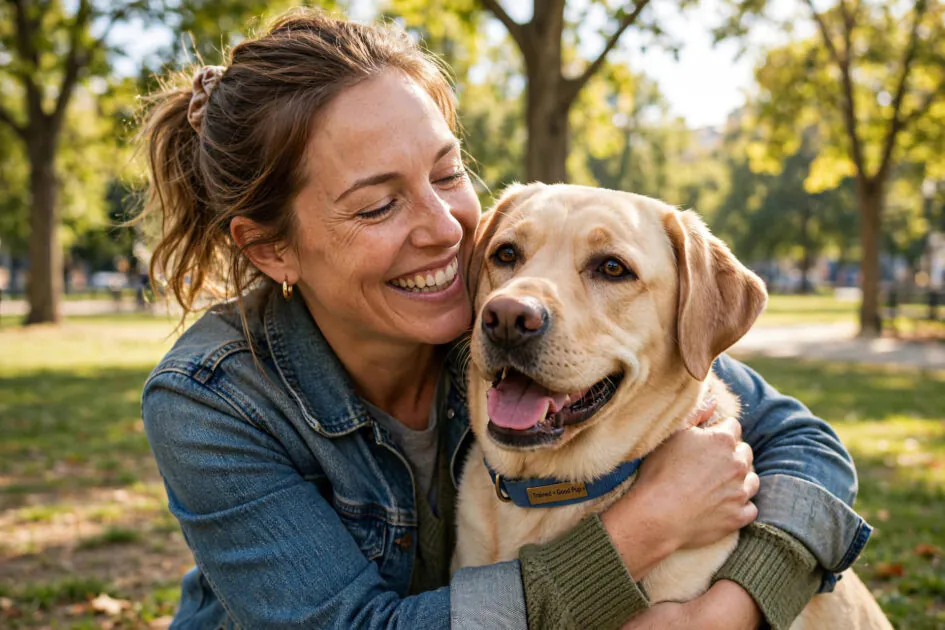
A glowing review in plain text gets scrolled past; the same words over a photo of a beaming owner hugging their transformed dog gets saved and shared. Turn every great testimonial into a branded graphic or a short video where the client tells their story in their own words.
Ask for testimonials at the moment of peak happiness, right after a breakthrough session, when enthusiasm is highest. Keep a simple template ready so clients can respond in under two minutes. Fresh social proof posted regularly does more for your credibility than any credential badge.
4. Optimize Your Profiles and Boards for Search
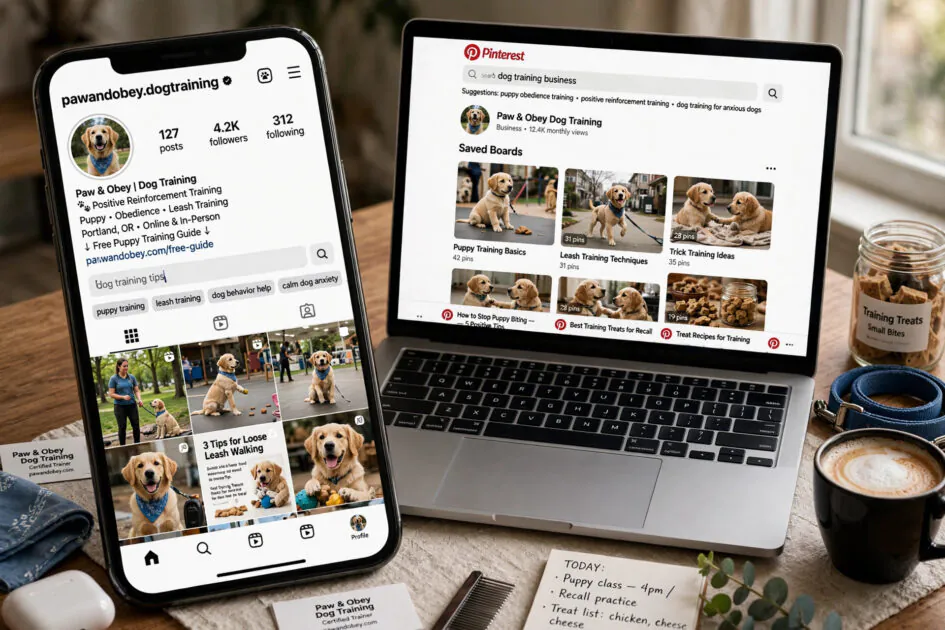
Both platforms are search engines in disguise. Your Instagram name field should include what you do and where, like “Puppy Trainer | Austin TX,” not just your business name. Your bio needs one clear outcome promise and a link to booking, not a link tree with twelve confusing options.
On Pinterest, create boards around the exact phrases owners search: “puppy biting solutions,” “crate training schedule,” “reactive dog help.” Write keyword-rich pin descriptions and link every pin back to the matching page on your website. This turns Pinterest into a long-term traffic machine that works while you train.
5. Engage Daily With Stories, Comments, and Collabs
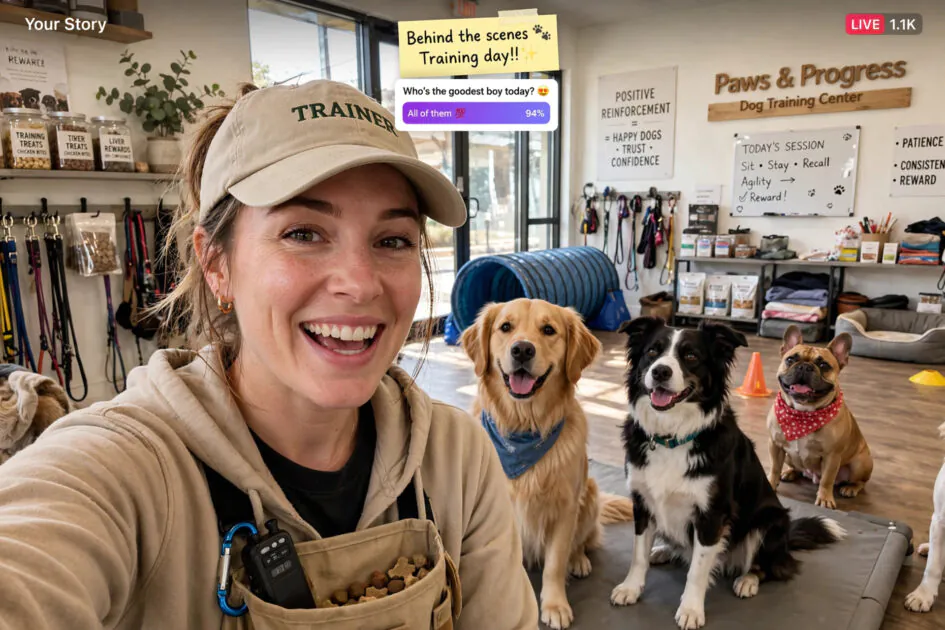
Posting is only half the game; the algorithm rewards conversation. Spend fifteen minutes daily replying to comments, answering DMs with genuinely helpful mini-advice, and commenting thoughtfully on local pet business accounts. Stories with polls and question stickers keep you visible even on days you do not post.
Collaborate with complementary local businesses: groomers, vets, pet stores, and photographers. Joint reels, giveaways, and tagged posts introduce you to warm audiences who already trust animal professionals. One good collaboration can outperform a month of solo posting.
FAQs About Dog Training Marketing
How often should I post on Instagram and Pinterest?
Aim for 3 to 4 Instagram posts per week plus daily stories, and 5 to 10 Pinterest pins per week. Consistency beats volume: a sustainable rhythm you maintain for a year outperforms a frantic month followed by silence.
Do I need to pay for ads to get clients from social media?
No. Organic content works extremely well for local dog trainers because your market is geographic and visual. Consider ads only after your organic content is converting; ads amplify what works, they do not fix what does not.
What kind of content gets the most saves and shares?
Transformations, quick tips that solve one painful problem, and relatable humor about dog owner struggles. Educational carousels on Instagram and step-by-step Idea Pins on Pinterest consistently earn the most saves.
Should I show my face or just the dogs?
Show your face regularly. Clients hire the trainer, not just the methods, and faces build trust far faster than dog-only content. Even short talking clips between training demos make your brand feel personal and real.
How do I turn followers into paying clients?
Every piece of content should have a soft next step: “link in bio to book,” “DM the word PUPPY for class dates,” or a pinned comment with your booking link. Make the path from follower to booked call obvious and frictionless.
The Bottom Line
Great dog training marketing on Instagram and Pinterest is not about going viral. It is about showing up consistently with proof, tips, and personality until local dog owners cannot imagine hiring anyone else. Post transformations, teach in short videos, collect testimonials, optimize for search, and engage daily. The bookings will follow.