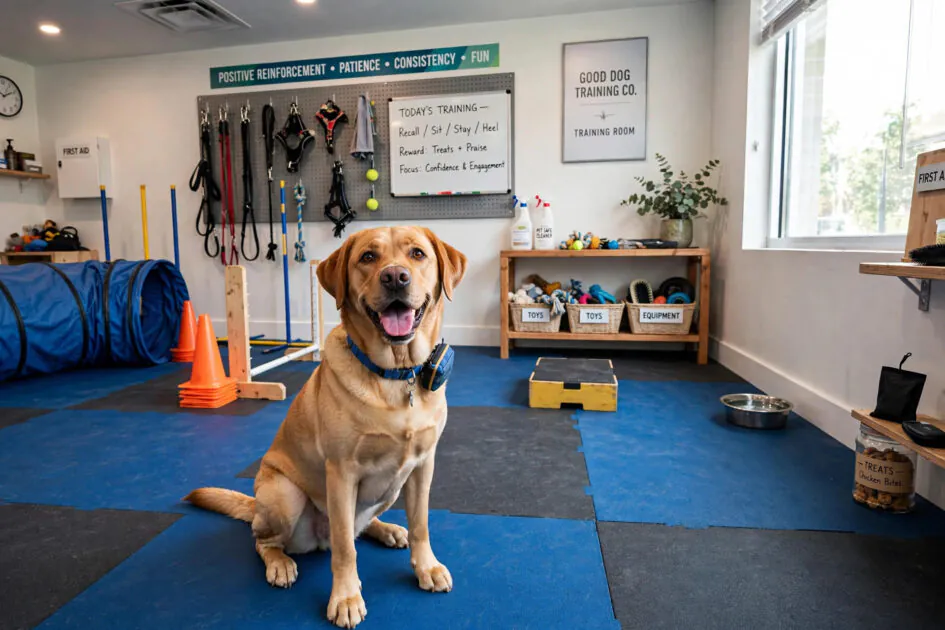

You do not need a professional facility to train your dog well, but having a dedicated space makes everything easier. The right dog training room ideas turn any corner of your home, big or small, into a place where your dog knows it is time to focus. Fewer distractions, better surfaces, gear within reach: that is the whole recipe.
Whether you have a spare room or just a corner of your living room, these five ideas will help you build a training space that works as hard as you do.
1. Start With the Right Flooring and Walls
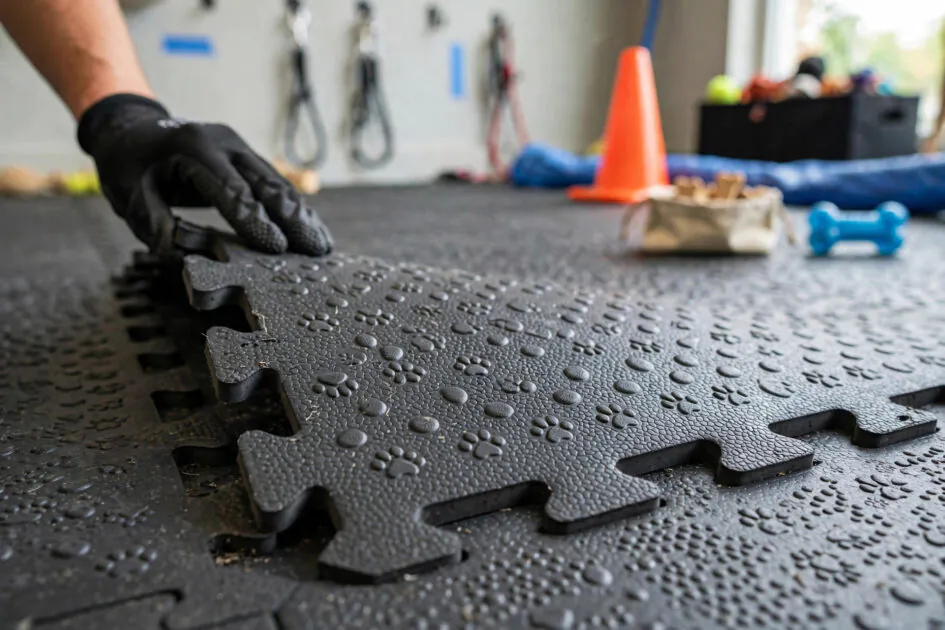
Flooring is the foundation of every good training space, literally. Dogs slip on hardwood and tile, which kills confidence during stays, recalls, and agility work. Interlocking rubber mats or foam tiles are the gold standard: affordable, easy to clean, and kind to joints.
For walls, choose washable paint or wipeable panels, because excited dogs shake, drool, and occasionally leave nose art. If you rent, removable foam wall tiles protect against scuffs without risking your deposit. A six-by-six-foot matted area is enough for most foundation skills.
Skip rugs with loops that catch nails, and avoid anything you would cry over if it got chewed. Training rooms should be functional first, pretty second.
2. Small-Space Training Corner Ideas
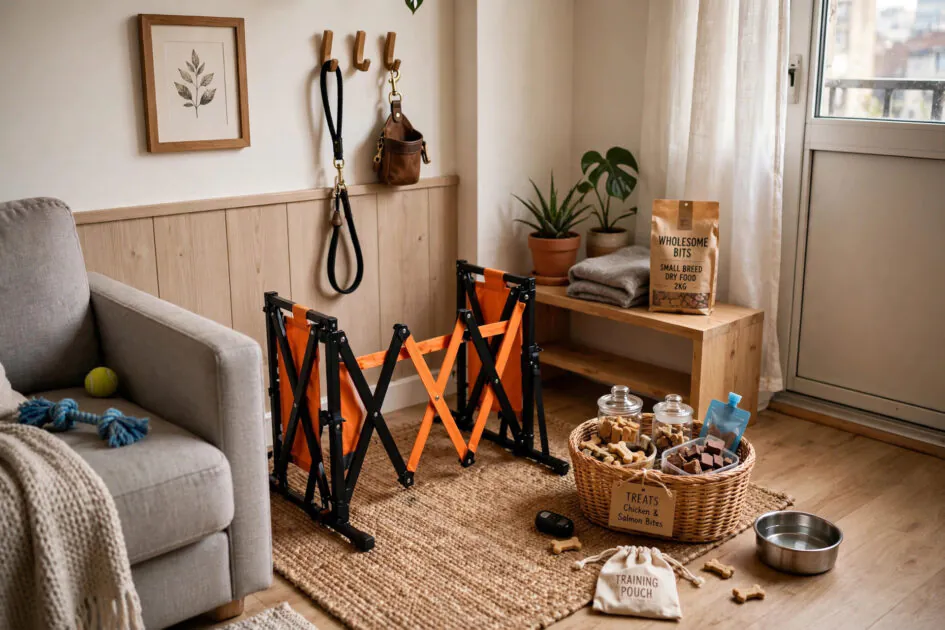
Living in an apartment? You can still carve out a brilliant training zone. Pick one quiet corner, lay down two or three interlocking mats, and add a small basket with your essentials: treats, a clicker, a tug toy, and a short leash. That is a complete training room in four square feet.
Think vertical to save floor space. Wall hooks hold leashes and long lines, a hanging organizer stores treat pouches and poop bags, and foldable equipment like a collapsible tunnel or a low jump hurdle tucks behind furniture when guests come over.
The real trick is consistency. Always train in the same corner, and your dog will learn that stepping onto those mats means focus time. Small space, big results.
3. Large-Space Training Room Layouts
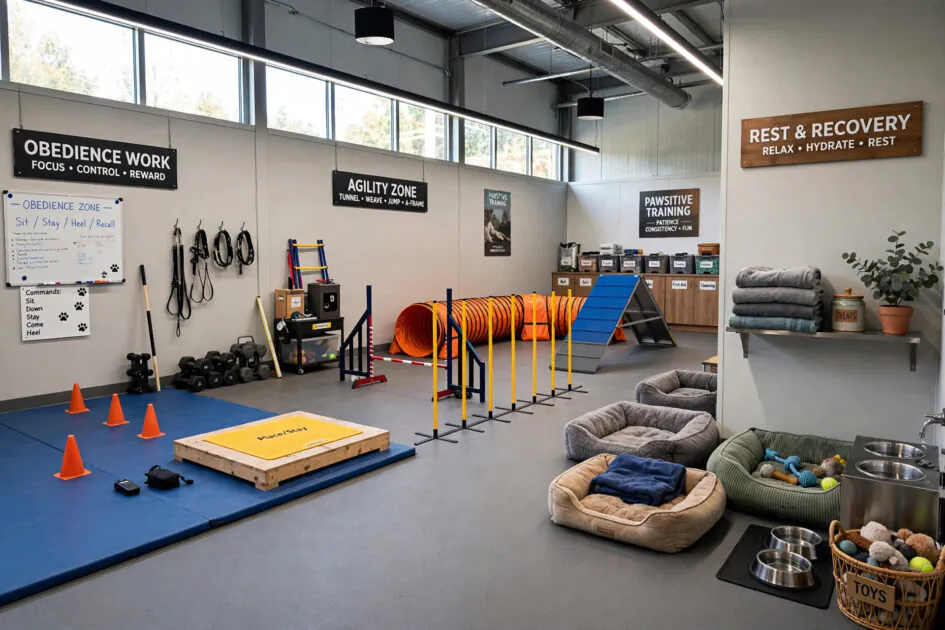
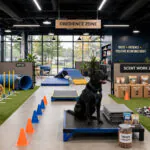
If you have a spare room, garage bay, or basement to dedicate, divide it into zones. A central open area for obedience and recall work, one wall or corner for agility equipment like weave poles or a pause table, and a calm rest zone with a crate or bed where your dog decompresses between exercises.
Keep the layout flexible. Lightweight, movable equipment lets you reconfigure for different skills: wide open for distance stays, an obstacle course for confidence building. Leave clear pathways so you can move freely without tripping over gear mid-session.
A large mirror on one wall is a pro move borrowed from dance studios. Watching your own body language reveals accidental cues you are giving, like leaning forward on recalls, that confuse your dog.
4. Lighting, Sound, and Distraction Control
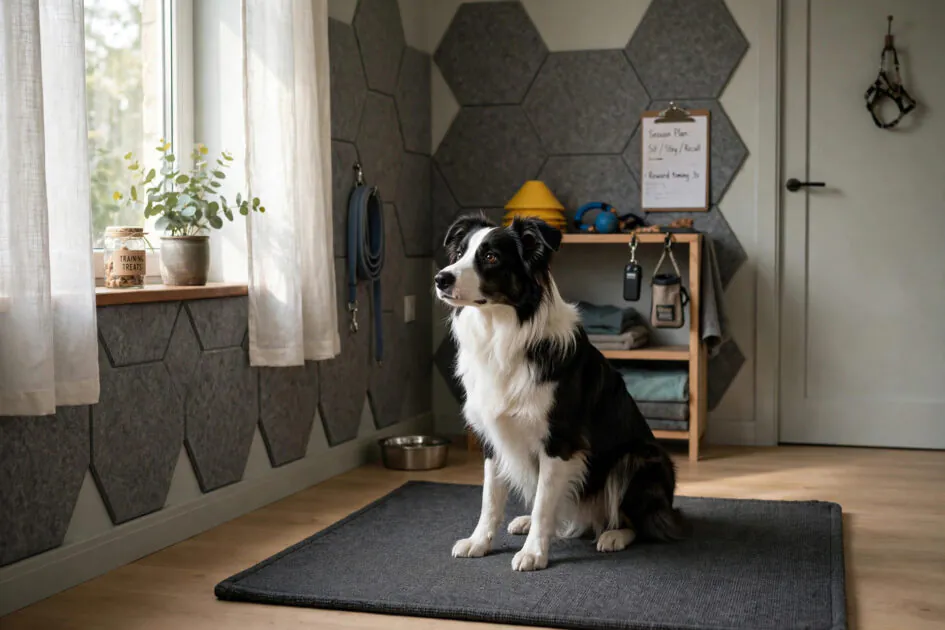
Dogs learn fastest in calm environments, so design yours for focus. Soft, even lighting beats harsh overhead fluorescents; natural window light is ideal, supplemented with warm lamps for evening sessions. Avoid flickering bulbs, which some dogs find stressful.
Control sound too. If your training space shares a wall with a noisy street or a barking neighbor’s yard, add sound-dampening panels, heavy curtains, or even a white noise machine. Lower background noise means your marker word and praise actually stand out.
Manage visual distractions the same way. Face your dog away from windows during early training, put exciting toys out of sight until needed, and keep other pets out of the room during sessions. You can add distractions back later as proofing, on purpose.
5. Storage and Safety Essentials
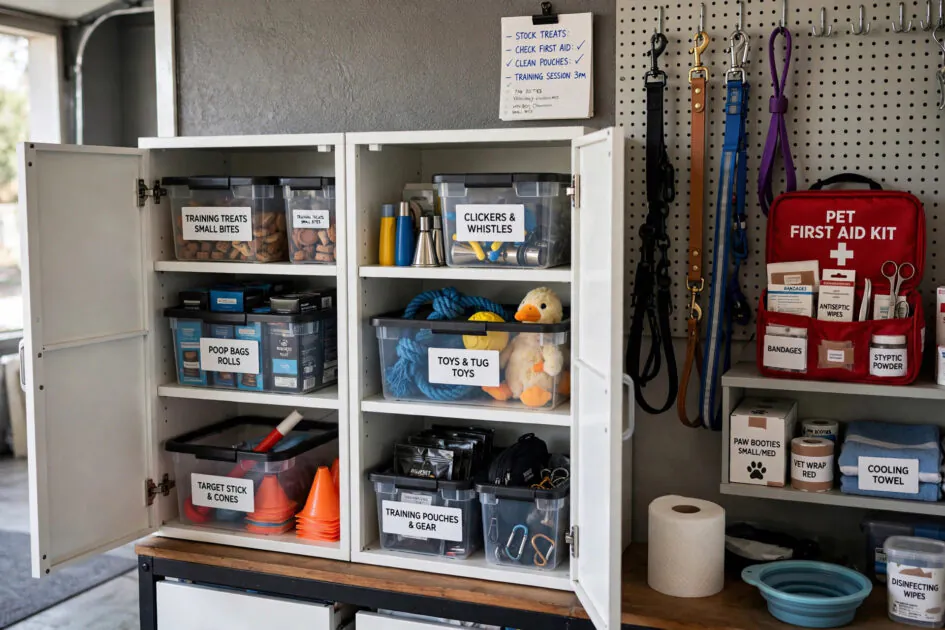
An organized room gets used; a chaotic one gets avoided. Install closed storage for anything chewable or ingestible: treats, medications, and cleaning products go in latched cabinets, never on open shelves. Label bins by category so setup takes seconds.
Safety basics belong in every training space regardless of size. A pet first-aid kit, a non-slip mat under water bowls, baby gates to control access, and secured heavy items that cannot topple onto an excited dog. Check the room at your dog’s eye level for hazards like exposed cords or small swallowable objects.
Finally, keep a small trash bin and enzyme cleaner within arm’s reach. Accidents happen, especially with puppies, and fast cleanup protects your flooring and your motivation.
FAQs
How much space do I need for a home dog training area?
A six-by-six-foot matted area handles most foundation skills like sit, stay, recall foundations, and place training. For agility or distance work, more space helps, but you can absolutely start small.
What is the best flooring for a dog training room?
Interlocking rubber mats or EVA foam tiles. They are non-slip, cushion joints, easy to clean, and affordable. Avoid slippery hardwood, tile, and looped rugs that catch nails.
Can I set up a training space in a rental apartment?
Yes. Use a corner with removable foam mats, wall hooks instead of drilled shelving, and foldable equipment that stores away. Everything can be renter-friendly and still highly effective.
How do I keep my dog focused in the training room?
Minimize distractions: face away from windows, remove exciting toys until needed, keep other pets out, and use consistent lighting and low background noise. Add distractions gradually as deliberate proofing later.
What safety items should every training space have?
A pet first-aid kit, latched storage for treats and chemicals, baby gates for access control, secured heavy furniture, and enzyme cleaner for accidents. Do a hazard check at your dog’s eye level.
Conclusion
Great dog training room ideas are not about square footage, they are about intention. Choose forgiving flooring, carve out a consistent spot, control light and sound, and keep gear organized and safe. Whether it is a corner of your apartment or a dedicated room, a purpose-built space tells your dog exactly what to expect: focus, fun, and learning. Set yours up this weekend and feel the difference in your very next session.