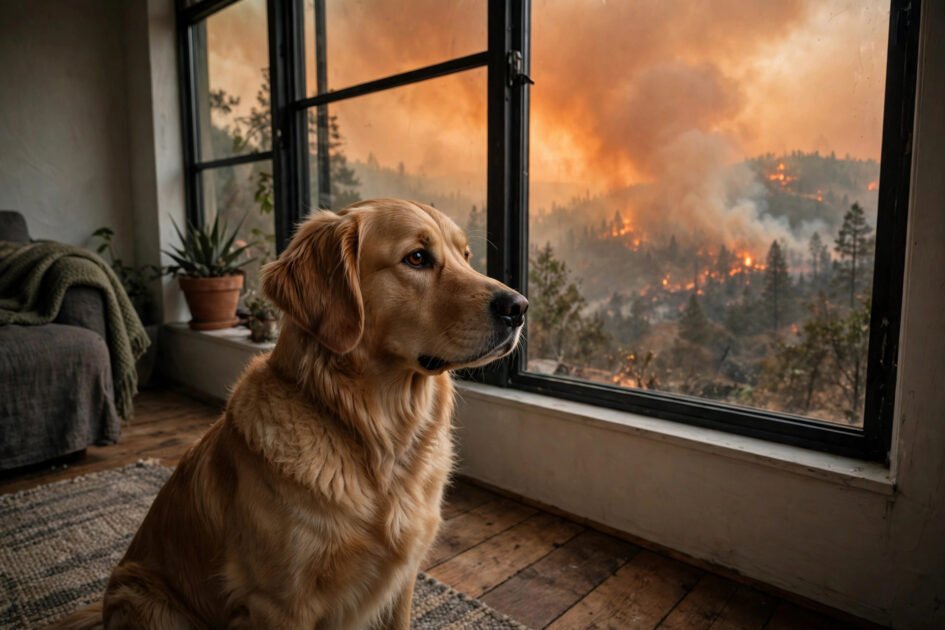

When wildfire smoke turns the sky orange, most of us know to stay inside. But what about our dogs? Dogs breathe faster than we do, spend time close to the ground where particles settle, and can’t tell us when the air is hurting them. Learning how to keep your dog safe from wildfire smoke isn’t optional anymore, it’s an essential skill for every dog owner in fire-prone regions.
The good news: a few simple steps dramatically reduce the risk. Here’s what vets recommend.
Tip #1: Keep Them Indoors When Air Quality Drops
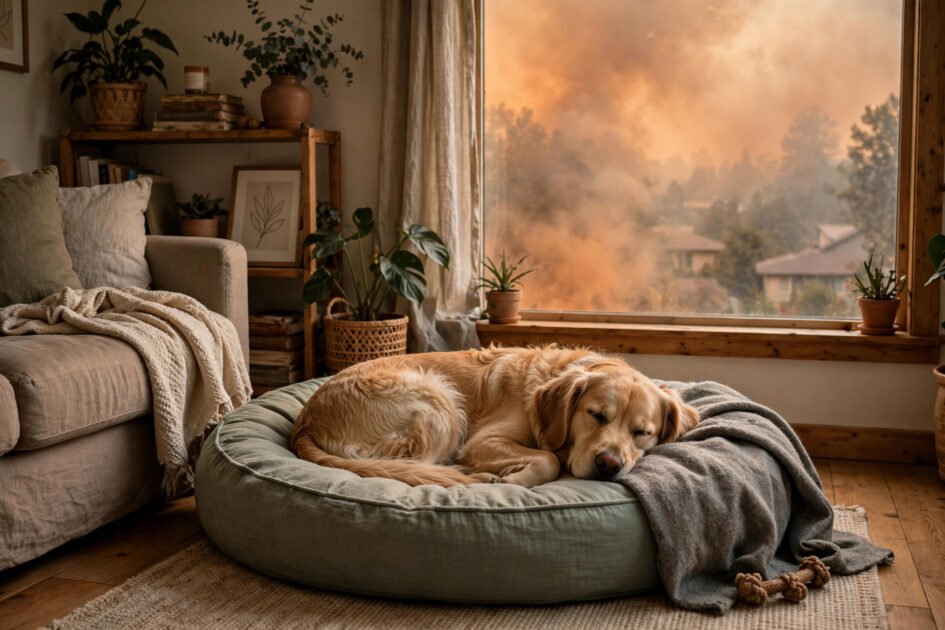
This is the single most effective thing you can do. When the Air Quality Index (AQI) climbs above 100, treat it like extreme weather: dogs stay in. Above 150, even healthy dogs should only go out for quick bathroom breaks. Puppies, seniors, flat-faced breeds, and dogs with heart or respiratory conditions are vulnerable at even lower levels.
Make it work: Check your local AQI each morning during fire season using a weather app or AirNow. Set a personal threshold and stick to it, the way you’d respect a heat advisory.
Tip #2: Make Outdoor Breaks Short and Boring
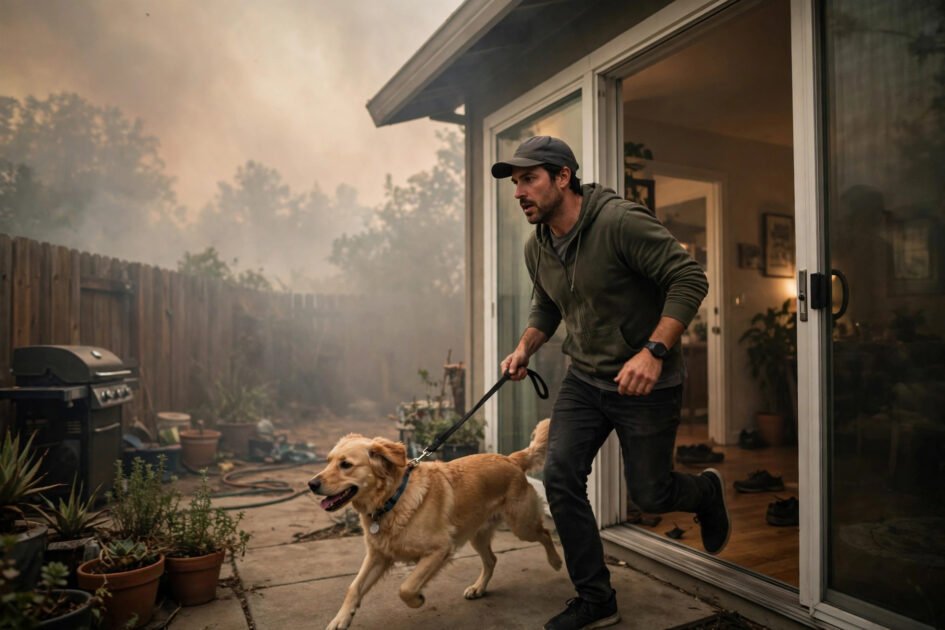
When the air is thick, the backyard is not a playground. Every minute outside means more fine particles in your dog’s lungs. Long games of fetch in smoky air can trigger coughing fits, and repeated exposure adds up over a fire season.
Make it work: Leash up, go out, handle business, come straight back in. Save the real exercise for indoor play sessions instead.
Tip #3: Create a Clean-Air Room
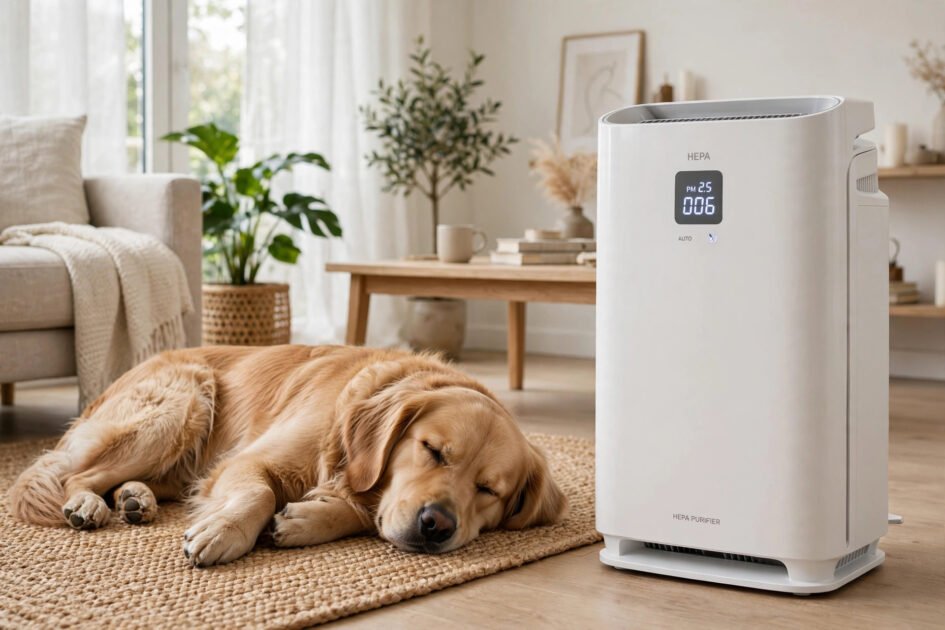
Smoke seeps indoors through every crack, but one well-sealed room with a HEPA air purifier can stay remarkably clean. This gives your dog, and you, a safe zone to sleep and relax in during multi-day smoke events.
Make it work: Pick a room your dog already loves, close windows and doors, and run a true-HEPA purifier sized for the space. A DIY box-fan filter works in a pinch. Keep the door closed as much as possible.
Tip #4: Watch for Warning Signs
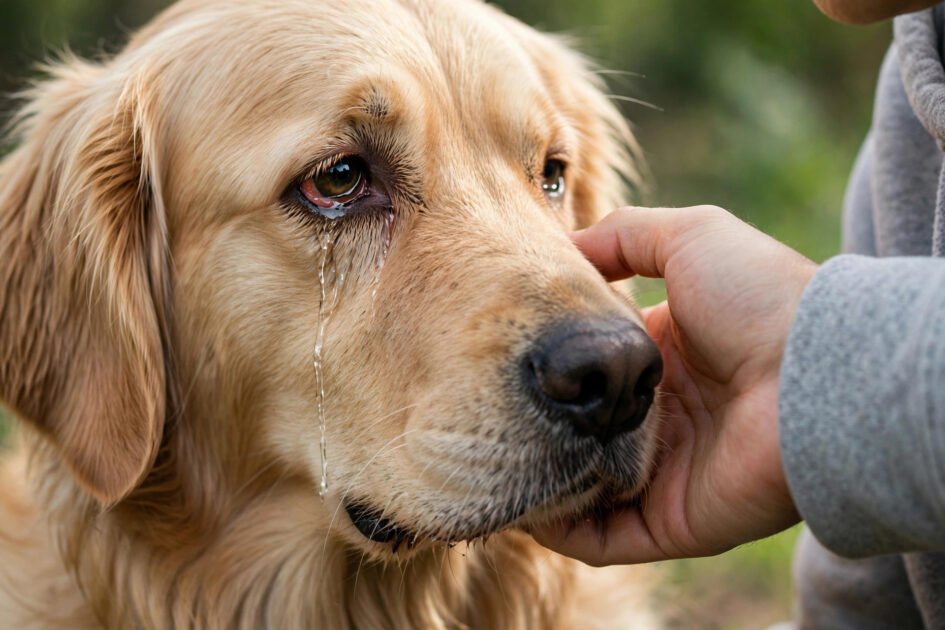
Dogs show smoke distress differently than we do. Watch for coughing or gagging, watery or red eyes, unusual tiredness, reduced appetite, wheezing, or excessive panting at rest. These signs mean your dog has had too much exposure and needs cleaner air immediately.
Make it work: Check on your dog a few times a day during smoke events. If symptoms appear, move them to your clean-air room and call your vet if coughing persists or breathing looks labored. Don’t wait and hope it passes.
Tip #5: Seal Your Home and Recirculate Air
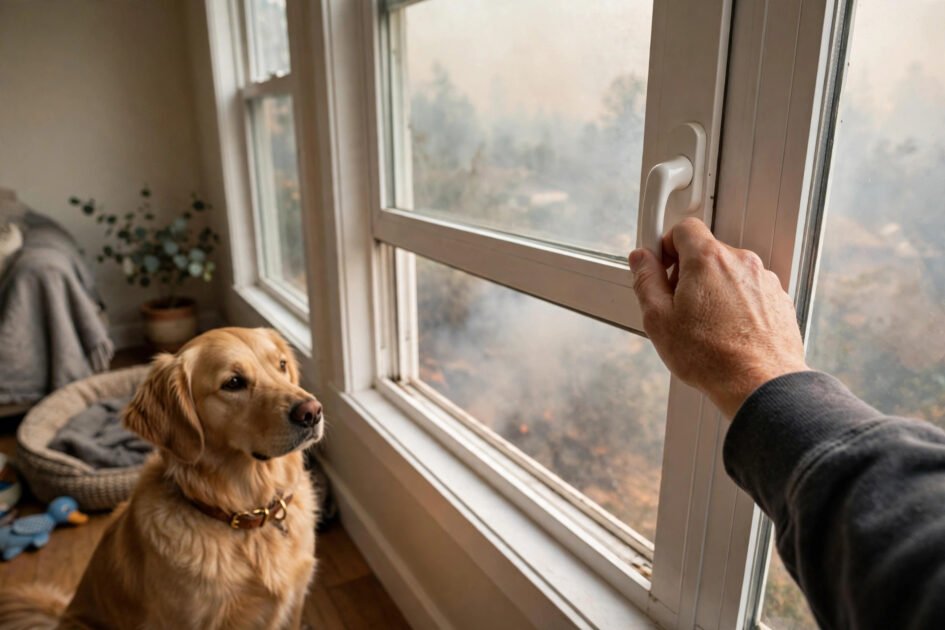
Running your AC on fresh-air intake during a smoke event just pumps particles inside. Small gaps around windows and doors let in more smoke than you’d think, and dog doors are basically open invitations.
Make it work: Close all windows, set HVAC to recirculate, and temporarily seal or limit the dog door. Wipe your dog’s paws and coat with a damp cloth after bathroom breaks to remove particles they’d otherwise lick off and ingest.
Tip #6: Have an Evacuation Plan Ready
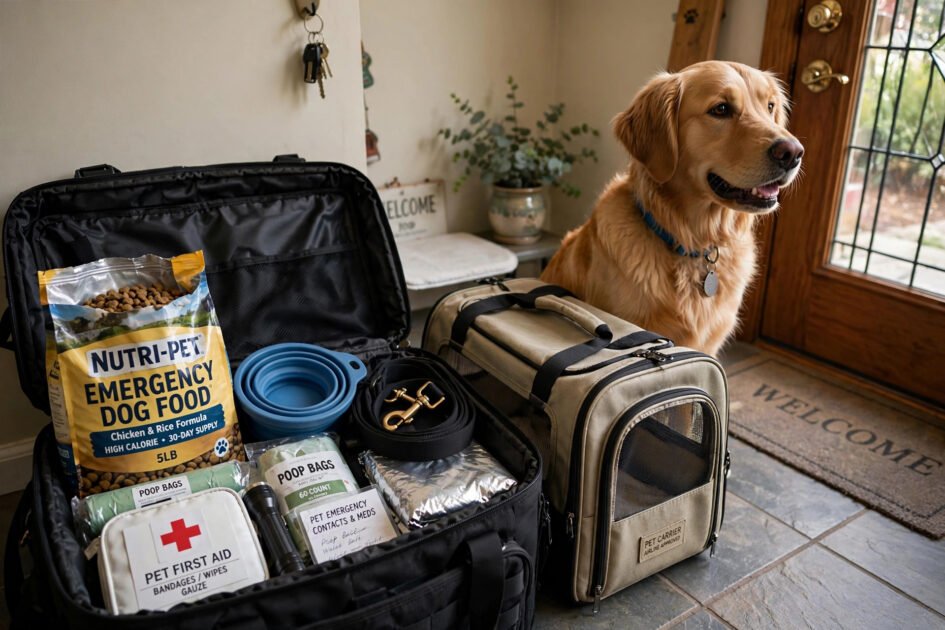
Fires move fast, and evacuation orders don’t wait for you to pack. Dogs left behind during evacuations face the worst outcomes. A ready go-bag turns a panicked scramble into a calm two-minute exit.
Make it work: Pack a bag now: 3 to 5 days of food, water, bowls, medications, leash, crate or carrier, vaccination records, and a familiar blanket. Keep it by the door all fire season. Also confirm which nearby shelters or hotels accept pets before you need one.
FAQs About Dogs and Wildfire Smoke
Can dogs wear masks for wildfire smoke?
Specially designed dog respirator masks exist, but most dogs won’t tolerate them, and a poor fit gives false confidence. Vets generally recommend limiting exposure instead of relying on masks. Never put a human mask on a dog.
What AQI level is unsafe for dogs?
Above 100 (unhealthy for sensitive groups), limit outdoor time for puppies, seniors, and flat-faced breeds. Above 150, keep all dogs indoors except for quick bathroom breaks. Above 200, minimize even those.
How long does wildfire smoke affect dogs?
Mild irritation usually clears within a day or two of breathing clean air. But repeated or heavy exposure can worsen asthma-like conditions and heart disease, so cumulative exposure across a fire season matters.
Should I exercise my dog indoors during smoke events?
Yes. Puzzle feeders, snuffle mats, gentle tug games, and short training sessions burn mental and physical energy without the smoke. A tired brain is just as satisfying as tired legs.
When should I call the vet about smoke exposure?
Call if your dog has persistent coughing, labored or noisy breathing, extreme lethargy, or refuses food for more than a day after exposure. Breathing difficulty is always an emergency.
The Bottom Line
Knowing how to keep your dog safe from wildfire smoke comes down to three habits: check the air, limit exposure, and have a plan. Fire seasons are getting longer, but with a clean-air room, short outdoor breaks, and a packed go-bag, your dog can ride out the smoky days comfortably and safely.