
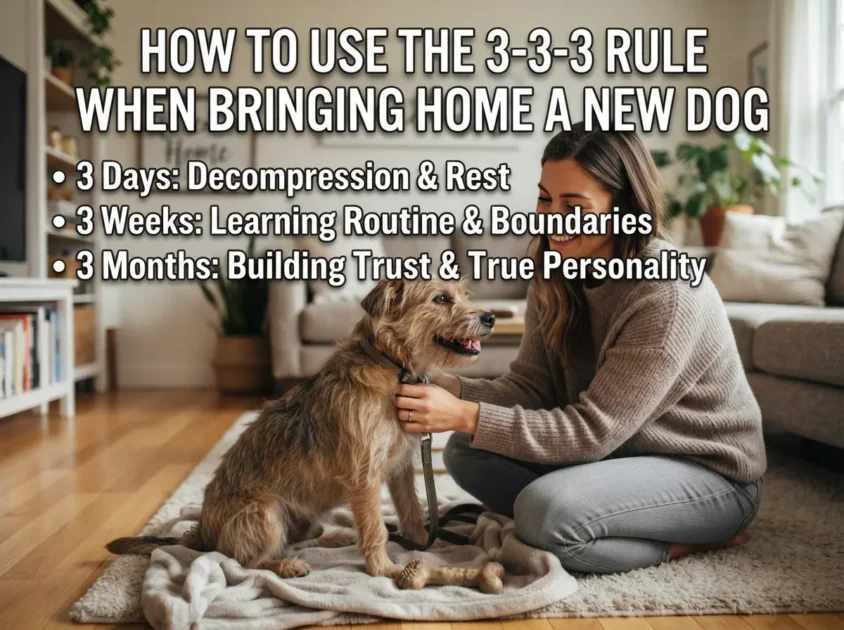

Bringing a new dog into your life is a huge moment. You are likely excited, nervous, and ready to start this new chapter. It is easy to expect your new friend to settle in right away. But dogs need time to adjust to their new life. How to Use the 3-3-3 Rule When Bringing Home a New Dog. It is a simple way to understand what your dog is feeling during those first few weeks.
When you welcome a pet into your home, you want everything to be perfect. You might want to introduce them to all your friends or take them to the park immediately. I learned the hard way that less is more. The 3-3-3 rule gives you a timeline to follow. It helps you manage your expectations and keeps your dog happy and stress-free.
How to Use the 3-3-3 Rule When Bringing Home a New Dog
The First 3 Days: Decompression
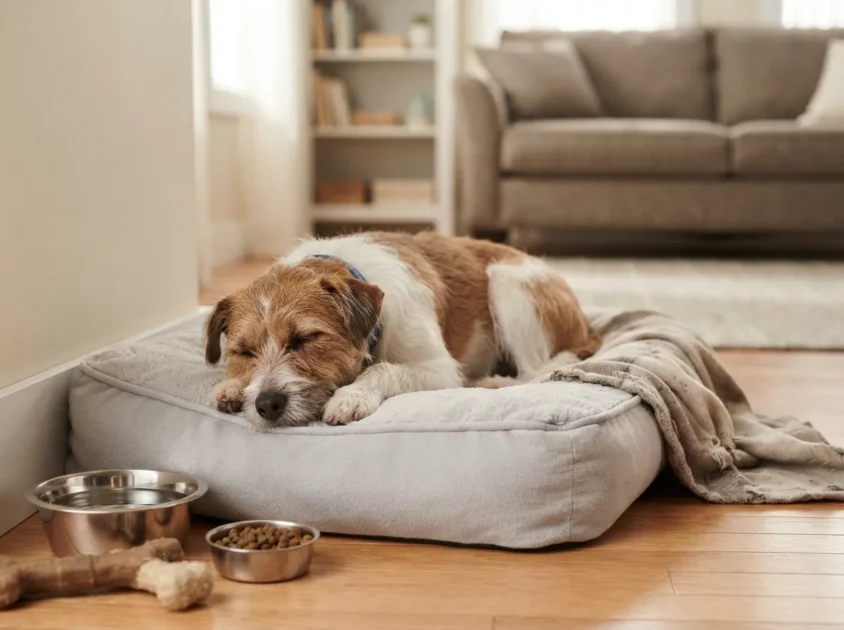
The first three days are the hardest for a new dog. They have just left a shelter or a foster home. Everything smells different. The sounds are new. Their routine has changed completely. Many dogs will feel scared or overwhelmed during this time.
You might notice your dog does not want to eat much. They may hide in a corner or under a bed. Some dogs might even pace around the house or pant a lot. This is totally normal behavior. They are just trying to process all the big changes. Do not take it personally if they do not want to cuddle right away.
During these first 72 hours, try to keep things quiet. Give them a safe space where they can be alone. Make sure they have fresh water and a cozy spot to sleep. You do not need to introduce them to your neighbors or other pets yet. Just let them exist in your home without any pressure.
If you are worried about what to feed them, keep it simple. Some people like to make their own meals to help their dog feel comfortable. You can look at these 25 Easy Homemade Dog Food Recipes Your Pup Will Love to see if there is something healthy and calming you can prepare. Fresh food can sometimes help a picky eater settle down.
The First 3 Weeks: Learning Your Routine
Once you pass the three-day mark, things start to shift. Your dog begins to realize that this is their new home. They start to understand that you are the one who provides food, safety, and love. This is when you will see more of their real personality coming out.
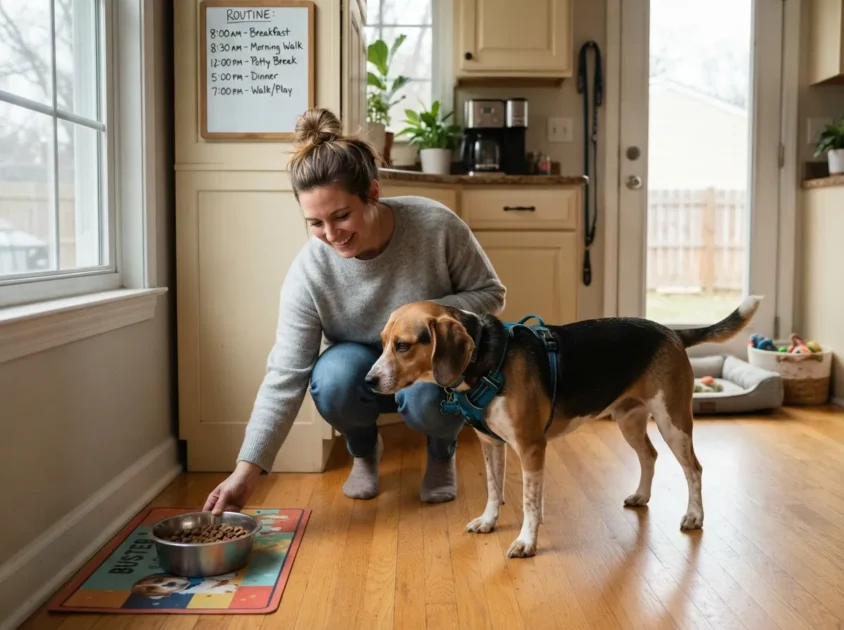
By the end of the third week, your dog should feel much more relaxed. They will start to learn your daily routine. They will figure out when you wake up, when you go for walks, and when it is time to relax. This is a great time to start basic training if you have not already.
However, be careful. Just because they seem comfortable does not mean they are perfect yet. They might test boundaries. They could have an accident on the carpet or chew on something they should not. This is not because they are bad dogs. They are just learning the rules of your house. Stay patient and keep using positive reinforcement.
At Clumsy Paw | For Pet Lovers and Pet Enthusiasts, we believe that kindness is the best training tool. If your dog makes a mistake, do not get angry. Gently guide them to the right behavior. Keep your training sessions short and fun. This helps build trust between you and your new companion.
The First 3 Months: Building A Lasting Bond
After three months, you should feel like you have a real partner. By now, your dog feels like a true member of the family. They trust you. They know the house rules. They are likely much more confident in their surroundings.
You will probably see their true character at this stage. Maybe they are high energy and love to run. Maybe they are a total couch potato who just wants to nap. You will know their favorite toys, their favorite treats, and exactly how they like to be scratched behind the ears.
At this point, you can start going on bigger adventures together. You can visit new parks or walk in busier areas. Your dog now has the confidence to handle new experiences because they know they have a solid home base with you. This is the stage where the hard work pays off.
Remember that every dog is different. Some might need more than three months to fully settle in. Rescue dogs with a difficult past might take a little longer to trust. That is okay. There is no race here. The goal is to give your dog a safe and happy life. Follow their lead and let them adjust at their own pace.
Final Thoughts
Using the 3-3-3 rule is the best way to be a kind pet parent. It reminds us that we are asking a lot of our dogs when we bring them home. We are asking them to learn our language and our ways. By being patient, you are setting everyone up for success.
Love takes time. Do not rush the process. Enjoy the small moments as they happen. Whether it is the first time they wag their tail at you or the first time they fall asleep on your lap, these moments are what matter most. You are building a friendship that will last for years to come.
Frequently Asked Questions
What if my dog is still scared after three weeks?
That is perfectly fine. Every dog has a different history. If your dog still seems anxious, just give them more time and keep providing a calm environment. Consult your vet if you are really worried about their behavior.
Should I invite friends over during the first 3 weeks?
It is best to wait. Too many new people can make a dog feel overwhelmed. Let your dog get used to you and your home first before adding guests into the mix.
Does the 3-3-3 rule work for puppies too?
Yes, it applies to all dogs. While puppies are often more adaptable, they still need time to learn house rules and trust their new family. The timeline helps you stay patient with their puppy energy and training needs.
What is the most important thing during the first 3 days?
Safety and quiet are the most important things. Let your dog decompress without too much activity. Focus on building trust rather than expecting them to perform tricks or be social.