
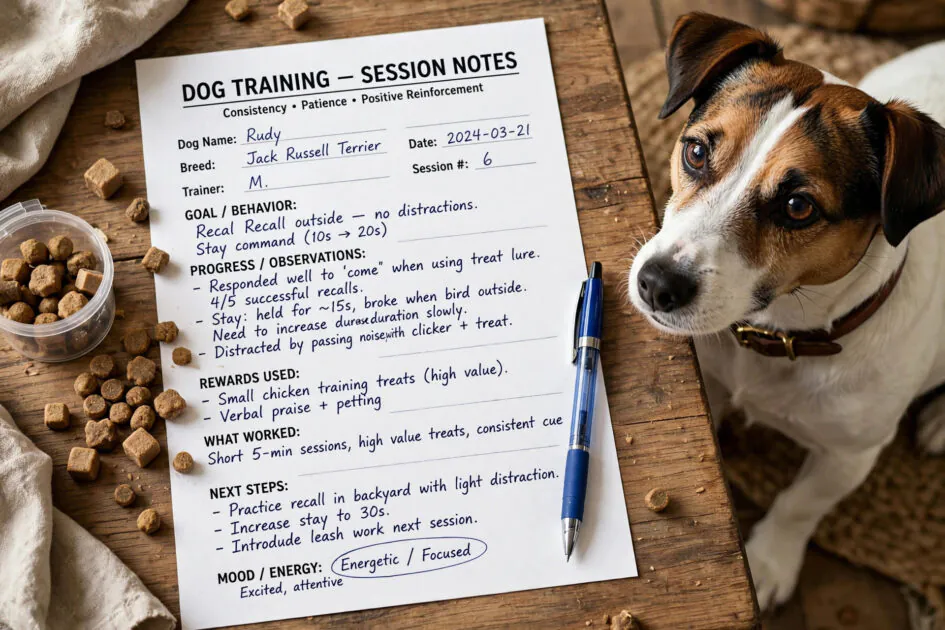

Ten focused minutes beat an hour of random drilling, but only if those ten minutes have a plan. A dog training notes template gives every daily session a simple structure: what you’re working on, how it went, and what comes next. No more standing in the yard wondering what to practice.
Below is a complete template you can copy into any notebook, plus a breakdown of each part so you know exactly what to write.
1. Session Header: Date, Dog, and Goal
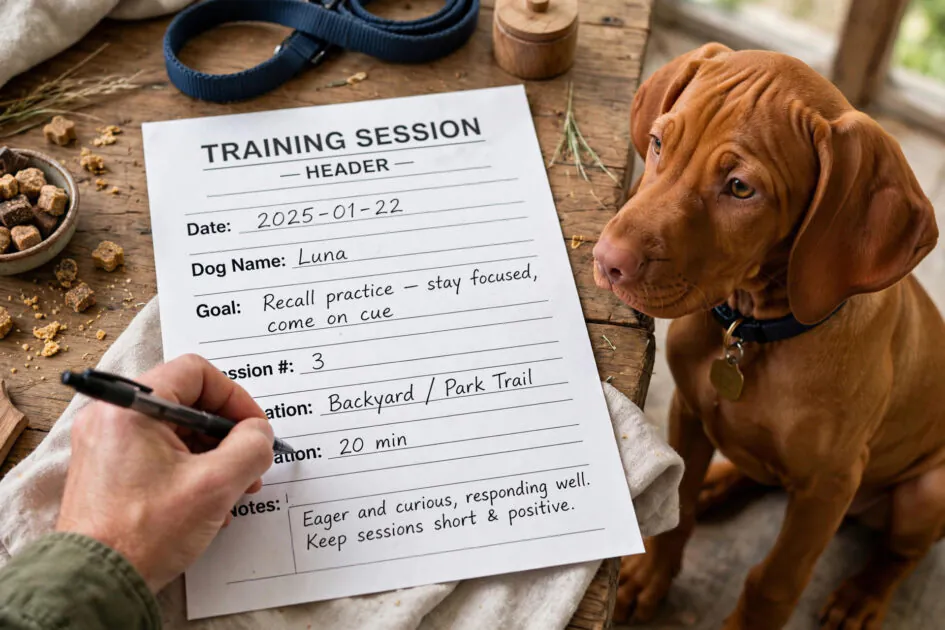
Every session starts with three lines at the top of the page: the date, which dog you’re working with, and one clear goal. Just one. “Improve recall at 20 feet” beats “work on obedience” every time, because a specific goal tells you when you’re done.
This header takes fifteen seconds and pays off all session long. It focuses your treat choices, your setup, and your criteria for success. When you flip back later, the header instantly tells you the context of everything below it.
If you train with a partner or family member, the header keeps everyone aligned. Anyone can pick up the notebook, see today’s goal, and run the session the same way you would.
2. The Warm-Up Notes
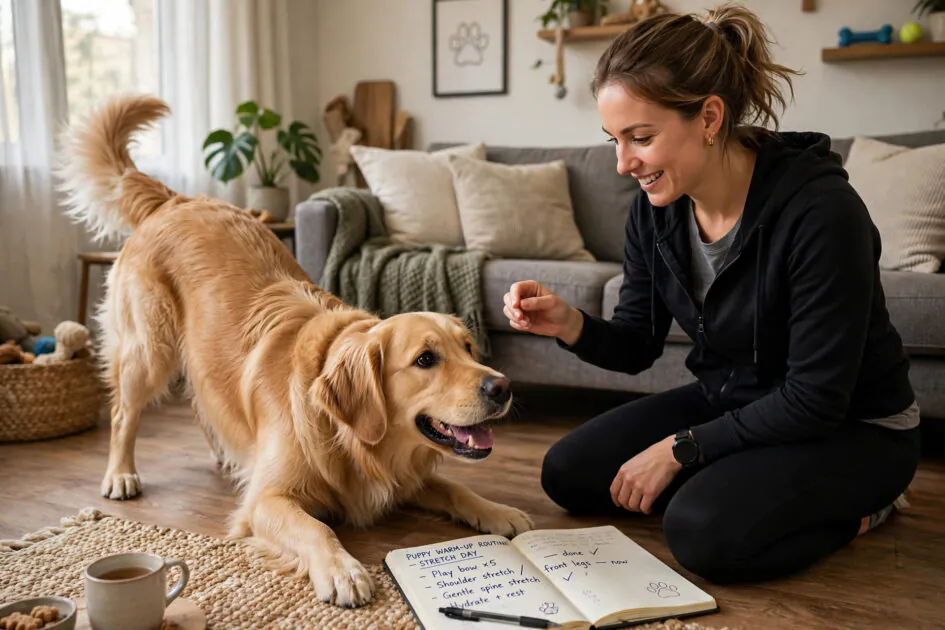
Before the real work, note how your dog is doing right now. Are they bouncing off the walls or half asleep? Did they just eat, or is it pre-dinner prime training time? A quick energy check, rated 1 to 5, explains a lot about the session that follows.
Also jot down your two-minute warm-up: a few easy known commands rewarded generously. This gets your dog in learning mode and gives you a baseline. If the warm-up is sloppy, that’s your cue to keep the session short and easy today.
Over weeks, warm-up notes reveal your dog’s rhythms. Many dogs are sharpest before breakfast and foggy after long naps. Scheduling sessions around those patterns is a quiet superpower.
3. Repetition Log: What Worked, What Didn’t
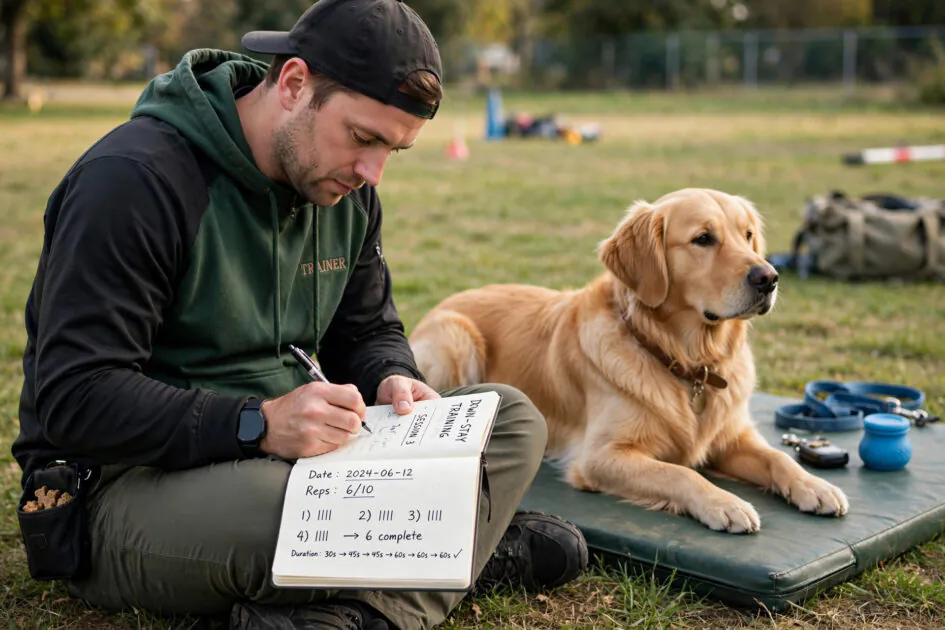
This is the heart of the template. For your main exercise, log your repetitions in small batches: five reps, then a quick note. Tally marks work great here. After each batch, write one line about what happened, like “broke stay at rep 4 when the cat walked by.”
The pattern across batches is where the insight lives. If reps 1 to 5 are perfect and 6 to 10 fall apart, your dog’s limit is five clean reps, and that’s exactly where you should stop. Logging keeps you from drilling past the point of learning, which is one of the most common training mistakes.
Don’t hide the bad batches. A page full of honest low scores is more valuable than a page of inflated wins, because it tells you precisely what to fix tomorrow.
4. Distraction and Environment Notes
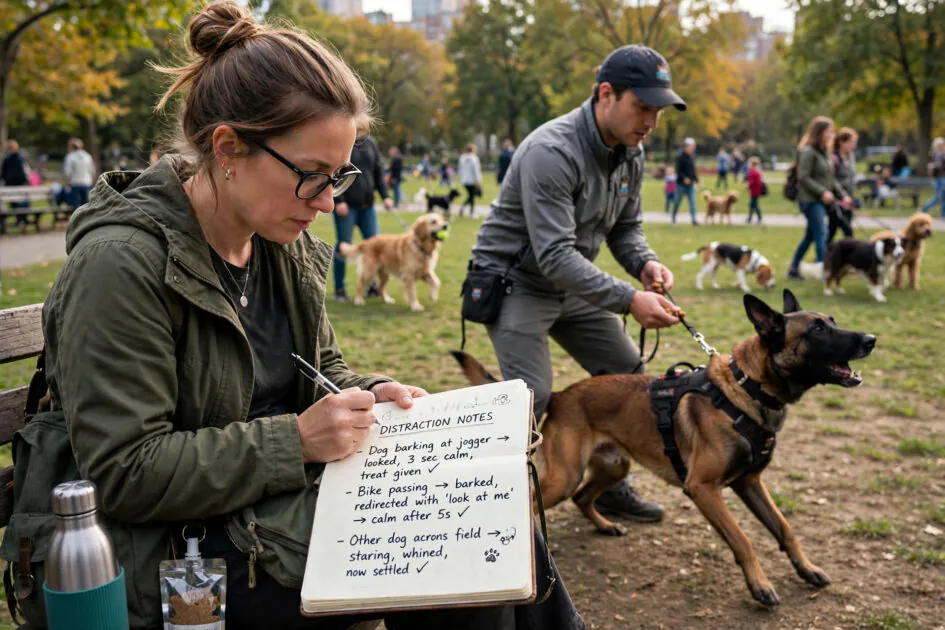
Dogs don’t generalize well, so where you train matters as much as what you train. Note the location, the distractions present, and their intensity. “Backyard, neighbor mowing lawn, moderate distraction” tells future-you why the scores look the way they do.
This section is your proofing roadmap. When a skill is solid at home but shaky at the park, your notes show you the exact gap. Gradually increase one variable at a time, new place or new distraction, never both, and log the results. That’s how reliability gets built.
Seasonal notes help too. Fireworks in summer, holiday guests in winter, each brings predictable distractions you can prepare for once you’ve logged them once.
5. Tomorrow’s Plan
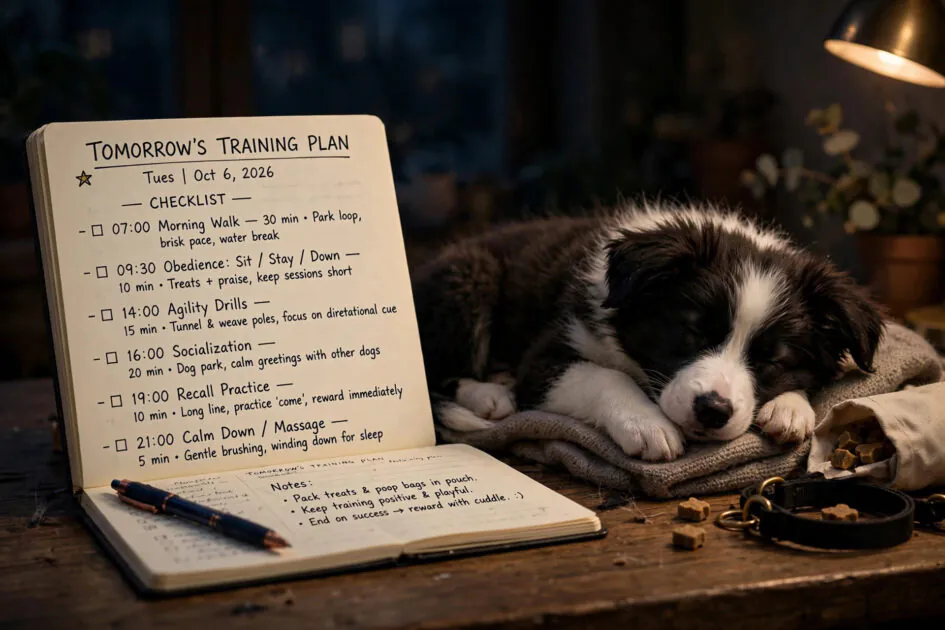
End every session by writing tomorrow’s plan while it’s fresh. One sentence is enough: “Retry stay at 15 feet in the front yard, higher-value treats.” This removes all decision fatigue from your next session.
The plan should follow directly from today’s notes. If the repetition log showed fading after five reps, tomorrow’s plan is shorter sets. If distractions were the issue, tomorrow trains at the same distraction level until it’s easy. Your journal becomes a conversation with yourself across days, and each session starts exactly where the last one ended.
Keep old plans visible when you write new ones. Seeing a whole week of plans in a row shows whether you’re progressing, plateauing, or accidentally repeating the same easy session.
FAQs
How long should a daily training session be?
Five to fifteen minutes for most dogs. Puppies do best with several two-minute sessions. End while your dog still wants more, not when they’re exhausted.
What if I miss a day of notes?
Don’t try to reconstruct it from memory, just write the date and “skipped” and move on. The template works because it’s honest, not because it’s perfect.
Should I use the same template for every skill?
Yes, consistency is the point. The same five sections work for recall, leash walking, trick training, and behavior work. You’ll get faster at filling it out every week.
Can I keep these notes on my phone?
Absolutely. A simple notes app with a copied template works great, especially for logging right after a session. Just keep the same five sections in the same order.
How do I know when to move to a harder exercise?
When your repetition log shows 80 percent success or better across three sessions in the same environment, it’s time to raise one difficulty variable.
A good dog training notes template turns scattered practice into a real training program. Copy these five sections into your notebook tonight, and use them at your very next session. Your dog will feel the difference within a week.