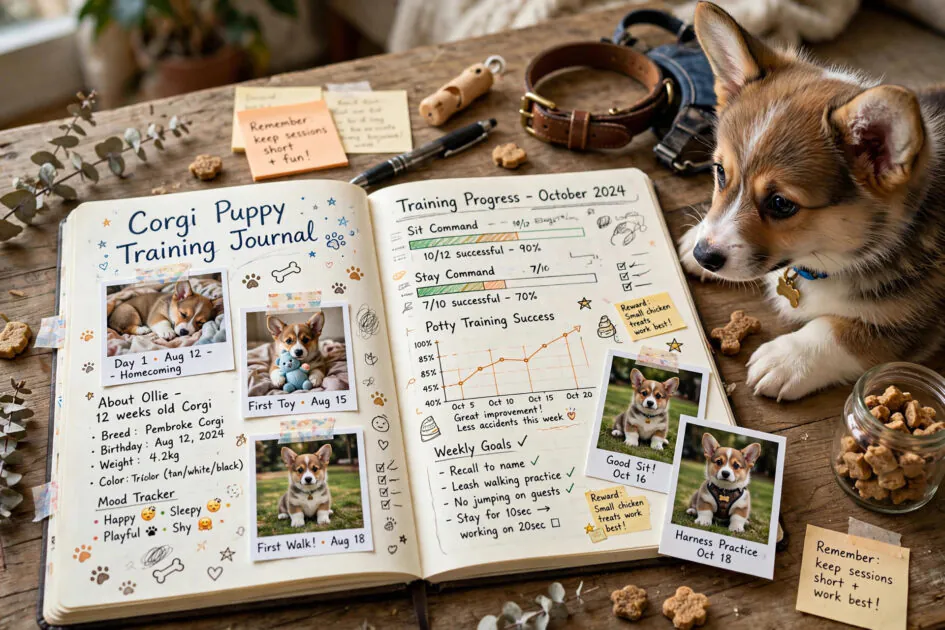

Training your dog without tracking progress is like driving without a dashboard. You might be moving, but you have no idea how fast or in which direction. These dog training journal ideas give you simple, creative ways to record what matters, so every session builds on the last one instead of starting from scratch.
You don’t need anything fancy. A notebook, a pen, and five minutes after each session are enough. Here are five journaling ideas that actually help you see progress.
1. The Daily One-Line Entry

Not every session deserves a full page. Some days you just need one honest line: “Practiced recall in the yard, 6 out of 10, distracted by squirrels.” That’s it. The daily one-line entry is the lowest-effort journaling idea there is, and it’s often the most sustainable.
The magic is in the streak. After a month of one-liners, patterns emerge that you’d never notice otherwise. You’ll see which days your dog shines, which skills keep stalling, and whether that new treat is actually making a difference. Keep a dedicated notebook by the treat jar so there’s zero friction.
Keep the notebook where you train, not on a shelf. A journal that lives by the back door gets used; one buried in a drawer becomes decoration within a week.
2. The Skill Scorecard
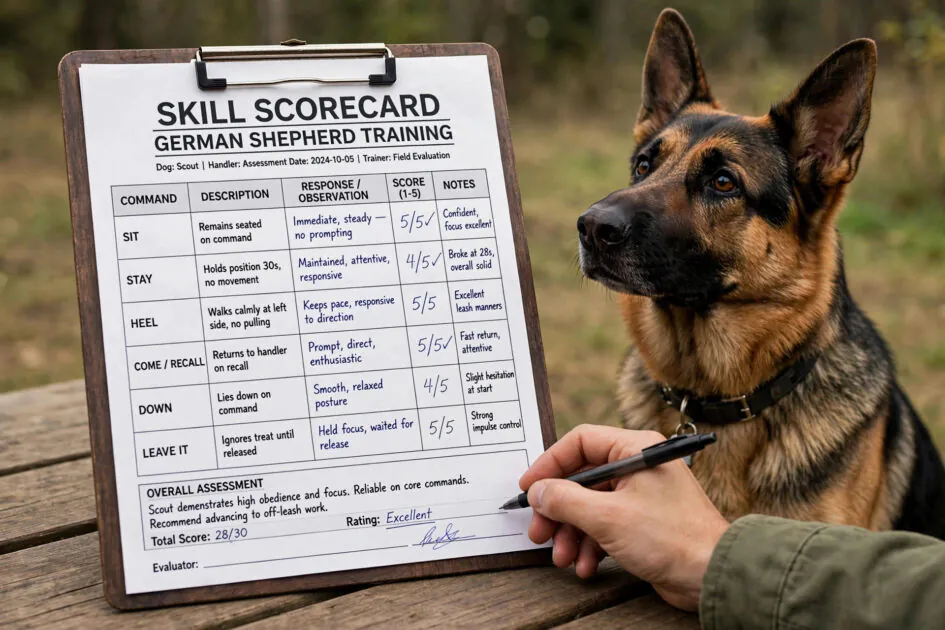
Pick the five to eight skills you’re actively training, like sit, stay, recall, loose-leash walking, and place. Once a week, score each one from 1 to 5. A scorecard turns “we’re doing okay” into “recall went from 2 to 4 this month,” which is far more useful.
Scorecards also stop you from overtraining strengths and ignoring weaknesses. It’s tempting to drill the tricks your dog already knows because it feels good. The scorecard keeps your eyes on the lagging skills, which is where the real progress happens. Update it every Sunday and plan the week’s sessions around the lowest scores.
Don’t chase perfect fives. A skill sitting at 3 for a month is telling you something important: either the criteria are too hard or the reward isn’t motivating enough.
3. The Weekly Wins and Wobbles Review
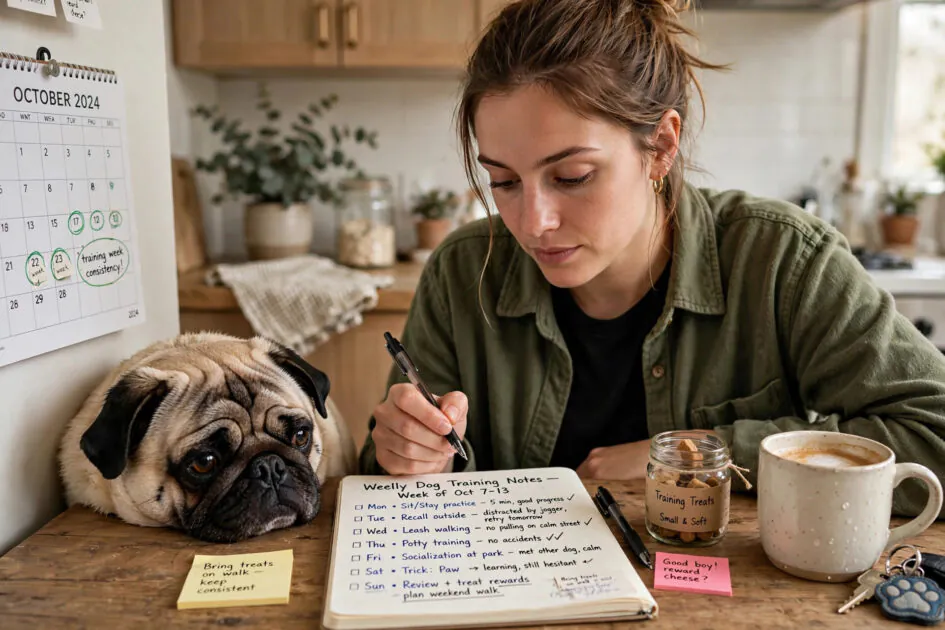
Every week, write down three wins and three wobbles. Wins are anything that went right, no matter how small: a calm greeting, a faster sit, a walk without pulling. Wobbles are the moments that need work, written without judgment.
This ritual does two things. First, it forces you to notice the good stuff, which keeps motivation alive during slow weeks. Second, it turns problems into a short, manageable list instead of a vague cloud of frustration. Pick one wobble to focus on next week, and watch it shrink.
Share your weekly review with a training buddy or online group if you like accountability. Saying your wins out loud makes them real, and others often spot solutions for your wobbles.
4. The Behavior Pattern Tracker
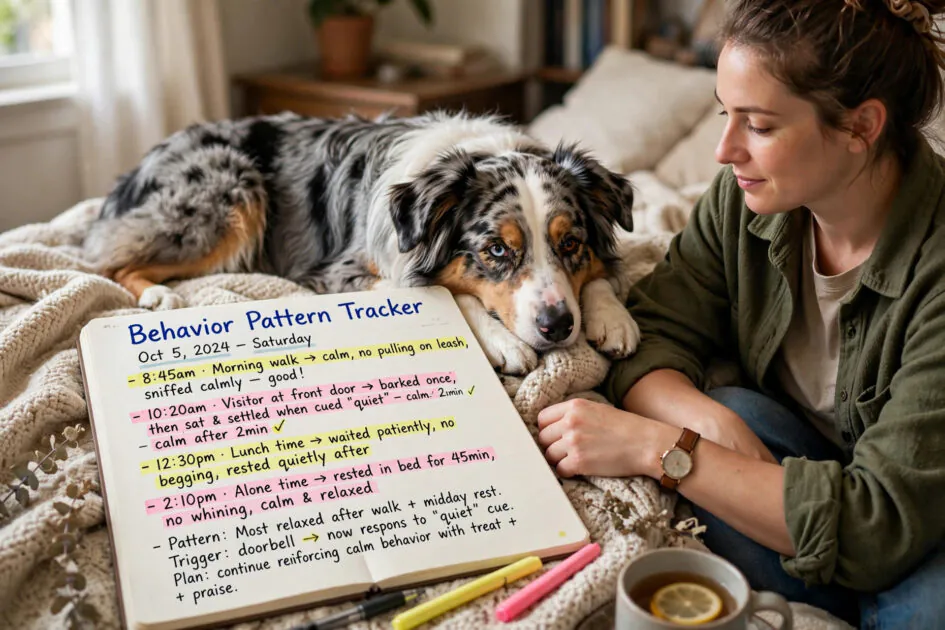
For recurring issues like barking, jumping, or reactivity, dedicate a page to tracking each incident. Note the time, location, what triggered it, and how intense it was on a 1-to-5 scale. Highlight entries where things went well in a different color.
After two weeks, you’ll have a map of the problem. Maybe the jumping only happens with visitors after 6 p.m., or the reactivity spikes on narrow sidewalks. These specifics let you manage the environment and train the exact scenario, instead of fighting the behavior in general. This is the journaling idea trainers use most with difficult cases.
Video one incident if you safely can. Watching it later, calmly, often reveals triggers you missed in the moment, like a subtle stare or a leash tightening before the reaction.
5. The Photo-and-Video Progress Log
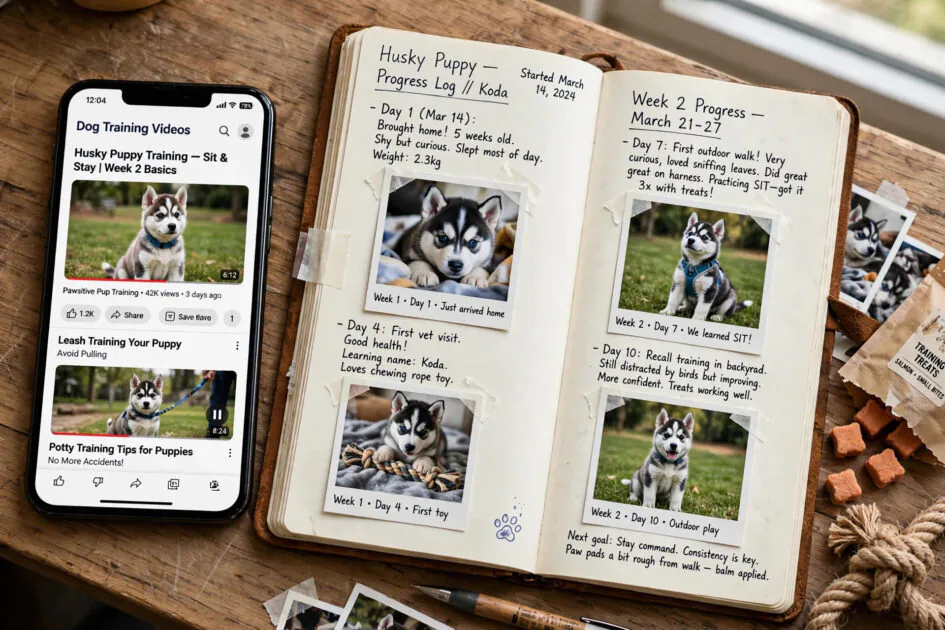
Some progress can’t be captured in words. Once a month, film your dog doing their key skills, or snap a photo of a milestone moment. Tape printed photos into your journal or link to the videos with a QR code or short note.
Visual proof is powerful. On the days you feel stuck, watching a video from two months ago reminds you how far you’ve come. It also helps enormously if you ever work with a professional trainer, since you can show them exactly what your dog could do, and when things changed.
Back up your videos somewhere safe. Phones get lost, and a year’s worth of progress footage is irreplaceable. Cloud storage or an external drive takes five minutes to set up.
FAQs
How detailed should my training journal be?
As detailed as you’ll sustain. One honest line beats a blank elaborate template. Start minimal and add detail only where it helps you make decisions.
Should I track every single session?
Track the sessions you care about improving. Casual play doesn’t need logging, but any structured training rep is worth at least a one-liner.
What’s the best notebook for a training journal?
Any notebook you’ll carry. Many owners like small pocket notebooks for sessions plus a bigger one for weekly reviews. Durability matters more than beauty.
How do I track progress for multiple dogs?
Give each dog their own section or notebook. Comparing dogs side by side only causes frustration, since every dog learns at their own pace.
When should I review my journal?
Do a quick scan weekly and a deeper review monthly. The weekly scan plans your sessions; the monthly review shows the trend lines that keep you motivated.
These dog training journal ideas all share one goal: making progress visible. Pick the one that fits your life, start today, and give it a month. You’ll be amazed at what a few lines a day can reveal about your dog, and about yourself as a trainer.