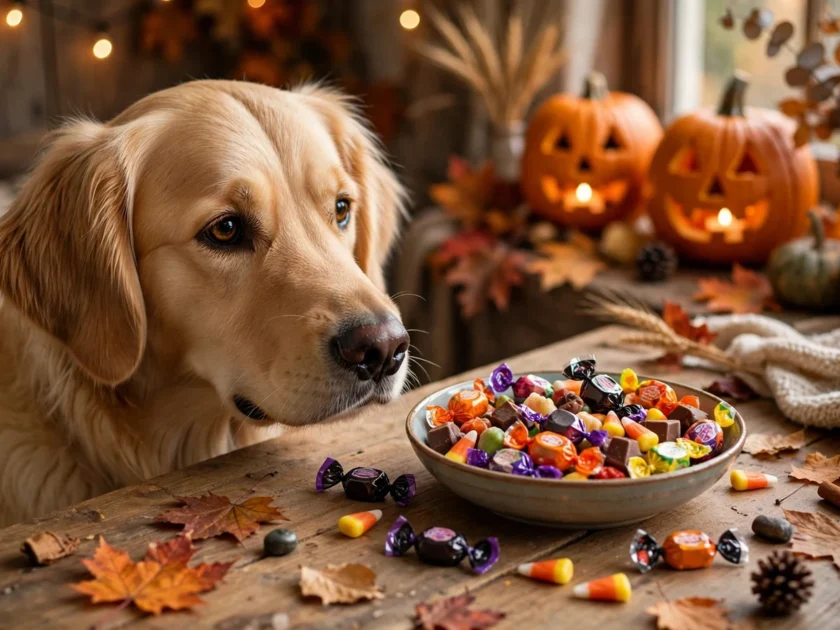

Halloween is a blast for us — costumes, decorations, and mountains of candy. But for your dog, that tempting bowl of treats on the counter can turn into a genuine emergency. Every October, vet clinics see a spike in candy-related poisoning cases, and most of them are completely preventable.
So, is Halloween candy bad for dogs? The short version is yes — and some types are far more dangerous than others. Here’s everything you need to know to keep your four-legged friend safe this spooky season.
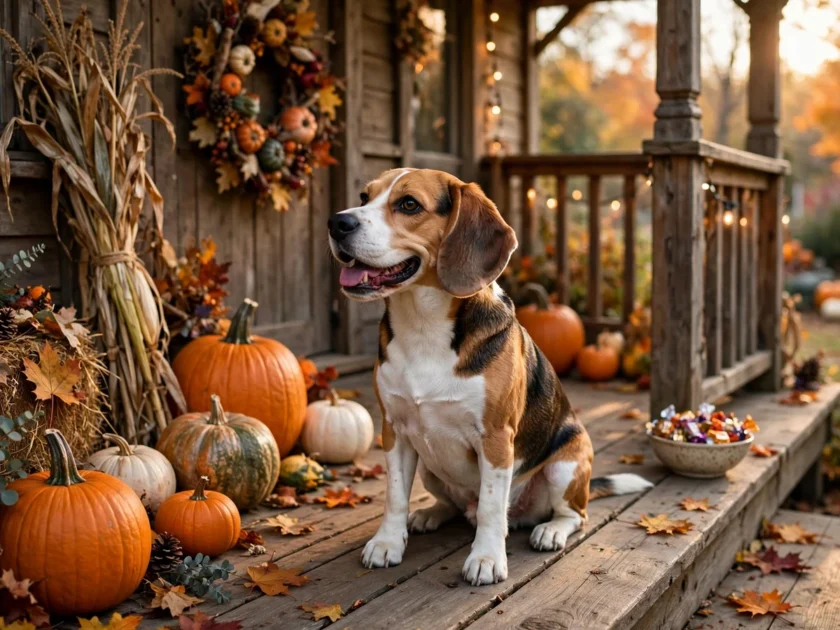
The Short Answer: Is Halloween Candy Bad for Dogs?
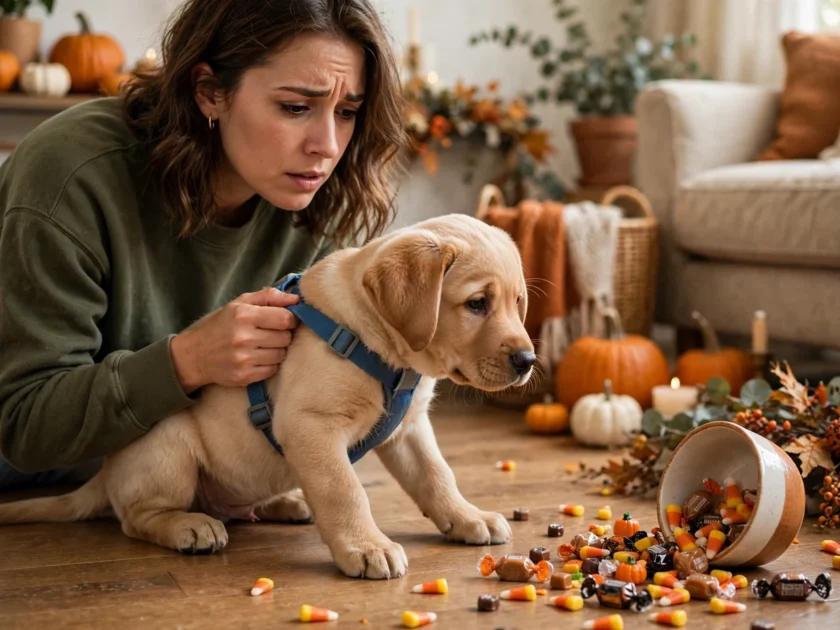
Yes — Halloween candy is bad for dogs, full stop. Even the “mild” stuff like sugary gummies, hard candies, and caramel chews can cause vomiting, diarrhea, and pancreatitis. The worst offenders, chocolate and anything sweetened with xylitol, can be life-threatening even in small amounts.
Dogs can’t tell a chocolate bar from a safe treat, and their noses make them experts at finding candy in low bowls, open trick-or-treat bags, and kids’ bedrooms. The safest rule this October: keep all human candy completely out of paw’s reach.
Why Chocolate Is So Dangerous for Dogs

Chocolate tops the Halloween hazard list because it contains theobromine and caffeine — stimulants that dogs metabolize very slowly. What clears our system in hours can circulate in a dog’s body for a full day, building to toxic levels.
The darker the chocolate, the deadlier it is. Here’s how the risk stacks up:
- Dark and baker’s chocolate. The highest theobromine levels — a small square can poison a small dog. The number-one Halloween chocolate emergency vets see.
- Milk chocolate. Less concentrated, but a fun-size haul can still make a medium dog seriously ill.
- White chocolate. Barely any theobromine, but the fat and sugar can trigger pancreatitis.
Chocolate poisoning signs — restlessness, vomiting, tremors — can take 6 to 12 hours to appear. Don’t wait for symptoms if you suspect your dog grabbed some.
Xylitol: The Hidden Killer in Sugar-Free Candy
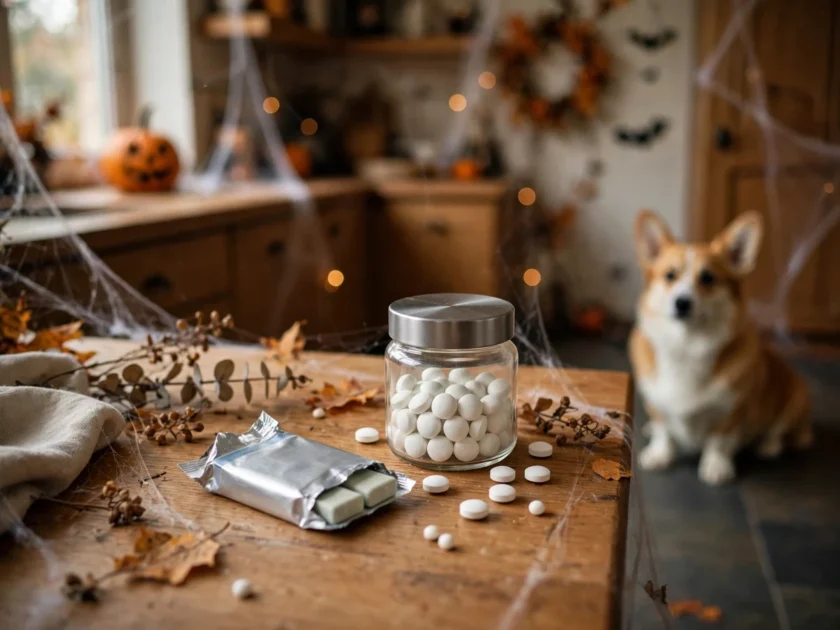
Xylitol (also labeled birch sugar or E967) is a sugar substitute found in sugar-free gum, mints, and some candies. Harmless to humans, it’s devastating to dogs: it triggers a massive insulin release that crashes blood sugar and can cause liver failure within hours.
Just a couple of pieces of sugar-free gum can poison a small dog — and because it’s “sugar-free,” many owners don’t realize the danger until it’s too late.
- Check every label. Scan your candy stash for xylitol, birch sugar, or “sugar alcohol” in the ingredients before Halloween night.
- Gum is the biggest risk. Sugar-free gum concentrates xylitol, so keep purses, pockets, and bowls containing gum far from curious noses.
- Act immediately. Weakness and collapse can start within 30 minutes. Xylitol poisoning is always a race against time — call your vet at once.
Other Halloween Candies That Can Harm Dogs
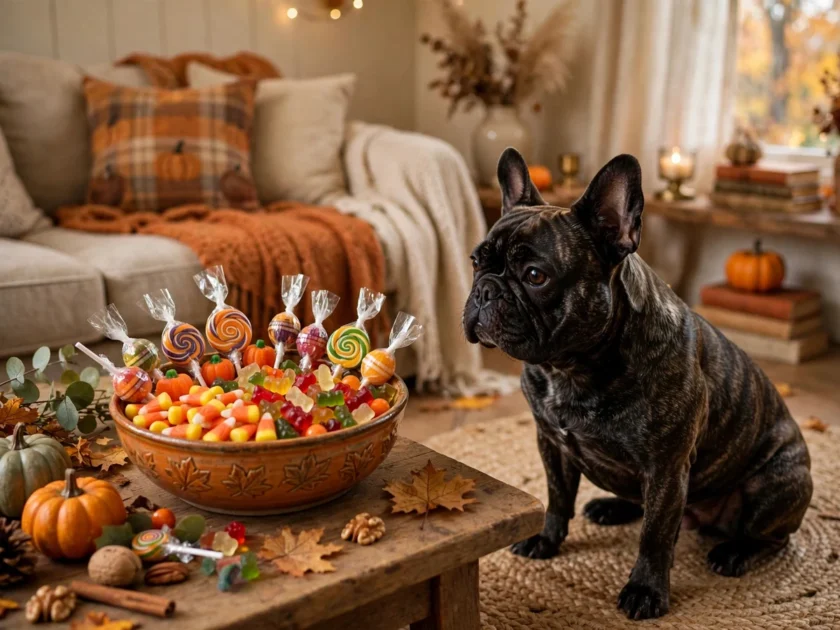
Chocolate and xylitol get the headlines, but plenty of other Halloween sweets can hurt your dog too:
- Candy corn and sugary chews. Pure sugar bombs that cause vomiting and diarrhea — large amounts can inflame the pancreas.
- Hard candies and lollipops. A choking hazard that can also fracture teeth if your dog tries to crunch them.
- Raisins. Some handouts include raisin boxes, and raisins are toxic to dogs — even a small box can cause sudden kidney failure.
- Macadamia nuts. Found in premium chocolate assortments, they cause weakness, vomiting, and tremors — doubling the danger.
What About Candy Wrappers and Packaging?
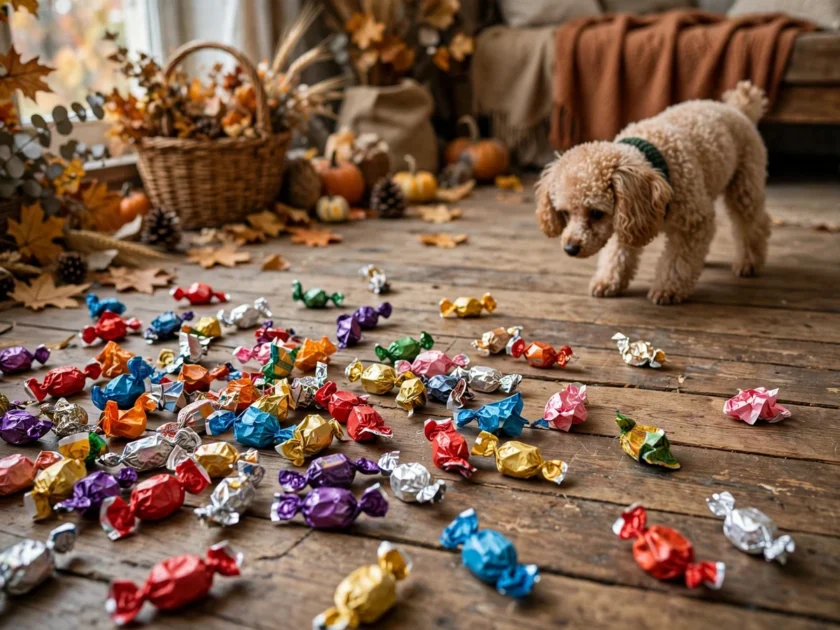
Here’s the part many owners miss: even when the candy is gone, the wrapper can be a problem. Dogs that scarf down candy often swallow the foil, plastic, and cellophane along with it.
Wrappers can choke or block the intestines — sometimes requiring surgery. After trick-or-treating, sweep floors, couches, and the yard for stray wrappers your dog’s nose is sure to find.
Warning Signs Your Dog Ate Something Toxic

Dogs are sneaky, and candy theft often happens when nobody’s looking. Watch for these red flags in the hours after Halloween festivities:
- Vomiting or diarrhea. Often the first sign — the body trying to expel something it shouldn’t have eaten.
- Restlessness, panting, or a racing heart. Classic stimulant effects from chocolate’s theobromine and caffeine.
- Weakness, stumbling, or collapse. A hallmark of xylitol blood-sugar crashes — treat this as an emergency.
- Belly pain, drooling, or appetite loss. Can signal pancreatitis or a wrapper-related blockage developing.
Staying alert to these signs — and having an emergency plan ready — is part of what it takes to keep your dog safe through every season, not just the holidays.
What to Do If Your Dog Eats Halloween Candy

Stay calm and act fast. Here’s your step-by-step plan:
- Secure the evidence. Grab the wrapper so you can tell the vet exactly what — and how much — your dog ate. Check the ingredients for xylitol.
- Call your vet immediately. Don’t wait for symptoms. Share your dog’s weight, what was eaten, and when. After hours, call the ASPCA Animal Poison Control Center at (888) 426-4435.
- Don’t induce vomiting yourself. Unless your vet tells you to, skip the home remedies — some substances cause more damage coming back up.
- Watch and note. Keep your dog calm and monitor for vomiting, tremors, or lethargy while you follow your vet’s instructions.
Save your vet’s number and the poison control hotline in your phone before Halloween night.
Safe Halloween Treats to Give Your Dog Instead
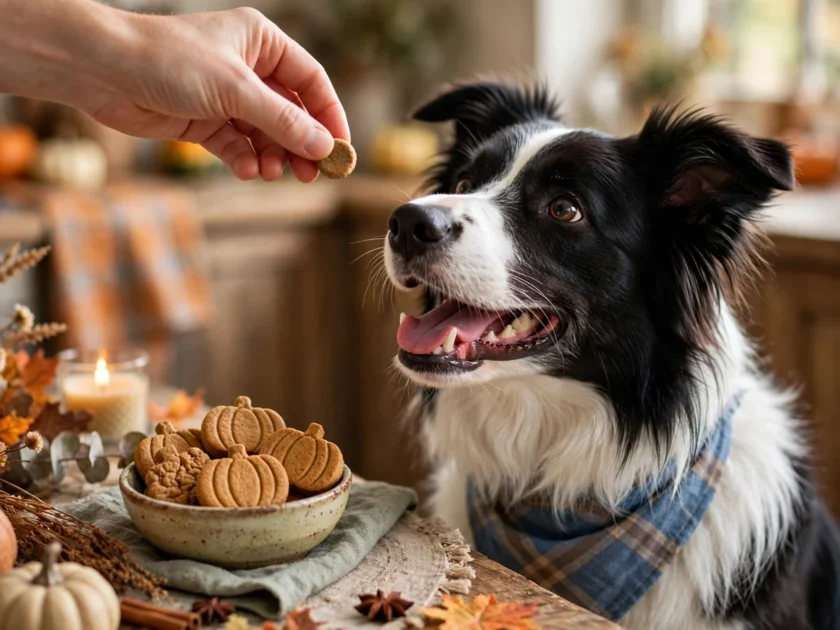
Your dog doesn’t have to miss out — keep dog-safe goodies on hand so sharing your candy isn’t tempting:
- Halloween dog biscuits. Pumpkin-shaped dog treats are everywhere in October and are made for canine tummies.
- Plain pumpkin purée. A spoonful of unsweetened pumpkin purée (not pie filling) is a tasty, tummy-friendly fall treat.
- Apple slices or blueberries. Naturally sweet and crunchy — just skip the seeds and cores.
- Frozen peanut-butter bites. Freeze xylitol-free peanut butter (always check the label) in a silicone mold for a festive snack.
Give your pup their own treat bowl on trick-or-treat night and they’ll feel part of the celebration — all treats and no tricks for every family member, thanks to a little planning around Halloween.
Frequently Asked Questions
Can dogs eat any Halloween candy at all?
No — no human Halloween candy is genuinely good for dogs. Stick to treats made specifically for them.
How much chocolate is toxic to a dog?
It depends on the chocolate type and your dog’s size, but small amounts of dark chocolate can endanger small dogs. When in doubt, call your vet.
What if my dog only ate the wrapper?
Small wrappers often pass, but watch for vomiting, appetite loss, or straining. Large amounts of foil or plastic can block the gut — call your vet if you’re unsure.
Are candy apples safe for dogs?
The apple is fine, but the caramel coating is pure sugar and the stick is a choking hazard. Offer plain apple slices instead.
How fast do candy poisoning symptoms appear?
Xylitol signs can start within 30 minutes, while chocolate poisoning may take 6–12 hours. Never wait for symptoms before calling the vet.