
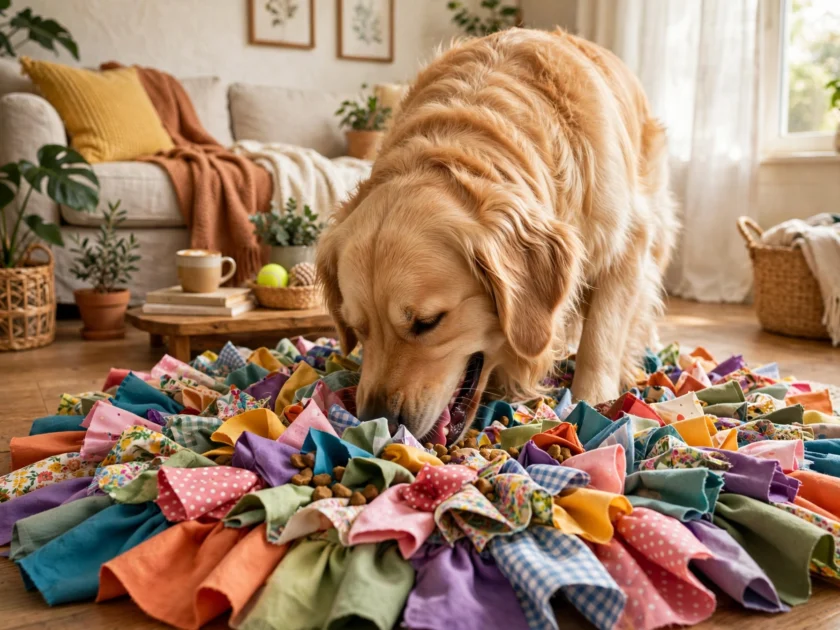

Pet Enrichment Ideas for Bored Dogs and calming setups are having a huge moment on Pinterest as part of the 2026 pet-wellness movement, and honestly, your dog deserves to be in on it. Bored dogs don’t just mope — they chew shoes, dig holes, and turn your house into their personal playground.
The good news? Keeping your dog’s brain busy doesn’t require fancy gear or a big budget. These 12 calming, vet-approved enrichment ideas are easy to set up at home, and most use things you already have. Let’s turn that boredom into happy, tired-out tails.
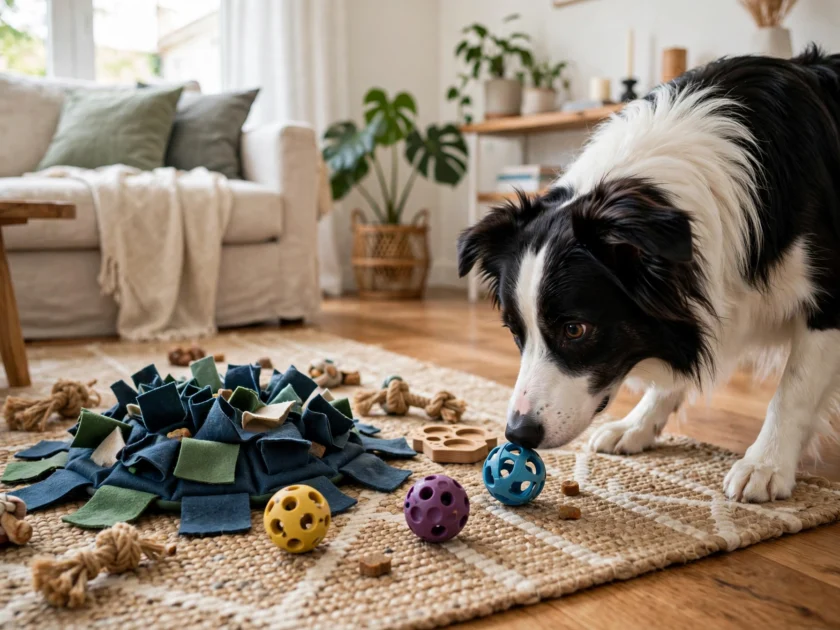
1. Snuffle Mat Feeding
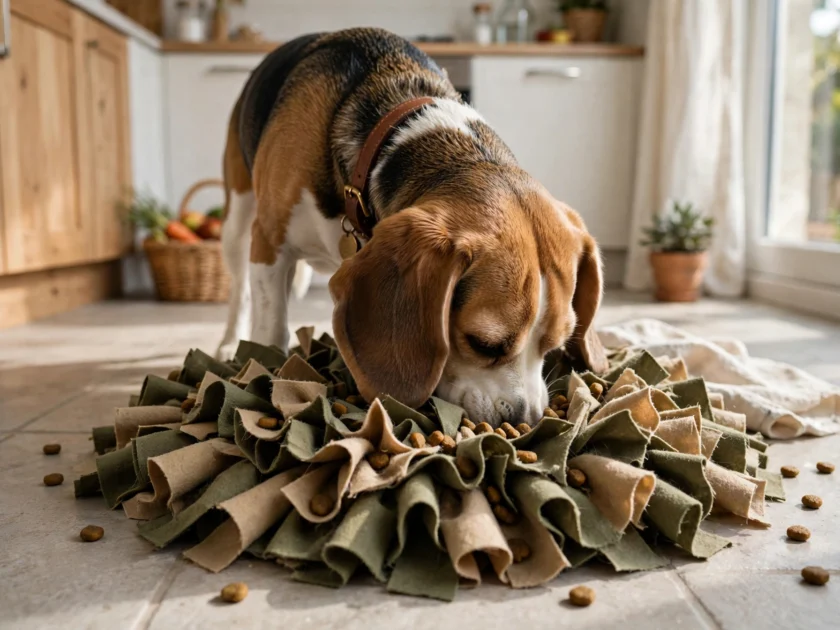
Ditch the bowl and scatter your dog’s kibble into a snuffle mat instead. Your pup has to snuffle and forage through the fabric folds to find every bite, which taps into their natural hunting instincts. Ten minutes of foraging tires a dog out more than a quick walk around the block.
2. Frozen Kong
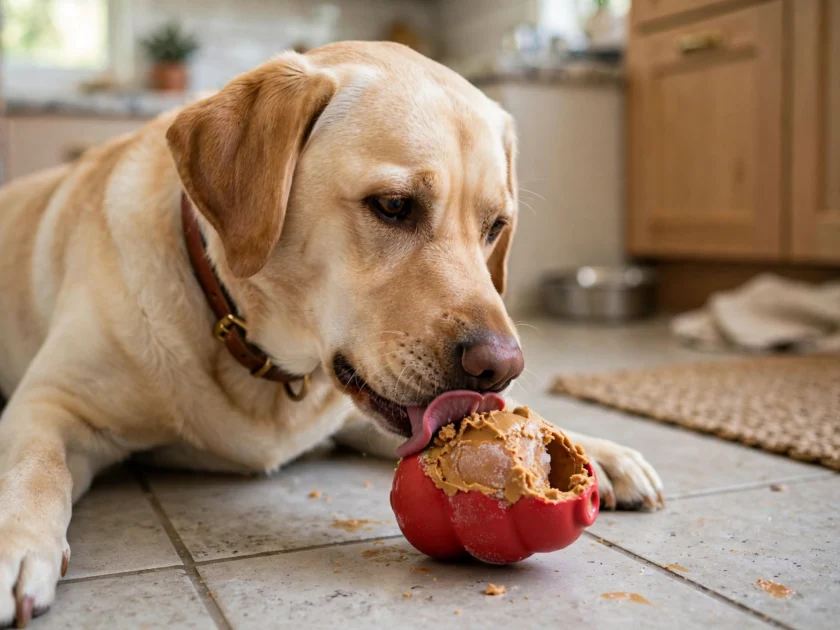
Enrichment Ideas for Bored Dogs Stuff a Kong with peanut butter, banana, or plain yogurt, then freeze it solid overnight. The frozen filling keeps your dog licking, pawing, and problem-solving for ages. It’s one of the simplest boredom busters vets recommend, and it doubles as a calming settle activity for anxious pups.
3. Lick Mat with Peanut Butter
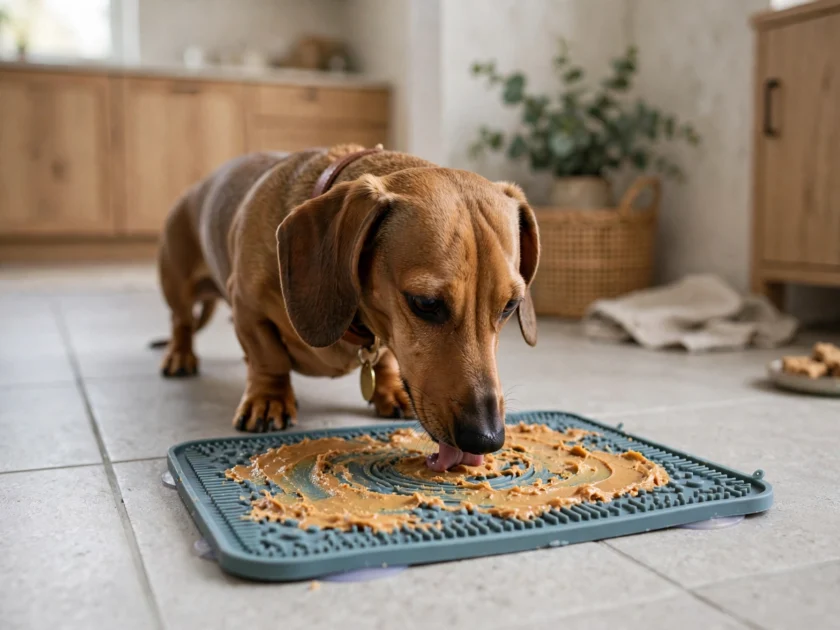
A silicone lick mat spread with xylitol-free peanut butter or wet food works wonders for an over-excited dog. The repetitive licking motion releases calming endorphins, making it perfect before guests arrive, during nail trims, or at bedtime. Pop it in the freezer first to make it last even longer.
4. Scent Work Games
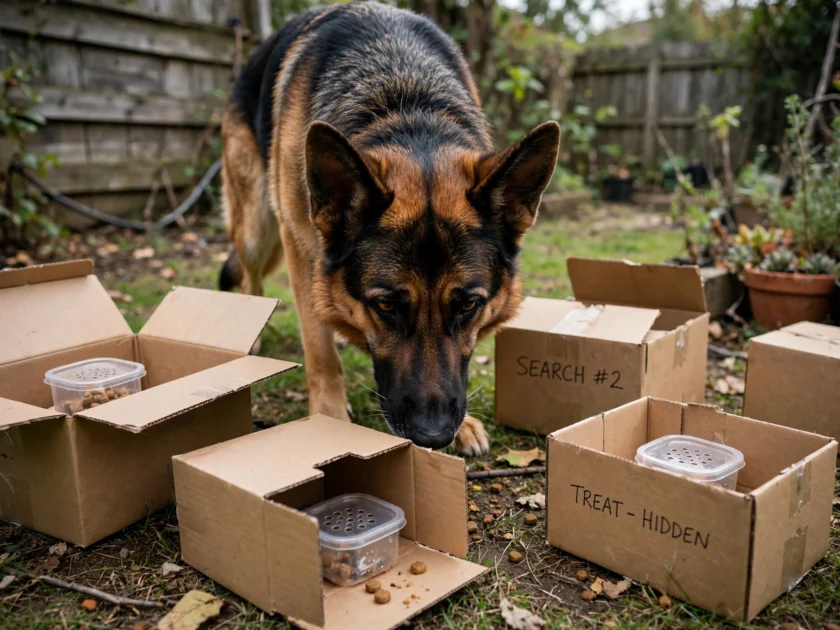
A dog’s nose is their superpower, and scent games put it to work. Hide treats around a room, play the “find it” game in the backyard, or let your pup sniff every blade of grass on a dedicated sniffari walk. Nose work is mentally exhausting in the best way, and it’s ideal for shy or reactive dogs who need confidence.
5. Puzzle Feeders
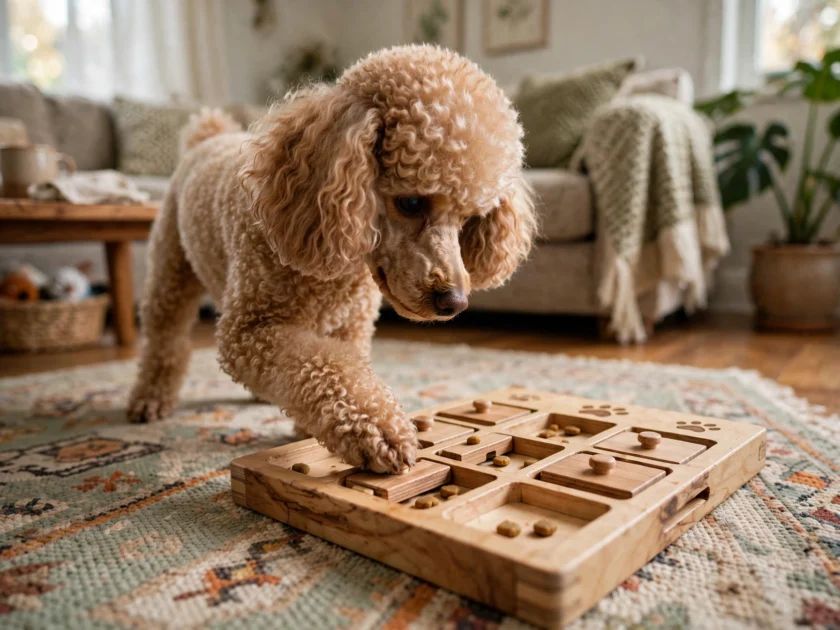
Puzzle feeders make your dog earn their dinner by sliding compartments, lifting lids, or nudging pieces to reveal treats. Start with easy levels so your dog doesn’t give up, and rotate between a few different puzzles to keep things fresh. It’s like giving your dog a brain workout with every meal.
6. Flirt Pole Play
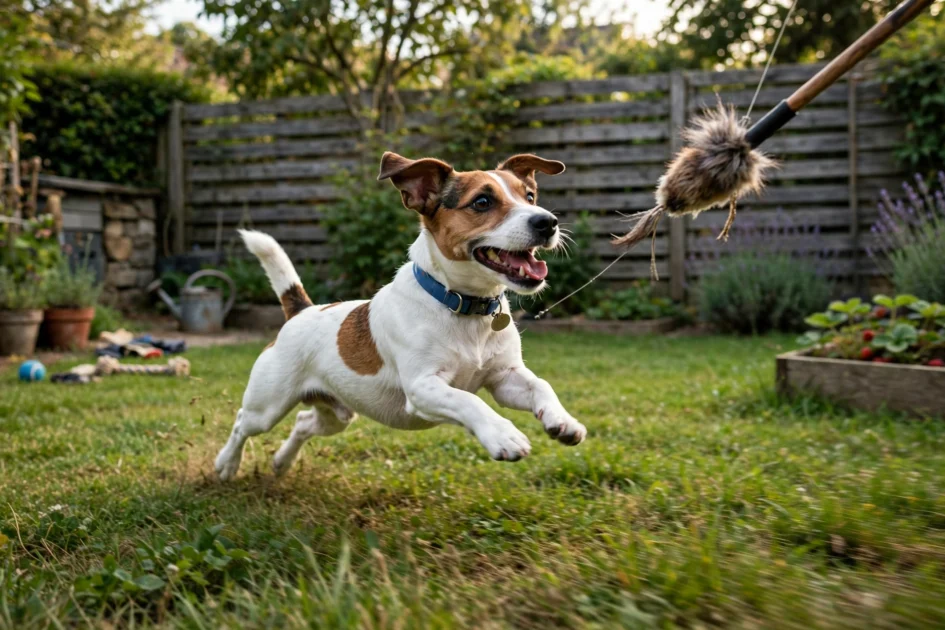
A flirt pole is basically a giant cat wand for dogs — a long stick with a rope and a lure that you drag along the ground. Five minutes of chasing, jumping, and practicing impulse control burns a shocking amount of energy. It’s also fantastic for practicing drop-it and wait commands in a high-energy setting.
7. Cardboard Shredding Box
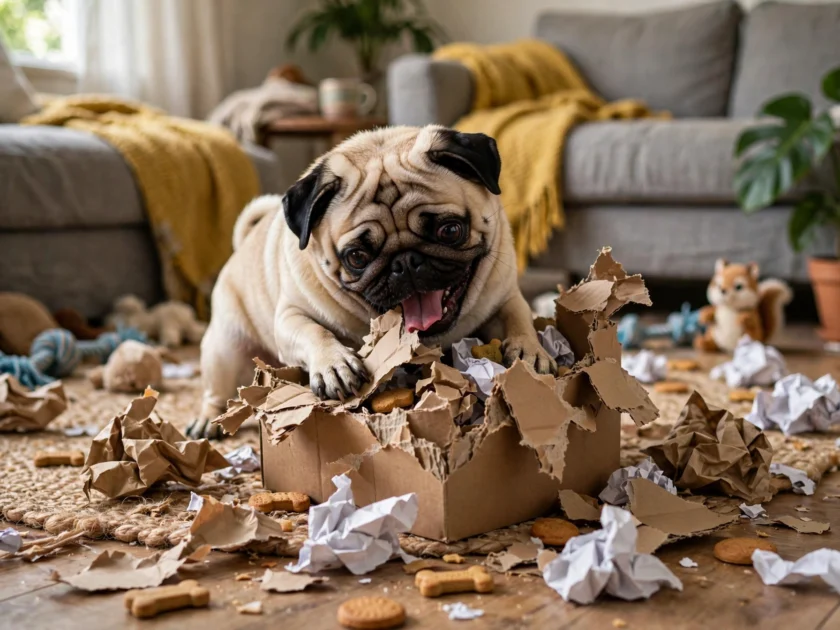
Save your delivery boxes and turn them into legal destruction zones. Stuff a box with crumpled paper, toilet-roll tubes, and hidden treats, then let your dog shred to their heart’s content. Ripping and tearing is deeply satisfying for dogs, and giving them an approved outlet saves your furniture from the same fate.
8. Training Sessions as Enrichment
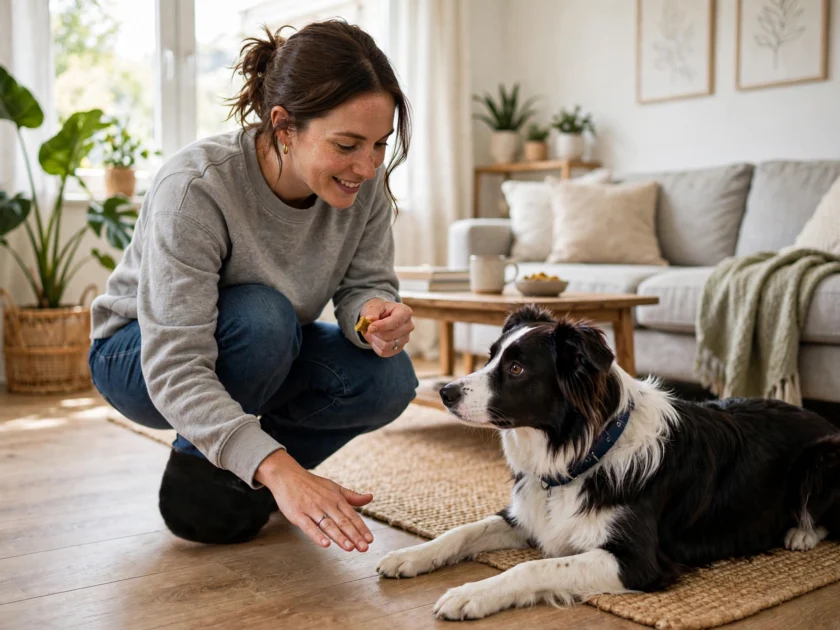
Short, fun training sessions are pure mental enrichment — learning a new trick is basically doggy schoolwork. Keep sessions to five minutes, use high-value treats, and try fun tricks like spin, shake, or “find your toy.” Great positive dog training techniques you can try at home make training feel like play, not homework.
9. Calm-Down Music Routine
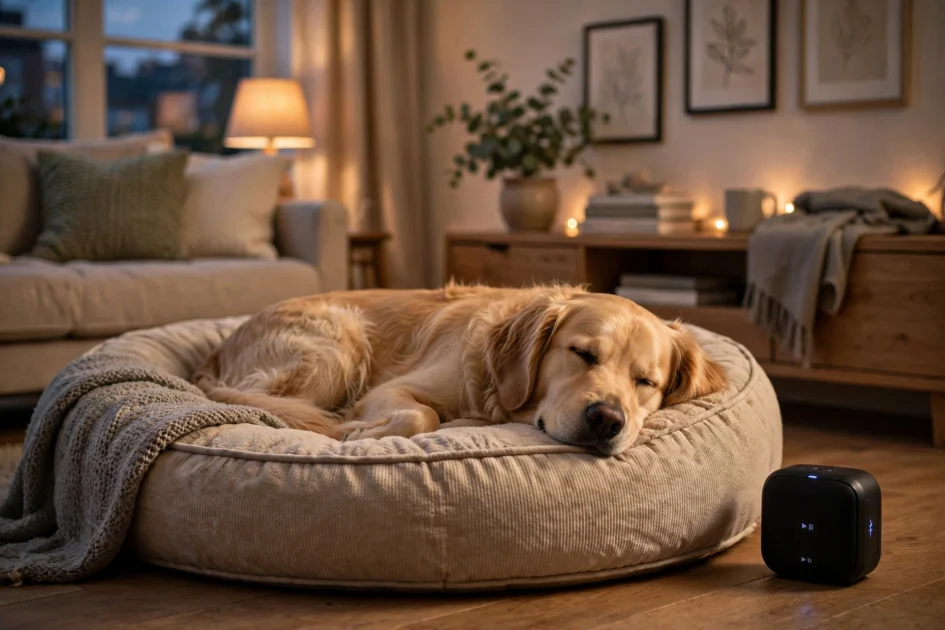
Research-backed calming music, like “Through a Dog’s Ear” playlists, genuinely helps dogs settle. Pair soft classical or specially composed canine music with a cozy bed and a chew, and use it consistently — at bedtime, during storms, or when you leave the house. Soon the music itself becomes a cue that it’s time to relax.
10. Rotating Toy Box
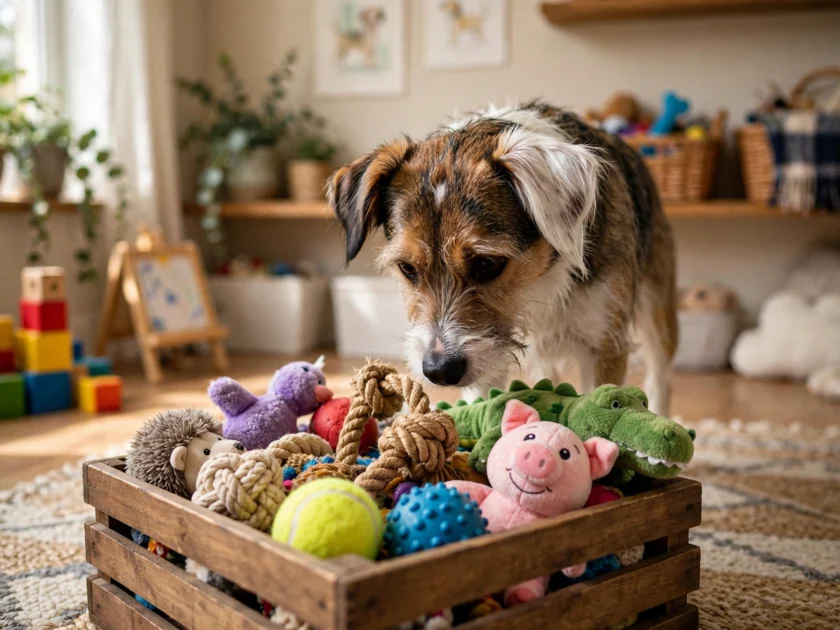
Dogs get bored of the same old toys just like we do. Keep two-thirds of your dog’s toys stored away and rotate a fresh batch every week — suddenly an “old” squeaky toy feels brand new. The novelty reignites their interest, and you won’t need to keep buying new toys to keep playtime exciting.
11. DIY Obstacle Course
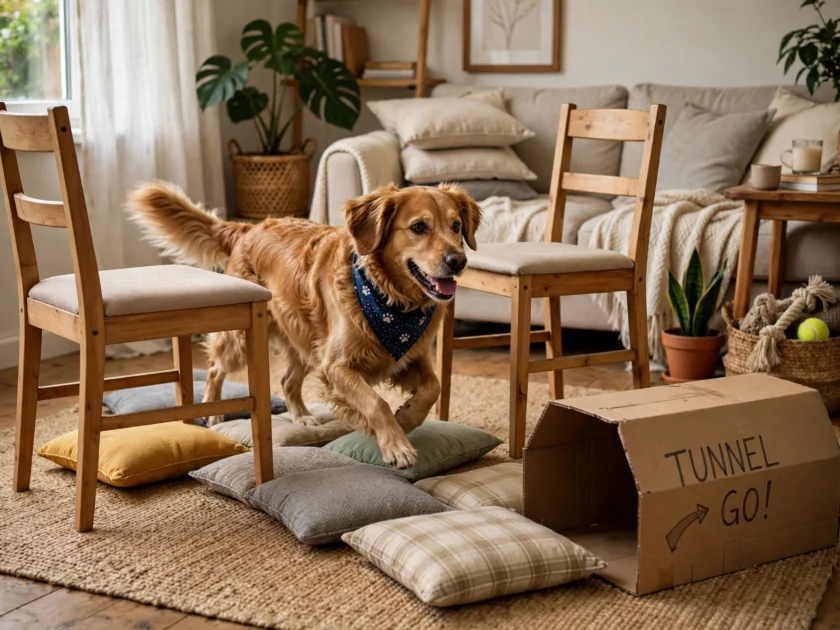
Turn your living room or backyard into an agility course with brooms, cushions, cardboard boxes, and hula hoops. Guide your dog over, under, and through each obstacle with treats and encouragement. It’s a full-body workout and a brain challenge rolled into one — and watching your dog figure it out is pure joy.
12. Supervised Chew Time
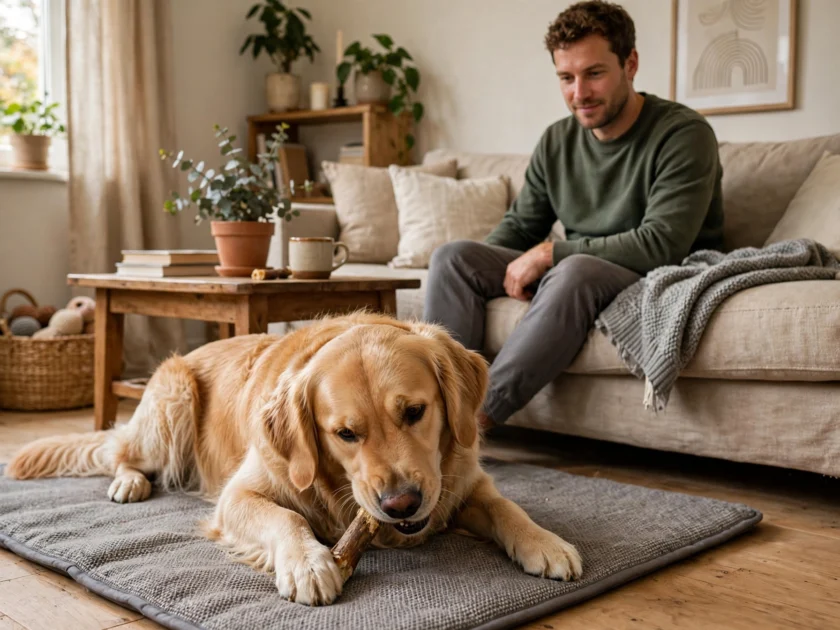
Chewing is one of the most natural calming behaviors a dog has — it lowers heart rate and relieves stress. Offer safe chews like bully sticks or yak chews during a designated wind-down time, and always supervise so your dog doesn’t swallow large pieces. Thirty minutes of focused chewing can turn a wired dog into a sleepy one.
Frequently Asked Questions
How much enrichment does a dog need per day?
Most dogs benefit from at least 20 to 30 minutes of mental enrichment daily, on top of physical exercise. Puppies, working breeds, and high-energy dogs may need more. Watch your dog’s behavior — if destructive chewing drops off, you’re hitting the sweet spot.
Can enrichment replace walks?
Not entirely. Enrichment and exercise serve different needs — mental stimulation wears out the brain, while walks provide physical fitness, fresh air, and social exposure. On rainy days or after an injury, enrichment can fill the gap temporarily, but aim for both.
Are frozen Kongs safe for puppies?
Yes, as long as you use the right size Kong and puppy-safe fillings like plain peanut butter, mashed banana, or soft kibble. Always supervise young puppies with any enrichment toy until you know they won’t chew off and swallow pieces.
What if my dog gets frustrated with puzzle toys?
Start at the easiest difficulty and help your dog succeed by partially uncovering the treats. Frustration-free first experiences build confidence. If your dog gives up, lower the difficulty rather than giving up on the toy.
Can enrichment help with separation anxiety?
Enrichment helps, but it’s not a standalone cure for true separation anxiety. Frozen Kongs, lick mats, and calming music can make alone time less stressful, yet dogs with genuine anxiety usually need a structured training plan and sometimes professional guidance from a vet or behaviorist.
A bored dog isn’t a bad dog — they’re just a dog with unused brainpower looking for a job. Adding even two or three of these enrichment ideas into your daily routine can cut down destructive behavior, ease anxiety, and deepen the bond between you and your pup. That’s what behavioral enrichment is all about: meeting your dog’s natural needs so they can be their happiest, calmest selves. Pick one idea, try it tonight, and watch your dog’s whole mood shift.