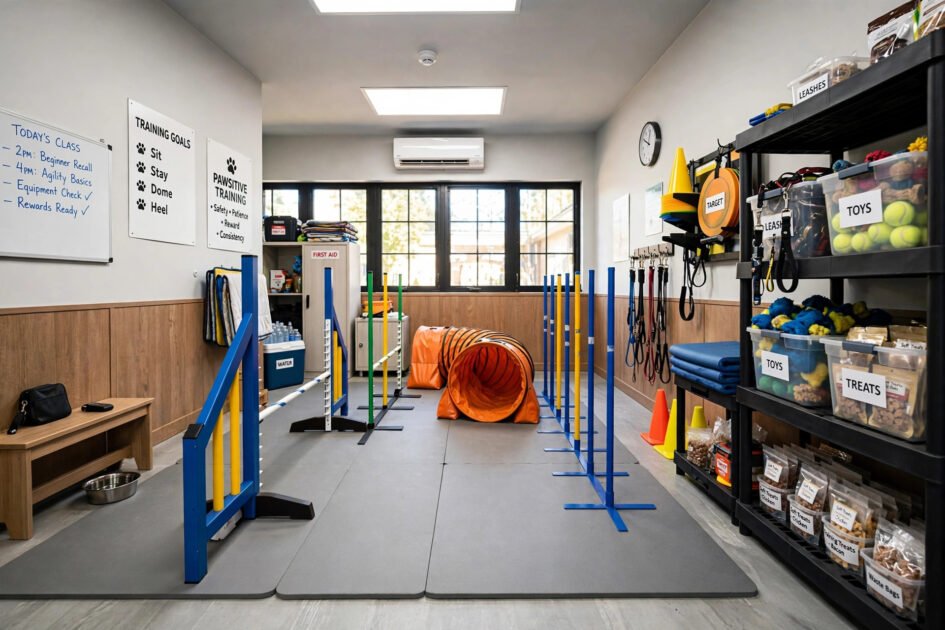

You don’t need a professional facility to train your dog well. A spare bedroom, a cleared garage corner, or even half a living room can become a fantastic training space. The secret is a thoughtful dog training room setup that removes distractions and makes practice easy.
Training indoors gives you something the backyard can’t: total control. No squirrels, no neighbor dogs, no sudden gusts scattering your treats. A dedicated room lets you train in any weather, at any hour, with your dog’s full attention.
1. Pick the Right Room and Clear the Clutter
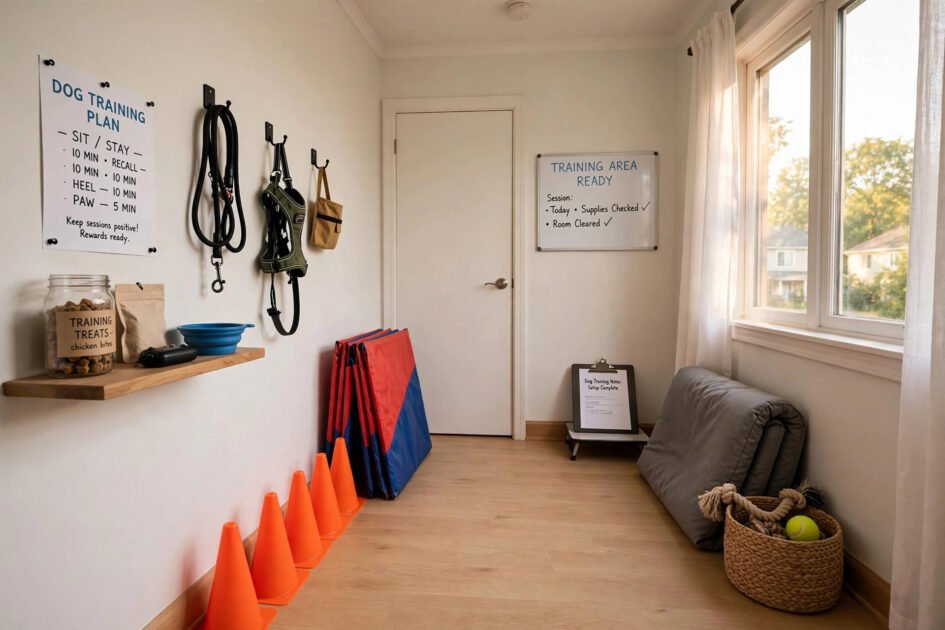
Start with the quietest room you can spare. Bedrooms and home offices work well because they’re naturally low-traffic. Avoid rooms next to busy streets or the front door, where passing noise will constantly break your dog’s focus.
Clear everything you can. Every object in the room is either a distraction or a chew target. Move out fragile décor, secure loose cables, and put away anything your dog might grab mid-session. You’re creating a blank canvas where the only interesting thing is you and the training.
2. Choose Safe, Easy-Clean Flooring
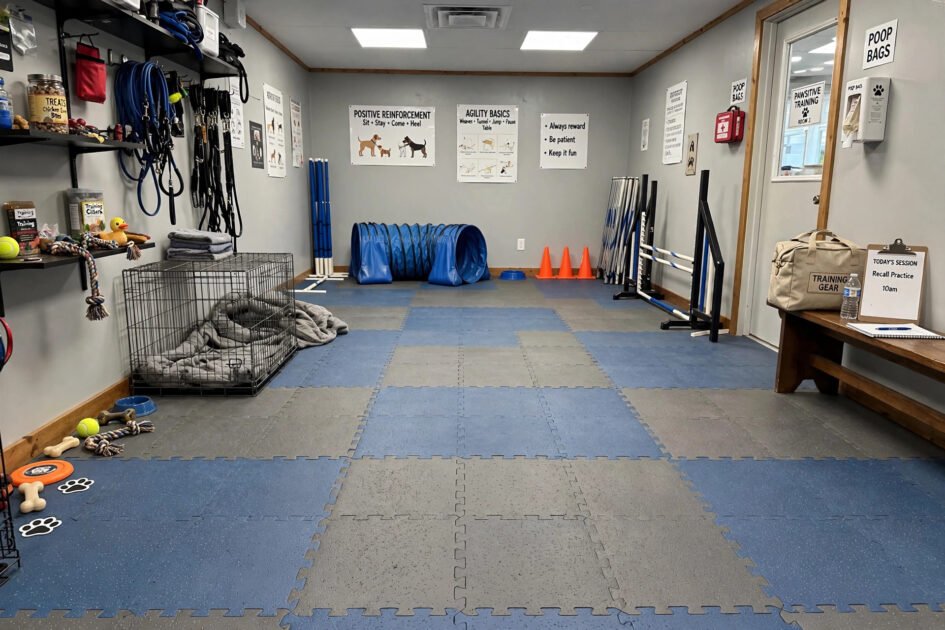
Flooring makes or breaks a training room. Hardwood and tile are slippery, which is risky when dogs sprint, pivot, or jump. Carpet holds smells and stains. The sweet spot is interlocking foam mats or rubber puzzle flooring.
Foam mats are affordable, easy to install, and kind to joints. They wipe clean, reduce noise, and give your dog confident footing for active exercises. Choose mats at least half an inch thick, and look for non-toxic, water-resistant options.
3. Set Up Smart Training Zones
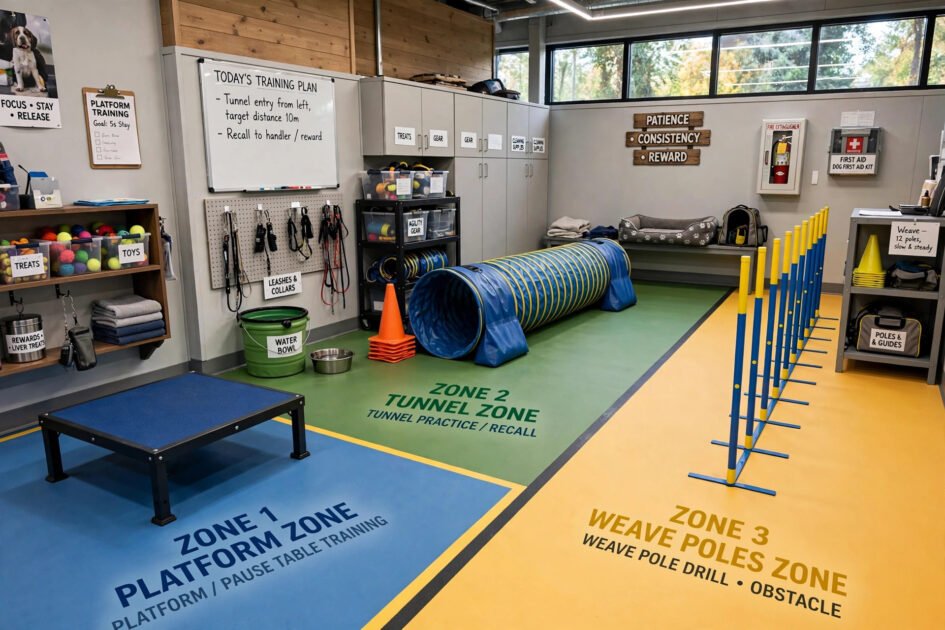
Even in one room, zones make training clearer for your dog. Dedicate one corner to active work with a small jump or tunnel, another to platform and place training, and keep a mat near the door as the calm-down spot.
Zones don’t need walls. A folded blanket marks a settle zone, a platform marks the place-training zone, and open floor space is the active zone. Dogs are brilliant at learning that different spots mean different games.
4. Organize Gear With Clever Storage
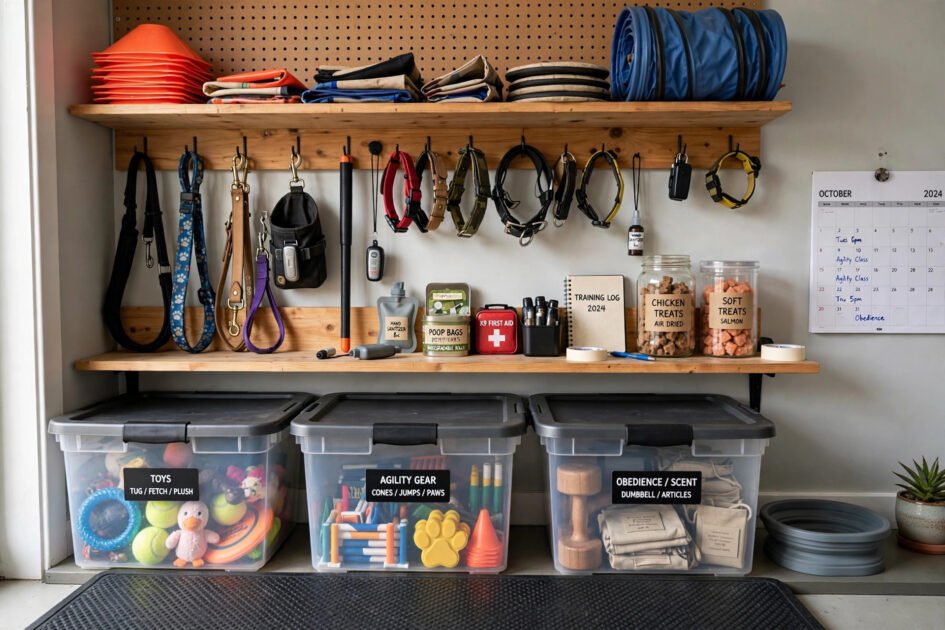
Nothing kills training momentum like hunting for treats while your dog loses focus. A small storage station keeps everything within arm’s reach: treat pouch, clicker, favorite toys, long line, and cleaning supplies.
Wall-mounted shelves or a narrow rolling cart work perfectly in small rooms. Use labeled bins so family members put things back correctly. Keep high-value training treats in a sealed container on a high shelf, both for freshness and to keep clever noses out.
5. Control Light, Sound, and Distractions
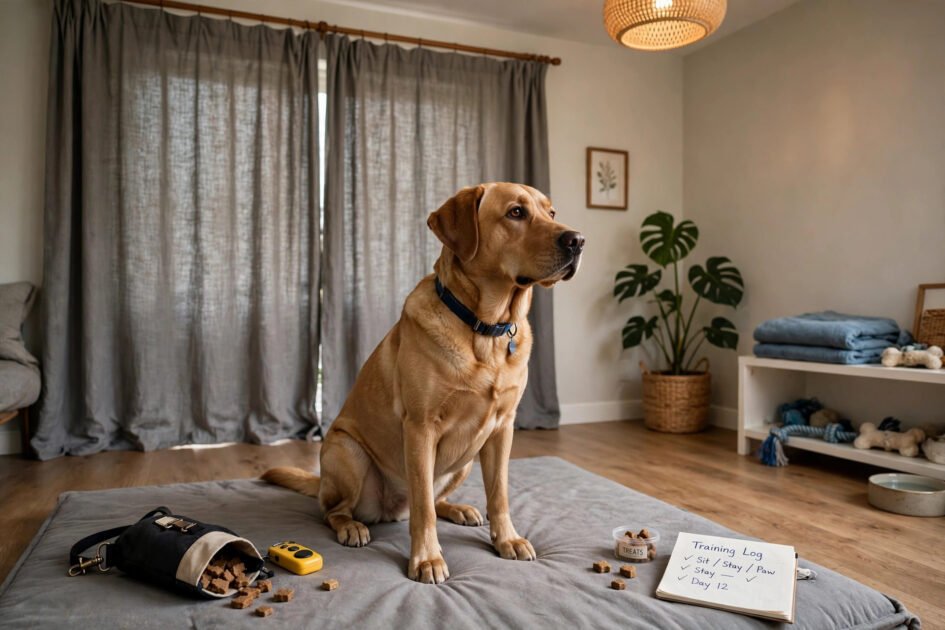
Environment is a training tool. Bright, even lighting helps your dog read your body language, while harsh shadows or dim corners create uncertainty. If the room has big windows facing a busy street, use curtains or frosted film during sessions.
Sound matters too. A white noise machine or soft background music masks sudden household noises that might startle a sensitive dog. Keep the door closed during training so kids, guests, and other pets don’t wander through mid-rep.
FAQs
How big should a dog training room be?
A 10-by-12-foot space handles most obedience and trick training comfortably. Larger rooms suit agility-style work, while smaller rooms actually help easily distracted dogs concentrate.
Can I use my garage as a training room?
Yes, with precautions. Insulate against temperature extremes, cover concrete with foam mats, and store chemicals and tools securely. Garages work well because they’re spacious and separate from household bustle.
What’s the cheapest way to set up a training room?
Clear a room you already have, lay down interlocking foam mats, and use household items as equipment: a sturdy ottoman as a platform, a blanket as a place mat. Effective setups can cost under fifty dollars.
How do I keep the room smelling fresh?
Washable flooring, washable bedding, and good ventilation are the foundation. An enzymatic cleaner handles accidents, and an air purifier keeps the air fresh between sessions.
Should the training room double as my dog’s living space?
It can, but keep the crate or bed in a quiet corner away from the active zone. Dogs rest better when their sleep spot feels separate from the excitement of training equipment.
The Bottom Line
A smart dog training room setup isn’t about fancy equipment, it’s about removing friction. Clear the space, protect the floor, organize your gear, and control distractions. Do that, and you’ll have a room where great training happens almost by itself.