
Does your dog turn into a different animal when they see another dog on a walk? If your pup lunges, barks, or pulls hard on the leash, you are not alone. Many dog owners deal withDog Training Tips for Reactivity and Calm Behavior. It can feel stressful and embarrassing, but you can change this behavior with time and patience.
Reactivity is often just a sign that your dog is over-stimulated or scared. They do not know how to handle the situation. Your job is to help them feel safe and teach them how to stay calm. At Clumsy Paw | For Pet Lovers and Pet Enthusiasts, we believe that understanding your dog is the first step to a happier life together. Let us look at how you can help your dog find their inner calm.
Understand Why Your Dog Acts Out
Before you fix the problem, you need to know why it happens. Reactivity is rarely about being mean or aggressive. Most of the time, the dog is just too excited or feels nervous about what they see. They see a trigger like a bike, a person, or another dog, and they react because they want to get closer or get away.
Think about what happens right before your dog starts barking. Do their ears go up? Do they get very still? Do they start panting? Recognizing these small signs helps you stop the reaction before it even starts. You want to spot the trigger before your dog loses their cool.
Also, consider your own stress. Dogs are great at reading our moods. If you tense up on the leash the moment you see another dog, your pup feels that tension. They think something bad is about to happen. Try to keep your body loose and your leash relaxed, even if you are worried.
Dog Training Tips for Reactivity and Calm Behavior
You cannot teach a dog anything if they are already barking at the top of their lungs. Their brain is too busy being upset to listen to your commands. You need to work at a distance where your dog can see the trigger but stay calm enough to take a treat.
If your dog reacts at ten feet away, try working from twenty feet or even thirty feet. This is called working under the threshold. It might mean walking in a park at a quiet time or staying on the edge of a busy trail. Giving them space is the most effective way to help them learn.
Sometimes, we forget that our choices for our pets matter for their well-being too. Choosing the right gear and healthy habits is a big part of the process. You can read more about why Why Pet Sustainability is the Future of Pet Care to see how thoughtful choices improve your bond with your pet.
Use Positive Reinforcement to Build Calm
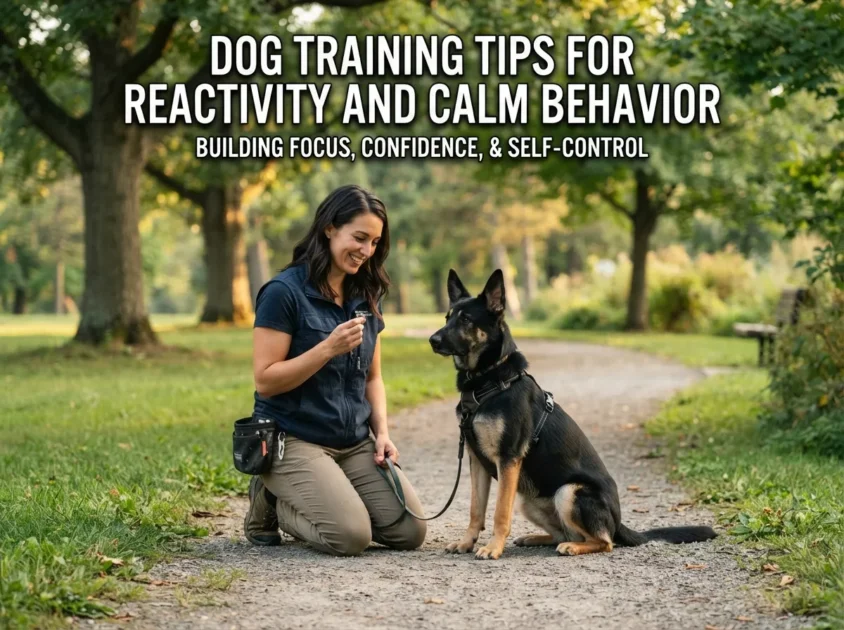
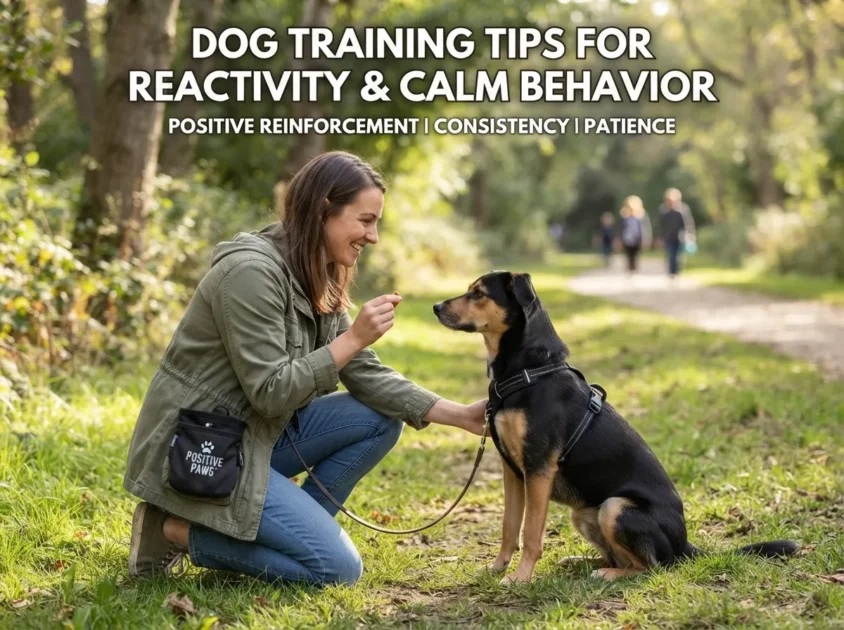
The best way to change behavior is to reward the good stuff. When you are out on a walk, keep high-value treats in your pocket. These should be things your dog loves more than anything, like small pieces of cheese or cooked chicken.
When your dog sees a trigger but chooses to look at you instead, give them a reward right away. This teaches them that looking at the trigger is not the goal. The goal is to look at you. Over time, your dog will start to look at you automatically when they see something that used to make them bark.
Be consistent. If you only reward them sometimes, they will get confused. Make sure everyone in your house follows the same rules. If you do not have time for a full training session, even a five-minute walk where you focus on calm behavior makes a big difference.
Teach Your Dog to Focus on You
A simple command like “watch me” or “look” is a lifesaver. You can teach this at home in your living room first. Hold a treat near your nose and wait for your dog to make eye contact. As soon as they do, say “yes” or use a clicker and give them the treat.
Once they are good at this inside, take it to the backyard. Then, try it on the sidewalk. By the time you are out on a real walk, your dog will be an expert at checking in with you. This gives them a job to do instead of staring at other dogs.
If they get distracted, stay patient. You can change your direction and walk the other way to help them reset. Training is not a straight line. You will have good days and bad days, and that is perfectly okay.
When to Get Extra Help
Sometimes, reactivity is deep-rooted. If your dog is showing signs of true aggression, or if you feel unsafe, please reach out to a professional trainer. Look for someone who uses positive reinforcement methods. Avoid anyone who suggests using shock collars or heavy punishment, as these can make reactivity much worse.
A good trainer will come to your home and see how you and your dog interact. They can give you a plan that fits your specific needs. Do not be afraid to ask for help. Asking for guidance shows how much you care about your dog.
Focus on Quality Time
Training should be fun, not a chore. If you find yourself getting frustrated, stop the session and go play a game of fetch or just cuddle on the couch. Your dog wants to please you, but they need you to be a calm leader.
Focus on the small wins. Maybe your dog did not bark at one car today. That is a success. Celebrate those moments. With time, those small wins turn into a dog that can handle the world with confidence and peace.
FAQ Dog Training Tips for Reactivity and Calm Behavior
How long does it take to fix dog reactivity?
Every dog is different, so there is no set timeline. Some dogs improve in a few weeks, while others need months of consistent practice. The key is to be patient and keep your training sessions short and positive.
Can older dogs learn to stop being reactive?
Yes, dogs of all ages can learn new behaviors. While it might take a bit more time to change habits in an older dog, they are very capable of learning to stay calm and follow your lead.
What should I do if my dog lunges during a walk?
Stay calm and do not yell. Immediately move away from the trigger, increase the distance between you and the other dog, and use a treat to get your dog’s focus back on you. Once they are calm, you can continue your walk.