
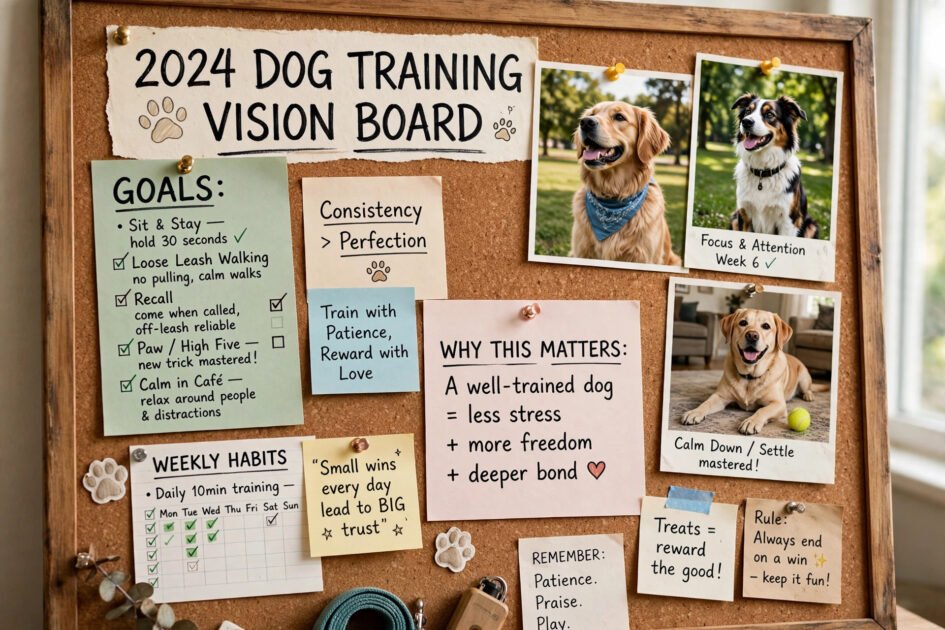

Starting a dog training career is exciting and overwhelming in equal measure. There are certifications to earn, skills to master, and a business to build, all while you’re still learning the craft. A dog training vision board cuts through that overwhelm by turning your fuzzy ambitions into a clear, visual roadmap you see every single day.
A vision board isn’t magic; it’s focus. When your goals are staring back at you each morning, you make decisions that move you toward them. Here are five sections every new trainer’s vision board should include.
1. Define Your Training Niche and Dream Client
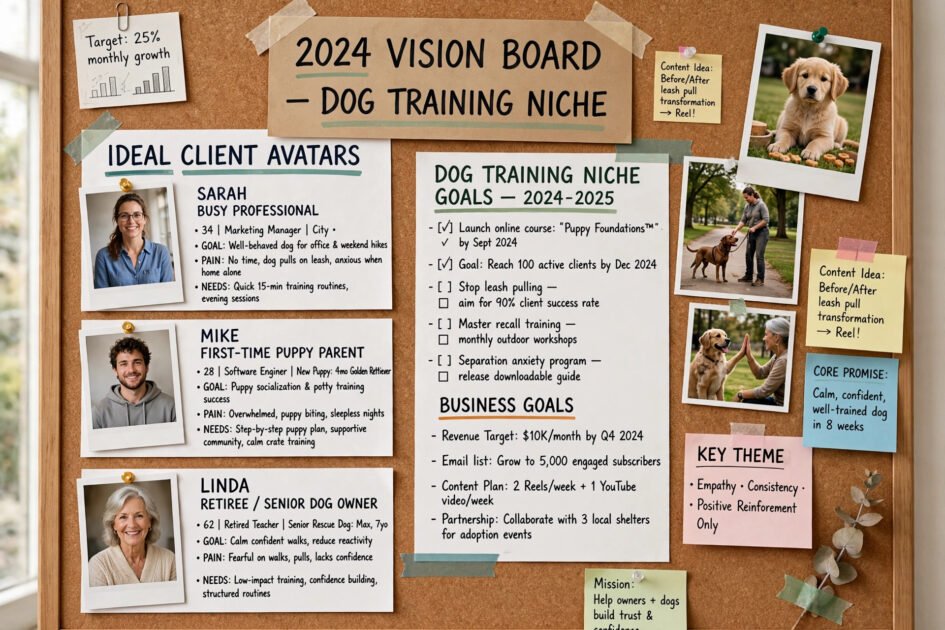
“I train dogs” is too vague to build a career on. The most successful trainers specialize: reactive dogs, puppies, service dog foundations, sport work, or separation anxiety. Your vision board should picture exactly who you serve.
Pin photos that represent your niche: a nervous rescue learning confidence, a bouncy puppy nailing its first sit, or an athlete dog mid-agility run. Add words describing your dream client: “committed,” “kind,” “ready to learn.” This clarity shapes everything from your marketing to your continuing education choices.
2. Visualize Your Ideal Training Space
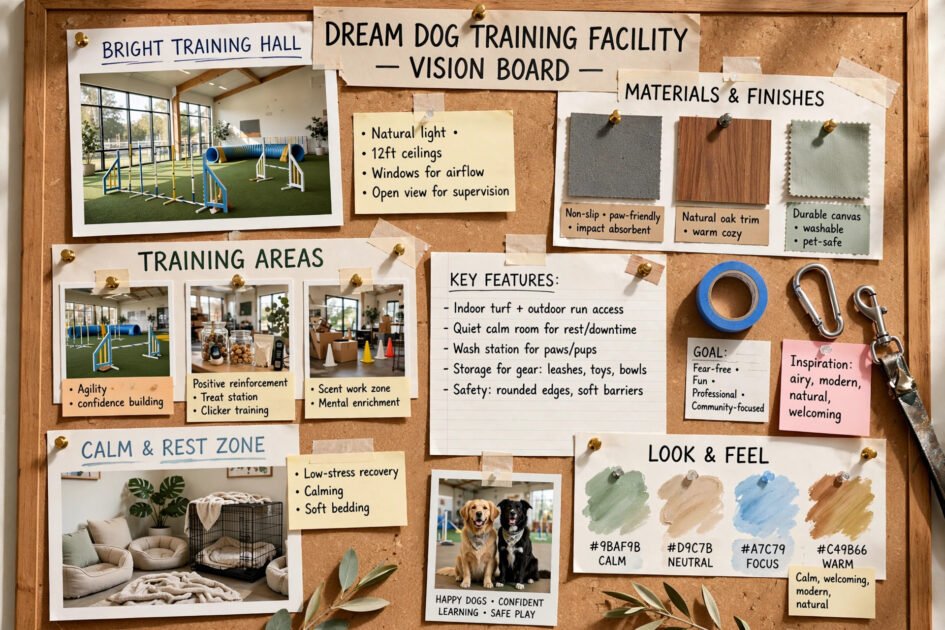
Where do you picture yourself working in five years? A sunlit training hall with rubber flooring? A fenced acre for off-leash work? A cozy home studio for one-on-one sessions? Put that space on your board.
Collect images of facilities you admire: the layout, the equipment, the atmosphere. Note the details that matter to you, like separate areas for reactive dogs or a welcoming lobby. Even if you’re starting in a rented church hall or clients’ living rooms, visualizing the destination keeps you moving toward it.
3. Map Out Skills and Certifications to Earn

Credentials build credibility, and a visual learning path keeps you accountable. Dedicate a section of your board to the skills and certifications you’re working toward, in order.
Pin the logos or badges of programs on your list: CPDT-KA, IAABC courses, Fear Free certification, or specialized workshops in your niche. Add target dates next to each. Checking one off and moving it to a “completed” corner of the board is deeply satisfying and shows visiting clients your commitment to growth.
4. Picture Your Business Growth and Income Goals
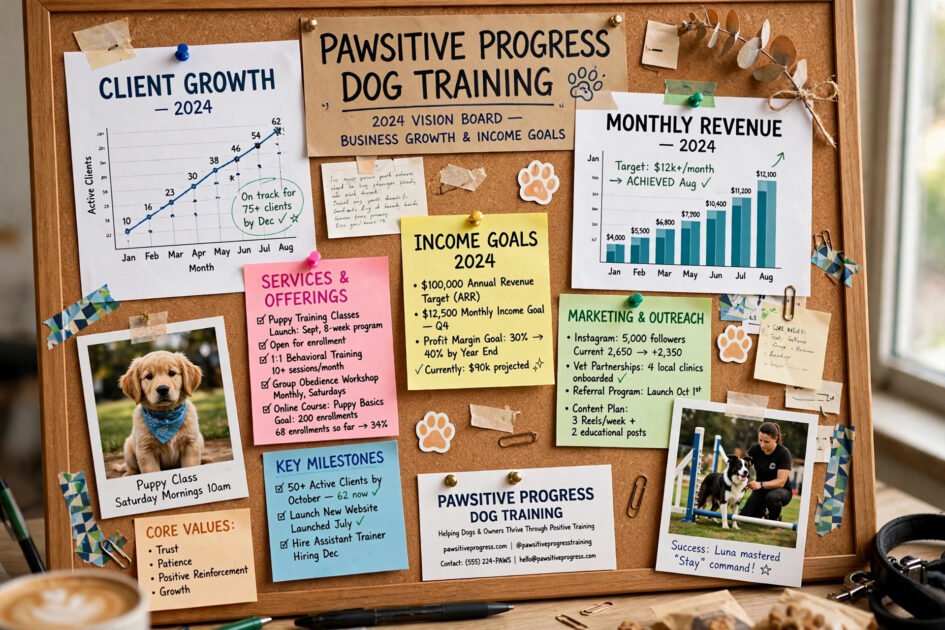
Passion pays the bills only if you plan for it. This is the section many trainers skip, and it’s the one that determines whether your career thrives. Be concrete: monthly income target, number of weekly clients, prices for packages.
Visualize it with numbers and images: a chart trending upward, a photo representing what financial stability means to you, your dream schedule written out. Add business milestones too: “first 10 five-star reviews,” “waitlist started,” “assistant hired.”
5. Include Daily Motivation and Affirmations

Training careers have hard days: difficult cases, slow months, self-doubt at 2 a.m. A corner of your board dedicated to motivation carries you through them.
Choose affirmations that feel true, not hollow: “I am becoming the trainer my clients need,” “Every expert was once a beginner,” or “Progress, not perfection, for my dogs and myself.” Pair them with photos that make you smile: your own dog, a breakthrough moment, your mentors.
FAQs
What is a vision board for a dog trainer?
It’s a visual collage of your career goals: your niche, dream facility, certifications, income targets, and motivation. It keeps your ambitions visible so your daily decisions align with them.
Should I make a physical or digital vision board?
Either works. Physical boards (corkboard, pins, magazine cutouts) feel tactile and satisfying. Digital boards (Canva, Pinterest) are portable and easy to update. Many trainers keep both.
How often should I update my vision board?
Review it monthly and refresh it yearly, or whenever a major goal is achieved. An outdated board loses its power, so move completed goals to a “wins” section and add new ones.
Do vision boards actually work?
They work as a focus tool, not magic. Research on visualization shows that regularly picturing your goals improves motivation and decision-making. The board keeps your targets top of mind.
What should new trainers avoid putting on a vision board?
Avoid vague wishes like “be successful.” Replace them with concrete, measurable goals: “earn CPDT-KA by December” or “book 15 sessions per week.” Specificity turns dreams into plans.
Final Thoughts
A dog training vision board turns a scattered to-do list into a career you can see. Define your niche, visualize your space, map your learning, plan your income, and fuel your motivation. Then put it where you’ll see it every day, and watch your decisions start lining up with your dreams.