
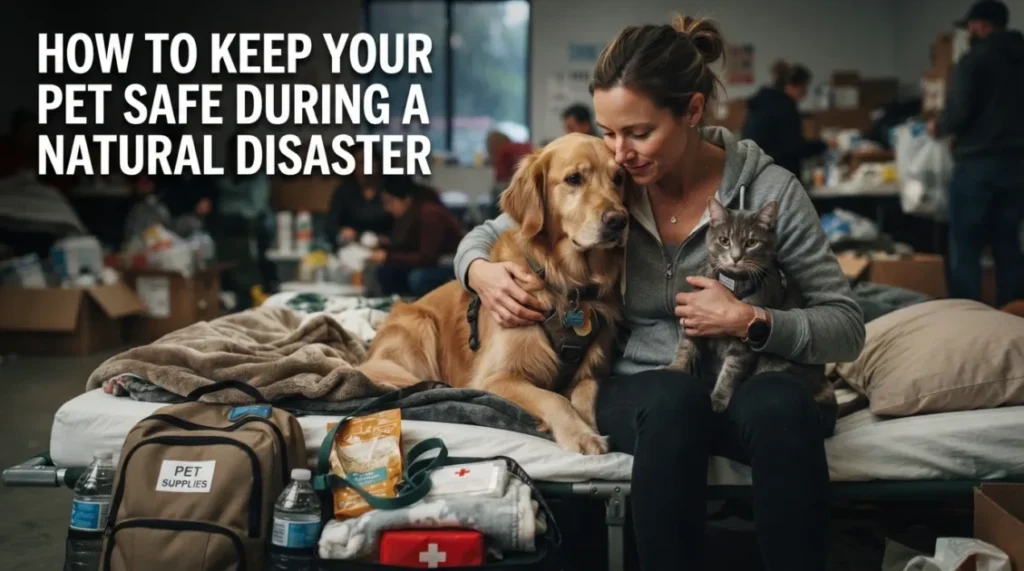

How to Keep Your Pet Safe During a Natural Disaster as it can strike at any time, bringing with them a sense of chaos, fear, and uncertainty. Whether it’s a hurricane, earthquake, wildfire, or flood, ensuring the safety of your loved ones is always a priority. However, in the rush of preparing for an emergency, pets are often overlooked. As part of the family, it’s vital to have a disaster preparedness plan that includes them.
This blog post will guide you through steps to let you know how to keep your pet safe during a natural disaster and help you stay prepared for the unexpected.
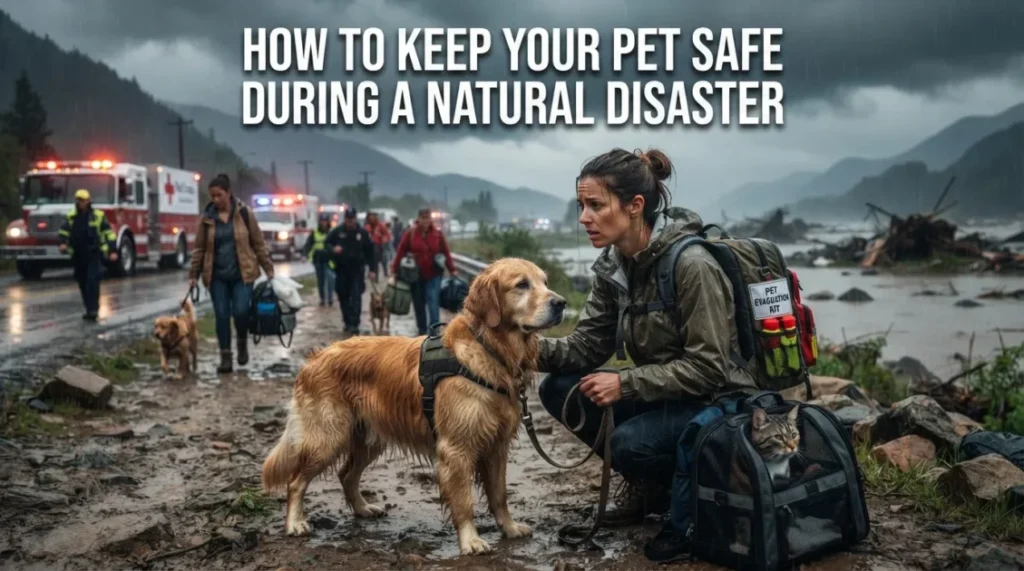
How to Keep Your Pet Safe During a Natural Disaster
Explore the sections below to get to know about how to keep your pet safe during a natural disaster.
Understanding the Risks to Your Pet
Before diving into preparedness steps on how to keep your pet safe during a natural disaster, it’s essential to understand the potential risks natural disasters pose to pets. While you may think your pets will be okay as long as you’re safe, the reality is that disasters can cause significant harm to your pets, too.
- Frightened pets: During a natural disaster, pets can become frightened by the loud noises, sudden movements, or unfamiliar smells. This anxiety can lead them to run away or get lost.
- Separation: In some situations, evacuating to a shelter or being separated from your pet becomes necessary. This can cause additional stress and fear for your pet, especially if they are not familiar with traveling or staying in new places.
- Physical dangers: Pets can be at risk from collapsing buildings, rising waters, falling debris, and other hazards that you may not even notice in your immediate panic.
- Health risks: After a disaster, pets may be exposed to diseases, contaminated water, or even hazardous substances that pose long-term health risks.
With this in mind, here’s how you can ensure your pet’s safety during a natural disaster.
also read The Future of Pet Breeding: Trends in Ethical Breeding.
1. Make a Disaster Preparedness Plan
Just like you make emergency plans for your family, it’s equally important to create a disaster preparedness plan for your pets. This plan should include essential items, evacuation routes, and sheltering options.
A. Assemble an Emergency Kit for Your Pet
Having an emergency kit for your pet is crucial. It’s best to prepare in advance so that you don’t have to worry about gathering everything while you’re in a panic. Your pet’s emergency kit should include:
- Food and water: A minimum of 72 hours’ worth of food and water for your pet, along with bowls for feeding.
- Pet medications: Keep a supply of any necessary medications your pet is on, and include a copy of the prescriptions in case you need to refill them.
- Leash, collar, and harness: These are essential if you need to evacuate with your pet or move them quickly.
- Pet ID tags and microchip information: Ensure your pet has an updated ID tag with your current contact information. Microchipping is also a good backup in case your pet gets lost.
- Pet first-aid kit: Include basic items like gauze, antiseptic, tweezers, and any items specific to your pet’s needs.
- Blanket or bedding: Your pet’s bedding will provide them comfort in stressful situations, so pack a familiar blanket.
- Waste disposal bags: Don’t forget to bring waste bags, especially if you’re evacuating to a temporary shelter.
- Toys and comfort items: A few of your pet’s favorite toys or comfort items can help calm them in stressful situations.
B. Research Local Shelters and Pet-Friendly Locations
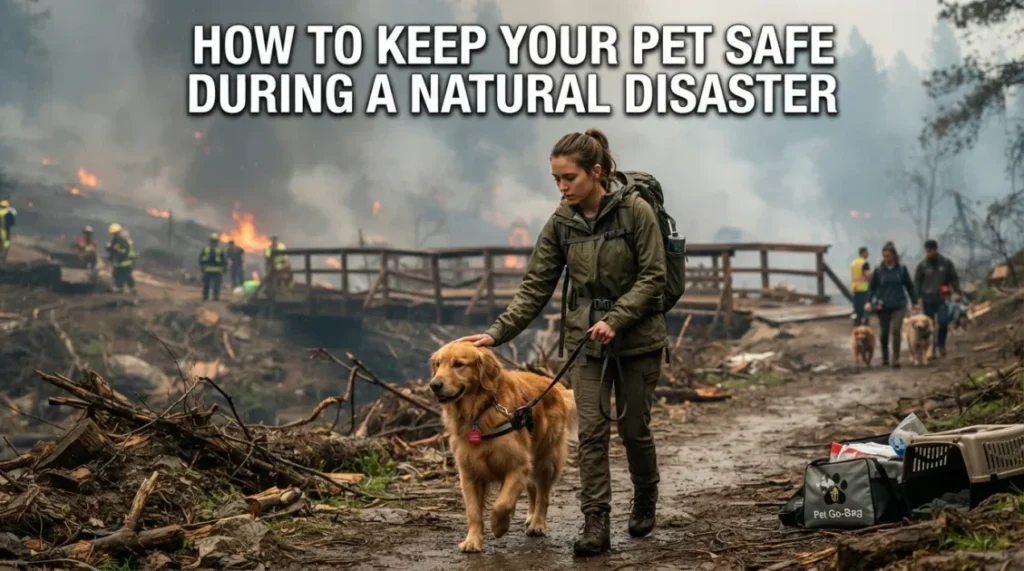
Before disaster strikes, research local shelters or pet-friendly hotels and motels that would be able to accommodate you and your pet in the event of an evacuation. Many shelters will not accept pets, so it’s important to know where you can go if you need to leave your home.
Make sure that these shelters allow pets and find out if they require any special arrangements in advance. It’s also useful to have the contact information for nearby veterinary clinics in case you need medical attention for your pet during or after the disaster.
C. Identify Safe Routes and Locations for Evacuation
It’s important to identify evacuation routes in case you need to leave your home. In case of a flood, wildfire, or another emergency, knowing where you and your pet can safely go is critical. You should include multiple routes, as some roads might be blocked due to the disaster.
2. Keep Your Pet Close and Calm
During the disaster itself, your pet’s safety and well-being will depend largely on how you react. When evacuating, you should focus on keeping your pet as calm and safe as possible.
A. Use a Pet Carrier
If your pet is small enough, using a pet carrier can make transportation easier and safer. A carrier keeps your pet contained and protected from outside elements while allowing them to feel secure. Make sure your pet is comfortable with their carrier ahead of time and practice getting them in and out of it.
For larger pets, make sure they are securely leashed and under control. Keeping them in your sight at all times is crucial, especially in chaotic situations.
B. Don’t Leave Your Pet Behind
Never leave your pet behind during an evacuation. Even if you’re in a rush or unable to bring your pet with you, it’s important to never abandon them. Your pet is just as vulnerable as you are, and being separated from you can cause them immense stress.
C. Remain Calm and Reassuring
Pets are sensitive to human emotions, and they can pick up on your stress and anxiety. Try to remain calm and reassuring during the evacuation process. Speak to your pet in a soothing tone, and keep their routine as consistent as possible.
3. Secure Your Home Before a Natural Disaster
In case you are unable to evacuate your pet immediately, securing your home to keep them safe is important. Take the following precautions for:
A. Identify Safe Areas Inside Your Home
Find an area in your home where your pet can safely stay. If you’re dealing with an earthquake, for example, a sturdy table or safe corner might work. In the case of floods or wildfires, choose an upper-level room that’s dry and away from the immediate dangers. Ensure that the area is free of debris and accessible for you to check on your pet.
B. Pet-Proof the Home
Before a natural disaster occurs, make sure your home is pet-proofed. This includes securing furniture and heavy objects that could fall or injure your pet during a disaster. Make sure windows, doors, and escape routes are secure.
C. Close All Escape Routes
During some natural disasters, pets may get scared and run off. It’s essential to close all escape routes (windows, doors, and gates) and keep your pet in an enclosed area where they can be monitored. If your pet is allowed to roam outside, make sure to keep them inside until the danger has passed.

4. What to Do After the Disaster
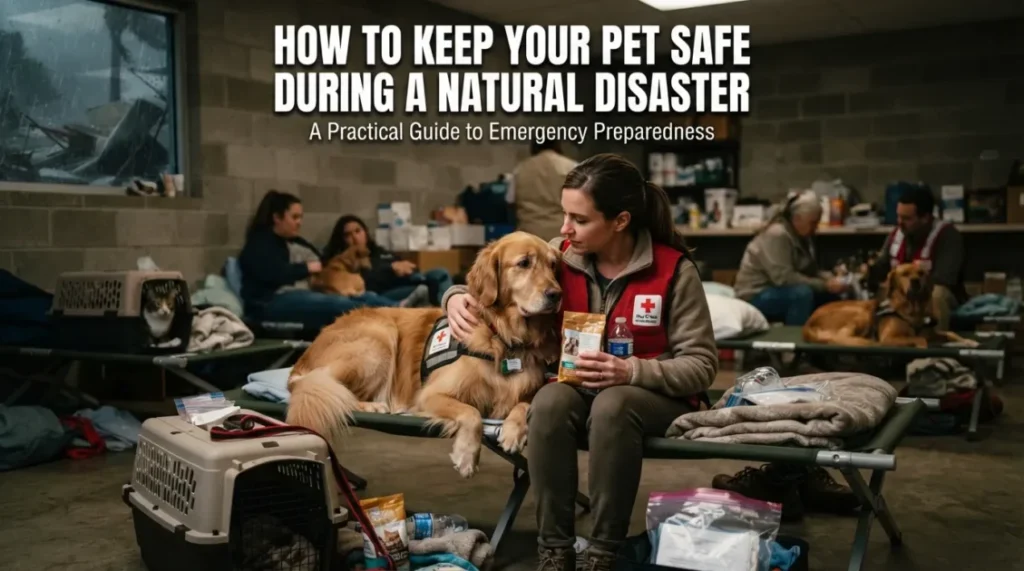
Once the disaster is over and the danger has passed, you must check on your pet’s well-being and ensure they are safe.
A. Check for Injuries
Inspect your pet for any injuries, such as cuts, bruises, or signs of trauma. If they appear to be hurt, contact a veterinarian immediately. Even if your pet looks fine, consider scheduling a checkup to ensure they didn’t ingest something harmful or suffer any internal injuries.
B. Watch for Signs of Stress
Pets can experience significant stress after a disaster. Common signs of stress in pets include panting, drooling, hiding, aggression, or changes in eating and bathroom habits. Make sure to monitor your pet closely and provide a calm, stable environment for them to recover.
C. Reconnect with Your Pet
If you were separated from your pet during the disaster, make sure to take time to reconnect with them once it’s safe to do so. Reassure them with familiar routines, playtime, and comforting interactions.
5. Additional Tips for Pet Owners
Here are a few more tips on how to keep your pet safe during a natural disaster:
A. Microchip Your Pet
A microchip is a small device that’s implanted under your pet’s skin. It contains a unique identification number that can help identify your pet if they get lost. This is especially important during disasters, as pets may become separated from their owners. Always keep your pet’s microchip information updated.
B. Pet Insurance
Consider purchasing pet insurance that covers emergency situations, such as accidents or injuries that may happen during a disaster. Pet insurance can ease the financial burden of veterinary care in times of crisis.
C. Know Your Pet’s Specific Needs
Each pet has unique needs and preferences. For example, some pets may have special dietary restrictions, while others may be more sensitive to noise. Take note of these preferences and prepare accordingly.
Conclusion
When a natural disaster strikes, your primary concern should always be the safety of your loved ones, and that includes your pets. By planning ahead, staying calm, and ensuring that your pet has everything they need, you can keep them safe and secure throughout any emergency. Always remember that pets depend on their owners for protection, and it’s your responsibility to ensure they’re well-prepared for whatever comes their way.
By following these steps you get to know how to keep your pet safe during a natural disaster. Make your pets’ safety a priority, and be ready for the unexpected.