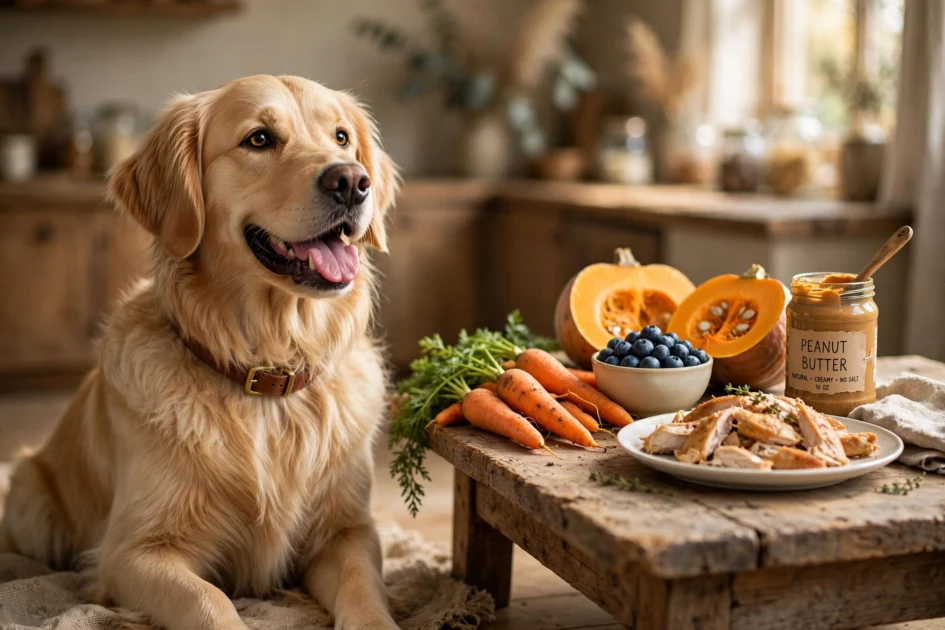

Human foods dogs can and can’t eat You are making dinner, and those big hopeful eyes are locked on your plate. Every dog owner knows the look. The good news: sharing a snack is not always bad. The bad news: some everyday human foods can make dogs seriously ill.
That is why we put together this simple, printable list: five foods that are genuinely good for dogs, and five that should never end up in their bowl. Knowing the difference takes the guesswork out of snack time.
Safety is not just about food, though. Protecting your pup from everyday dangers matters too — which is why we also wrote a guide on how to keep your dog safe when the environment turns hazardous.
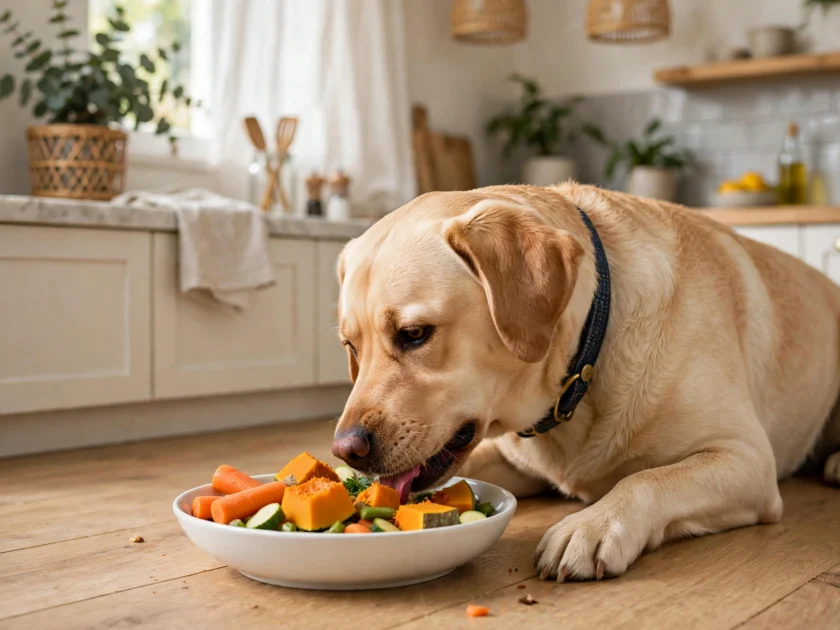
Safe Foods
These vet-approved foods can be shared with your dog in moderation. Treat them as snacks, not meal replacements, and adjust portions to your dog’s weight.
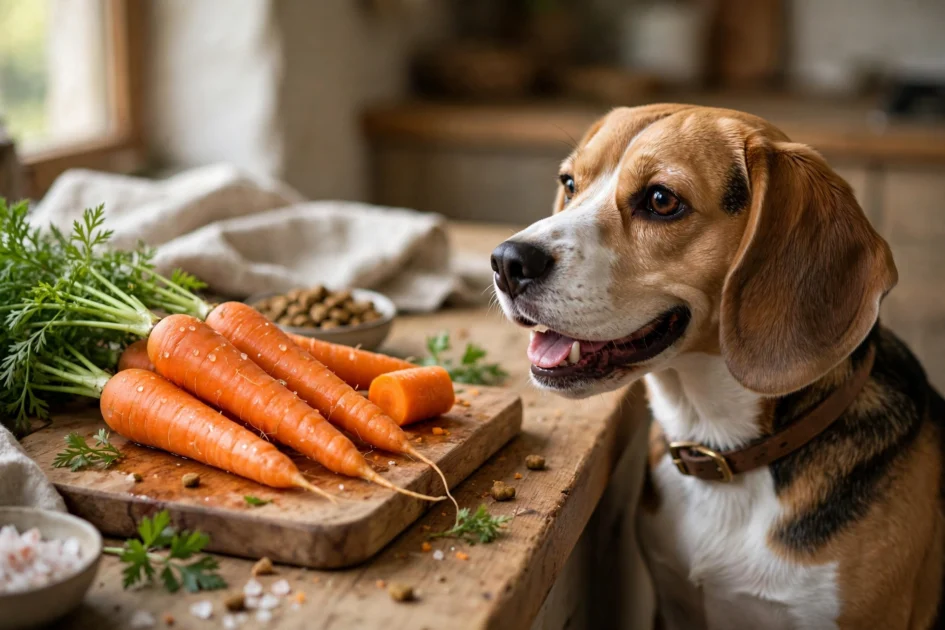
1. Carrots
Human foods dogs can and can’t eat Carrots are a crunchy, low-calorie powerhouse packed with beta-carotene and fiber — great for your dog’s eyes, digestion, and teeth, and the crunch even helps scrape away plaque. Wash them, cut into bite-size coins or sticks to avoid choking, serve raw or lightly steamed, and start with a few pieces.
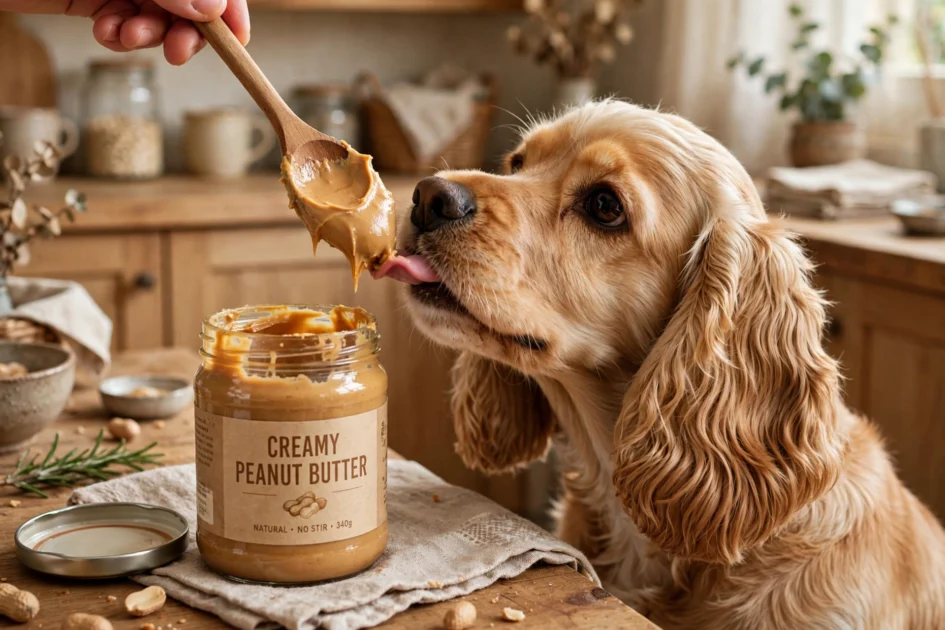
2. Peanut Butter
Most dogs go wild for peanut butter, and in moderation it is a great source of protein, healthy fats, and vitamins B and E — perfect for a Kong or hiding a pill. The critical rule: check the label and choose plain, unsalted peanut butter with NO xylitol. Because it is calorie-dense, offer just a teaspoon for small dogs and a tablespoon for large ones.
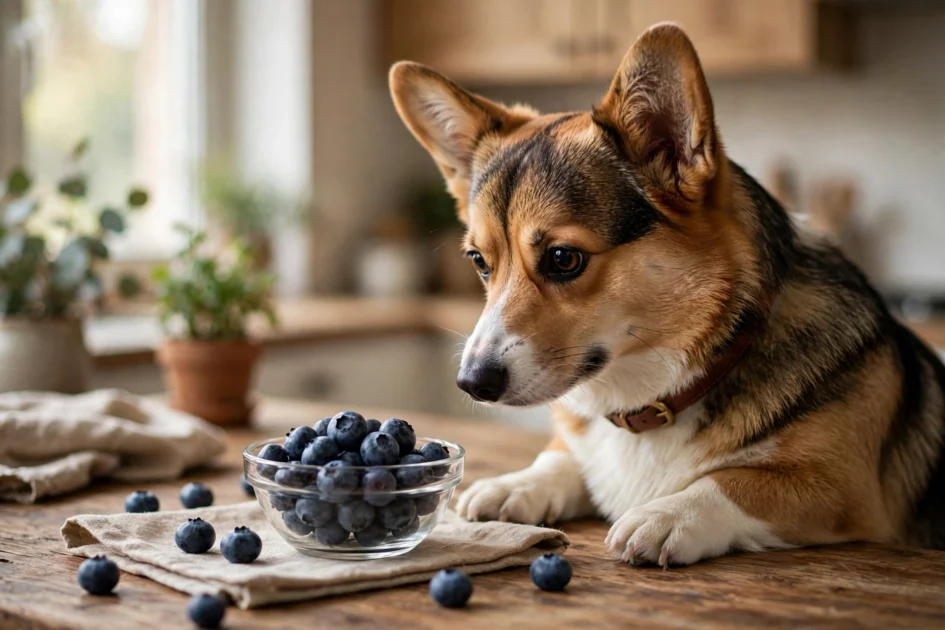
3. Blueberries
Blueberries are tiny but mighty — loaded with antioxidants, vitamin C, and fiber that support your dog’s immune system and brain health, and one of the lowest-calorie treats you can offer. Wash them, serve fresh or frozen, cut them in half for small dogs, and offer just a small handful.
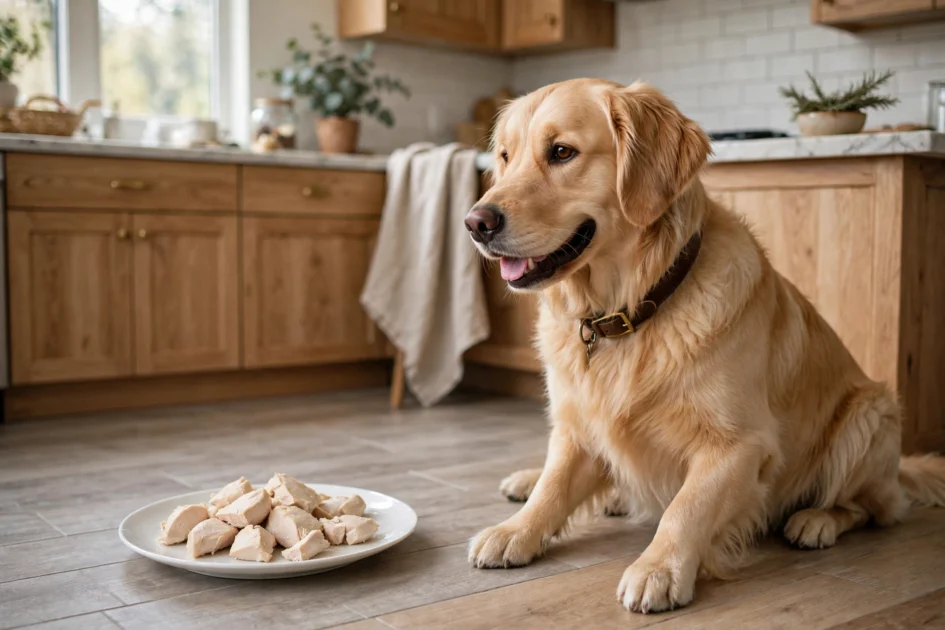
4. Cooked Chicken
Plain cooked chicken is a lean, high-protein favorite that supports strong muscles — vets often recommend bland boiled chicken with rice for upset stomachs. Serve it boneless, skinless, and unseasoned: boiled or grilled with no butter, onion, garlic, or sauces. Never give cooked bones, which splinter and injure the digestive tract. A few strips in their meal is plenty.
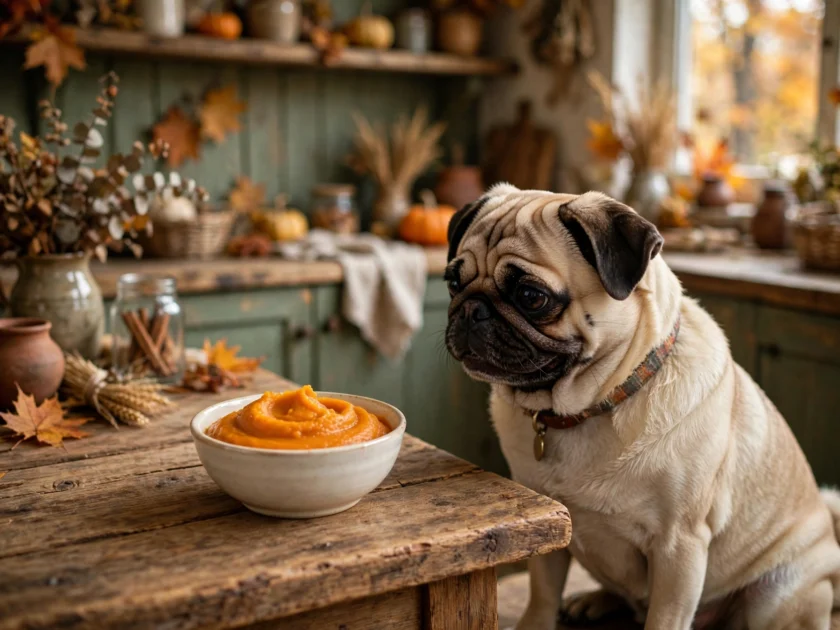
5. Plain Pumpkin
Plain pumpkin puree is a fiber-rich digestive helper that can ease both constipation and mild diarrhea, plus vitamins A, C, and E. The key word is PLAIN: use pure canned pumpkin, never pie filling, which is loaded with sugar and spices. Mix a teaspoon for small dogs or a tablespoon or two for large dogs into their regular food.
Toxic Foods — Never Feed These
These five foods are genuinely dangerous — some in any amount. Memorize the list, keep them out of reach, and warn everyone in your household.
6. Chocolate
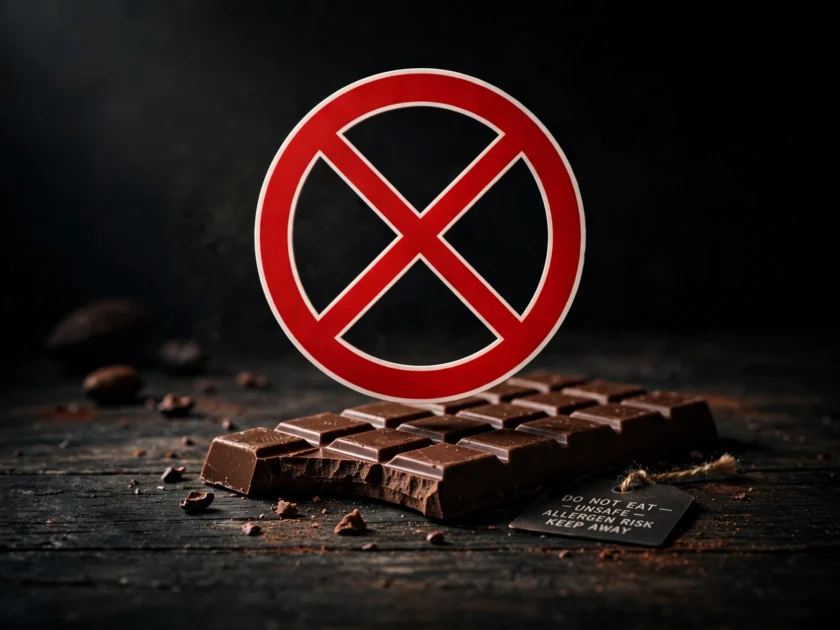
Chocolate contains theobromine and caffeine, which dogs metabolize far too slowly — dark and baking chocolate are the most dangerous, but no chocolate is safe. It can cause vomiting, a racing heart, tremors, seizures, or worse. If your dog eats chocolate, call your vet or emergency clinic immediately with the type, the amount eaten, and your dog’s weight. Do not wait for symptoms, and never induce vomiting unless your vet says to.
7. Grapes & Raisins
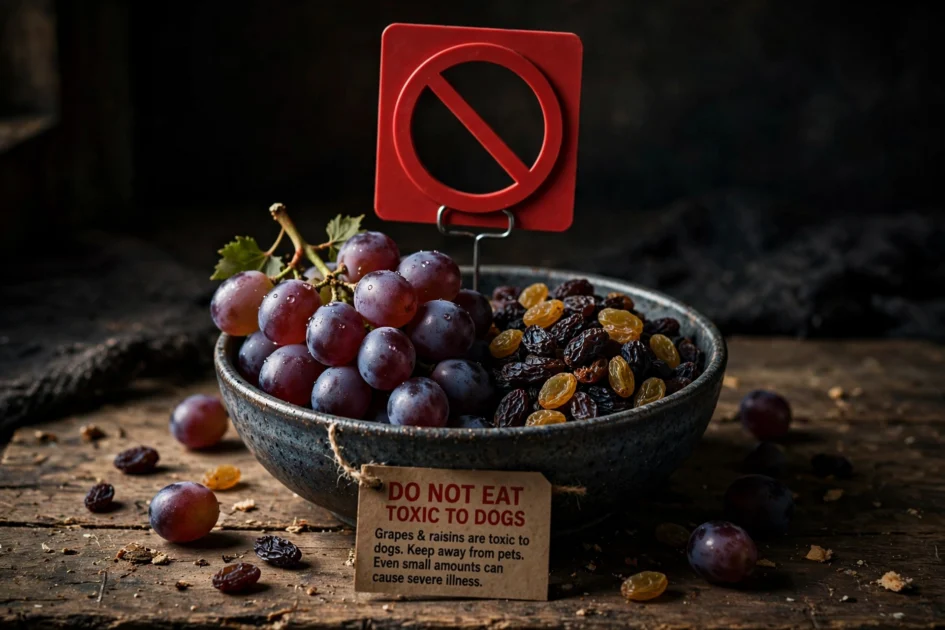
Grapes and raisins can trigger sudden kidney failure in dogs — and since nobody knows the exact toxic dose, even a single grape can be dangerous for a small dog. If your dog eats any, call your vet right away; early treatment is critical. Watch for vomiting, lethargy, or reduced urination — but never take a wait-and-see approach.
8. Onions & Garlic
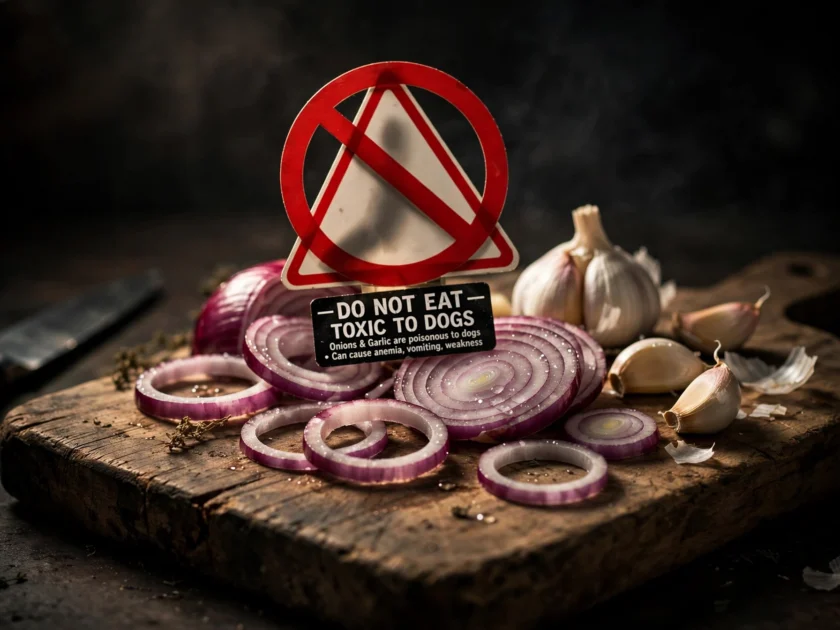
Onions and garlic damage a dog’s red blood cells and can cause dangerous anemia — and the concentrated powders are just as harmful as the fresh bulbs. They lurk in sauces, gravies, baby food, and seasoned leftovers. Symptoms like pale gums, weakness, and reddish urine can take days to appear. If your dog eats any, contact your vet right away.
9. Xylitol (Birch Sugar)
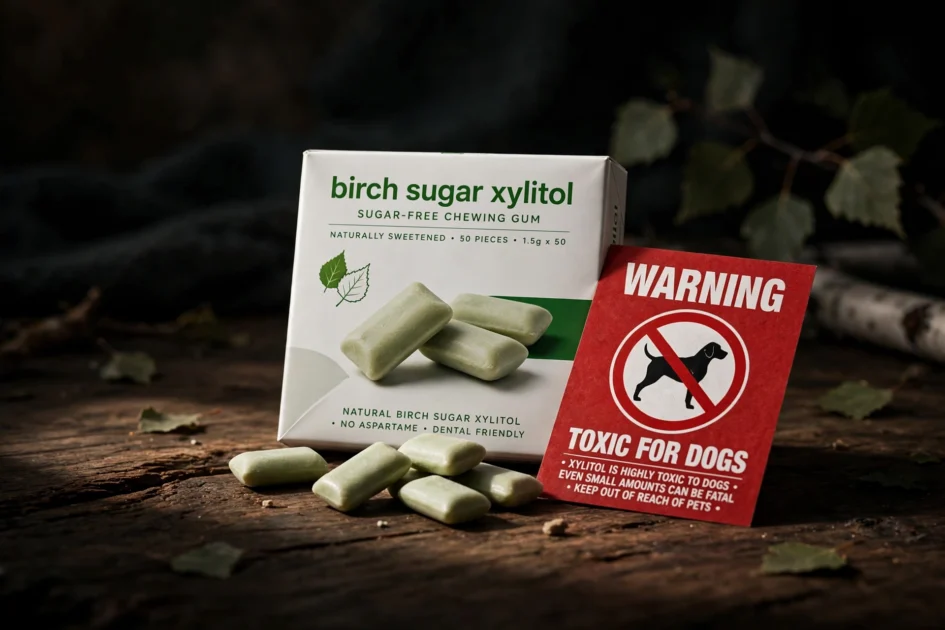
Xylitol — often listed as “birch sugar” — is a sweetener in sugar-free gum, candy, mints, some peanut butters, and baked goods. In dogs it triggers a massive insulin release, causing a dangerous blood-sugar crash, and even small amounts can cause liver failure. Treat it as an emergency: call your vet or pet poison helpline immediately, and always read labels before sharing processed foods.
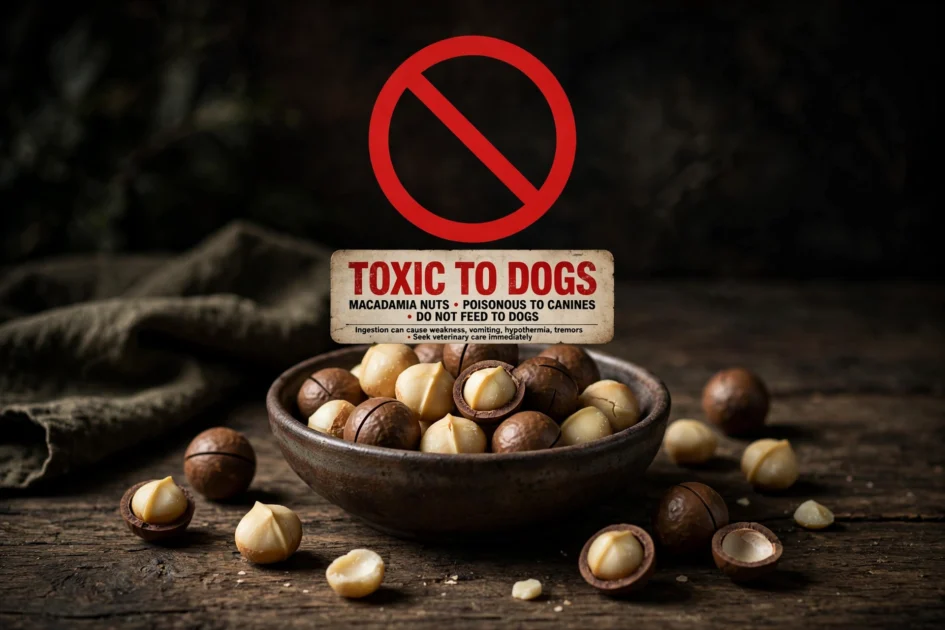
10. Macadamia Nuts
Macadamia nuts can cause weakness, vomiting, tremors, hind-leg wobbliness, and overheating in dogs, with symptoms often appearing within 12 hours. They are also common in cookies and trail mixes dogs love to steal. If your dog eats any, call your vet with the amount and timing, keep your dog calm, and let the vet decide if an examination is needed.
FAQ
Can dogs eat cheese?
Most dogs can handle small amounts of plain, low-fat cheese as an occasional treat. However, some dogs are lactose-sensitive and will get gassy or develop diarrhea. Offer a small cube first, skip rich or blue cheeses, and keep portions tiny.
What is the most dangerous human food for dogs?
Xylitol is arguably the most urgently dangerous — even a tiny amount can cause a life-threatening blood-sugar crash — followed closely by chocolate, grapes and raisins, onions and garlic, and macadamia nuts. With all of them, speed matters: call your vet the moment you suspect your dog ate any.
My dog ate something toxic but seems fine — should I still call the vet?
Yes, absolutely. Symptoms of onion or grape poisoning can take hours or days to appear, and by the time you notice, the damage may be harder to treat. A quick call costs nothing; waiting could cost your dog’s health.
Can I share my dinner leftovers with my dog?
It is risky. Leftovers often contain hidden onion, garlic, heavy seasoning, butter, or cooked bones — all harmful. Instead, set aside a small portion of plain cooked meat or vegetables before seasoning them. When in doubt, leave the leftovers for yourself.
Does this article replace my vet’s advice?
No — this list is a helpful starting guide, but it does not replace professional veterinary advice. Age, breed, weight, and health conditions can all change what is safe for your dog. Check with your veterinarian before adding new foods, and call them immediately if you suspect poisoning.
Print this list, stick it on the fridge, and share it so everyone knows the safe treats and the danger foods. Store toxic items in sealed containers up high, and remember that even the best snacks are extras — a complete, balanced dog food should always remain your dog’s main diet. When in doubt, ask your vet before you share.