


Introduction
There is a sound every Labrador owner knows by heart: the happy thump of a tail against the kitchen cupboards at six in the morning. Then comes the wet nose nudging your hand before your eyes are even open. A Labrador does not do mornings quietly. He greets the day with total enthusiasm, convinced you are the best thing that has ever happened to him.
Bred in Newfoundland as a fisherman’s helper, and refined in England into the world’s favourite family dog, the Labrador has spent two centuries perfecting one job: being beside people. This guide covers what that really looks like day to day, from his sunny temperament to the health problems worth watching for.

Characteristics
Meet a Labrador and the first thing you notice is the face: kind brown eyes, a broad head, and an expression that seems permanently delighted to see you. Beneath it sits a sturdy, athletic body built for swimming and carrying. Adult males stand 57 to 62 centimetres tall and weigh 29 to 36 kilograms, while females are a touch smaller. All that muscle is wrapped in a short, dense double coat in black, yellow, or chocolate.
Temperament is where the Labrador earns his reputation. He is gentle, patient, and eager to please, which is why families and first-time owners love him. He is also clever and food-motivated to a comical degree, which makes training a joy and a stolen sandwich a near certainty. Most Labradors live 10 to 12 years, and their energy sits firmly on the high side: this is a dog who needs real exercise every day.

Habits and Behaviour
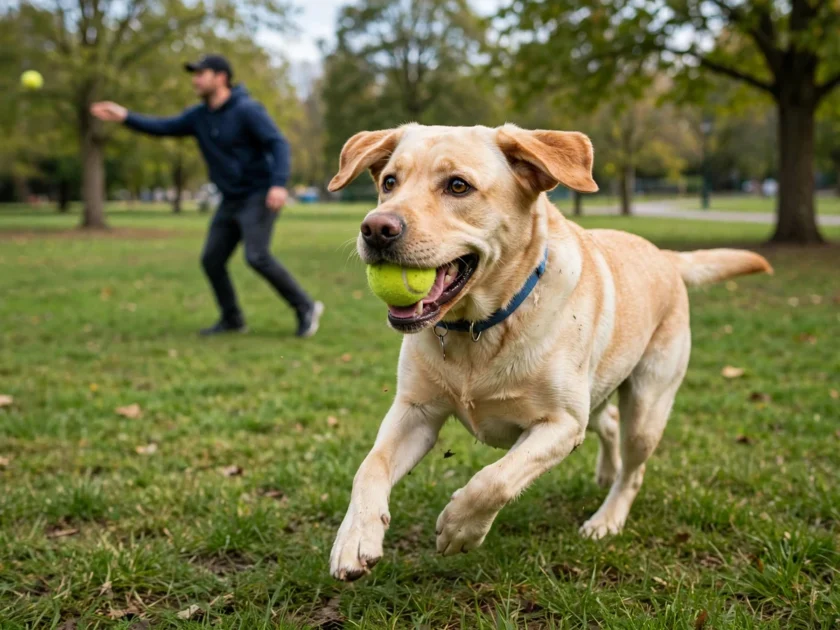
A typical Labrador day is simple: eat breakfast at lightning speed, go outside, play, eat again, and nap in a sunbeam. He is a creature of habit who thrives on routine, and he will learn your routine faster than you will learn his. Labradors are mouthy by nature, not from aggression but from heritage: they were bred to carry things gently, so do not be surprised when yours greets guests by proudly presenting a shoe or a sock.
Exercise is not optional with this breed. Aim for at least an hour a day of walking, swimming, or fetch, because a bored Labrador is a destructive Labrador. The good news is that training him is genuinely fun, and he picks up commands quickly, especially when treats are involved. Around children he is famously tolerant, and with other pets he is usually the peacemaker. Our guide to the dog breeds that are the easiest to train explains why he sits near the top of every such list.
Common Diseases and Health Problems
For all his robustness, the Labrador carries a few well-known health risks every owner should know by name. Hip dysplasia and elbow dysplasia top the list: the ball and socket of the joint do not fit together neatly, which causes pain, stiffness, and eventually arthritis. Obesity is the second great Labrador problem, and it is tangled up with the first, because extra weight pounds sore joints.
Many Labradors carry a gene variant that makes them feel hungry all the time, so the dog staring at you while you eat is not being dramatic. Other conditions include progressive retinal atrophy, an inherited eye disease that gradually steals vision, and cataracts in older dogs. Some develop exercise-induced collapse, and ear infections are common after swimming. Bloat is the emergency every large, deep-chested breed owner fears: the stomach fills with gas and twists, and it needs a vet within the hour.
Solutions and Prevention
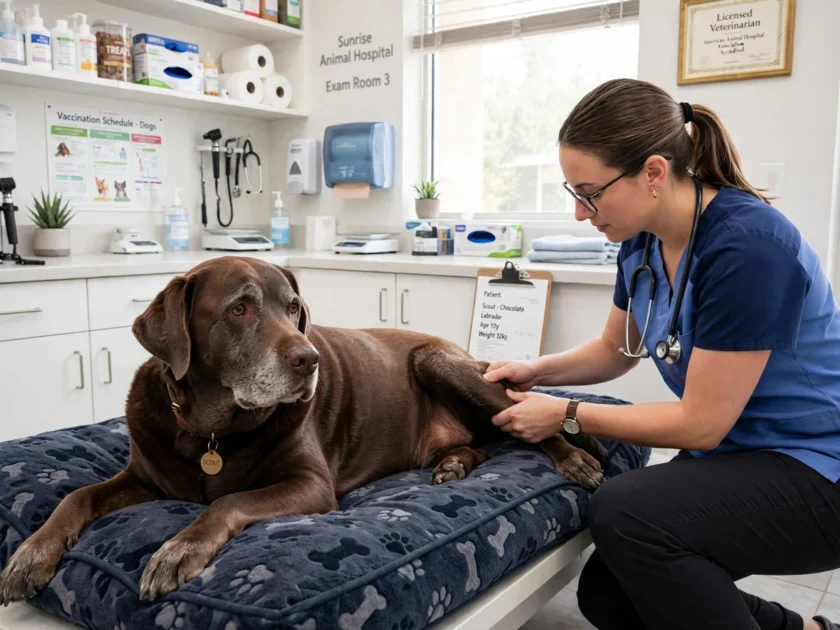
Prevention starts with the least glamorous tool in the house: the measuring cup. Feed a measured amount of good-quality food twice a day, and count treats as part of the daily total. Keeping a Labrador lean is the single most powerful thing you can do for his joints and his lifespan. Ask your vet to check his weight at every visit, and if he is already carrying extra kilos, switch to a weight-management food and swap biscuit treats for carrot sticks.
Buy from a breeder who screens parents for hip and elbow dysplasia and eye disease, and keep up with annual vet checks as he ages. Build exercise gradually in puppies, avoiding hard running and jumping on stairs until their joints mature. After swimming, dry those ears thoroughly, and feed smaller meals from a slow-feeder bowl to reduce the risk of bloat. A little daily discipline buys your Labrador Retriever years of happy, pain-free fetch.

Grooming and Cleaning
If you have ever owned a Labrador, you already know the joke: they only shed twice a year, for six months each time. That thick double coat drops hair constantly, and it explodes during the spring and autumn moult. A quick brush two or three times a week with a slicker brush or rubber grooming mitt keeps it manageable, rising to daily brushing during moulting season.
Bathing only needs to happen every six to eight weeks, or after a muddy adventure, using a gentle dog shampoo. Check those floppy ears weekly for redness or smell, and clean them with a vet-approved ear cleaner, especially after swimming. Trim nails every three to four weeks, and brush his teeth several times a week with dog toothpaste to keep gum disease away. Start young, pair each session with a treat, and grooming becomes easy.

Living With a Labrador Retriever: Care Tips for Owners
Living with a Labrador means accepting a few cheerful truths. Your house will have hair in it. Your socks will occasionally go missing. Your dog will try to swim in any puddle, then shake himself dry right next to you. Make peace with these things early and you will enjoy one of the easiest, most rewarding dogs on earth. Give him a job: learning a new trick each month keeps his clever brain busy.
Set boundaries kindly but firmly from puppyhood, because a 35-kilogram dog who was allowed to jump up as a puppy is a real problem as an adult. Crate training gives him a safe den and protects your furniture during the chewing phase. Most importantly, include him in your life: Labradors do not cope well with long hours alone in the garden, and a lonely one digs up the flower beds.

Frequently Asked Questions
Are Labrador Retrievers good with children?
Yes, Labradors are one of the best breeds for families with children. They are famously patient, gentle, and tolerant of noise and rough play. Always supervise young children around any dog.
How much exercise does a Labrador need?
An adult Labrador needs at least an hour of exercise every day, ideally walking, swimming, and fetch. Puppies need less: short play sessions and gentle walks, because hard exercise can damage growing joints.
Do Labradors shed a lot?
Yes, Labradors shed heavily all year round, with two big seasonal moults in spring and autumn. Regular brushing two to three times a week, daily during moulting season, keeps loose hair under control.
Are Labradors easy to train?
Labradors are among the easiest breeds to train because they are intelligent, eager to please, and highly food-motivated. Keep sessions short and fun, reward generously, and start socialisation early.
How long do Labradors live?
Most Labradors live 10 to 12 years, and keeping them lean can genuinely extend that. Lean Labradors live on average around two years longer than overweight ones, so portion control is one of the kindest things you can do.