
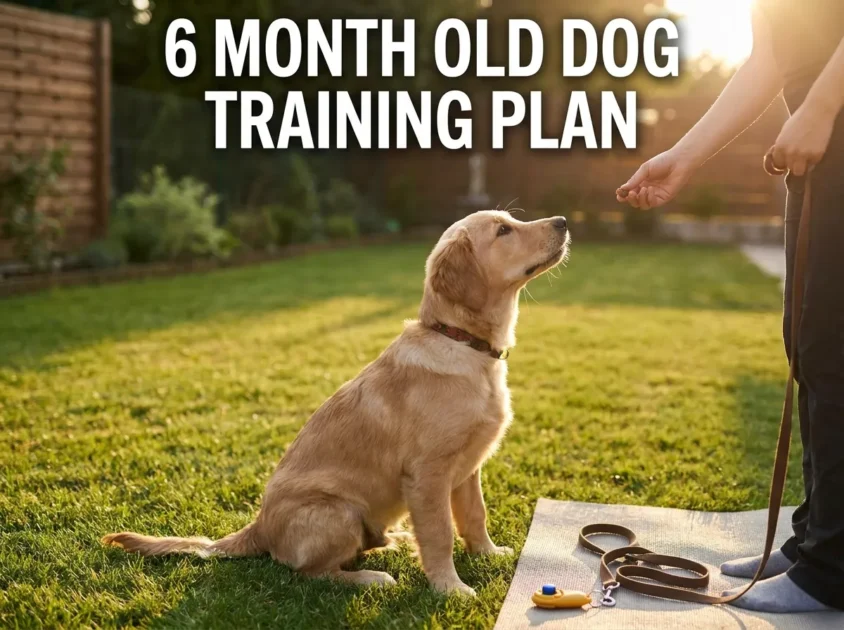

Congratulations on making it this far with your puppy. At 6 Month Old Dog Training Plan is likely acting more like a teenager than a baby. They have more energy, they might test your patience, and they are definitely stronger than they were a few months ago.
This is a critical time for training. If you stop now, you might lose all the hard work you put in during those first few months. The good news is that your dog is smart and ready to learn. At Clumsy Paw | For Pet Lovers and Pet Enthusiasts, we believe that staying consistent is the secret to success.
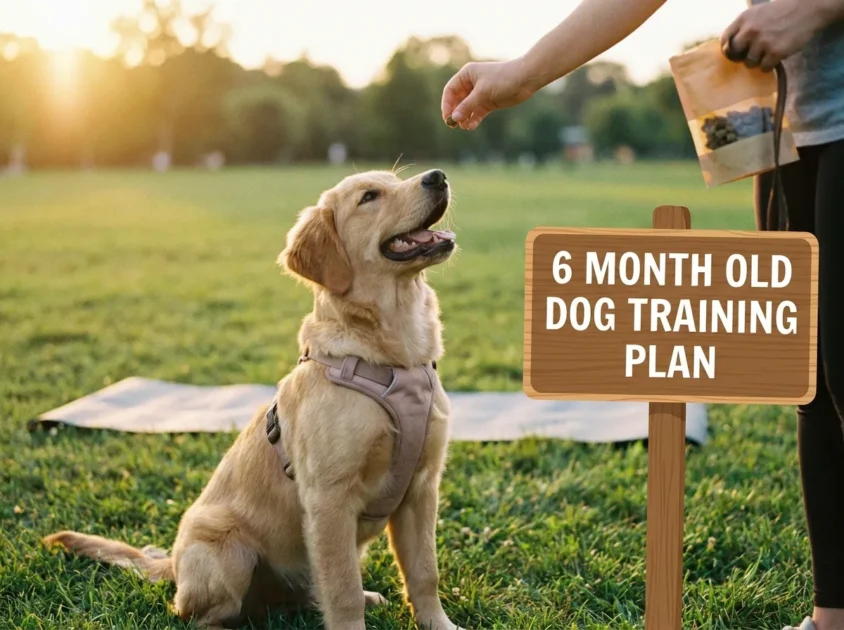
6 Month Old Dog Training Plan
Understanding Your Teenage Dog
At six months, your dog is going through big physical and mental changes. Hormones are kicking in, and their brain is working overtime to figure out where they fit in the world. You might notice they suddenly “forget” commands they used to know perfectly.
Do not get frustrated. This is normal behavior. Your dog is not being mean or stubborn on purpose. They are just distracted by everything new and exciting. Your job is to be the calm, steady leader they need.
If your home still feels chaotic, remember that safety is always part of training. You should check out these Top 5 Ways to Pet Proof Your Home for Safety to make sure your space is ready for a dog that can reach higher and chew harder than before.
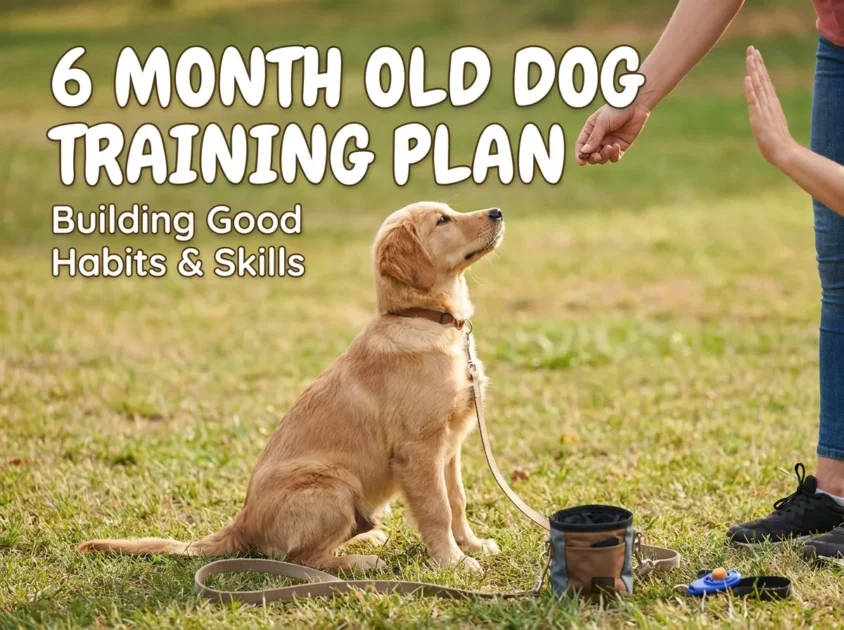
Focus on Impulse Control
Impulse control is the most important thing to work on at six months. This means teaching your dog to think before they act. They want to jump on people, grab food off the counter, and pull toward every squirrel they see. You need to teach them that patience pays off.
Start with the “wait” command before they eat their meals. Put the bowl down, and if they try to dive in, lift it back up. Wait for them to sit and look at you calmly. Once they do, give them the “okay” to eat.
You can also practice this during walks. If your dog pulls toward a tree or a person, stop walking immediately. Stand still until they look back at you or put some slack in the leash. Once the leash is loose, you can start walking again. This teaches them that pulling gets them nowhere, but walking nicely keeps the adventure moving.
Refining Basic Commands
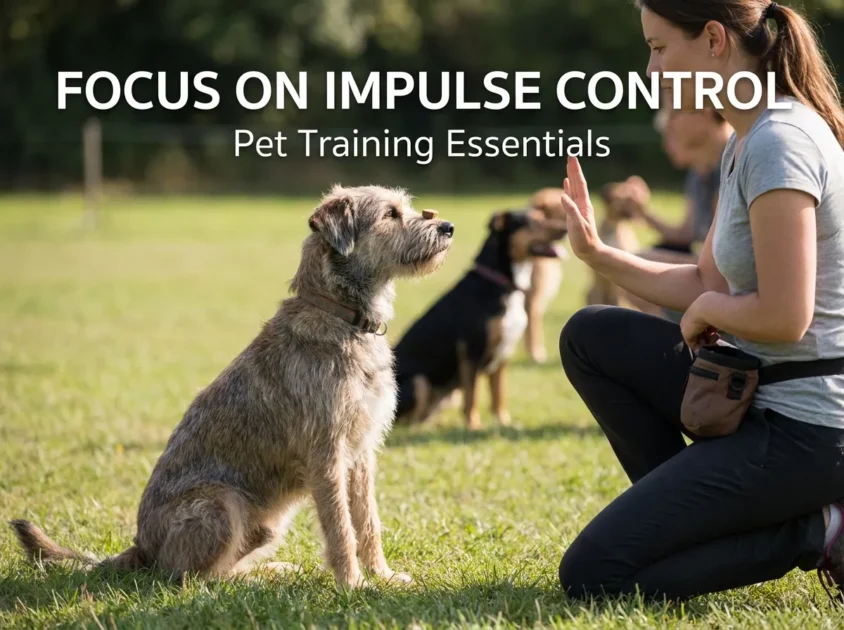
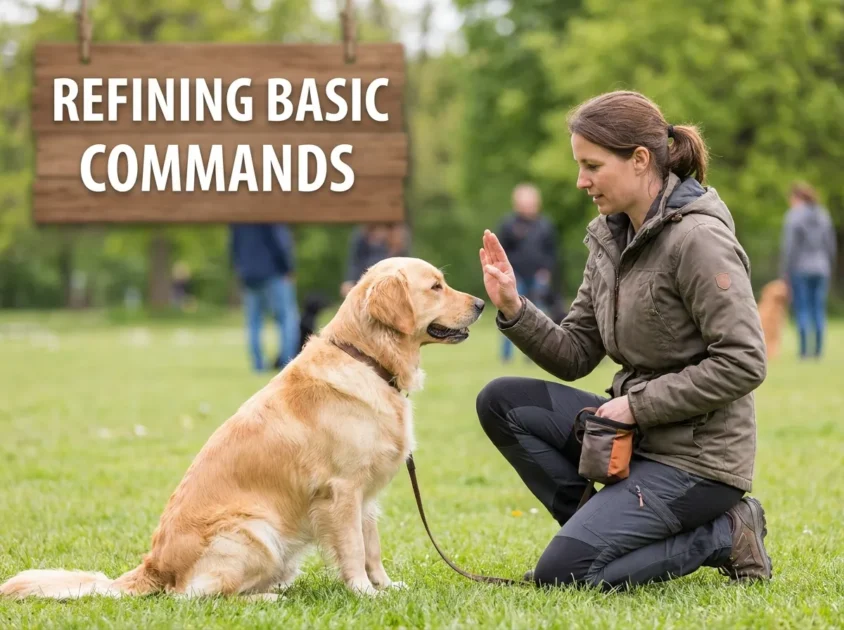
Your dog should know “sit,” “stay,” and “come” by now. At six months, you need to make these commands reliable, even with distractions. It is easy for a dog to sit in a quiet kitchen. It is much harder to sit in a park full of other dogs.
Take your training sessions to different places. Practice in your yard, on the sidewalk, or at a quiet corner of a park. Keep your sessions short, around 5 to 10 minutes, so your dog stays focused.
Use high-value rewards for difficult situations. If your dog comes when called at the park, give them a piece of real chicken or cheese, not just a dry biscuit. You want them to think that listening to you is the best thing that could ever happen to them.
Socialization is Still Necessary
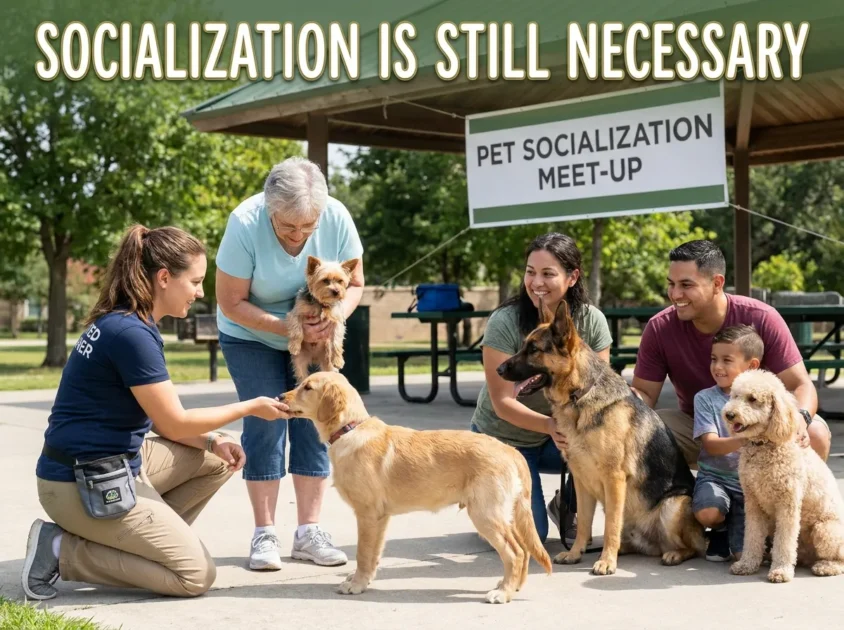
Many people think socialization ends after the puppy shots. That is not true. You should continue to expose your dog to new people, places, and sounds throughout their life. However, at six months, you want to focus on calm social interactions.
Avoid chaotic dog parks if your dog gets overwhelmed easily. Instead, set up playdates with one or two dogs you know are well-behaved. This helps your dog learn how to play and interact without getting into bad habits like bullying or extreme over-excitement.
Make sure they experience different surfaces too. Walk them on gravel, grass, wood, and concrete. Let them hear loud trucks or sirens from a safe distance. If they seem scared, stay calm and give them space. Do not force them into situations that cause them to panic.
Handling Teenage Challenges
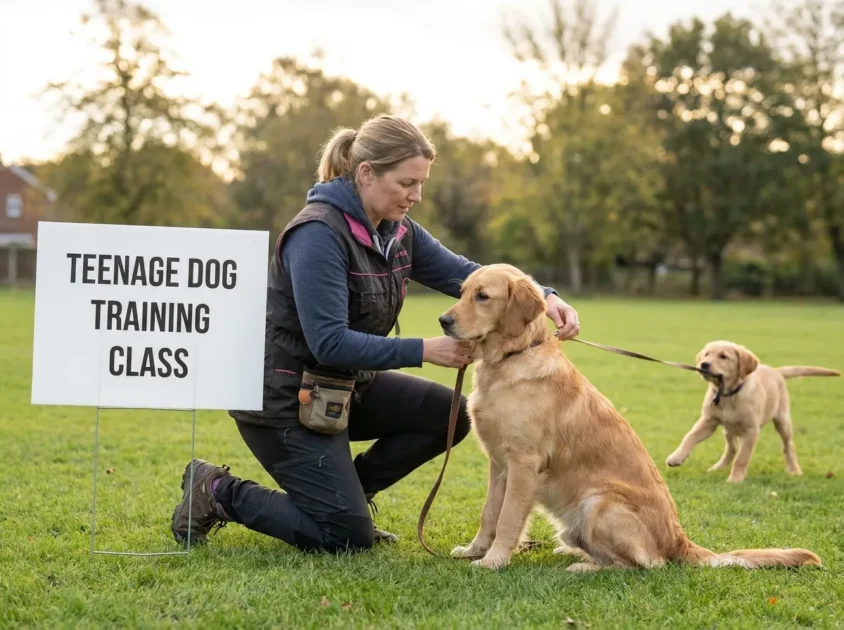
You will likely face some regressions. Maybe your dog starts chewing your shoes again or refuses to come inside. When this happens, go back to basics. If they are chewing things they should not, provide more exercise and brain games.
A tired dog is a good dog. If your dog is destroying your house, they probably have too much bottled-up energy. Increase their walk time, play fetch, or use puzzle toys to make them work for their food. Mental exercise is just as tiring as physical exercise.
Also, keep an eye on their confidence. Some dogs become fearful of things they were fine with before. If your dog suddenly fears a trash can or a specific person, just be patient. Give them time to approach things on their own terms. Never punish them for being afraid, as that will only make the fear worse.
Consistency is Your Best Friend
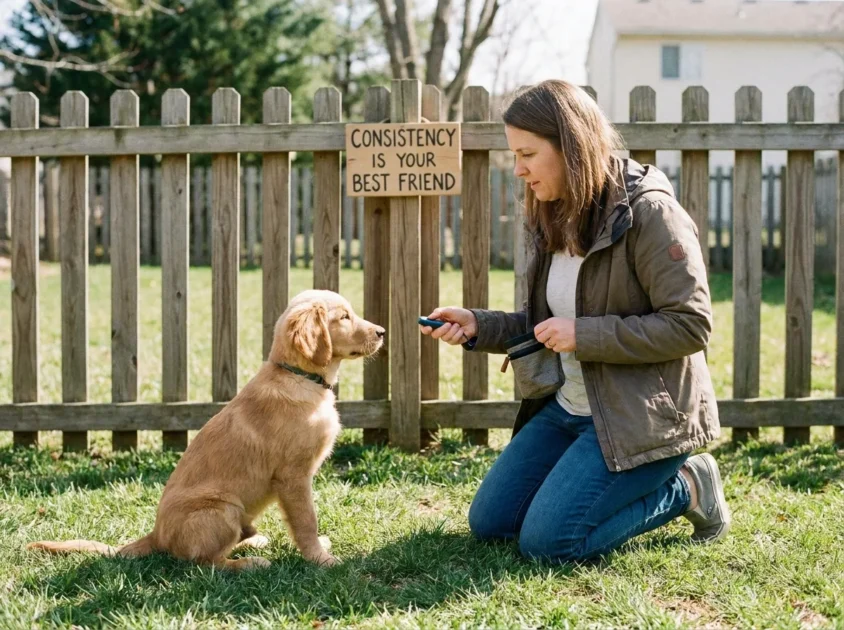
Everyone in your house needs to follow the same rules. If you do not let the dog on the couch, but your partner does, the dog will get confused. Confusion leads to behavior problems.
Sit down with your family and agree on the house rules. Everyone should use the same words for commands. Use “down” for lying on the floor and “off” for getting off the furniture. If you use different words, your dog will never learn what you want.
Remember that you are building a relationship. This is not about winning a battle or showing who is boss. It is about showing your dog how to live happily in your home. Be fair, be kind, and keep showing up every day.
Frequently Asked Questions
How long should my training sessions be?
Keep training sessions short, usually between 5 and 10 minutes. Dogs have a short attention span, and you want to end on a positive note before they get bored or frustrated.
Is it too late to start training?
It is never too late. While puppyhood is a great time to start, dogs of all ages can learn new things. Be patient and consistent, and you will see progress.
Why is my dog acting out suddenly?
Your dog is likely going through a teenage phase. This is a common time for dogs to test boundaries. Stick to your routines, provide plenty of exercise, and do not change the rules.
Should I use treats for every command?
You do not need to use treats forever, but you should use them during the learning phase. As your dog gets better, you can start using treats only sometimes or rewarding them with toys and praise instead.