
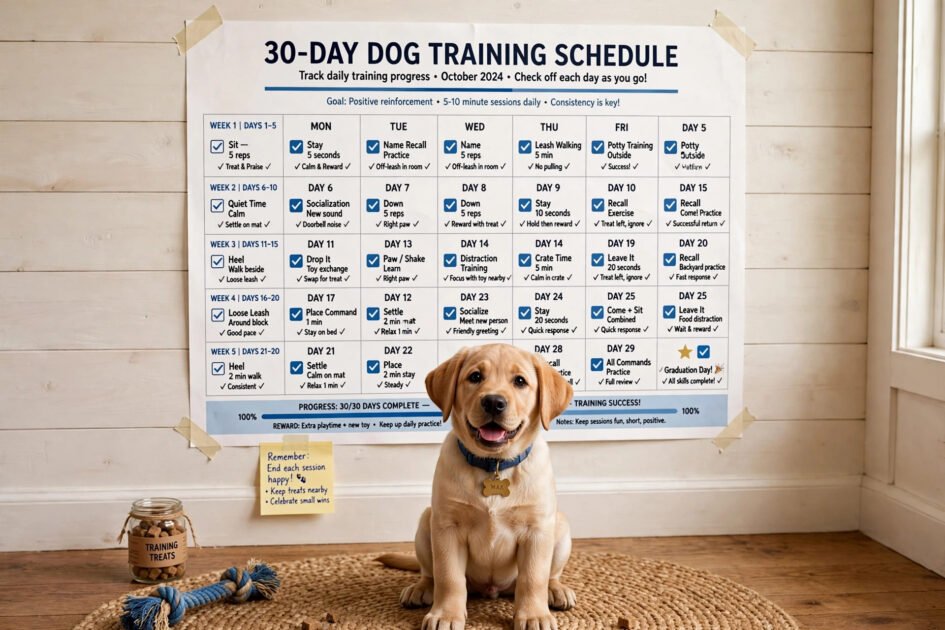

The first 30 days with a new dog set the tone for everything that follows. Without a plan, those weeks blur into random practice and missed opportunities. A dog training schedule printable solves that: it maps out exactly what to work on each day, builds in rest, and tracks milestones so you can see real progress by day 30.
Print the schedule, stick it on your fridge, and follow it one day at a time. Here’s how the month breaks down, and how to use your printable each day.
1. Days 1-7: Foundation and Name Recognition
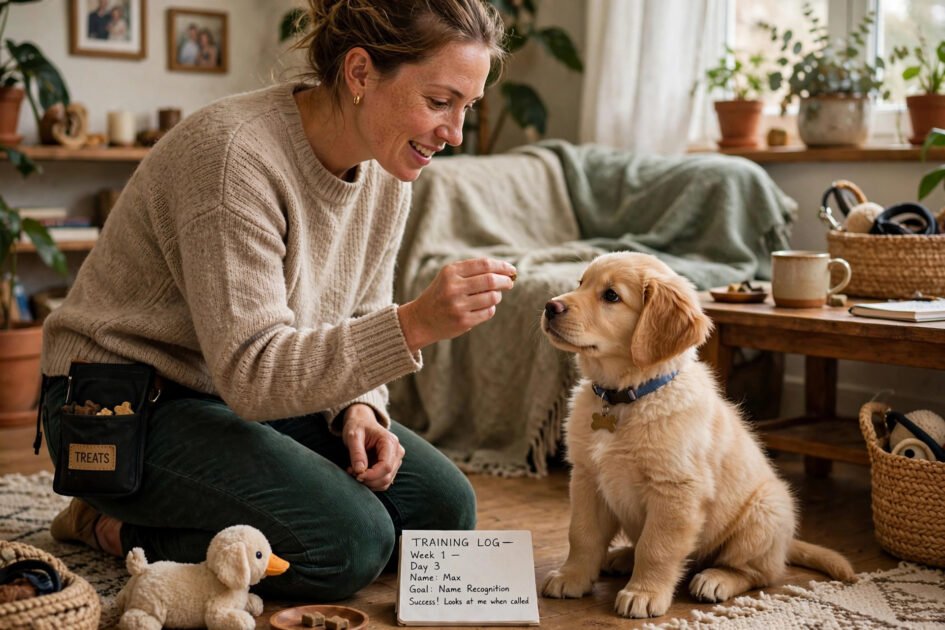
Week one is all about settling in, not showing off. Your printable should schedule two or three micro-sessions a day, each just two to three minutes. The goals are simple: teach your dog their name, reward eye contact, and start hand-feeding part of their meals so they learn that good things come from you.
Keep a daily checkbox for “name game” and “eye contact” reps, plus a notes line for how your dog is settling in. Are they eating well? Sleeping through the night? These observations matter because a stressed dog can’t learn, and your schedule should flex around their comfort, not fight it.
By day 7, your milestone is a dog who perks up at their name and offers eye contact unprompted. Check those boxes with pride. You’ve built the attention foundation that every future skill depends on, and you did it without any pressure.
2. Days 8-14: Core Commands Take Shape
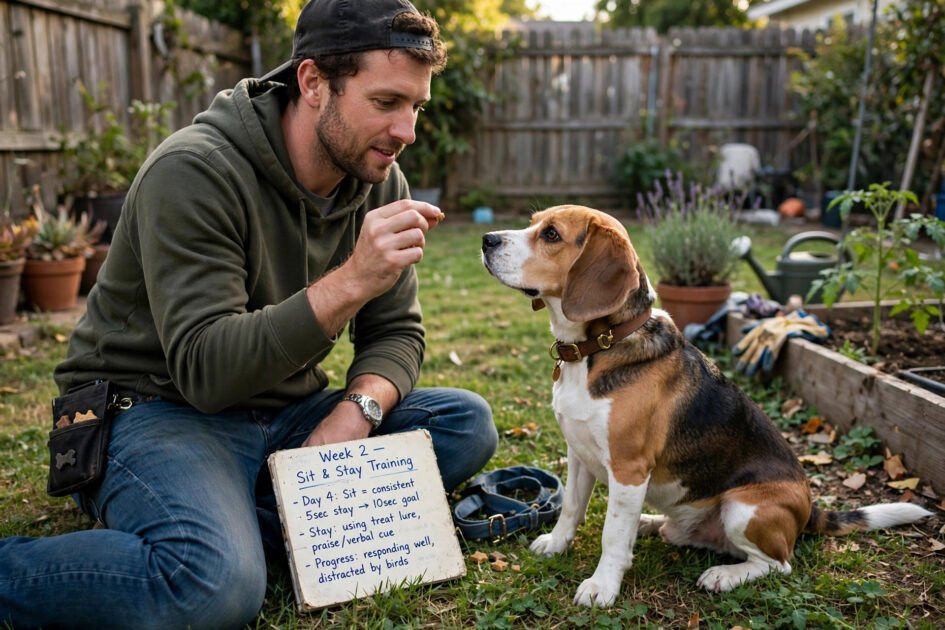
Week two introduces the classics: sit, down, and stay. Your printable schedules one new command every two to three days, with short review sessions for the previous ones. Each day gets checkboxes for the target reps, usually three sets of five, and a 1-to-5 success rating.
This is also the week to start a simple routine. Same training spot, same time of day, same treat pouch. Dogs thrive on predictability, and your schedule printable doubles as a routine-builder. Note any command your dog picks up suspiciously fast; that’s your high-value skill for redirecting unwanted behavior later.
The day-14 milestone: sit and down on cue with a lure, and a three-second stay. It won’t be pretty yet, and that’s fine. You’re building muscle memory, not performing. Shade in those progress boxes and enjoy watching the chart fill up.
3. Days 15-21: Adding Duration and Distance
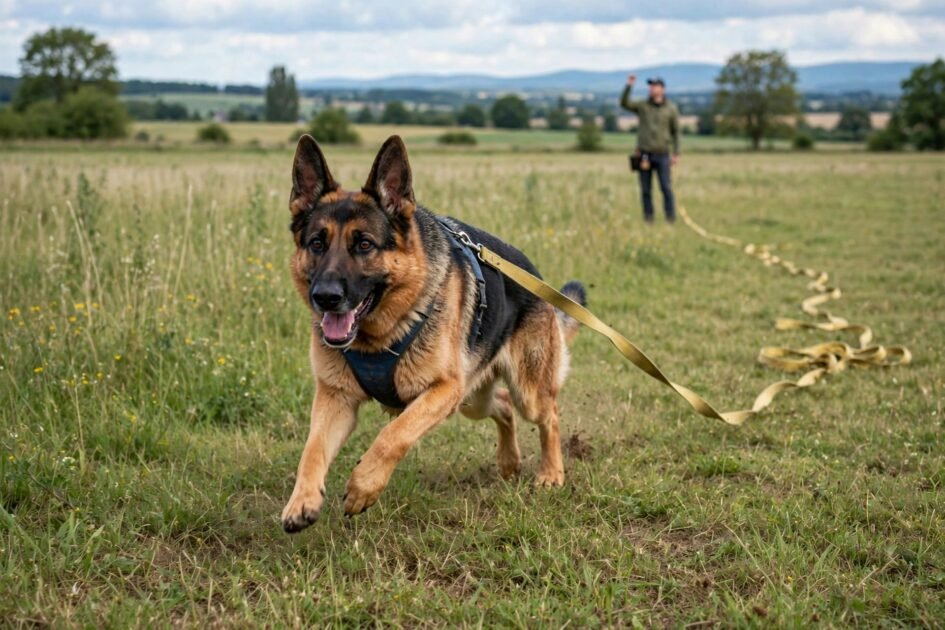
Week three is where training gets interesting. Your dog knows the basics, so now your schedule adds the three Ds: duration, distance, and distraction, one at a time. Monday might be longer stays, Wednesday adds distance to recall on a long line, and Friday introduces mild distractions.
Your printable needs a column for “difficulty level” this week. Logging it prevents the classic mistake of jumping too far too fast. If Tuesday’s 10-second stay falls apart, Wednesday’s plan automatically drops back to 5 seconds. The schedule adapts to your dog instead of dragging them along.
Day-21 milestone: a 15-second stay, recall from 20 feet on a long line, and polite behavior during one mild distraction. These are the skills that start making daily life noticeably easier, from doorways to vet visits.
4. Days 22-30: Real-World Proofing

The final stretch takes training out of the backyard and into real life. Your printable schedules practice in new locations: the front sidewalk, a quiet park, a pet-friendly store. Each outing gets a location line and a distraction rating, because context is everything at this stage.
Expect some backsliding, and plan for it. Your schedule should include “reset days” where you revisit easy wins in the new environment before asking for more. This isn’t failure; it’s how generalization works. Dogs don’t truly know a skill until they’ve done it in five different places.
Day-30 milestone: a calm walk past mild distractions, a reliable recall in the yard, and stays that hold while you move around the room. Take a photo, check the final boxes, and compare day 30 to day 1. The transformation is always bigger than it felt day to day.
5. How to Use the Printable Each Day
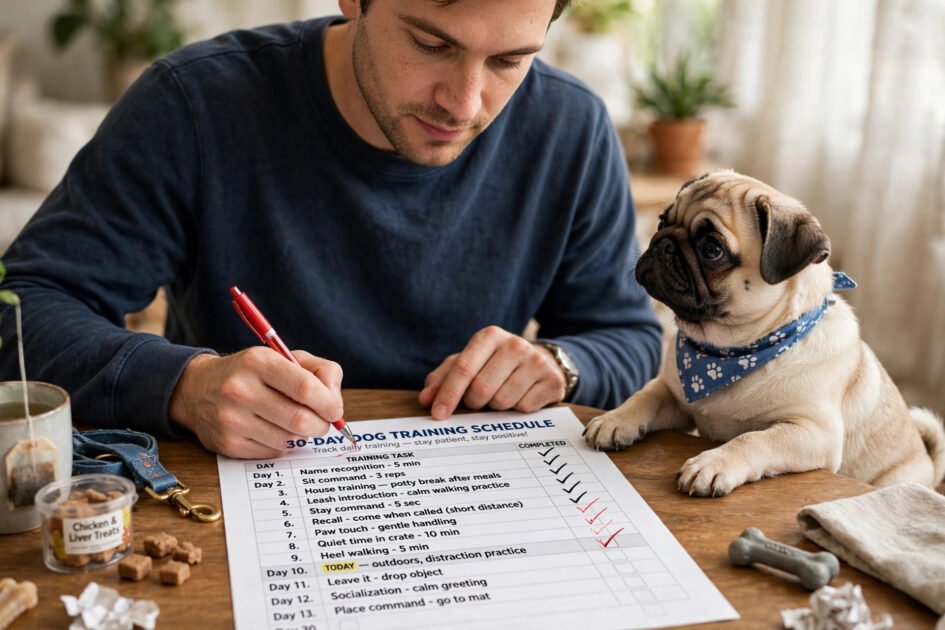
A schedule only works if you actually open it. Each morning, glance at today’s boxes: which skills, how many reps, what difficulty. Gather your treats before the session, not during. After training, check the boxes and scribble one line about how it went. The whole ritual takes under a minute.
Build in the rest days your printable includes, usually one or two per week. Rest isn’t laziness; it’s when learning consolidates. Dogs often perform better after a day off, and so do trainers. Use rest days for a sniffy decompression walk instead of drills.
Finally, don’t restart the whole month if you fall behind. Just pick up where you left off, or repeat the current week. The printable is a guide, not a contract. Thirty days of imperfect consistency beats seven days of perfection followed by quitting.
FAQs
What if my dog already knows the basics?
Skip ahead to the week that matches their level, but don’t skip the tracking habit. Even trained dogs benefit from a schedule when you’re proofing skills or fixing specific issues.
How many sessions per day does the schedule need?
Two to three short sessions work best, five minutes or less each. Puppies under four months do better with even shorter bursts spread through the day.
Should I train every single day for 30 days?
Almost. Include one or two rest days per week for consolidation. The printable marks them clearly, so you get the benefits without the guilt.
What treats work best for a 30-day program?
Small, soft, smelly treats your dog doesn’t get at other times. Reserve the highest-value rewards, like real chicken or cheese, for the hardest new skills.
Can I reuse the schedule after day 30?
Yes. Start a second month focused on your weakest skills from the first round, or use the same format to train a brand-new trick. The system scales to any goal.
A dog training schedule printable turns a vague intention into a daily practice you can see and check off. Print it tonight, fill in day 1 tomorrow morning, and let the checkboxes pull you forward. Thirty days from now, you’ll have the receipts to prove how far you’ve come.