
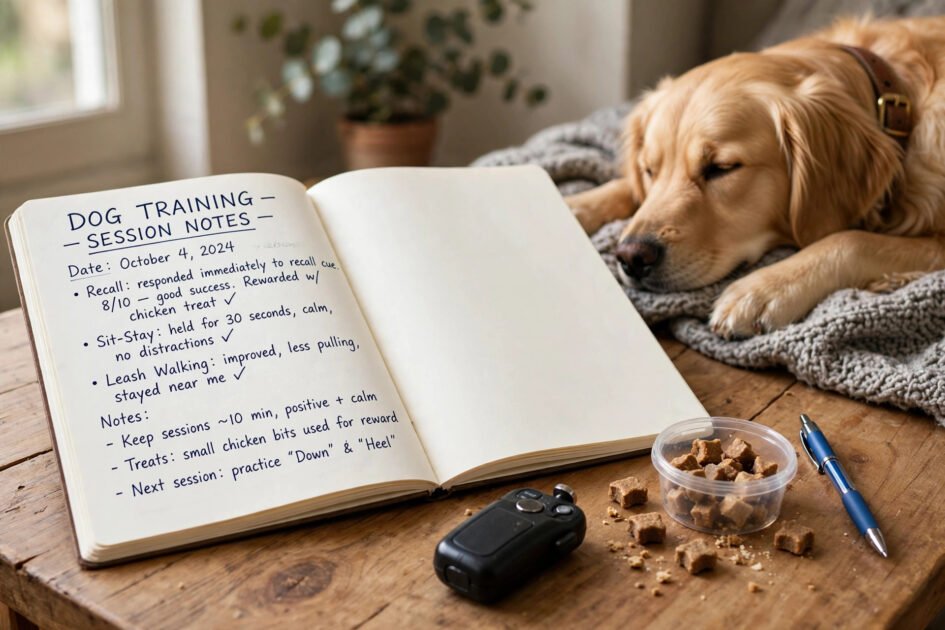

The difference between owners who see steady progress and those who feel stuck usually is not talent, it is tracking. A well-kept dog training notebook turns scattered sessions into a clear system: you know what you practiced, what worked, and what needs attention next. It takes two minutes a day and pays off enormously.
Whether you love pen and paper or prefer an app, this guide shows you how to set up a notebook that makes your training organized, measurable, and genuinely motivating.
1. Choose the Right Notebook Format

The best format is the one you will actually use. A simple dotted or lined paper notebook works beautifully, especially one small enough to carry on walks. If you prefer digital, a notes app with a dedicated “dog training” folder or a simple spreadsheet does the same job and is searchable.
What matters is structure, not style. Avoid fancy pre-printed training journals with fifty fields per session; you will abandon them by week two. Pick something with minimal friction: open, write three lines, done. If writing feels like homework, the notebook dies, and so does the habit.
Pro tip: keep a pen attached to a paper notebook with a clip or elastic band. The number one killer of training logs is hunting for a pen.
2. The Daily Session Log
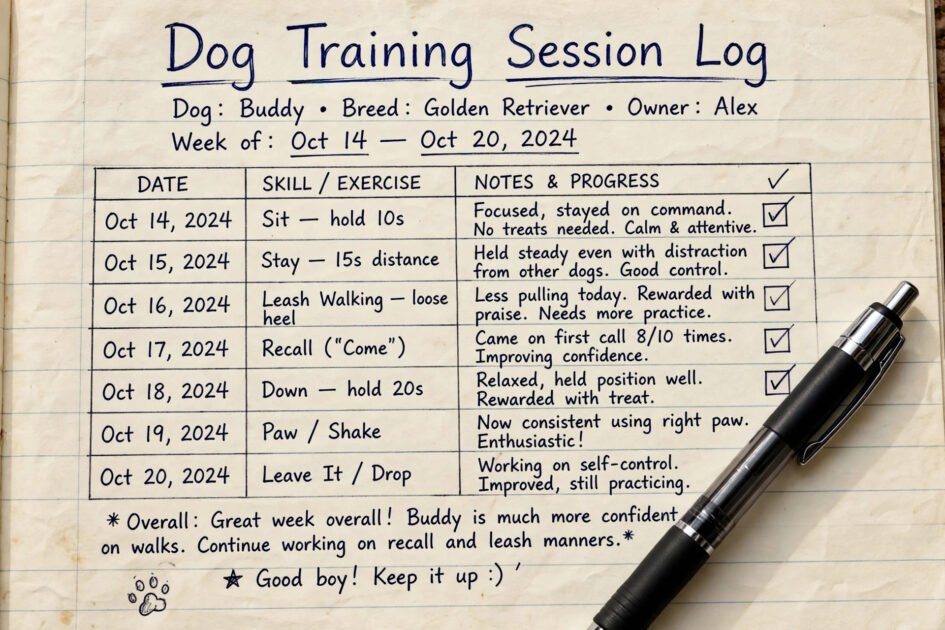
This is the heart of your notebook. After each session, jot down four things: the date, the skill you practiced, the number of successful reps out of ten, and one observation. That is it. For example: “Oct 6, recall in yard, 7/10, distracted by neighbor’s cat at rep 6.”
That tiny record is gold. Over two weeks, patterns jump out: recall is great at home but falls apart near the park fence, or your dog nails “stay” in the morning but not after dinner. Without the log, you would just feel vaguely frustrated. With it, you know exactly what to fix.
Keep sessions honest. Writing “5/10” is not failure, it is data. The log only helps if it reflects reality, so record the messy sessions too.
3. Weekly Review and Goal Pages
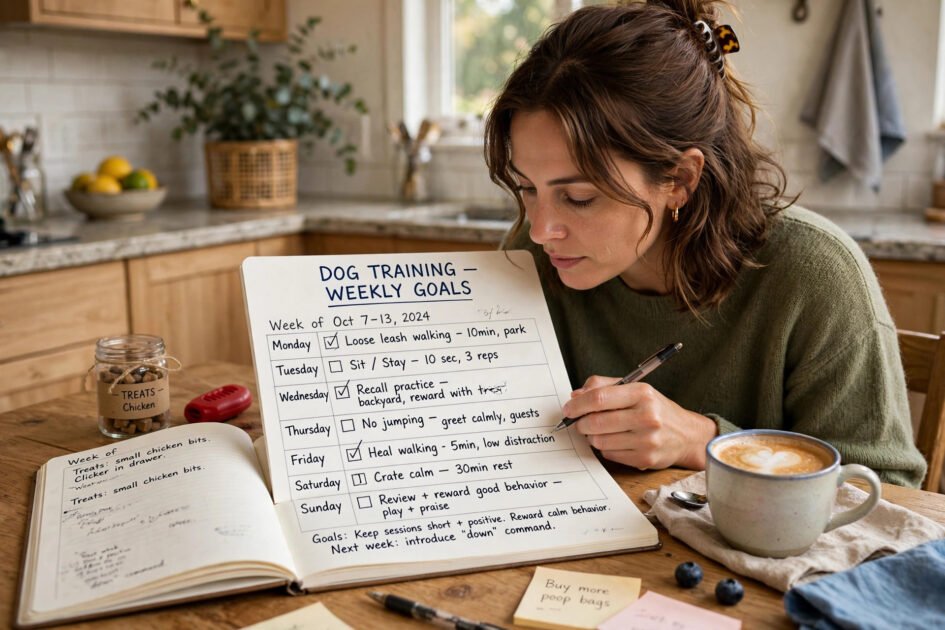
Once a week, spend five minutes reviewing your daily logs and set one clear goal for the coming week. One goal, not five. “Improve recall from 6/10 to 8/10 in the front yard” beats a vague “work on obedience” every time.
Dedicate two pages: one for the week’s wins (skills that improved, proud moments) and one for the single focus skill. This keeps training positive and prevents the common trap of drilling everything at once and improving nothing.
Monthly, flip back through everything. You will be amazed how far you have come, and that visible progress is the best motivation to keep going when a new challenge appears.
4. Behavior and Trigger Tracker
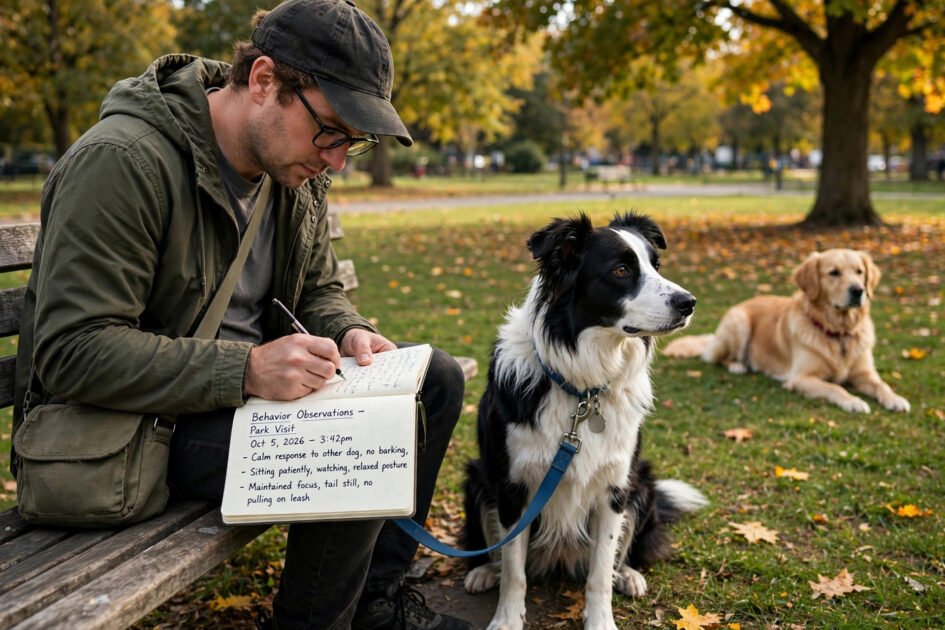
If your dog struggles with reactivity, fear, or anxiety, add a trigger tracker section. Each entry notes what happened, where, the distance to the trigger, and your dog’s reaction on a simple 1-to-5 scale. For example: “Saw skateboard, 20 meters, barked twice then took treat, level 3.”
This transforms emotional setbacks into measurable progress. A dog that reacted at level 5 last month and level 3 this month is improving, even if the problem is not solved yet. That perspective keeps you committed to the training plan instead of giving up.
Share these pages with your trainer or behaviorist if you work with one. Detailed notes help professionals spot patterns faster and adjust your plan precisely.
5. Making It a Habit You Will Actually Keep
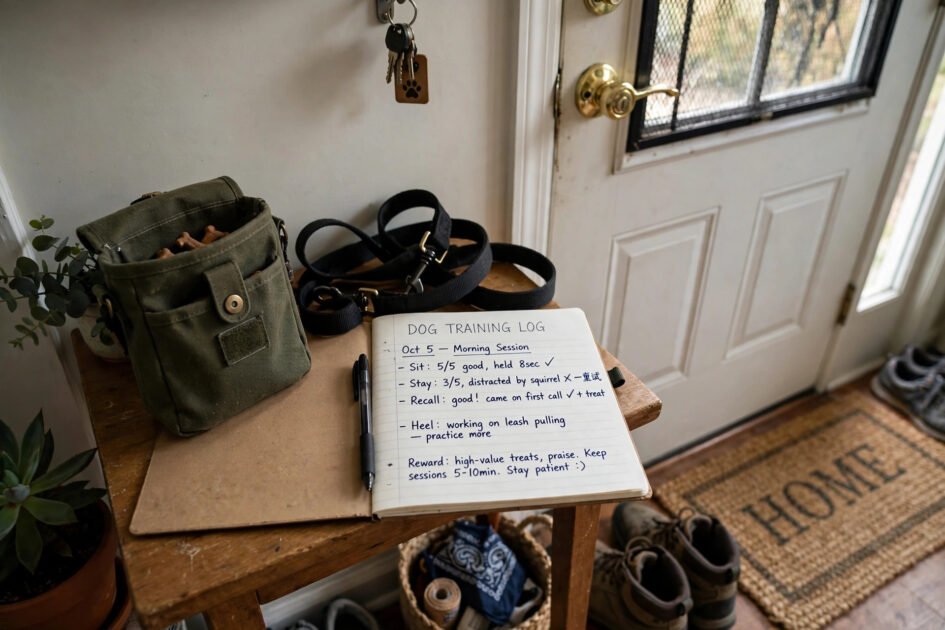
The perfect notebook system is worthless if you stop using it. Make the habit stick by anchoring it to something you already do: write your log right after you unclip the leash, while the session is fresh. Keep the notebook exactly where that happens, by the door or with the treat pouch.
Lower the bar shamelessly. On busy days, one line counts: “Oct 9, sit-stay before dinner, good.” A streak of tiny entries beats a beautiful journal abandoned after ten days. Some owners set a phone reminder for the first two weeks until the habit locks in.
Finally, review your wins regularly. Nothing sustains a habit like seeing proof it works. Your notebook is not just an organizer, it is a scrapbook of everything you and your dog achieve together.
FAQs
What should I write in my dog training notebook every day?
Just four things: date, skill practiced, successful reps out of ten, and one observation. That takes under two minutes and gives you everything you need to spot patterns.
Is a paper notebook or an app better for training logs?
Whichever you will use consistently. Paper is faster and distraction-free; apps are searchable and always with you. Many owners use paper at home and phone notes on walks.
How often should I review my training notes?
Glance at the week’s entries every Sunday and set one goal for the next week. Do a deeper monthly review to appreciate long-term progress and adjust your training plan.
Can a training notebook help with a reactive dog?
Yes, enormously. A trigger tracker with distances and reaction levels turns vague worry into measurable data, showing you and your trainer exactly what is improving and what still needs work.
What if I miss days of logging?
Just pick it back up, no guilt. A notebook with gaps is infinitely more useful than no notebook. Write one line for today and keep the streak going from here.
Conclusion
A dog training notebook is the simplest upgrade you can make to your training routine. Choose a format you will use, log four quick facts after each session, review weekly, and track triggers when needed. Within a month, you will train with more clarity, spot problems earlier, and feel more confident about your dog’s progress. Grab any notebook and start tonight, future you will be glad you did.