
Introduction
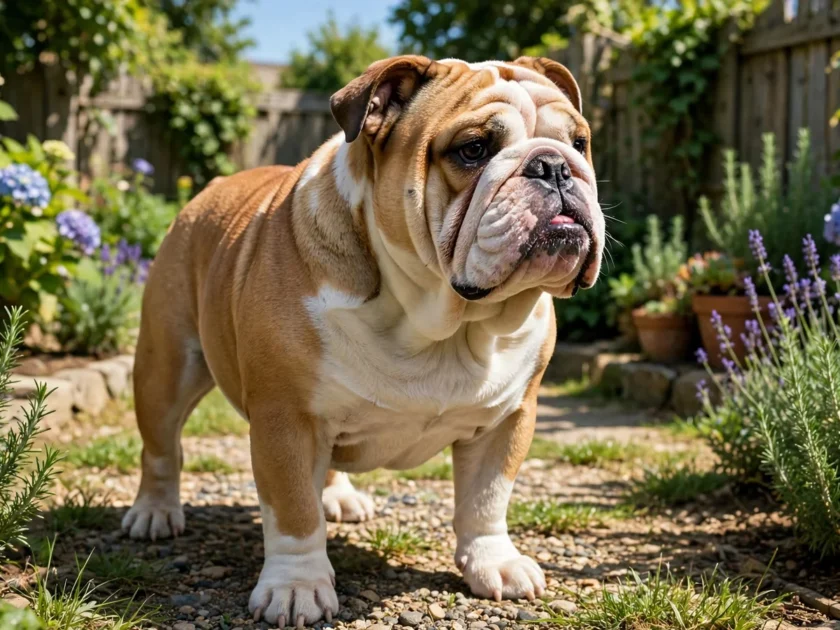
Meet the Bulldog, a dog that looks like a grumpy old man, snores like a freight train, and has the softest heart you will ever come across. Bulldogs do not rush anywhere. They amble, they flop, they sigh with great drama when asked to move from the sunny spot on the rug, and then they look up at you with those big, wrinkled eyes and you forgive them instantly.
Originally bred in England for bull-baiting, a cruel sport that thankfully ended long ago, the modern Bulldog has been bred for companionship, and the change is complete. Today they are calm, affectionate, and famously stubborn, a breed that would rather sit beside you on the sofa than chase a ball across a field. They are wonderful for people who want a loyal, low-energy friend with a huge personality packed into a short, sturdy body.
Characteristics
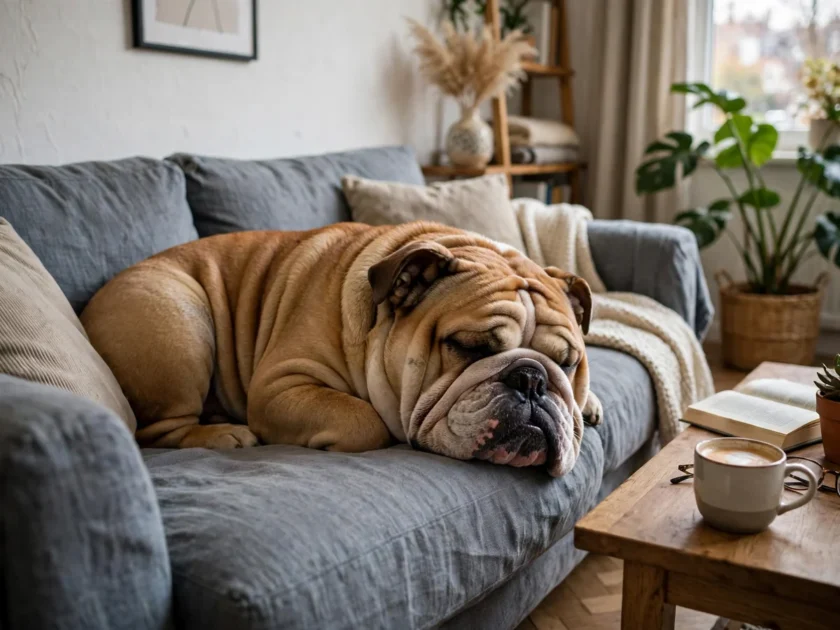
Bulldogs are medium-sized dogs with a build that is unmistakable: short, stocky, and powerfully muscled, with a wide chest, short legs, and a large, wrinkled head. Males usually stand about fourteen to fifteen inches tall and weigh around twenty-three to twenty-five kilograms, while females are a little smaller at eighteen to twenty-three kilograms.
Temperament is the real reason people fall for this breed. Bulldogs are calm, courageous, and deeply affectionate, and they form strong bonds with their families. They are not hyperactive or demanding, and they are usually happy with a short walk and a long nap. They can be stubborn, though, and they have a wonderful talent for pretending they did not hear you when you ask them to do something they do not fancy.
Habits and Behaviour
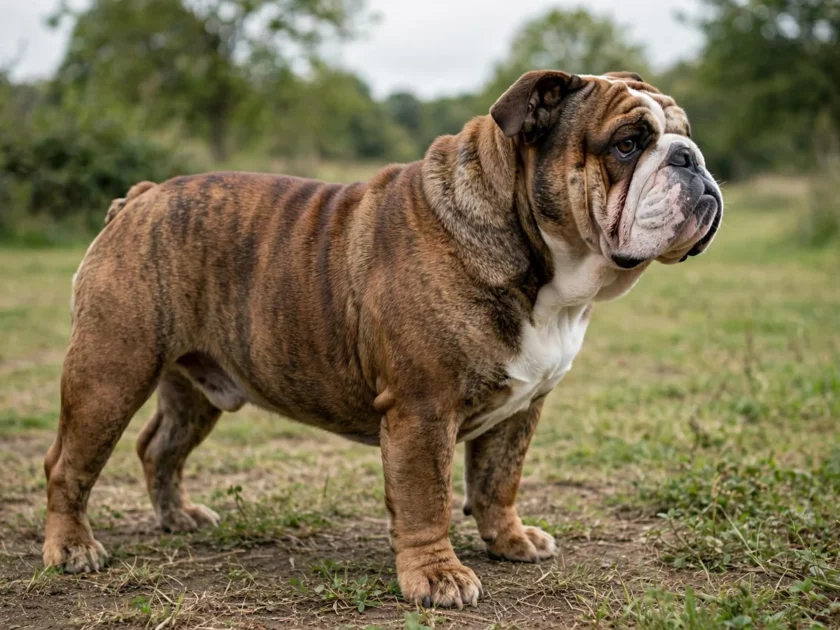
A Bulldog day follows a beautifully simple pattern. Wake up slowly, eat breakfast with great enthusiasm, take a short stroll around the garden, and then settle down for a nap. Later there might be a gentle walk, some play with a favourite toy, and then dinner, followed by the serious business of the evening nap on the sofa, preferably with their head on your lap.
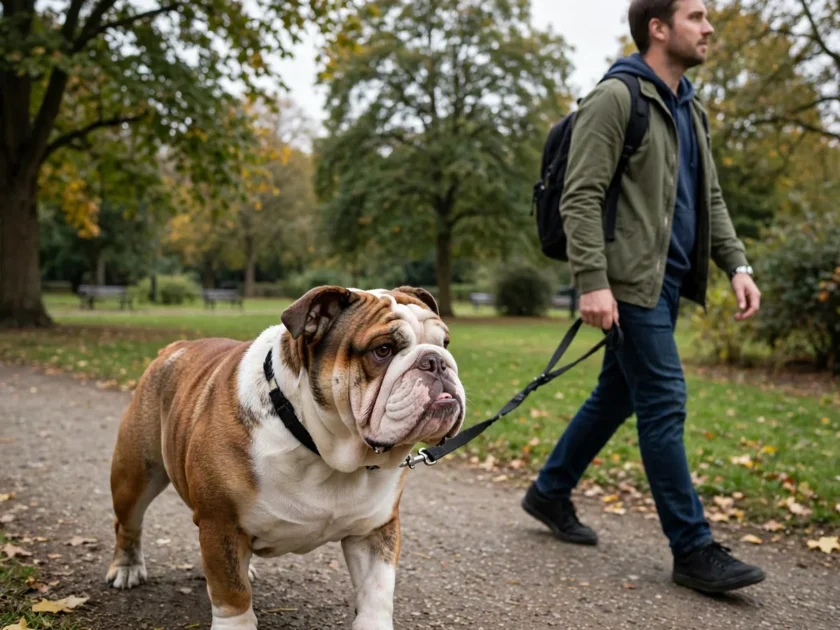
Exercise needs are modest, usually thirty to forty-five minutes a day, split into short walks and gentle play, because Bulldogs overheat easily and should never be pushed hard, especially in warm weather. Training works best with patience, humour, and food rewards, since a Bulldog responds far better to a treat than to a raised voice. With children they are famously gentle and patient, often letting toddlers climb all over them with saintly tolerance, although supervision is still important.
Common Diseases and Health Problems
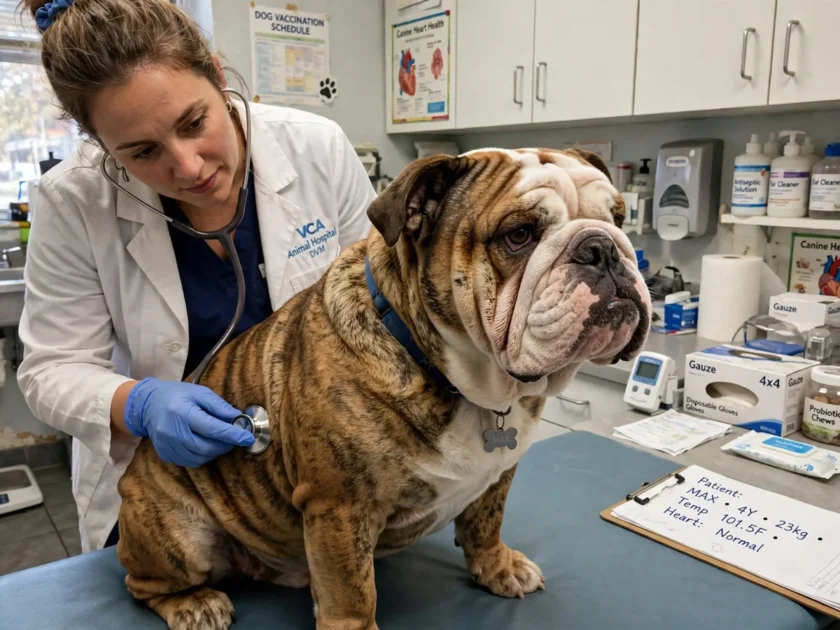
Bulldogs are one of the breeds where honest health information matters most, because their distinctive shape brings real risks. Brachycephalic obstructive airway syndrome is the biggest concern, caused by their short nose, narrow nostrils, and long soft palate, which together make breathing harder, especially in heat or during exercise. Many Bulldogs snore loudly, snort, and struggle to cool down, and in severe cases they may need surgery to help them breathe more easily.
Other problems include skin fold dermatitis, where moisture and bacteria build up in the wrinkles on the face and tail, cherry eye, where a gland in the eye pops out and looks like a small red cherry, and allergies that cause itchy skin and sore ears. Bulldogs are also prone to heart disease, particularly aortic stenosis, and to overheating and heatstroke because they cannot pant efficiently enough to cool down.
Solutions and Prevention
Prevention starts with choosing a breeder who puts health before extreme looks, testing parent dogs for hips, heart, and breathing, and breeding for a slightly longer muzzle and more open nostrils where possible. Ask direct questions about breathing, and meet the parent dogs if you can, because a breeder who is proud of healthy, active parents is a good sign.
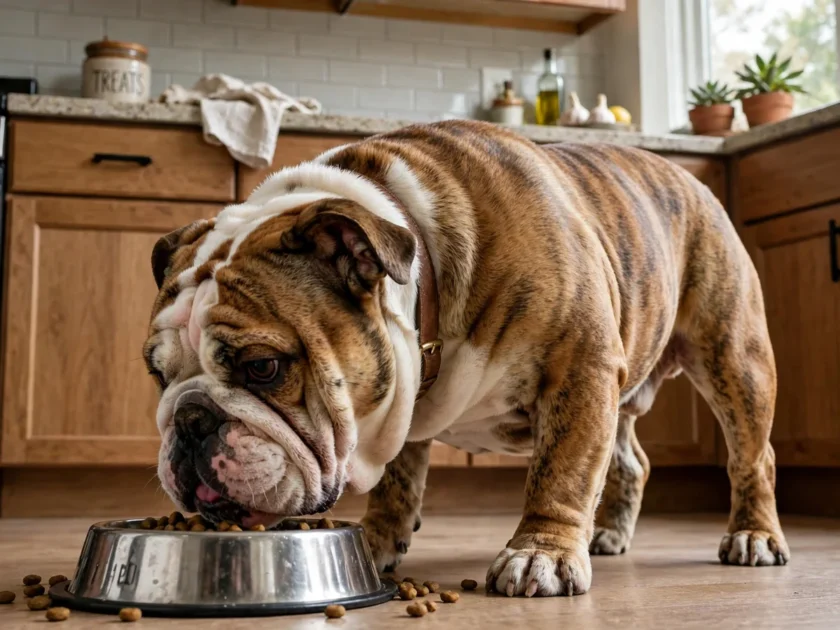
Feed a good-quality diet in measured meals, avoid overfeeding and table scraps, and exercise your Bulldog in the cool parts of the day, never in midday heat. Always carry water on walks, watch for heavy panting, drooling, or distress, and bring your dog indoors to cool down at the first sign of trouble.
Grooming and Cleaning
The good news is that a Bulldog coat is gloriously easy to care for. Their short, smooth fur needs only a quick brush once or twice a week with a soft bristle brush or rubber grooming mitt to remove loose hair and keep the coat shiny. They do shed, especially in spring and autumn, but nothing like a long-coated breed, and a weekly brush keeps the hair under control.
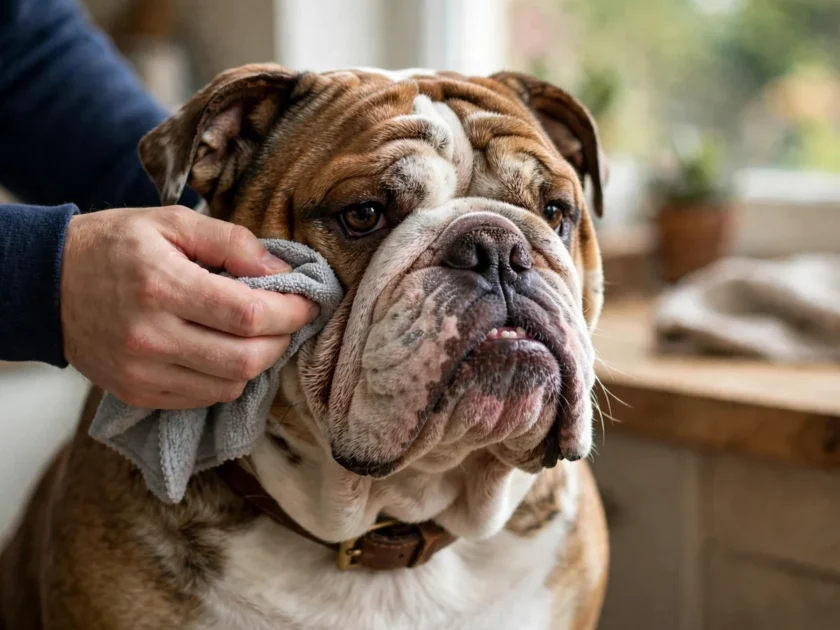
The real grooming work is in the wrinkles, and this is the part new owners must not skip. Those adorable face folds trap moisture, food, and dirt, so wipe them daily with a damp cloth or a vet-approved wipe, then dry them carefully to prevent infection and soreness. The tail pocket, the little fold under the tail, needs the same attention.
Living With a Bulldog: Care Tips for Owners
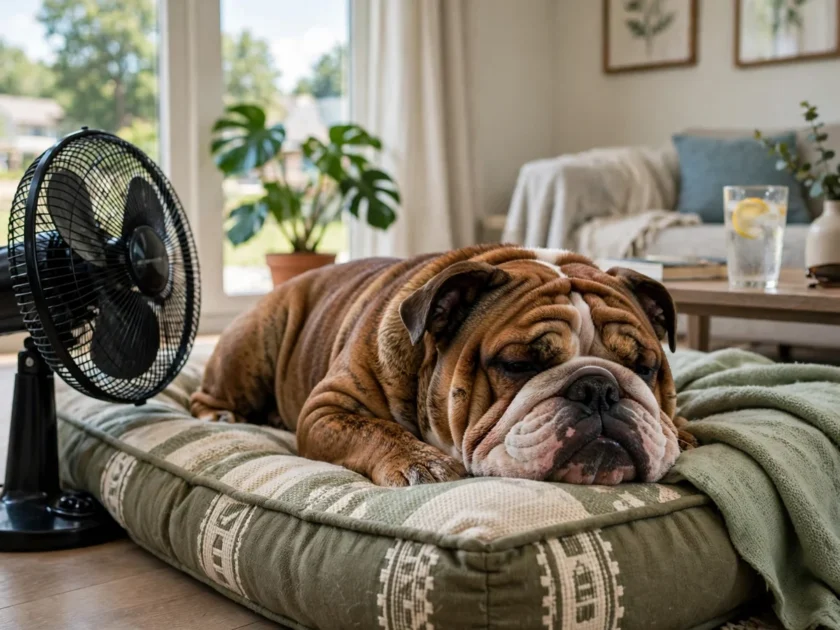
Living with a Bulldog is wonderfully low-key, as long as you plan around their needs. Keep your home cool in summer, with shade, fresh water, and a fan or air conditioning on hot days, because heat is genuinely dangerous for this breed. Give them a comfortable bed in a draught-free spot, and accept that the sofa will probably become shared territory.
Bulldogs are one of the calmest choices among quiet dog breeds that wont bark at everything, which makes them well suited to flats and quieter homes. Be patient with training, keep sessions short and fun, and use food rewards generously, because a Bulldog that thinks training is a game will try much harder than one that thinks it is a chore. Never leave a Bulldog in a hot car, near a swimming pool unsupervised, or out in strong sun for long. With good care, a cool house, and a family that loves a good nap, a Bulldog will be your loyal, snoring, funny shadow for years.
Frequently Asked Questions
Are Bulldogs good family dogs?
Yes, Bulldogs are excellent family dogs. They are patient, affectionate, and famously tolerant with children, and they love being part of family life, whether that means joining a walk, sitting beside you on the sofa, or simply sleeping nearby while the house gets on with its day.
Do Bulldogs bark a lot?
No, Bulldogs are generally quiet dogs and do not bark much. They may give a short bark to alert you to a visitor or something unusual, but they are far quieter than many breeds, which is one reason they suit flats and close neighbours so well.
How much exercise does a Bulldog need?
Most Bulldogs need only thirty to forty-five minutes of gentle exercise a day, split into short walks and play. They overheat easily, so exercise should be in the cooler parts of the day, and they should never be pushed to run hard or exercise in hot weather.
Why do Bulldogs snore so loudly?
Bulldogs snore because of their flat face and short airways, which make breathing noisier than in most dogs. Some snoring is normal for the breed, but very loud snoring, gasping, or struggling to breathe should be checked by a vet, as it can be a sign of airway problems.
How long do Bulldogs live?
Bulldogs usually live for eight to ten years. A healthy weight, careful temperature management, regular vet checks, and daily wrinkle care all help them stay healthier for longer, and you can read more about the breed on the Bulldog page on Wikipedia.