
Introduction
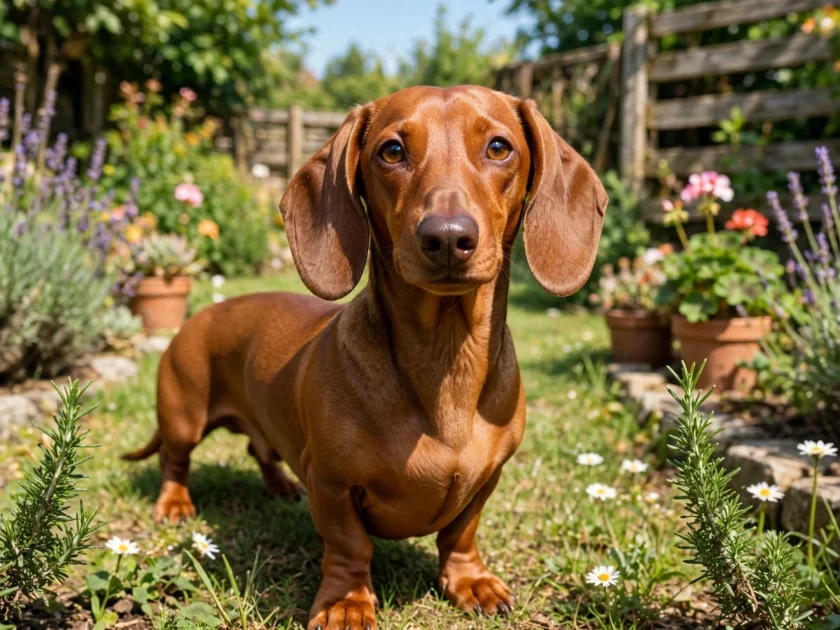
Every Dachshund owner knows the sound: four short legs trotting across the floor at surprising speed, then a determined little face at your knee, asking, with total confidence, to be picked up. Dachshunds are small dogs with enormous personalities, behaving as if nobody told them they are only knee-high. Bred in Germany to hunt badgers underground, that brave, stubborn spirit never left them.
The Dachshund, often called the sausage dog or wiener dog, comes in smooth, longhaired, and wirehaired coats, and in standard and miniature sizes. Owners fall for the long body and floppy ears first, then discover a loyal clown who burrows under blankets and guards the house with a bark far bigger than its body.
Characteristics
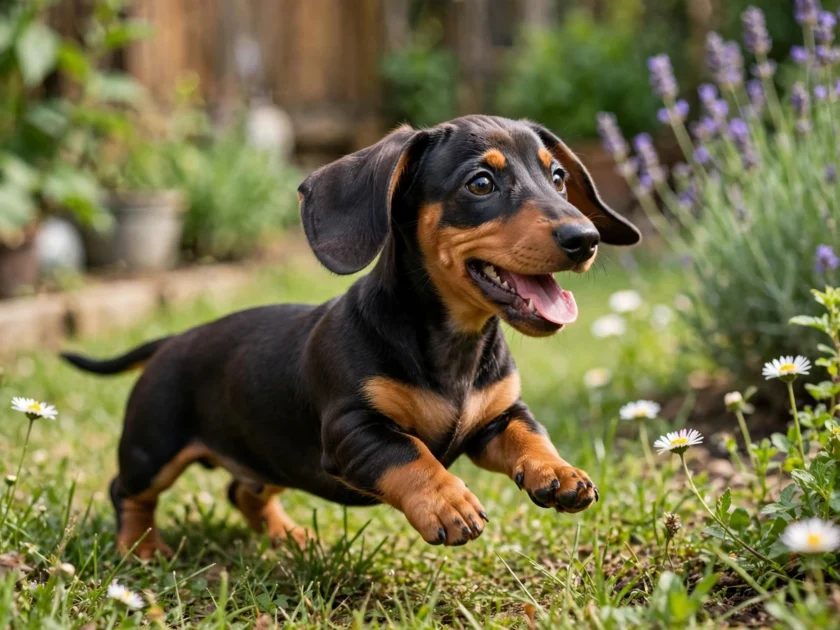
A Dachshund is instantly recognisable: a long low body, short sturdy legs, a deep chest, and a head held high. Standard Dachshunds weigh around seven to fifteen kilograms, miniatures stay under five kilograms, and most stand twenty to twenty-three centimetres tall. Coats come in red, black and tan, chocolate, cream, and dappled patterns, and they typically live twelve to sixteen years.
Temperament is where this breed truly shines. Dachshunds are affectionate, loyal, and deeply attached to their people, often choosing one favourite person to shadow all day. They are playful and clever, with a mischievous streak that shows up in stolen socks and campaigns to get onto the bed. They can be stubborn and suspicious of strangers, which makes them excellent watchdogs, though they would rather cuddle. Their energy is moderate: they love a walk and a game, then a long nap under a blanket, preferably touching you.
Habits and Behaviour
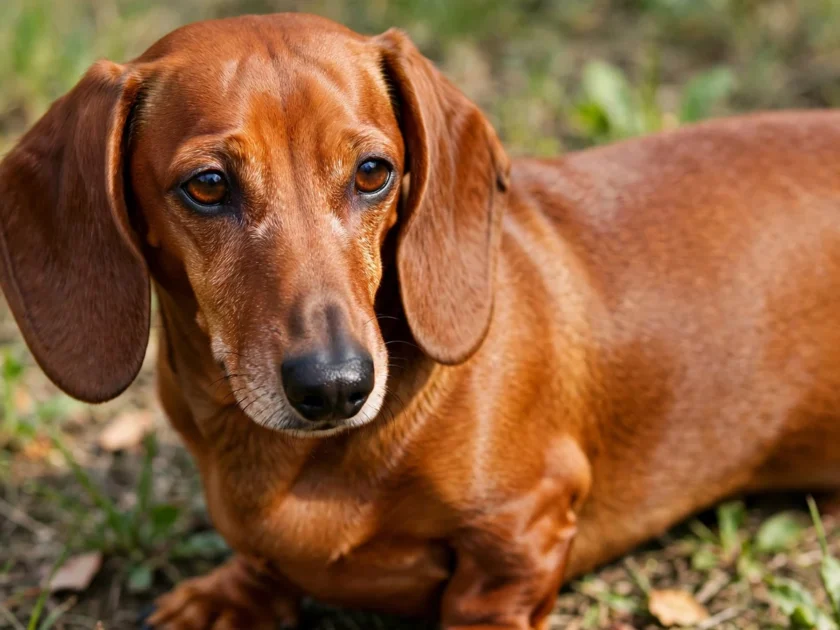
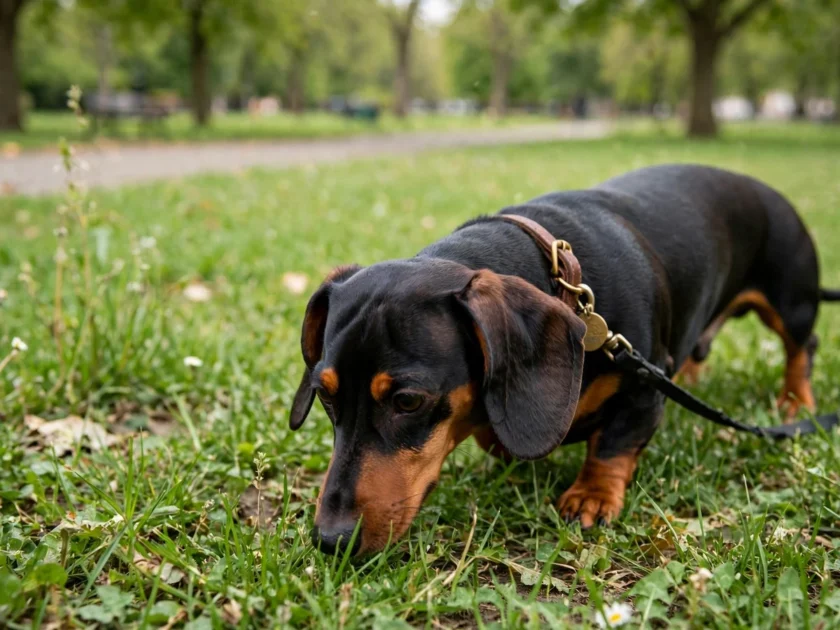
A typical Dachshund day has a cosy rhythm: a morning garden patrol, breakfast eaten with great seriousness, a walk full of enthusiastic sniffing, then a long burrowing session under the nearest blanket. They love to dig, a habit from their badger-hunting days, and they love to bark, at the postman, at a leaf, at a sound only they can hear.
Training works best with patience, humour, and very good treats. They learn quickly when they want to, and ignore you just as quickly when they do not, so short cheerful sessions beat long serious ones. House training can take a little longer, so a steady routine and praise help enormously. They need thirty to sixty minutes of exercise a day, split into walks and play, which keeps them fit without straining their backs. With children they are usually gentle and fun, especially older children who handle them carefully.
Common Diseases and Health Problems
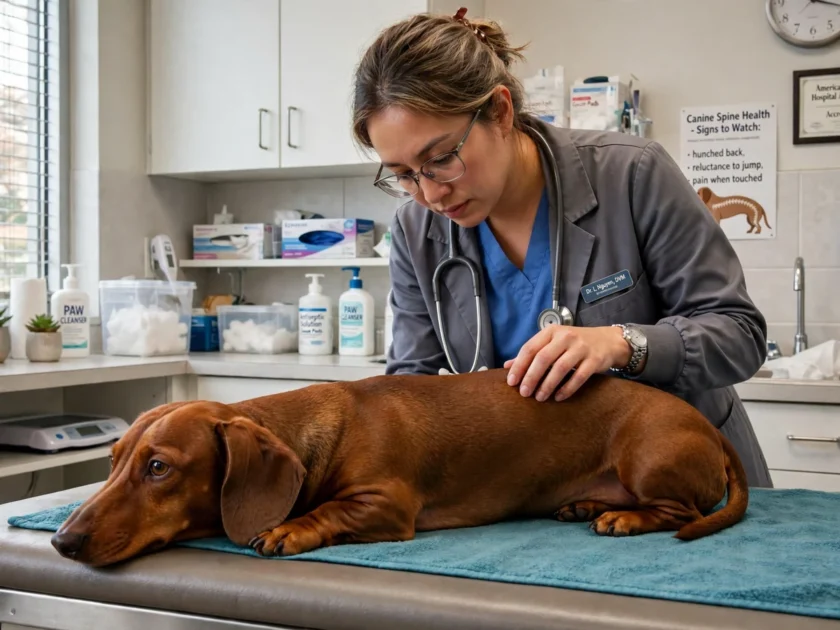
The most important health problem in Dachshunds is intervertebral disc disease, often called IVDD, which affects the discs in that long spine. A disc can slip or rupture, causing pain, wobbliness, or in serious cases paralysis in the back legs, and it is the condition every Dachshund owner should know by name. Obesity makes it far more likely, which is why weight control is genuine back protection for this breed. Hip dysplasia and patellar luxation, where the kneecap slips out of place, can also cause limping and stiffness.
Dachshunds are also prone to several eye problems, including progressive retinal atrophy and cataracts, which gradually affect vision, and to diabetes, which often shows up as increased thirst and weight loss despite a good appetite. Some develop Cushing’s disease, which causes increased drinking and a pot belly, while others face dental disease, because small mouths crowd teeth and trap plaque. Skin allergies and ear infections appear too. Knowing these names early means you spot trouble while it is still small.
Solutions and Prevention
Prevention starts with the spine. Keep your dog lean, because every extra kilogram presses on those vulnerable discs, and measure food carefully, since those pleading eyes are professional negotiators. Use ramps beside the sofa and bed so your Dachshund does not jump down from heights, and lift them with one hand under the chest and one under the hindquarters.
Regular vet checks matter just as much. Book a check-up at least once a year, ask your vet to look at teeth, eyes, and knees as part of it, and mention any small change, like hesitating before stairs or drinking far more water than usual. Feed a balanced diet for a small breed, keep daily walks steady rather than weekend-only marathons, and brush teeth several times a week. If your Dachshund ever cries when touched, drags a back leg, or suddenly cannot jump, treat it as urgent and call the vet the same day. See our guide to the best small dog breeds that make great family pets for comparison.

Grooming and Cleaning
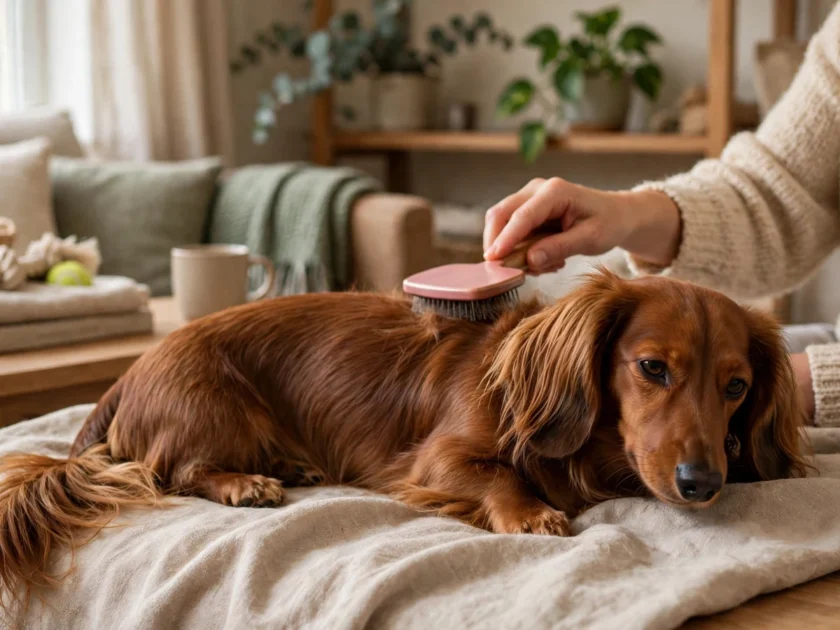
Grooming a Dachshund depends entirely on which coat you have, and each one has its own small ritual. Smooth-coated Dachshunds are the easiest, needing only a quick brush once or twice a week with a soft brush or a grooming mitt to remove loose hair and keep the coat gleaming. Longhaired Dachshunds need brushing two or three times a week, paying special attention to the feathering on the ears, chest, and legs, where tangles love to form. Wirehaired Dachshunds need regular brushing plus an occasional trim to keep that scruffy coat tidy.
Bathe your Dachshund only when dirty or every month or two, using gentle dog shampoo and drying those long ears thoroughly, since trapped moisture can cause infections. Trim nails every three or four weeks, because long nails change how a Dachshund walks and add strain to the back and joints. Check ears weekly for redness or smell, clean them gently with a vet-approved cleaner, and brush teeth several times a week, since small mouths are prone to tartar.
Living With a Dachshund: Care Tips for Owners
Living with a Dachshund is mostly about managing the small things well. Set up ramps early, before your dog learns to leap, and place a cosy bed or blanket in every room they favour, because a Dachshund will find the warmest spot in the house with or without your help. Keep them warm in winter with a little coat on cold walks, since short legs and low bellies meet snow and puddles first, and keep summer walks to cooler hours. Feed measured meals twice a day rather than leaving food down all day, and count treats in the daily total.
Give them company and mental stimulation every day, because Dachshunds left alone too long become bored, barky, and inventive. Puzzle feeders, sniffy walks, and short training games all help. They thrive in flats and travel well. In return you get a dog who burrows beside you at night and turns small moments, a shared biscuit, a sunny windowsill, a blanket fort, into the best part of your day.

Frequently Asked Questions
Are Dachshunds good family dogs?
Yes, Dachshunds are usually loving and playful family dogs, especially with older children who handle them gently. They bond closely with their family and enjoy being part of everyday life.
How much exercise does a Dachshund need?
Most adult Dachshunds need about thirty to sixty minutes of exercise a day, split into walks and play. Regular gentle exercise keeps them fit and protects their backs.
Do Dachshunds shed a lot?
They shed moderately all year, with smooth coats shedding the most visibly and longhaired coats needing more brushing. A quick weekly brush keeps loose hair under control.
Can Dachshunds live in flats?
Yes, they adapt very well to flat living because they are small and do not need a large garden. They still need daily walks, play, and company to stay happy.
Are Dachshunds easy to train?
They are clever but famously stubborn, so training works best with short fun sessions, tasty rewards, and plenty of patience. House training can take longer, so a steady routine helps a lot.