
Introduction
There is a moment every Affenpinscher owner knows well. You are sitting quietly at home when a tiny black shadow trots into the room, beard first, eyes bright, and settles on your lap as if it owned the house all along. That is the charm of the Affenpinscher, a toy dog with a monkey-like face, a huge personality, and a confidence that seems far too big for a dog that stands only about 25 to 30 centimetres tall. The name itself tells the story, because in German Affen means ape or monkey, and Pinscher means terrier, and the breed was once a working ratter in German stables, kitchens, and shops, where it kept rats and mice under control long before it became a beloved companion.
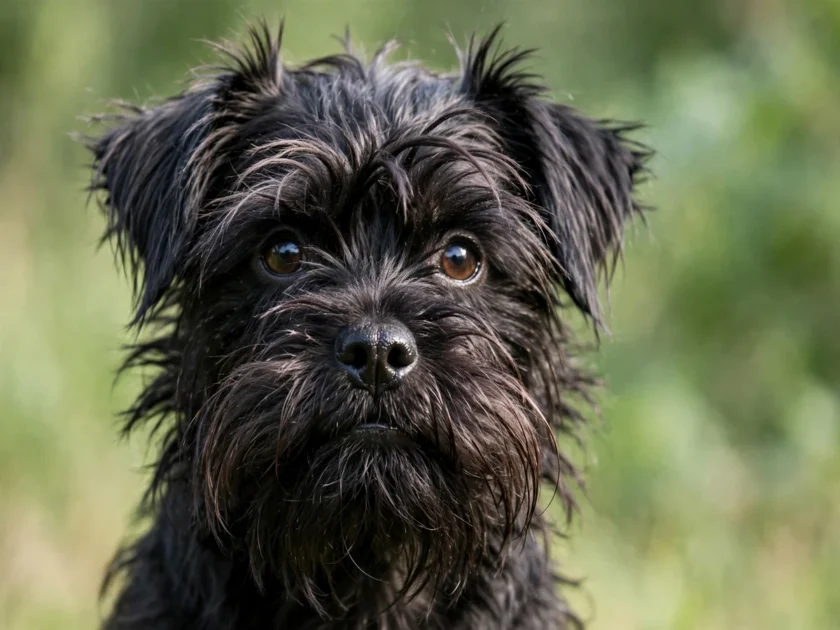
Today the Affenpinscher is a loyal and amusing companion dog, weighing about 4 to 6 kilograms, with a rough wiry coat, a shaggy beard, and a mane of longer hair around the neck and chest. The breed was recognised by the American Kennel Club in 1936, and it won the hearts of dog lovers around the world when a black Affenpinscher called Banana Joe won Best in Show at the Westminster Kennel Club Dog Show in 2013. He may be small, but he is not a fragile ornament. He is brave, curious, and full of character, and he suits owners who want a clever little dog with a strong sense of humour and a lot to say.
Characteristics
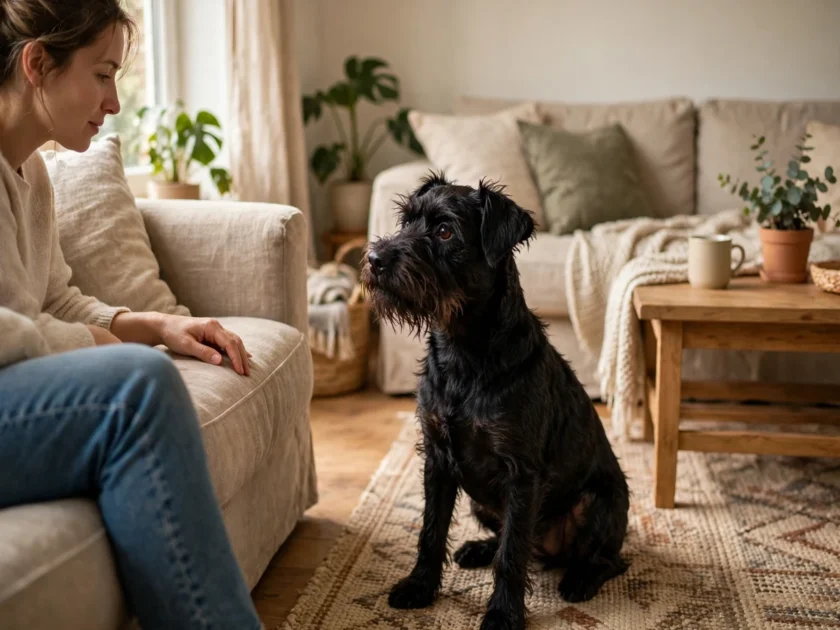
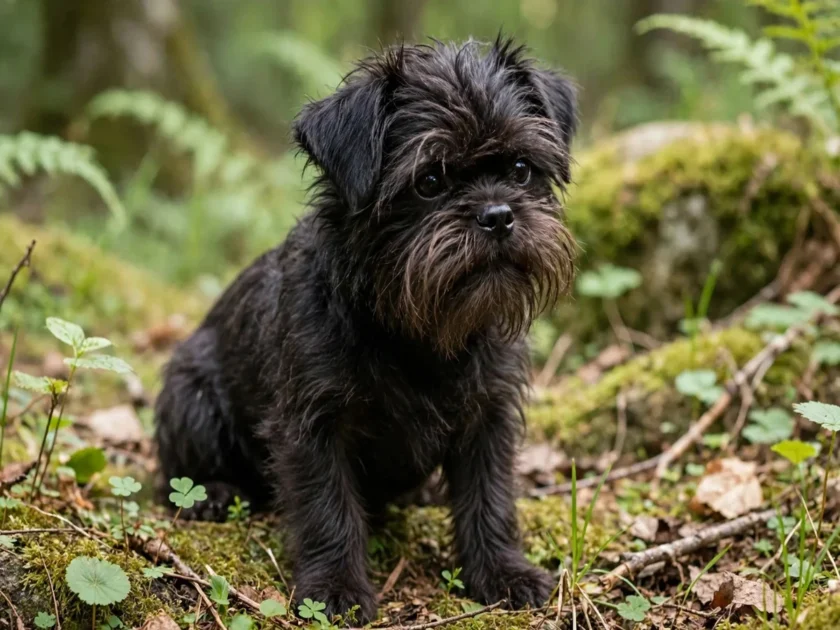
An Affenpinscher is instantly recognisable once you know what to look for. He has a compact and sturdy little body, a round head with a short muzzle, a prominent chin, and dark round eyes that seem to be taking everything in at once. His coat is rough, dense, and wiry, and it is usually black, although the American Kennel Club also accepts grey, silver, red, black and tan, and beige. The longer hair on the face forms a beard and moustache, the hair on the neck forms a mane, and the hair on the legs is a little softer and longer, which gives him a shaggy and slightly scruffy look that suits his playful nature perfectly.
Temperament is where the Affenpinscher truly wins people over. He is confident, fearless, curious, and loyal, and he often acts like a much larger dog. He is affectionate with his own family and can be wonderfully funny, inventing games, stealing socks, and demanding attention with a look that is hard to resist. He can be wary of strangers and protective of his home, and he is usually better with older children who know how to handle a small dog gently than with very young children. Like many best small dog breeds that make great family pets, he needs early socialisation, clear boundaries, and an owner who enjoys training a clever dog with a mind of its own.
Habits and Behaviour
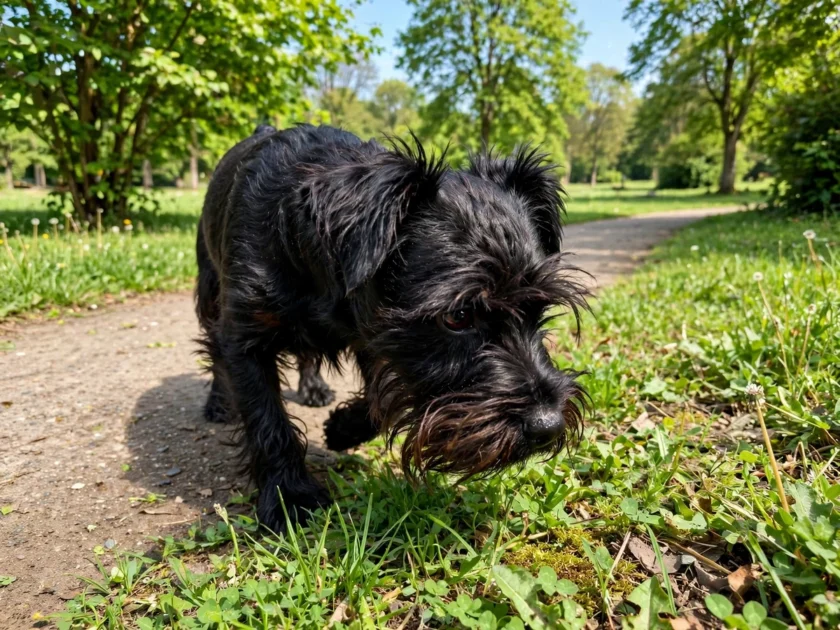
A typical Affenpinscher day is busy and full of small dramas. He wakes up ready for breakfast, follows his owner from room to room, and looks for something interesting to investigate. He loves to play with toys, chase a ball, and explore the garden, and he will happily curl up on a lap when the excitement is over. He is an alert watchdog who will bark to tell you that someone is at the door, a parcel has arrived, or a cat has dared to walk past the window. That barking can become a habit if it is never managed, so it helps to teach a quiet command early and to reward calm behaviour.
Exercise needs are modest but real. About thirty to forty-five minutes a day of walking and play, split into shorter sessions, is usually enough, along with plenty of mental stimulation at home. Training works best in short and cheerful sessions with treats and praise, because this breed is intelligent but stubborn and will quickly lose interest in boring repetition. He still has a terrier instinct to chase small animals, so keep him on a lead in open spaces and make sure your garden is secure. He does not like being left alone for long hours, and a bored Affenpinscher can become noisy, destructive, or anxious, so build up absences gradually and leave him with safe toys and a comfortable bed.
Common Diseases and Health Problems
Affenpinschers are generally hardy little dogs, but like every breed they have their own health risks that owners should know by name. One of the most common problems is patellar luxation, where the kneecap slips out of place and causes limping, skipping, or stiffness in the back legs. Hip dysplasia can also occur, although research has not settled how common it is in this breed, and it can lead to pain and arthritis as the dog grows older. Eye problems are worth watching for as well, including cataracts, which cloud the lens and reduce vision, and progressive retinal atrophy, which slowly damages the retina and can lead to blindness.
Some Affenpinschers are affected by Chiari-like malformation and syringomyelia, conditions in which the skull is too small for the brain and fluid-filled cavities form in the spinal cord, causing pain, scratching, and weakness. Heart problems such as patent ductus arteriosus, a hole in the heart that should have closed after birth, are also seen in the breed. Seasonal flank alopecia, a patch of hair loss on the sides that often appears in winter, is another known issue. Dental disease is common in small dogs with crowded teeth, so regular tooth care matters a great deal. Most Affenpinschers live for twelve to fifteen years with good care, although a United Kingdom study found a lower average of about nine years, which is a reminder that genetics, weight, and regular veterinary care all make a real difference.
Solutions and Prevention
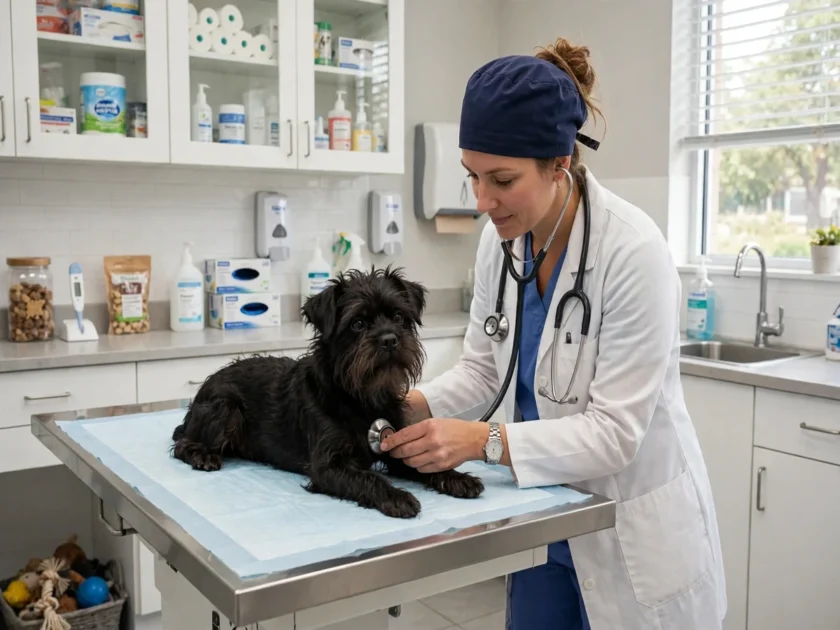
Prevention starts before you even bring an Affenpinscher puppy home. Choose a breeder who health-tests parent dogs for patellar luxation, hip problems, eye disease, and heart conditions, and who is happy to show you the results and talk honestly about the health of the breed. A good breeder will also socialise the puppies, let you meet the mother, and ask you questions about your home, because a careful start makes a healthier and happier adult dog. Ask your vet about the right vaccination and parasite control plan for your puppy, and keep a simple health record so nothing is missed.
Daily care does most of the heavy lifting after that. Feed a good-quality diet in measured meals and avoid overfeeding and too many treats, because even a small amount of extra weight puts more strain on tiny knees and hips. Give your dog regular exercise without forcing him to jump from high furniture or climb steep stairs every day, and watch for limping, scratching, cloudy eyes, or changes in energy. Take him to the vet at least once a year for a full check-up, including eyes, teeth, heart, and joints, and sooner if anything changes. Clean teeth regularly, keep ears clean and dry, and treat any skin or coat change promptly, because small problems in a small dog are much easier to fix when they are caught early.

Grooming and Cleaning
Grooming an Affenpinscher is straightforward once you understand his wiry coat. Brush him two or three times a week with a slicker brush and a comb to remove loose hair and prevent mats, paying extra attention to the beard, the mane, and the hair on the legs. The coat is usually hand-stripped twice a year, which means gently pulling out the dead outer coat so a fresh wiry coat can grow, and many owners ask a professional groomer to do this. If you prefer a simpler routine, a groomer can clip the coat, although clipping can make it softer over time. Trim the hair around the eyes so it does not irritate them, and wipe the beard after meals, because food and water can collect there.
Bathing is usually needed every six to eight weeks, or after a muddy adventure, using a gentle dog shampoo and rinsing well so no shampoo is left in the coat. Check the ears weekly for redness, smell, or dirt, and clean them gently with a vet-approved cleaner. Trim the nails every few weeks, because long nails make walking uncomfortable and can change the way a small dog stands. Brush the teeth daily if you can, or at least several times a week, with a dog toothpaste, because dental disease is one of the most common problems in toy breeds. A short grooming routine done little and often keeps this little monkey-faced dog comfortable, clean, and looking his best.
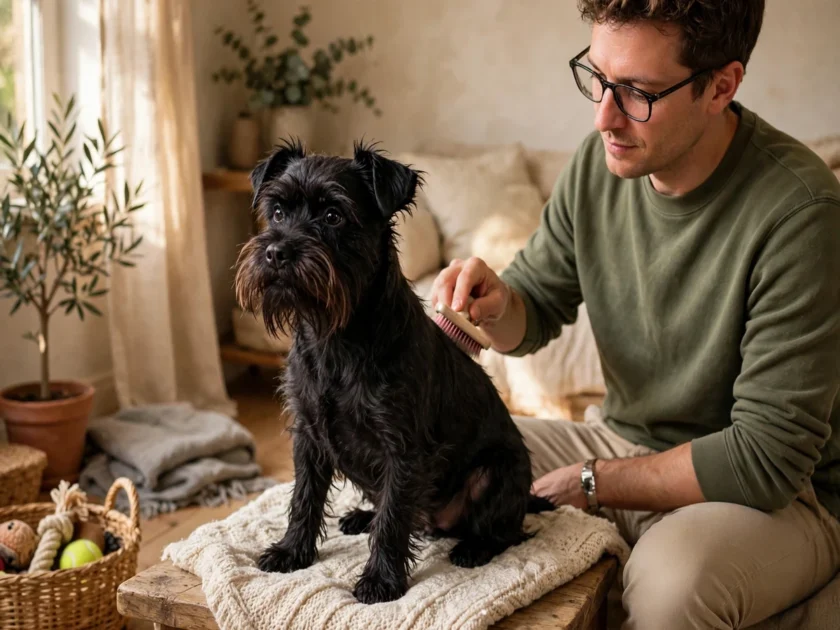
Living With a Affenpinscher: Care Tips for Owners
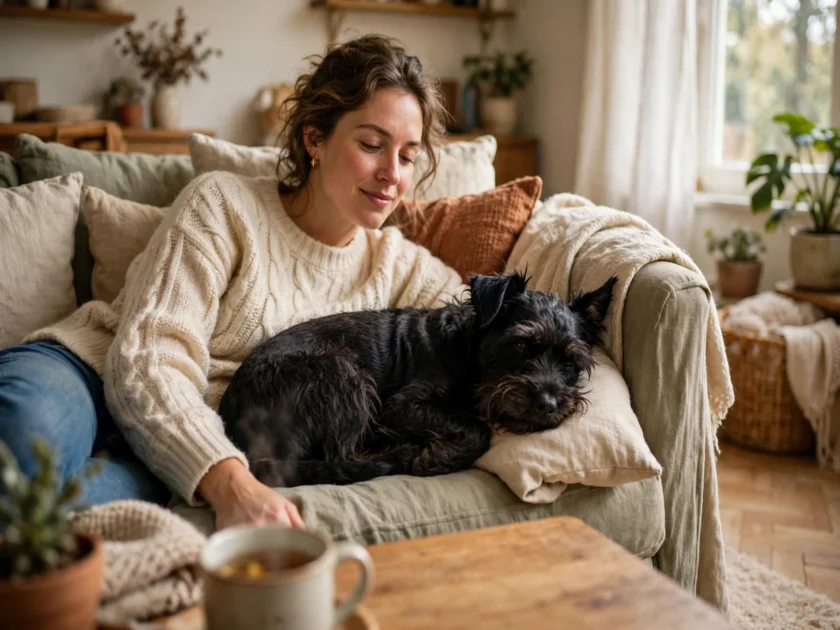
Living with an Affenpinscher means accepting a few cheerful truths. Your house will have a small shadow following you everywhere, your lap will rarely be empty, and your dog will have strong opinions about visitors, squirrels, and the postman. He suits flats and houses with gardens alike, as long as he gets company, play, and daily walks, and he is a good choice for owners who are at home for much of the day. Give him a comfortable bed in a quiet corner, a secure garden, and a routine he can rely on, because this breed settles best when life is predictable.
Set boundaries kindly but firmly from puppyhood, because a tiny dog who is allowed to demand attention, guard food, or bark at every sound can become difficult to live with. Teach him to sit, stay, and come when called, keep training sessions short and fun, and reward the behaviour you want to see again. Socialise him with different people, dogs, and places while he is young, and introduce him to children and other pets gently. Rotate his toys so he does not get bored, give him puzzle feeders to keep his clever brain busy, and never leave him alone for long hours every day. With patience, humour, and a little consistency, an Affenpinscher will repay you with years of loyalty, laughter, and companionship.
Frequently Asked Questions
Are Affenpinschers good family dogs?
Yes, Affenpinschers can be wonderful family dogs for the right home. They are loyal, playful, and affectionate with their own family, and they are usually best with older children who handle small dogs gently and respectfully.
How much exercise does an Affenpinscher need?
Most adult Affenpinschers need about thirty to forty-five minutes of exercise a day, split into shorter walks and play sessions, plus mental stimulation at home with toys and training games.
Do Affenpinschers shed a lot?
No, Affenpinschers shed very little compared with most breeds, because their wiry coat holds loose hair. Regular brushing two or three times a week removes dead hair and keeps the coat healthy.
Are Affenpinschers easy to train?
They are intelligent and quick to learn, but they can be stubborn and easily bored, so training works best in short, positive sessions with treats, praise, and plenty of patience.
How long do Affenpinschers live?
Most Affenpinschers live for twelve to fifteen years. Keeping them lean, giving them regular vet checks, and looking after their teeth, eyes, and joints can help them live a longer and healthier life.