

Introduction
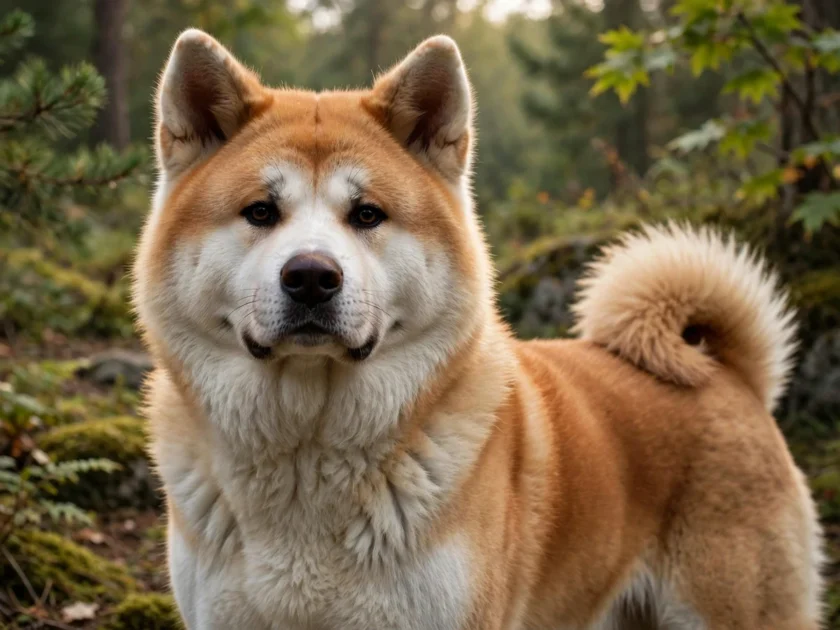
The Akita is Japan’s most famous dog, and one look explains why. This large, powerful breed carries itself with a quiet dignity that is rare among dogs: a broad head, small upright ears, a thick double coat and a tail that curls proudly over the back. The breed comes from the snowy mountains of northern Japan, where it was once used to hunt large game, and it still has the strength and courage of those working ancestors. Today most Akitas are family companions, yet the breed has never lost the calm, watchful nature that made it a treasured guardian in its homeland.
No Akita is more famous than Hachiko, the dog who waited at Shibuya station in Tokyo for his owner every day, even for years after his owner’s death. His loyalty touched the whole country, and in 1931 the Akita was declared a natural monument of Japan, a rare honour for a dog breed. That story still shapes how people see the breed: an Akita does not give its loyalty lightly, but once it bonds with a person or a family, that bond is deep and lasting. Owners often say their Akita follows them from room to room and quietly keeps watch over the household.
An Akita is not a dog for everyone, and this guide is honest about that. The breed is intelligent, strong-willed and protective, and it needs an owner who is patient, consistent and willing to train every day. In return it offers a faithful companion with a steady temperament and a striking presence. The sections below cover the Akita’s characteristics, habits and behaviour, the health problems to watch for, and the grooming and daily care that keep this magnificent dog happy. For more background on the breed’s history and the two types recognised today, see the Akita page on Wikipedia.
Characteristics
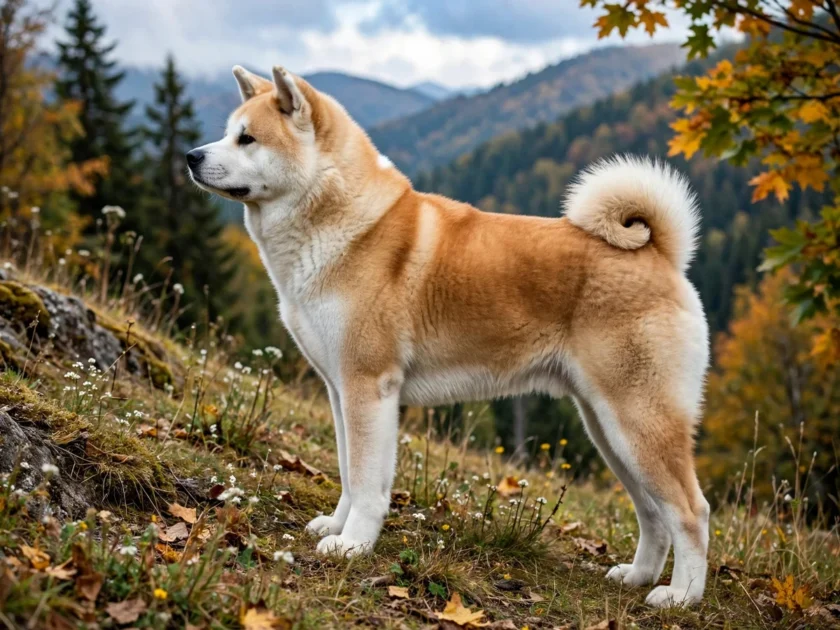
The Akita is a large spitz-type dog, and its build leaves no doubt about its working past. Males stand 64 to 71 centimetres at the shoulder and weigh between 27 and 59 kilograms, while females are a little smaller at 58 to 66 centimetres and 25 to 45 kilograms. The head is broad with a strong muzzle, the eyes are small and dark, and the ears stand upright and tilt slightly forward, giving the dog an alert expression. The tail is large and full, carried curled over the back, which is one of the breed’s most recognisable features.
The coat is short and double, with a dense, soft undercoat beneath a harsher outer coat that protects the dog from cold and snow. The usual colours are red, brindle and white, and most Akitas show pale fur on the underside of the body, a marking known in Japan as urajiro. The thick coat is part of the breed’s northern heritage, shared with other spitz breeds, and it sheds heavily twice a year when the seasons change.
Outside Japan there is a long-running debate about whether the American and Japanese Akitas are one breed or two. The American Kennel Club now treats them as separate breeds, and the FCI made a similar split in 1999, calling the American type the Great Japanese Dog before renaming it the American Akita in 2006. The Japanese type, often called the Akita Inu, tends to be a little lighter and more fox-like in the head, while the American type is heavier, with a broader head and a wider range of colours. This guide covers the breed as most owners know it, and the care advice applies to both types.
Habits and Behaviour
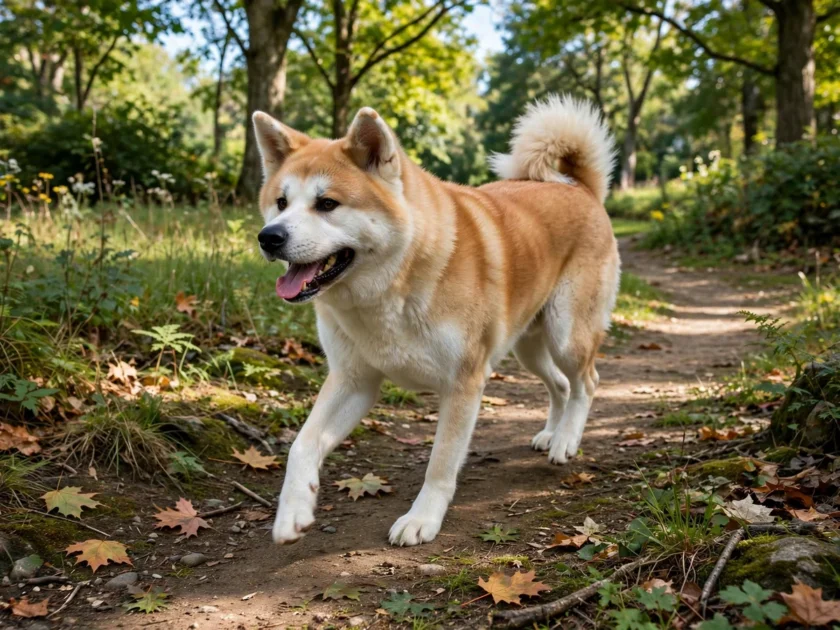
An Akita’s temperament is best described as loyal, quiet and dignified. The breed is famously devoted to its own family and is usually calm and gentle at home, happy to rest near its people rather than demanding constant attention. With strangers, however, most Akitas are reserved and watchful. They are not the kind of dog that rushes up to greet every visitor, and they take time to decide whether a new person is welcome. That reserve is part of their guardian nature, and it means early and regular socialisation is essential.
Akitas are intelligent and independent, and they were bred to work at a distance from their handler in difficult terrain, so they think for themselves. They learn commands quickly, but they may also decide that a command is not worth following, which can look like stubbornness. Training works best when it is short, consistent and based on rewards, and when the owner stays calm and patient. Harsh methods only make an Akita shut down or push back, while a fair and steady owner earns the dog’s respect.
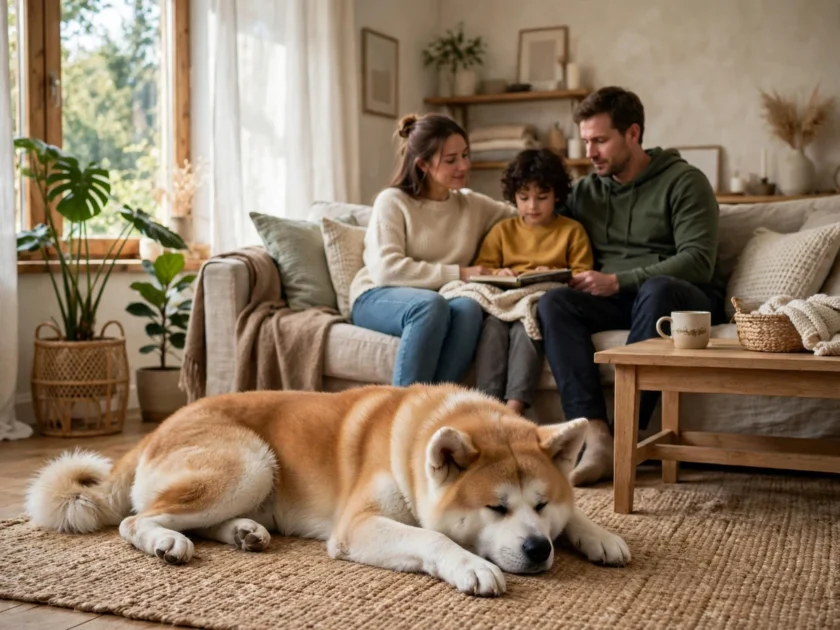
At home, Akitas are usually clean, quiet dogs that groom themselves a little like cats and rarely bark without reason. They can be strong-willed with other dogs, especially dogs of the same sex, and they have a strong prey drive, so introductions to other pets need care and supervision. With children, a well-socialised Akita that has grown up in the family is often gentle and protective, though its size and strength mean play should always be supervised. Daily exercise of an hour or more, with walks and play, keeps an Akita settled and content.
Common Diseases and Health Problems
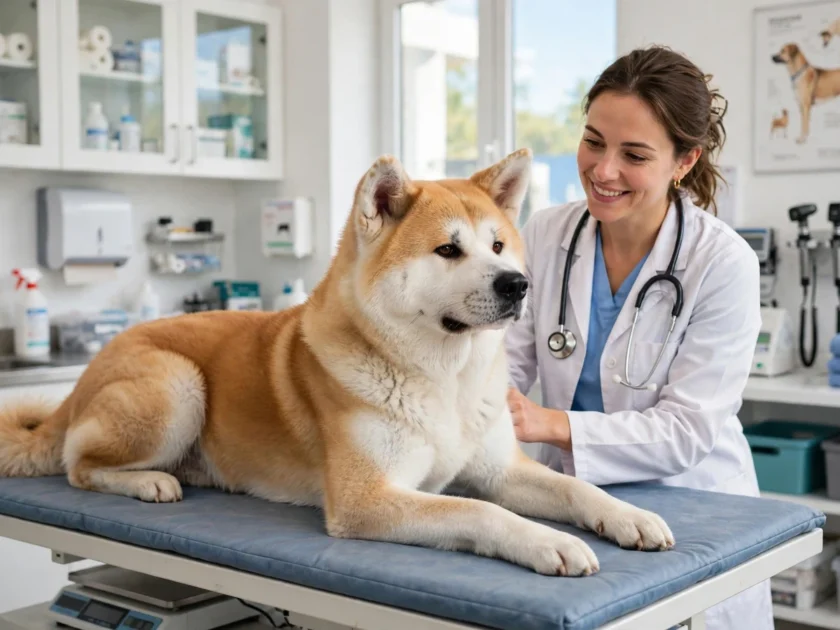
Akitas are generally hardy dogs, and a UK study found an average lifespan of 11.4 years. Even so, the breed has several health problems that owners should know about. Hip dysplasia and elbow dysplasia are both found in Akitas, and they can cause pain and stiffness as the dog grows older, so breeders should screen their dogs before breeding. Progressive retinal atrophy is an inherited eye disease that slowly reduces vision, and regular eye checks help catch it early. Bloat, where the stomach fills with gas and twists, is a serious emergency in deep-chested breeds, and owners should know its warning signs.
The breed is also prone to a number of autoimmune and hormonal conditions. Hypothyroidism, an underactive thyroid gland, is fairly common and can cause weight gain, a dull coat and low energy, but it is usually easy to manage with daily medication once diagnosed. Sebaceous adenitis is a skin condition in which the glands that oil the coat become inflamed, leading to dry, flaky skin and hair loss. Another autoimmune condition, sometimes called Vogt-Koyanagi-Harada-like syndrome or uveodermatologic syndrome, affects the eyes and the skin and can cause inflammation inside the eye, so any eye redness or cloudiness should be checked promptly.
Von Willebrand disease, a bleeding disorder in which the blood does not clot properly, is also seen in the breed, and it matters most if the dog ever needs surgery, so a vet should be told before any operation. Like many large breeds, Akitas can also develop certain cancers, and keeping the dog at a healthy weight, feeding a good diet and attending regular veterinary checks all help. Buying from a breeder who tests breeding dogs for hip, elbow and eye problems is the single best step a new owner can take.
Solutions and Prevention
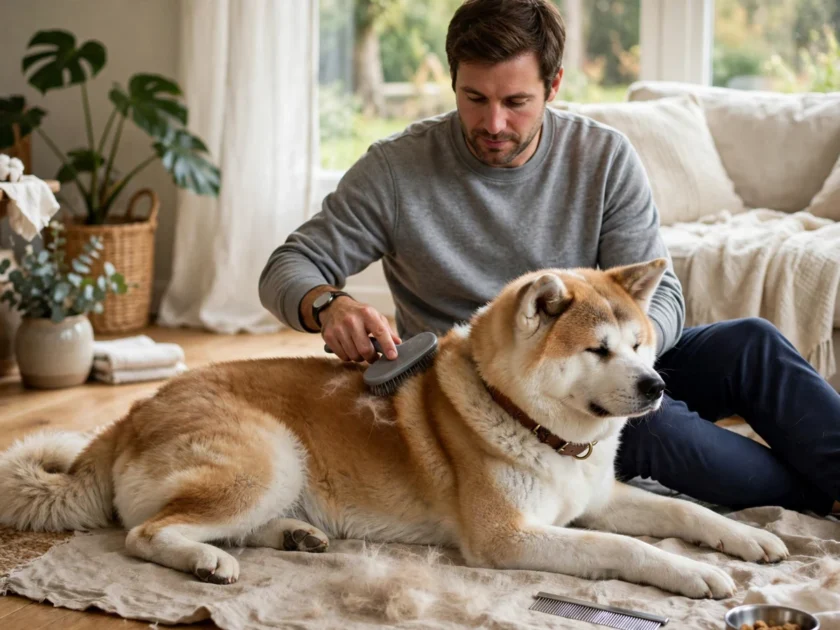
Prevention starts before the puppy comes home. Choose a breeder who screens breeding dogs for hip and elbow dysplasia, checks eyes and tests for thyroid problems, and ask to see the results. A good breeder will also be happy to talk about the health of the puppy’s parents and grandparents. Once the puppy arrives, keep up with vaccinations and worming, and book a vet check in the first week so any early problem is found while it is still easy to treat.
Feeding and weight matter a great deal for a large breed. Feed measured meals twice a day rather than one large meal, and keep the dog calm for an hour after eating, which helps reduce the risk of bloat. Choose a good-quality food suited to large breeds, avoid overfeeding, and weigh the dog regularly, since extra weight puts more strain on the hips and elbows. Fresh water should always be available, and treats should be kept small so they do not add up to extra kilos.
Regular checks at home catch problems early. Look at the eyes for redness or cloudiness, feel the coat for bald patches or sore skin, and watch how the dog moves after rest, since stiffness can be an early sign of joint trouble. Brush the teeth several times a week, clean the ears when they look dirty, and keep a note of any change in appetite, energy or weight to share with the vet. A yearly vet visit, with blood tests as the dog gets older, is the best way to keep a small problem from becoming a big one.
Grooming and Cleaning
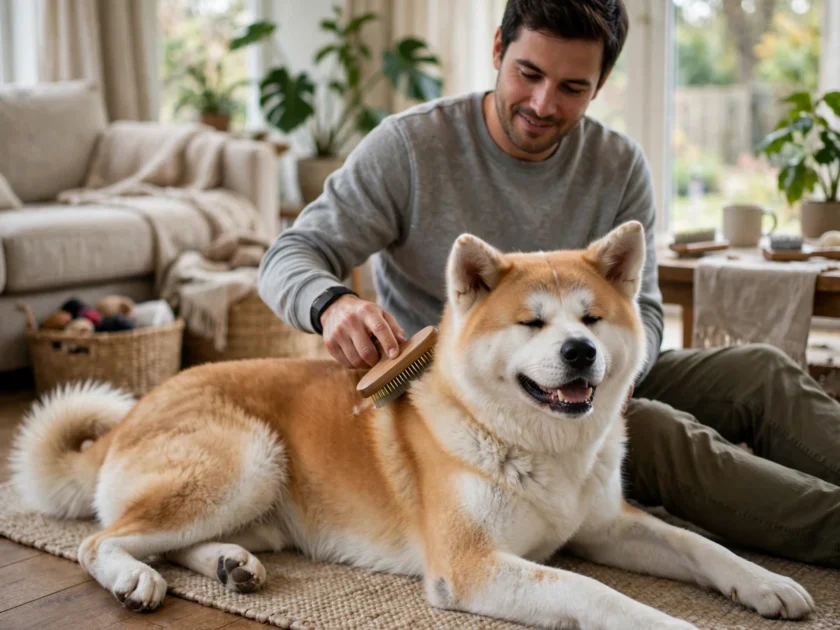
The Akita’s thick double coat looks impressive, but it is not hard to care for most of the year. Brush the coat once or twice a week with a slicker brush or a grooming rake to remove loose hair and keep the undercoat free of mats, paying attention to the thick fur around the neck, the backs of the legs and the tail. The coat is naturally quite clean, and Akitas tend to groom themselves, so they rarely smell strongly and do not need frequent baths.
Twice a year, usually in spring and autumn, the Akita sheds its undercoat in a heavy moult often called blowing the coat. During these weeks, daily brushing is the best way to keep the house and the dog comfortable, and a bath with a gentle dog shampoo can help loosen dead hair. Bathing at other times is only needed when the dog is dirty, and the coat should be dried well afterwards, since the dense undercoat holds water for a long time. Never shave an Akita’s coat, because the double coat protects the dog from both cold and heat, and shaving can damage the way it grows back.
The rest of grooming is simple but should not be skipped. Trim the nails every few weeks, since long nails make walking uncomfortable and can change the way the dog stands. Check the ears weekly and clean them gently if they look waxy or dirty, and brush the teeth several times a week with a dog toothpaste to keep the gums healthy. A quick check of the paws after walks, especially in winter when roads are salted, keeps the pads in good shape.
Living With an Akita: Care Tips for Owners
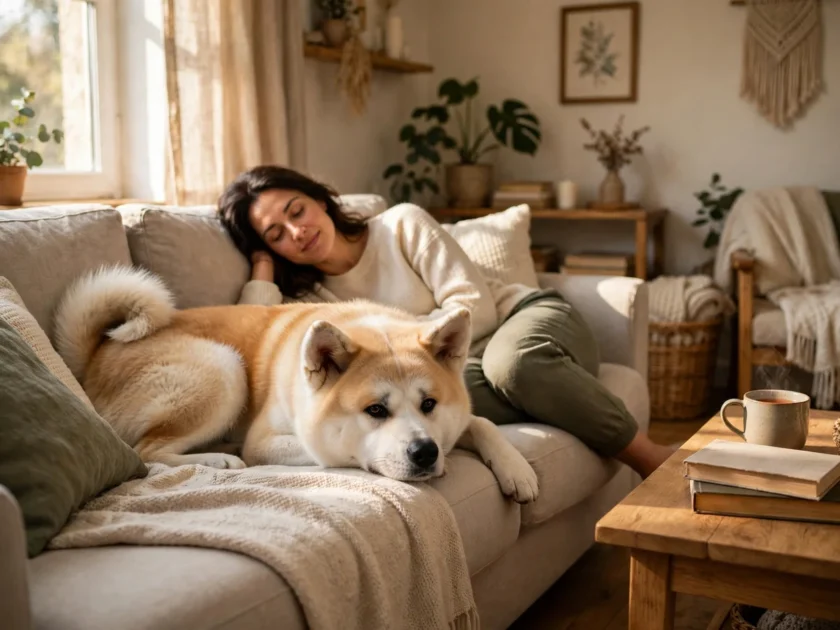
Life with an Akita works best in a home where the dog has space, routine and a clear job to do. An adult Akita needs around one to two hours of exercise each day, made up of walks, play and training, and it also needs things to think about, such as scent games or learning new commands. A secure, fenced garden is important, since Akitas are strong and curious and can be skilled at finding a weak spot in a fence. They are happiest as indoor dogs that live with their family, not as dogs left alone in a yard all day.
Training should start the day the puppy arrives and should never really stop. Short, fun sessions with treats and praise work far better than long, repetitive drills, and socialisation should continue through the first year, with calm meetings with different people, dogs and places. Like the Rottweiler, another large and powerful guardian breed, the Akita needs an owner who sets clear rules and keeps them, because a dog of this size and strength must be reliable around visitors and other animals. If the rules are fair and consistent, an Akita is a calm and trustworthy companion.
An Akita is probably not the best choice for a first-time owner, and that is worth saying plainly. The breed’s independence, strength and protective instincts need an owner with some experience of large dogs and a willingness to keep training. For the right owner, though, there are few more rewarding dogs. An Akita that is well trained, well exercised and part of the family is a loyal, dignified and quietly affectionate friend, and it will watch over its home with a devotion that few breeds can match.
Frequently Asked Questions
Are Akitas good family dogs?
Yes, when they are well socialised and raised with the family, Akitas are loyal, gentle and protective companions. They are usually calm at home and devoted to their people, but their size and strength mean that play with young children should always be supervised, and early socialisation is essential.
Do Akitas shed a lot?
Yes, Akitas shed a fair amount all year and very heavily twice a year when they blow their undercoat in spring and autumn. Weekly brushing helps most of the year, and daily brushing during the moult keeps loose hair under control.
How much exercise does an Akita need each day?
An adult Akita needs around one to two hours of exercise and play each day, plus training or scent games to keep its mind busy. Puppies need less, with short play sessions and gentle walks while their joints are still developing.
Are Akitas easy to train?
Akitas are intelligent and learn quickly, but they are independent and can be stubborn, so training works best when it is short, fun and reward-based. They need a calm and consistent owner, and harsh methods only make them shut down.
How long do Akitas live?
Akitas live for around 11 to 12 years on average. Good food, a healthy weight, regular veterinary care and early attention to any health problem all help a dog reach the upper end of that range.

