
Introduction
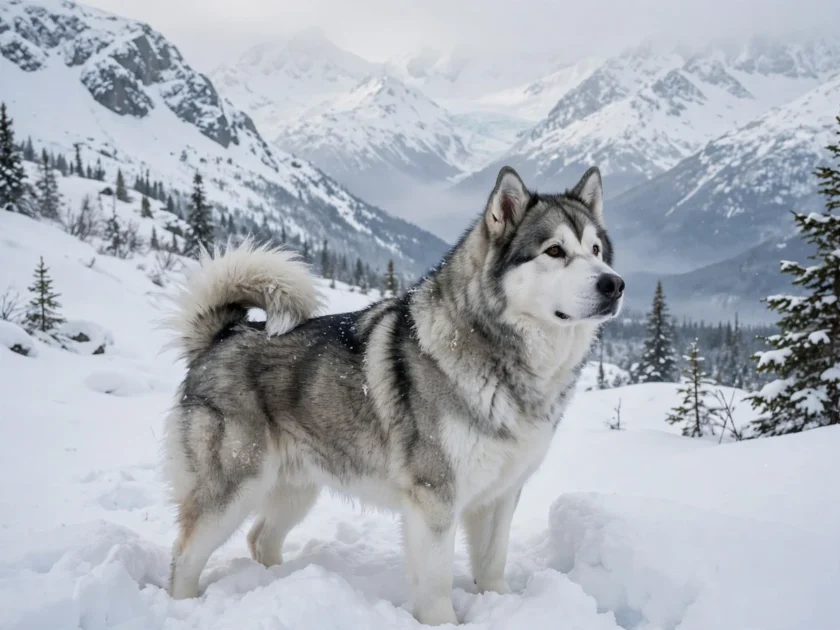
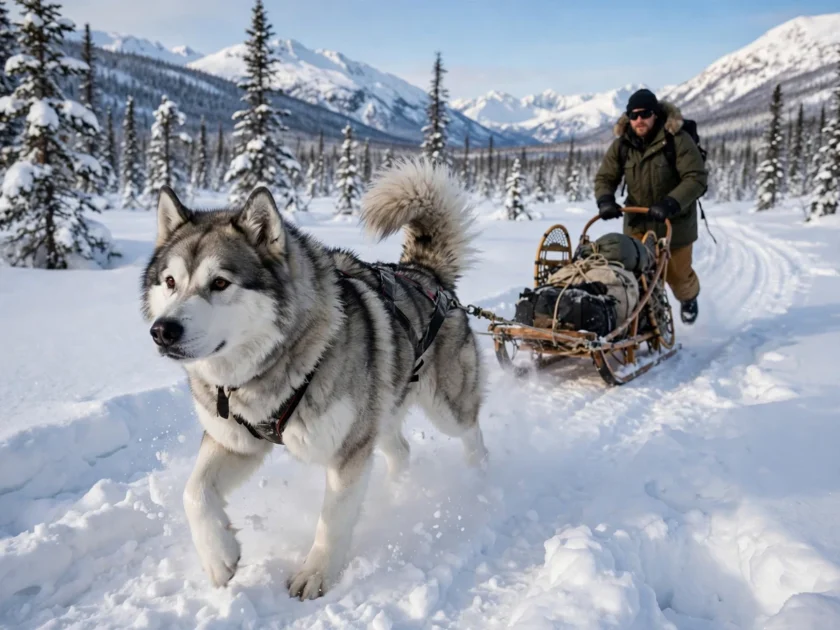
Picture a dog that looks as though it stepped out of a snowstorm: a big, powerful animal with a thick grey and white coat, warm brown eyes and a plumed tail. That is the Alaskan Malamute, one of the oldest Arctic sled dogs in the world. The breed was developed over thousands of years by the Mahlemut Inuit people of northwestern Alaska, to haul heavy freight over long distances. Power and endurance were everything, and the Alaskan Malamute was shaped around that work.
This is a dog with a genuine place in history. The American Kennel Club recognised the breed in 1935, and a team of Malamutes helped Admiral Byrd reach the South Pole in 1933. Behind that rugged, wolf-like appearance lives a surprisingly gentle and affectionate companion, loyal to its family and happiest at the heart of family life.
Characteristics
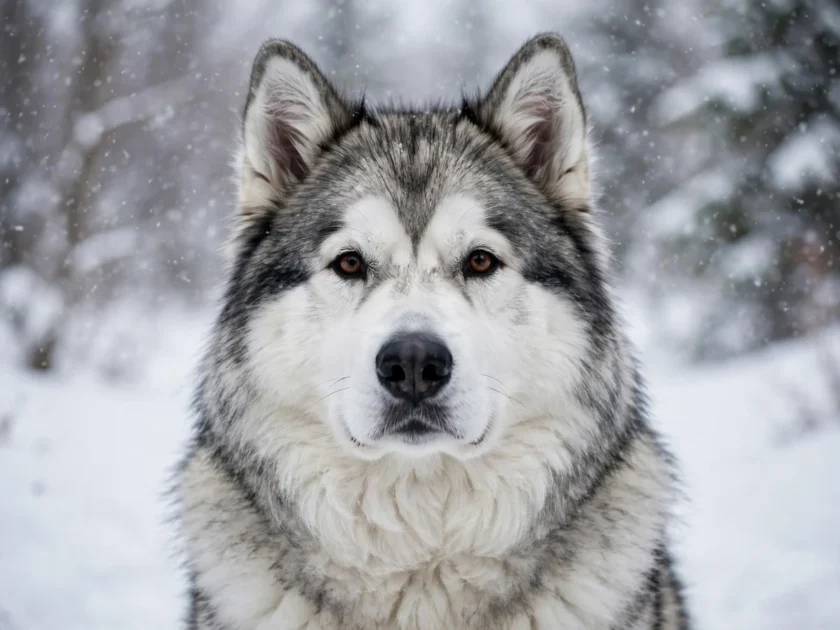
The Alaskan Malamute is a large and powerfully built dog, standing about twenty three to twenty five inches tall at the shoulder and weighing between seventy five and eighty five pounds. Its most striking feature is the thick double coat, a dense woolly undercoat beneath a coarse outer coat. The coat comes in grey and white, black and white, red and white, and sable and white. A Malamute’s eyes must be brown: blue eyes are a disqualification in the show ring.
Temperament is where this breed quietly surprises people. Malamutes are affectionate, loyal and playful, yet they carry themselves with a calm dignity. They are friendly with people, which means they make very poor guard dogs. They were built for power and endurance rather than speed, which is the great difference between them and the lighter, faster Siberian Husky. Their lifespan is around ten to twelve years.
Habits and Behaviour
Live with a Malamute and you will soon discover an independent minded dog with a will of its own. It is intelligent, but it does not always feel like obeying. Recall is famously unreliable, so a Malamute should never be let off the lead in an unfenced area. The breed also has a strong prey drive, so small animals and cats can trigger a chasing instinct, and some Malamutes can be aggressive towards dogs of the same sex. Early socialisation helps.
Digging is another habit every Malamute owner comes to know. A Malamute digs for fun, digs out of boredom, and often digs to find a cool patch of earth. It will also roam, so a garden needs a high, secure fence sunk deep into the ground. At the food bowl the Malamute is a thrifty feeder that wolfs its food down at remarkable speed, and that hearty appetite makes it prone to putting on weight.
Common Diseases and Health Problems
Alaskan Malamutes are generally hardy dogs, but like every pure breed they carry a few known health risks. Hip dysplasia is one of the most common, where the hip joint does not fit together neatly, causing stiffness and arthritis as the dog grows older. The breed is also known for chondrodysplasia, a skeletal condition affecting the growth of cartilage and bone, and for hypothyroidism, where the thyroid gland underperforms and the dog may gain weight and lose energy. Responsible breeders also screen for inherited polyneuropathy, a nerve condition affecting movement.
Eye problems deserve attention too, because Malamutes can develop cataracts that cloud the lens and reduce vision, and hemeralopia, a form of day blindness that makes bright light uncomfortable for the dog. Bloat is a serious risk in this deep chested breed, a condition where the stomach fills with gas and can twist. Obesity adds strain to the hips, joints and heart.
Solutions and Prevention
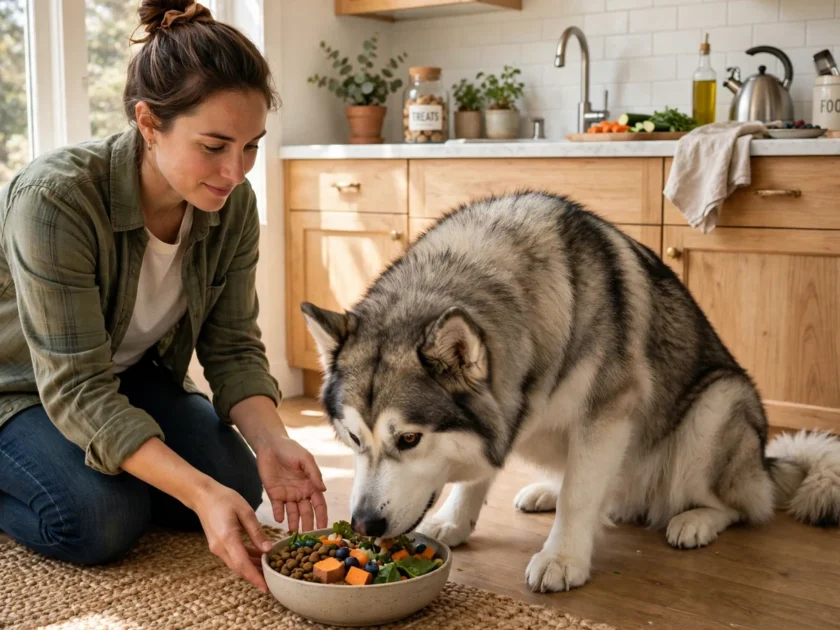
Prevention begins before you ever bring a puppy home, by choosing a breeder who screens their dogs for hip dysplasia, eye problems and polyneuropathy and is happy to share the results. Keep your dog at a healthy weight from the start. Measure meals rather than pouring from the bag, keep treats small, and feed two or three smaller meals a day instead of one large one, which helps reduce the risk of bloat. Learn the warning signs of bloat, because fast action saves lives.
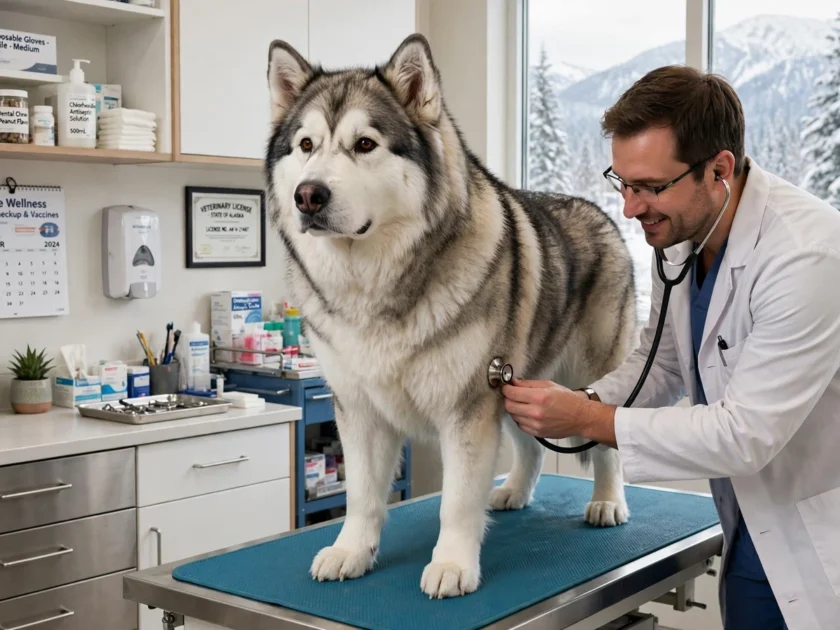
Exercise needs to be generous but thoughtful. A Malamute needs two or more hours of vigorous activity every day, but heat is its enemy. This is a dog built for the Arctic, so limit exercise when the temperature rises above twenty one degrees Celsius, around seventy degrees Fahrenheit, and always exercise in the cool of the morning or evening. Regular vet checks will catch thyroid problems, eye changes and joint trouble early.
Grooming and Cleaning
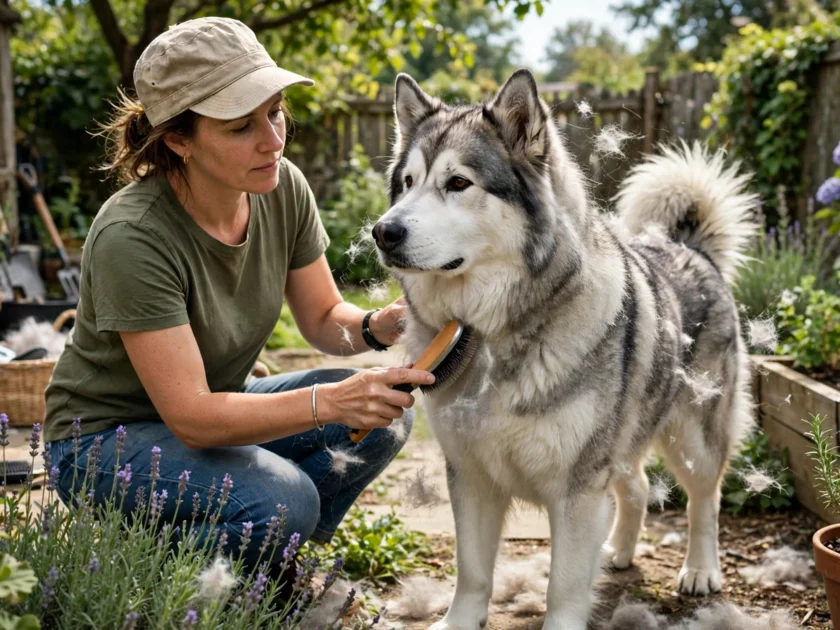
Grooming a Malamute is a serious part of ownership, because this is a heavy shedder with a coat that demands regular attention. A good brushing once a week with a slicker brush and an undercoat rake will keep the coat in order. Twice a year the coat blows, and during those weeks the woolly undercoat comes out in great clumps, so daily brushing becomes essential. One rule must never be broken: never shave a Malamute’s double coat. That coat insulates against heat as well as cold.
The good news is that Malamutes are naturally clean dogs. Their coat sheds dirt readily, so they rarely need a bath, and only an occasional wash with a gentle dog shampoo is enough. Nails should be trimmed every few weeks, ears checked and cleaned regularly, and teeth brushed several times a week with dog toothpaste.
Living With a Alaskan Malamute: Care Tips for Owners
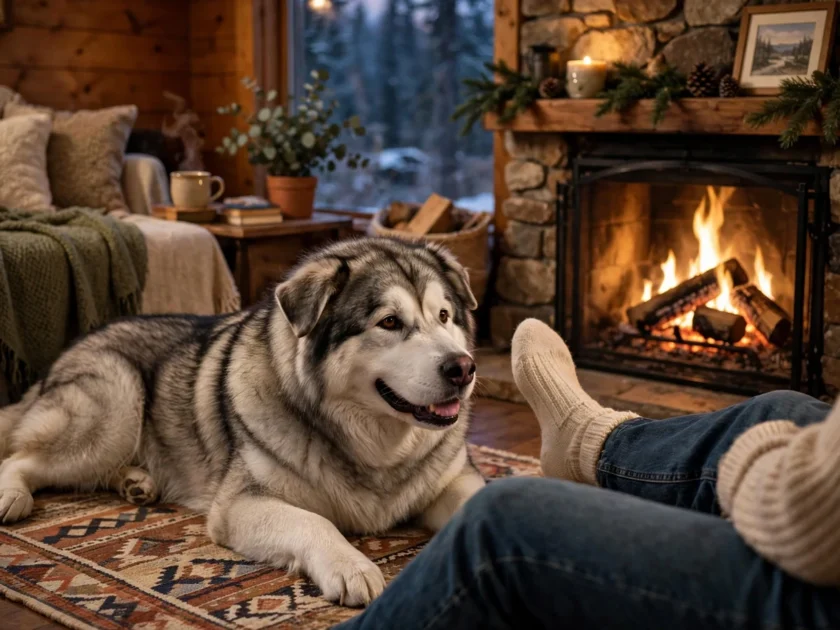
The secret to a happy Malamute is to match its life to what it was bred for: plenty of work, plenty of space and plenty of company. This is not a dog for a small flat or a quiet life. It needs a secure garden and owners who enjoy long walks and hikes. A Malamute does best in a cool climate and struggles in the heat, so owners in warm places must plan exercise around the cooler hours and always provide shade and fresh water.
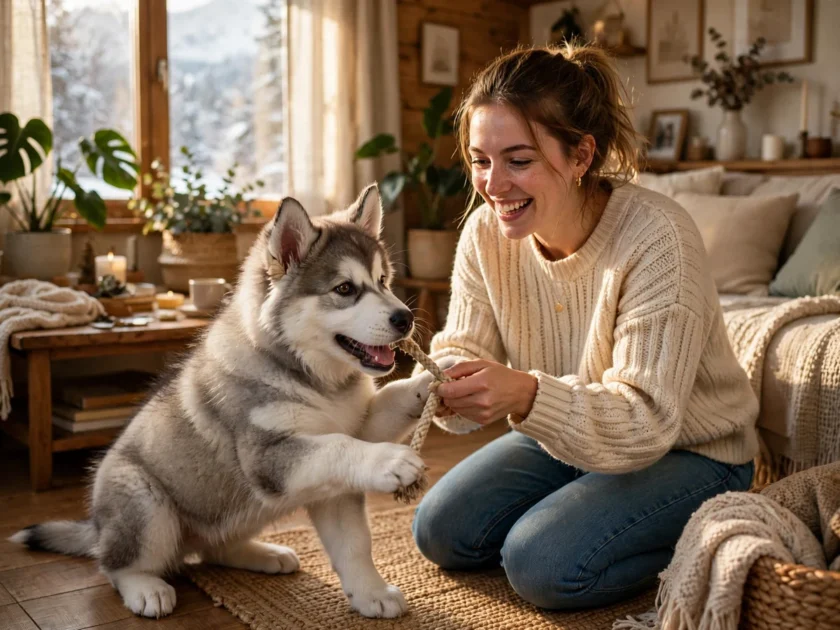
Children and Malamutes can be wonderful together, because the breed is usually patient and playful, but the dog’s sheer size means interactions should always be supervised. Keep feeding measured, store food securely, and train from puppyhood. Give this dog daily exercise, mental challenges such as scent games and pulling work, a cool place to sleep and regular vet visits, and you will have a loyal and deeply affectionate companion for ten to twelve wonderful years.
Frequently Asked Questions
Are Alaskan Malamutes good family dogs?
Yes, Alaskan Malamutes can be wonderful family dogs. They are affectionate, loyal and playful, and they usually love children. Their large size means play should always be supervised, and they need plenty of exercise and training.
Do Alaskan Malamutes shed a lot?
Yes, they shed heavily all year round, and twice a year they blow their undercoat, losing huge amounts of fur in clumps. Weekly brushing helps, daily brushing is needed during a coat blow.
How much exercise does an Alaskan Malamute need?
An adult Malamute needs at least two hours of vigorous exercise a day. Without enough activity it quickly becomes bored, restless and destructive.
Are Alaskan Malamutes easy to train?
Malamutes are intelligent but independent and strong willed, so training takes patience, consistency and tasty rewards. Keep sessions short and positive, and never rely on recall in an unfenced area.
Can Alaskan Malamutes live in warm climates?
They can, but they struggle in the heat because of their thick double coat. Exercise only in the cool morning or evening, and limit activity above twenty one degrees Celsius.