
Introduction
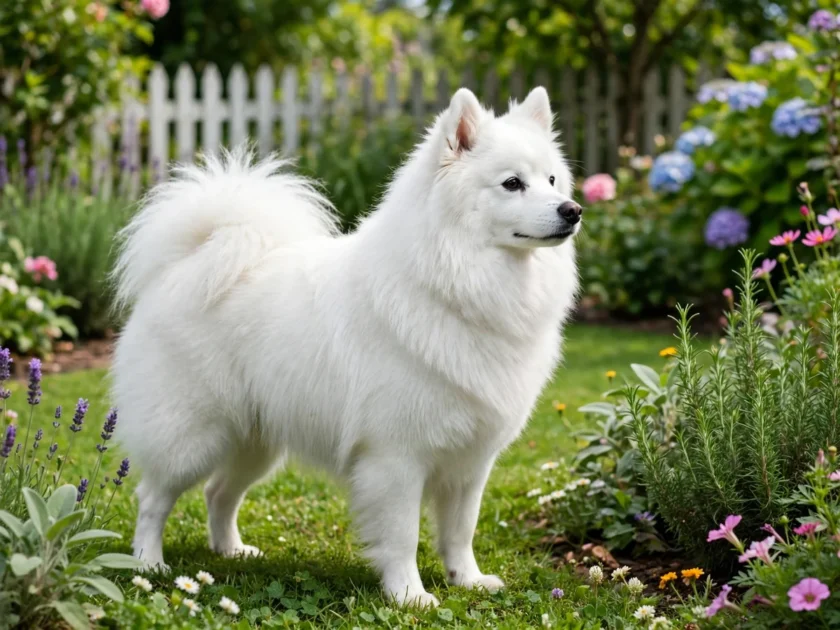
Picture this: a cloud of white fluff comes bounding across the garden, ears pricked and plumed tail curled high over its back. That is an American Eskimo Dog saying hello, and it is quite a greeting. Known to friends as the Eskie, this cheerful spitz looks like a snowdrift that learned to play fetch.
The American Eskimo Dog descends from northern spitz dogs, including the white German Spitz, the white Pomeranian and the Volpino Italiano, and it arrived in America with German immigrants. In the early twentieth century the Eskie became a star of the circus ring, thanks to its intelligence, agility and dazzling white coat. It no longer tours with travelling shows, but that same quick mind and show-off streak still live on in the family home, waiting for an audience.
Characteristics
One of the first things to know about this breed is that it comes in three sizes. The Toy stands nine to twelve inches tall and weighs roughly six to ten pounds, the Miniature stands twelve to fifteen inches and weighs about ten to twenty pounds, and the Standard stands fifteen to nineteen inches and weighs around eighteen to thirty-five pounds. Whichever size you choose, you get the same beautiful package: a thick fluffy white double coat, sometimes with biscuit markings, upright triangular ears, dark eyes rimmed in black, and a plumed tail carried proudly over the back. Most Eskies live thirteen to fifteen years.
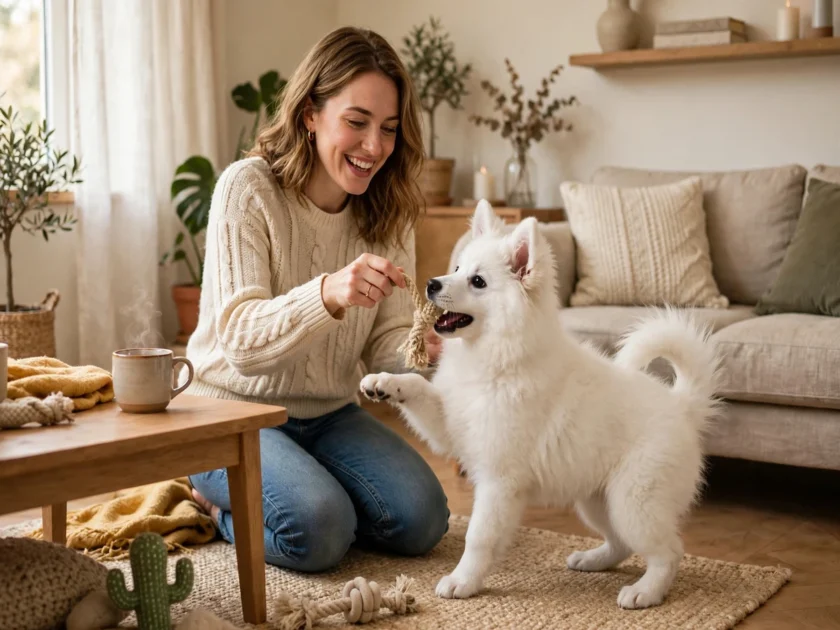
Temperament is where the Eskie truly wins hearts. It is clever, alert, playful and affectionate, with a mischievous streak that keeps its owners laughing. It bonds deeply to its family and wants to be included in everything. The breed makes an excellent watchdog, though that same alertness means it can be a very vocal companion. Like the Poodle, it is one of the smartest breeds you can bring home, and it thrives on mental stimulation.
Habits and Behaviour
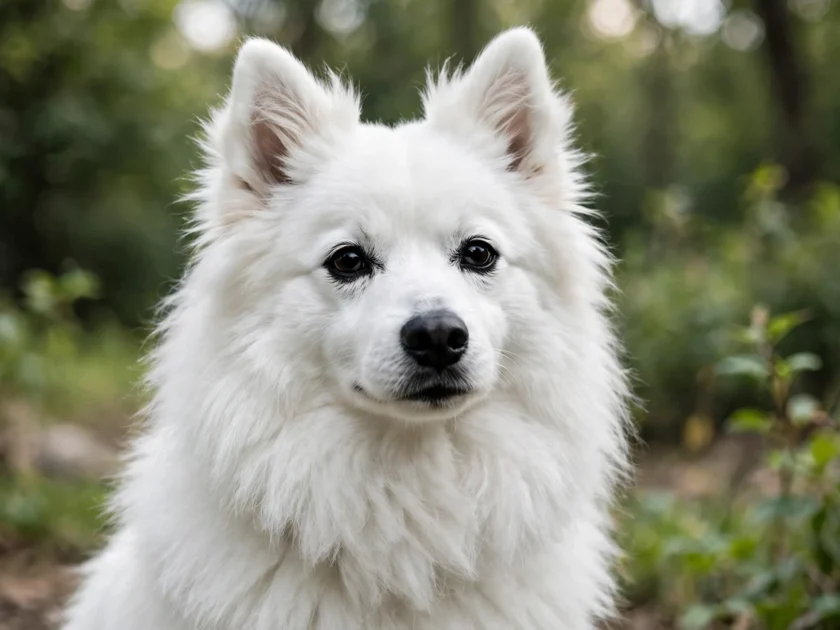
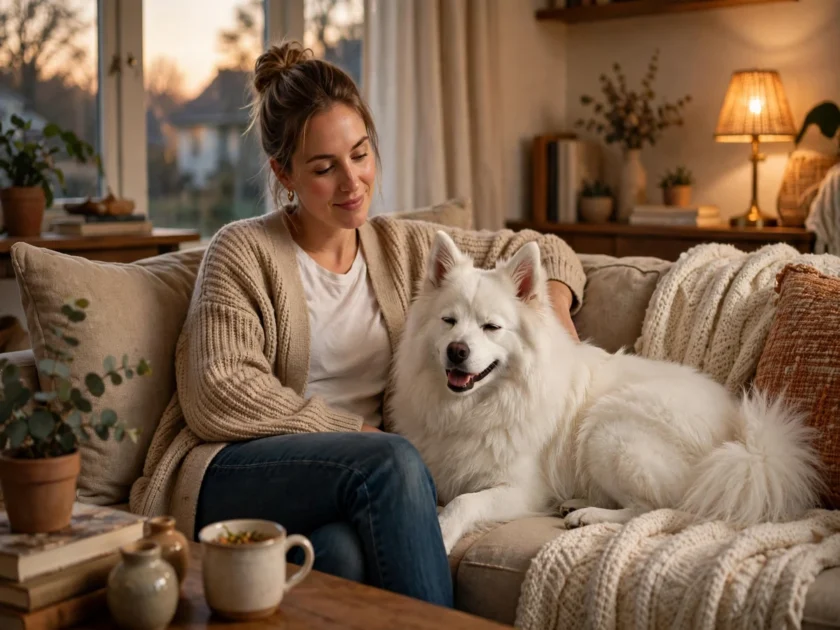
Live with an Eskie for a week and you will quickly learn that this is a dog that needs to belong. It follows its favourite people from room to room and greets every return home as if it were a small celebration. It is happiest when it is part of the action, and it can grow anxious or noisy if shut away or left alone for long stretches.
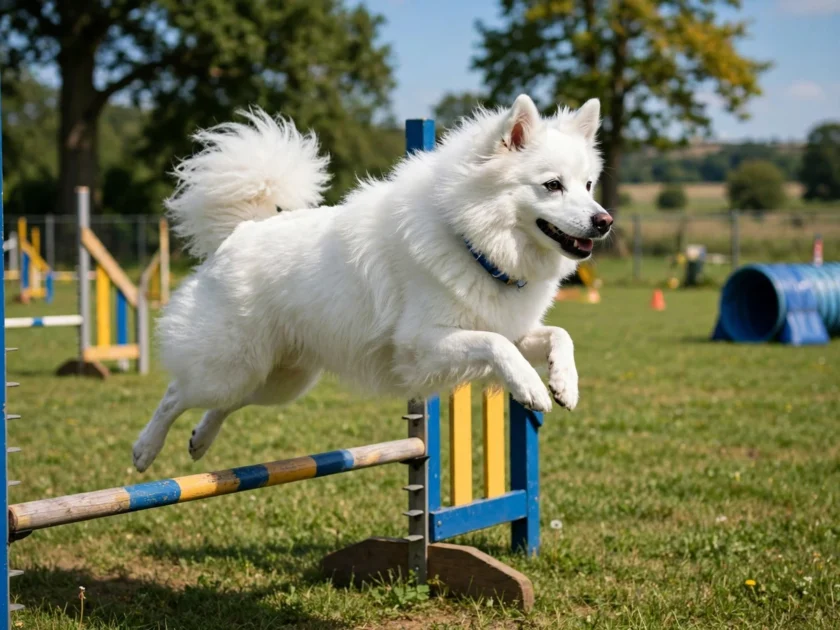
Training an Eskie is a genuine pleasure, because few spitz breeds learn as quickly. It loves tricks, obedience work and agility, and picks up new commands with an enthusiasm that surprises first-time owners. That said, it is strong willed and can be stubborn, so training needs to be firm, patient and positive, with plenty of praise and treats. The breed is naturally wary of strangers and sensitive to raised voices or tension at home, and it can be impatient with small children who hug or grab, so early socialisation and calm handling matter a great deal.
Common Diseases and Health Problems
The American Eskimo Dog is generally a healthy breed, and many Eskies enjoy long lives with few serious problems. Even so, owners should know the conditions to watch for so they can act early. Hip dysplasia can affect the larger dogs, causing stiffness and discomfort, while patellar luxation, where the kneecap slips out of place, is seen mostly in the smaller Toy size. Eye problems are also worth watching for, including progressive retinal atrophy, which gradually reduces vision, and juvenile cataracts, which can cloud a young dog’s sight.
Other concerns include Legg-Calve-Perthes disease, which affects the hip joint in young dogs, diabetes, skin allergies that cause itching and hot spots, and pyruvate kinase deficiency, a blood condition that can lead to chronic anaemia. Dental disease is common, and epilepsy can occur too. None of these problems is guaranteed, and a well-bred Eskie from health-tested parents has every chance of a long life.
Solutions and Prevention
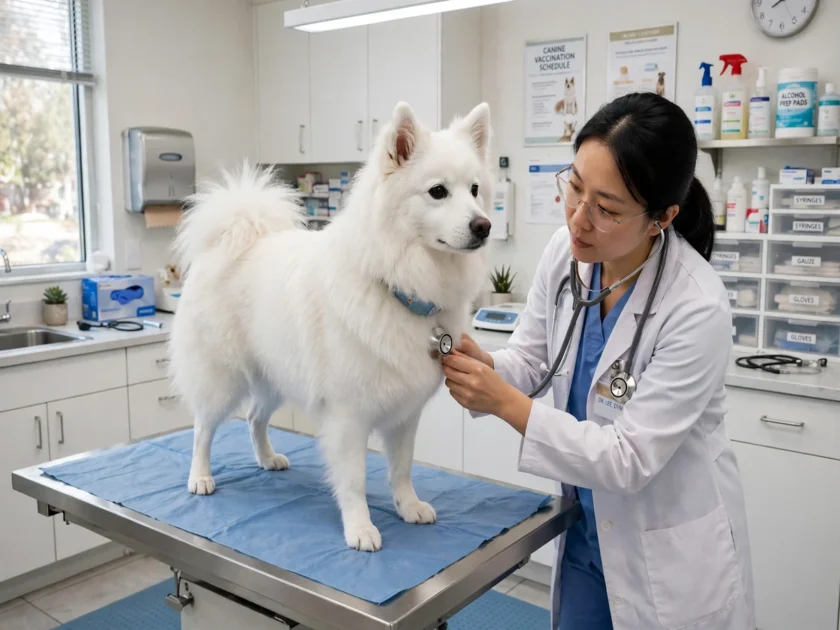
Prevention begins before you even bring your puppy home. Choose a breeder who health tests their dogs for hip problems, eye conditions and pyruvate kinase deficiency, and ask to see the results. Once your dog is home, keep up with regular vet checks, at least once a year and twice a year once it passes seven, so small problems are spotted before they grow. Keep vaccinations and parasite control up to date, and watch for warning signs such as limping, cloudy eyes, unusual thirst or repeated skin irritation.
Daily life plays a big part in keeping an Eskie healthy too. It needs forty-five to sixty minutes of activity every day, plus games, training and puzzle toys to tire out that busy brain. A good quality diet, measured portions and fresh water help prevent obesity and support blood sugar balance, which matters for a breed prone to diabetes. Brush its teeth often and give it a job to do, because a well-exercised Eskie is far less likely to develop boredom and stress.

Grooming and Cleaning
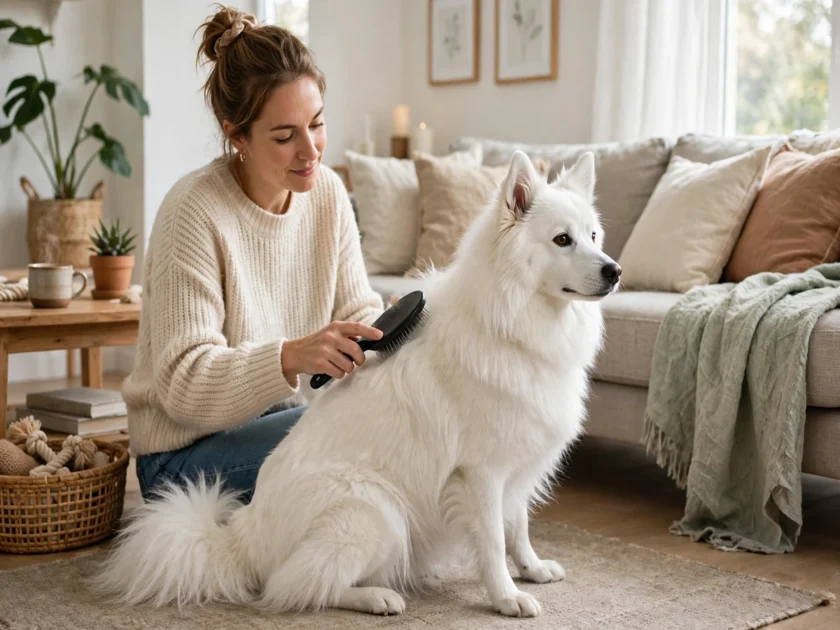
Grooming an Eskie is a real commitment, and new owners should go into it with their eyes open. This is a heavy shedder with a thick double coat, and it needs brushing two to three times a week to keep the coat free of mats and the house reasonably free of white fluff. Twice a year the coat blows, shedding the dense undercoat in a great seasonal moult, and during those weeks daily brushing is essential unless you enjoy living inside what feels like an indoor blizzard.
The good news is that the coat sheds dirt remarkably well, so baths can stay occasional, using a gentle dog shampoo and drying the thick fur thoroughly afterwards. Nails should be trimmed about once a month, ears checked weekly for redness or smell, and the face watched for tear staining, which shows up clearly on white fur. Teeth need brushing often, and regular grooming doubles as a health check, letting you spot lumps, sore skin or parasites early.
Living With a American Eskimo Dog: Care Tips for Owners
The secret to a happy Eskie is simple: keep its body moving, keep its mind busy, and never leave it feeling forgotten. Build a daily routine around a good walk, a training session or agility game, and a puzzle feeder to work through. Teach a quiet command early, because this is a breed that loves the sound of its own voice, and reward calm behaviour as generously as you reward tricks. A securely fenced garden is a must, since Eskies are clever escape artists.
Build up time alone gradually, starting with a few minutes and a safe chew, so your dog learns that you always come back. Keep it included in family life and introduce it gently to visitors and children so its natural wariness never turns into nervousness. With daily exercise, patient positive training, regular grooming and a family that enjoys its clownish charm, an American Eskimo Dog will repay you with years of loyal, funny and endlessly affectionate companionship.
Frequently Asked Questions
Are American Eskimo Dogs good family dogs?
Yes, they are affectionate and devoted family dogs that bond deeply with their people. They do best with older children who handle them gently, as they can be impatient with rough hugging or grabbing from very small children.
Do American Eskimo Dogs bark a lot?
Yes, Eskies are very vocal dogs. They bark to announce visitors, when excited, and when bored or left alone. A quiet command, plenty of exercise and mental stimulation help keep the barking under control.
How much exercise does an American Eskimo Dog need?
An adult Eskie needs forty-five to sixty minutes of daily activity, plus training games and puzzle toys. Without enough exercise and mental stimulation it quickly becomes bored, which leads to barking, digging and chewing.
Are American Eskimo Dogs easy to train?
They are among the quickest learners of the spitz breeds and love tricks, agility and obedience. They are also strong willed, so training works best when it is firm, patient and positive, with plenty of praise and treats.
Do American Eskimo Dogs shed a lot?
Yes, they are heavy shedders. Brush two to three times a week, and daily during the twice-yearly coat blow. Their white coat sheds dirt well, so baths can stay occasional.