
Introduction
Picture this: dawn is just breaking over the woods, and somewhere far ahead a ringing bay echoes through the trees as a lean, speckled hound works a scent trail with total concentration. That voice belongs to an American English Coonhound, a dog built for exactly this moment, and hearing it once is enough to understand why hunters and hound lovers have treasured this breed for centuries.
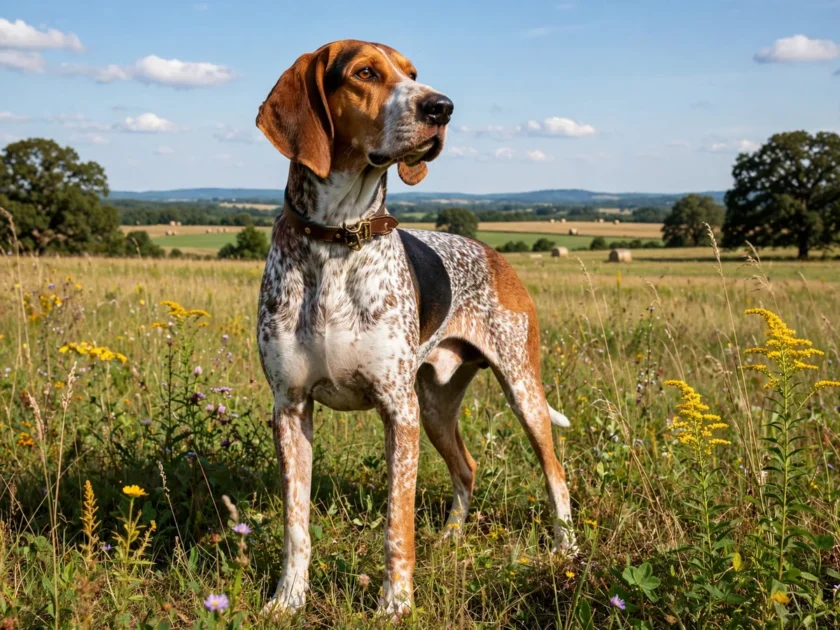
Descended from the English Foxhounds that settlers brought to North America in the 1600s, and developed from the colonial Virginia Hounds, the American English Coonhound is a true American scent hound. It was bred to run fox by day and tree raccoons by night, and today it is a sweet, mellow companion at home and a serious athlete in the field, a combination that surprises many people who meet the breed for the first time.

Characteristics
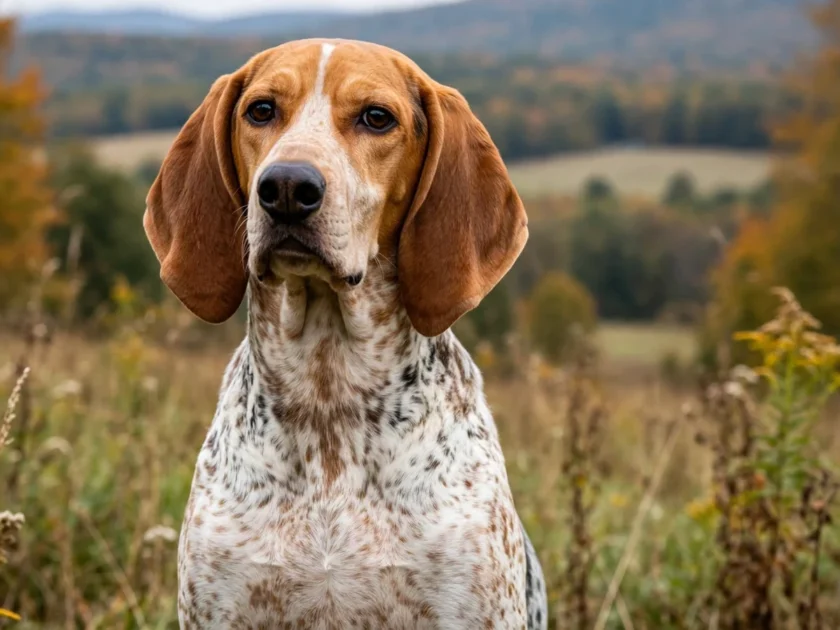
An American English Coonhound is a racy, athletic dog with a deep chest, a strong back and well-defined muscles that speak of long days on the trail. Most stand twenty-three to twenty-six inches at the shoulder and weigh forty-five to sixty-five pounds. The short, hard, protective coat comes in redtick, bluetick or tricolour, and the long hanging ears and pleading dark eyes give the breed its classic hound expression.
The breed has a long and proud history. The United Kennel Club recognised it in 1905 as the English Fox and Coonhound, and it entered the American Kennel Club Foundation Stock Service in 1995 before gaining full AKC recognition in June 2011, competing in the Hound Group from 2012 as the AKC’s 171st breed. Its lifespan is eleven to twelve years, and it is known as America’s fastest coonhound. Compared with the smaller and stockier Beagle, the American English Coonhound is a taller, rangier dog built for covering serious ground.
Habits and Behaviour
At home, an American English Coonhound is a delight: sweet, mellow, affectionate and sociable, happiest stretched out near its people after a good day’s work. It is excellent with children and gets on beautifully with other dogs, a real pack hound that thrives on company. Strangers are greeted as friends rather than threats, because this breed has no guarding instinct at all, and anyone hoping for a watch dog will be disappointed.
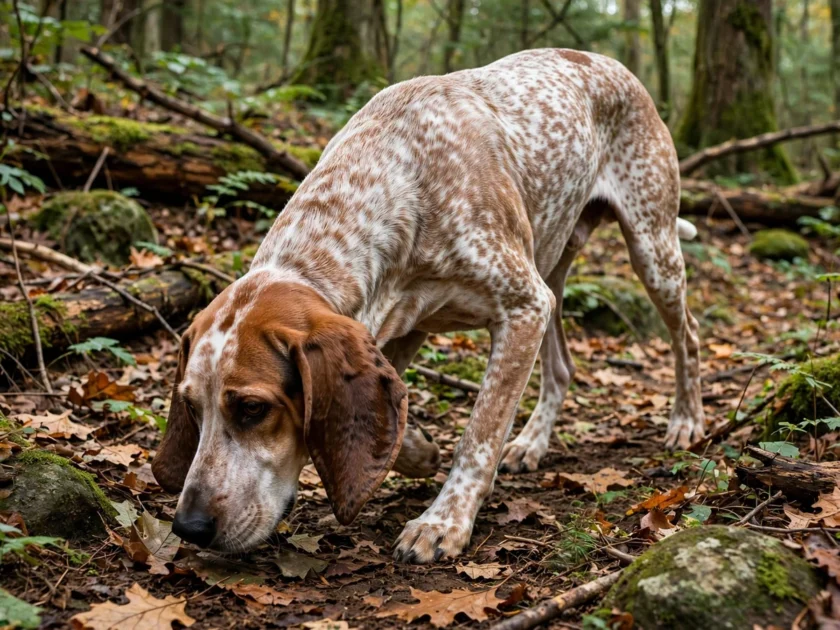
Outdoors, however, the same dog transforms completely, because it is all nose. A scent overrides everything else, and recall becomes unreliable the moment an interesting trail crosses its path, so this breed must never be trusted off the lead in unfenced areas. It is also a very vocal dog, and its ringing bawl or bay carries for miles through the forest, used constantly while working, so owners should expect plenty of noise.
Common Diseases and Health Problems
The American English Coonhound is generally a hardy breed with few breed-specific problems, which is one of the rewards of a working heritage that favoured sound, functional dogs. Knowing what to watch for helps owners act early when something changes.
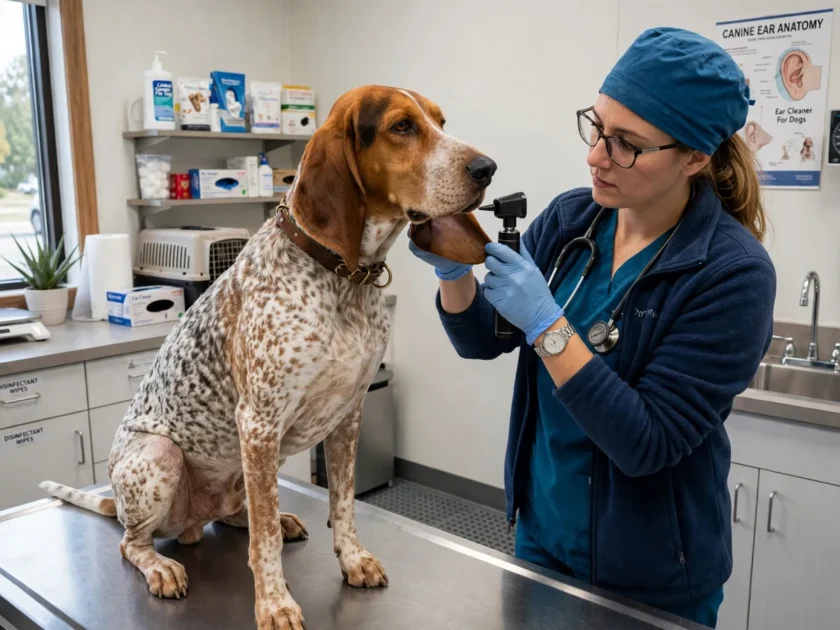
The most common issue is ear infection, because those long hanging ears trap warm, damp air and create an ideal home for yeast and bacteria, so ears need checking and cleaning every week. Hip dysplasia can also occur, where the hip joint does not fit together neatly, leading to stiffness, pain and eventually arthritis. Obesity is a real risk if the dog is under-exercised, and that extra weight puts strain on the joints, heart and back. Finally, these dogs can overheat when working hard in summer heat, so exercise should be planned around the cooler parts of the day and fresh water must always be available.
Solutions and Prevention
Prevention for an American English Coonhound starts with the ears, and it starts from the first week the dog comes home. Check the ears weekly for redness, smell or discharge, clean them gently, and dry them thoroughly after baths or swimming. A few minutes of ear care each week prevents the painful, stubborn infections that are the breed’s most frequent complaint.
Weight control is the next priority, and it depends on exercise as much as food. This is a very high-energy breed that needs at least sixty to ninety minutes of vigorous daily exercise, ideally scent games, jogging or field work, plus a large, securely fenced yard with a high, solid, dig-proof fence. Measure meals rather than free feeding, keep treats to a small share of daily calories, and book a vet check at least once a year. Training should be patient, consistent and food-driven, because this intelligent breed is scent-first and can be stubborn, but it responds well to rewards and gentle persistence.

Grooming and Cleaning
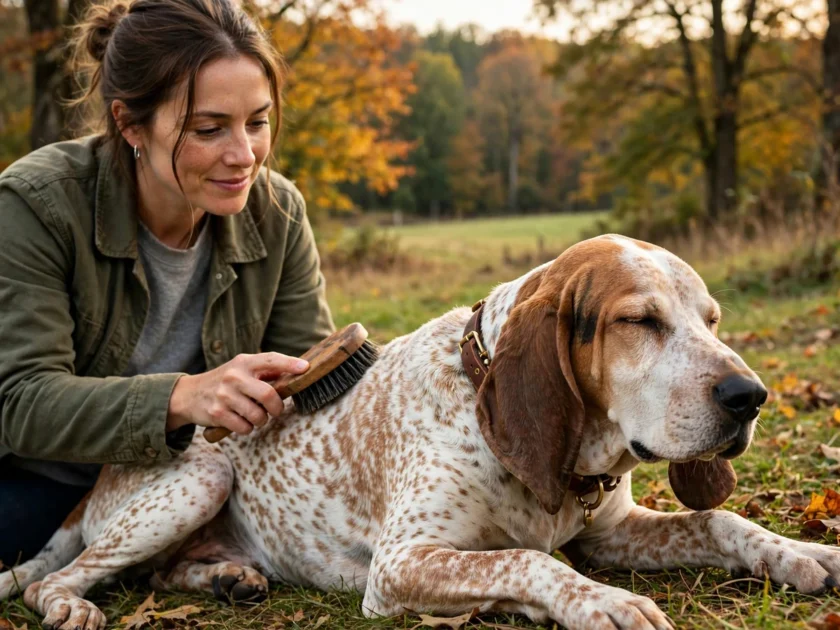
Grooming an American English Coonhound is wonderfully low maintenance, which is just as well, because this is a dog that would far rather be out running than standing still for a brush. The short coat sheds moderately all year round, and a quick brush once or twice a week with a rubber mitt or bristle brush lifts loose hair and lets owners check the skin for lumps or ticks.
Bathing only needs to happen when the dog is actually dirty, or after a particularly enthusiastic roll in something unpleasant, using a gentle dog shampoo and drying those long ears thoroughly afterwards. Nails should be trimmed every few weeks, teeth brushed regularly with dog toothpaste, and plenty of fresh water should always be on hand, especially after exercise. The weekly ear check is the one grooming task that must never be skipped, because clean, dry ears are the best defence this breed has against infection.
Living With a American English Coonhound: Care Tips for Owners
The secret to a happy American English Coonhound is simple: tire out the nose, feed the brain, and never let it loose without a fence. Scent games, scatter feeding, puzzle toys and long walks turn an ordinary afternoon into a proper job for a scent hound, and a tired coonhound is a quiet, contented companion curled up at your feet. Secure the garden properly too, because this breed is a talented escape artist when a fascinating smell drifts past the fence.
This breed is not suited to apartment living, and it needs space, activity and company to thrive. It hates being left alone for long stretches, so build up absences gradually and leave a safe chew or puzzle toy. Keep bins lidded and food well out of reach, because a hungry hound is an inventive thief. Give it daily exercise, a warm draught-free bed, regular vet visits, weekly ear care and a family that laughs at its baying, and you will have a loyal, affectionate and endlessly entertaining companion for many years.
Frequently Asked Questions
Are American English Coonhounds good family dogs?
Yes, they are excellent family dogs. They are sweet, affectionate and sociable, they are wonderful with children, and they get on well with other dogs.
How much exercise does an American English Coonhound need?
An adult American English Coonhound needs at least sixty to ninety minutes of vigorous exercise every day, ideally including scent games, jogging or field work. Without enough activity it quickly becomes bored, restless and destructive.
Can American English Coonhounds live in an apartment?
No, this breed is not suited to apartment living. It needs a large, securely fenced yard and plenty of daily exercise, and its loud baying will annoy close neighbours.
Do American English Coonhounds bark a lot?
Yes, they are very vocal dogs. Their ringing bay carries for miles and they use it constantly while working, as well as when excited or bored. Training and exercise reduce the noise, but a quiet coonhound is very unlikely.
Are American English Coonhounds easy to train?
They are intelligent but scent-first and stubborn, so training takes patience and tasty rewards. Keep sessions short and fun, use food motivation, stay consistent, and expect steady progress rather than instant obedience.