


You can be the best dog trainer in town, but if nobody knows you exist, your schedule stays empty. That’s where a well-designed dog training flyer comes in. Flyers are cheap, local, and surprisingly powerful: pinned on a vet’s bulletin board or slipped into a pet store bag, they reach exactly the dog owners you want, right in your neighborhood.
But most trainer flyers fail. They’re cluttered, vague, or just plain boring, and they end up in the trash unread. The good news? You don’t need design skills to fix that. With the right template and a few proven design tips, you can create a flyer that actually brings in clients. Here’s how.
1. Start With a Headline That Sells the Benefit
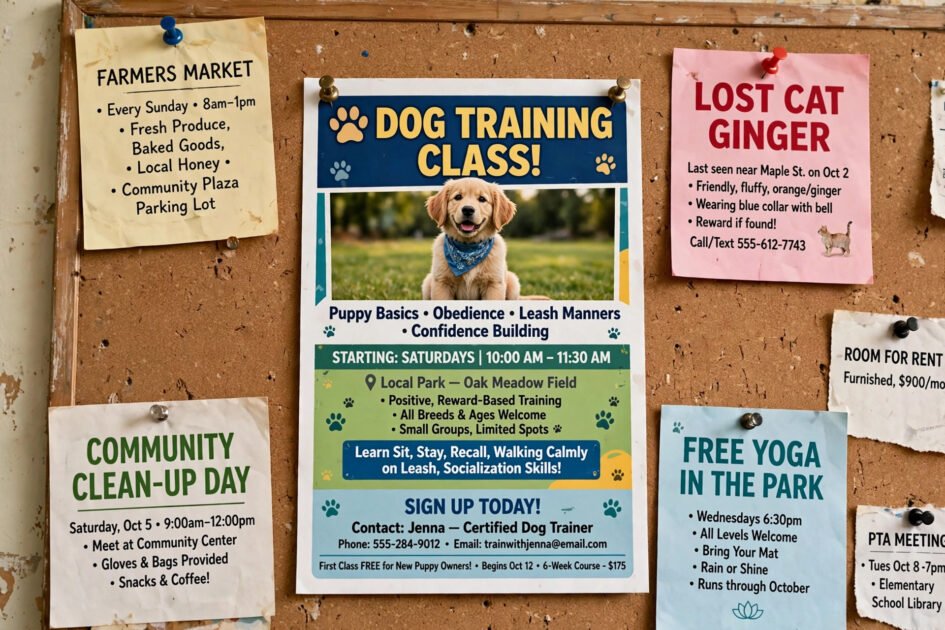
Your headline has about two seconds to stop someone mid-stride. “Dog Training Services” won’t do it. Nobody wakes up wanting “services.” They want a dog that stops jumping on guests, walks nicely on a leash, or finally comes when called.
Lead with the outcome: “Stop the Jumping in 3 Sessions,” “Loose-Leash Walking That Lasts,” or “Puppy Training That Actually Works.” Be specific and speak to the pain point. If you have a specialty, name it: “Reactive Dog Specialist” beats “Dog Trainer” for the owner who’s been struggling for months.
2. Use One Strong Dog Photo, Not Five

The biggest mistake on trainer flyers is photo overload: five tiny pictures of random dogs crammed into corners. The result looks chaotic and says nothing. One large, high-quality photo of a happy, well-trained dog beats a collage every time.
Pick a photo that shows the transformation you sell: a calm dog sitting attentively, a joyful dog mid-training, or a proud owner with their well-behaved pup. Skip generic sleeping-puppy stock photos; cute doesn’t sell training, results do.
3. Keep the Layout Clean and Scannable
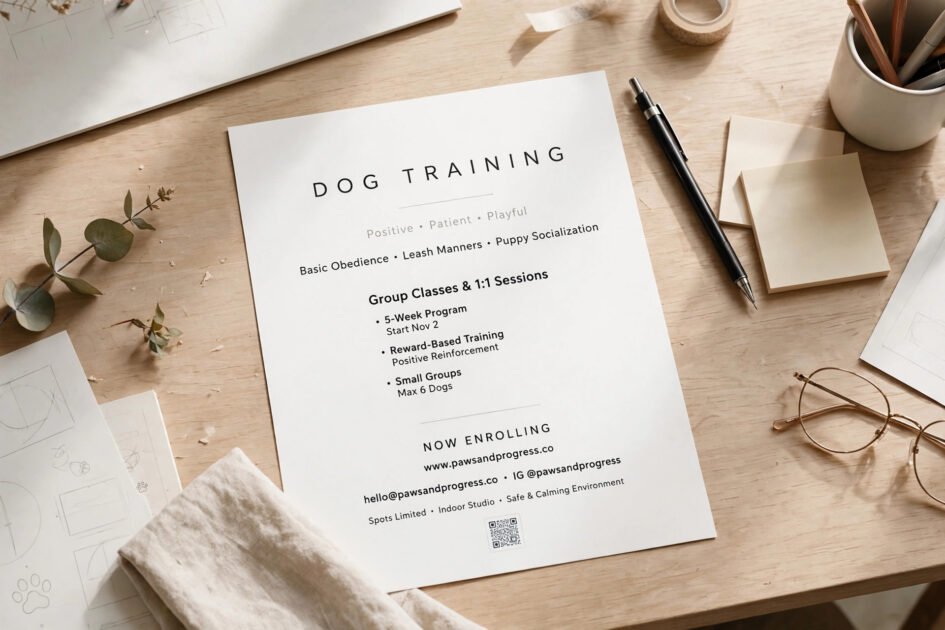
People don’t read flyers; they scan them. A wall of text loses instantly. A clean layout with generous white space guides the eye exactly where you want it: headline, photo, key details, call to action.
Limit yourself to three information blocks: what you offer (one or two lines), who it’s for, and how to reach you. Use bullet points instead of paragraphs. A template structure that always works: big headline on top, hero photo beneath it, three benefit bullets, then contact details in a bold footer strip.
4. Add a Call to Action People Can’t Ignore
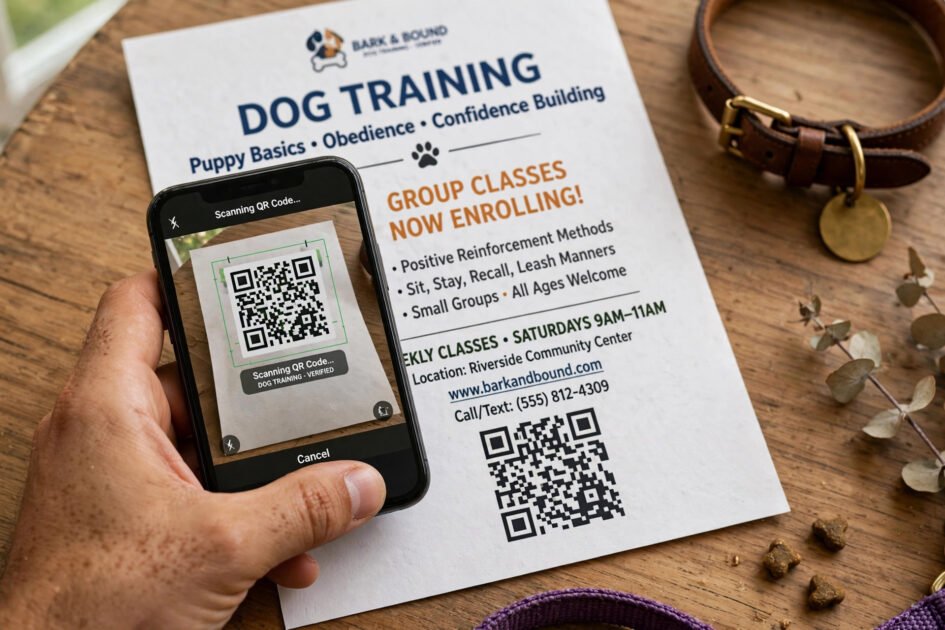
A flyer without a clear next step is just decoration. Tell people exactly what to do: “Text PUPPY to (555) 123-4567 for a free consult,” “Scan to book your first session,” or “Call today — first assessment free.”
Make the action easy and low-pressure. A free 15-minute phone consultation or a first-session discount removes the risk of reaching out. QR codes help enormously: one scan takes someone straight to your booking page, no typing needed.
5. Pick Colors and Fonts That Build Trust
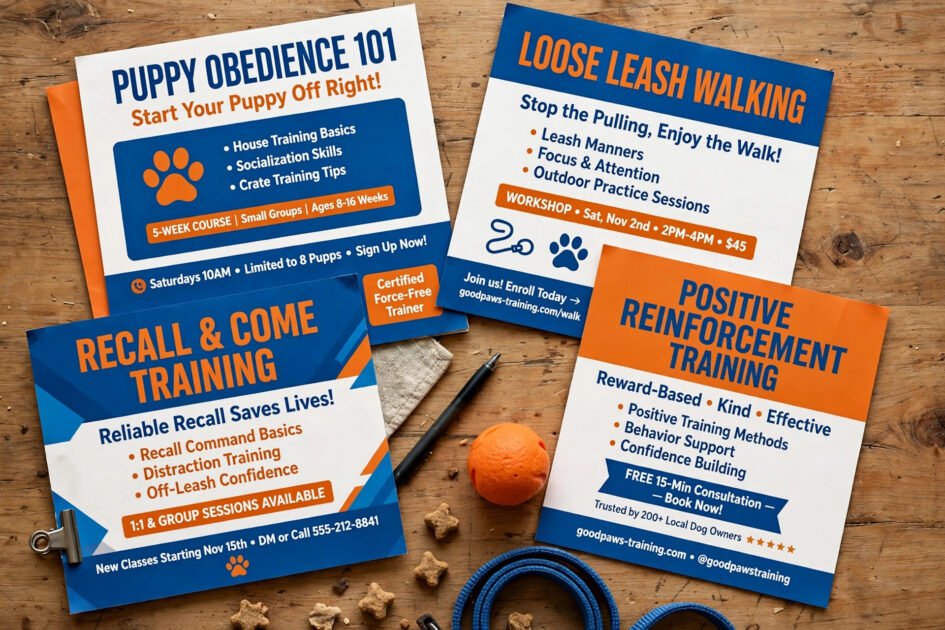
Design psychology matters. Blues and greens signal trust and calm, perfect for promising a calmer dog. Warm oranges and yellows feel friendly and energetic, great for puppy classes. Choose one primary color and one accent; more looks amateur.
For fonts, use two at most: one bold, readable headline font and one clean body font. Skip script fonts and anything hard to read at a glance. Keep branding consistent everywhere: same colors, fonts, and logo on your flyer, website, and social media.
FAQs
What size should a dog training flyer be?
US Letter (8.5 x 11 inches) or A4 works best for bulletin boards and handouts. For counters or windshields, a half-page (5.5 x 8.5 inches) is cheaper to print and harder to ignore.
Where should I put up my dog training flyers?
Vet offices, pet stores, groomers, dog parks (where permitted), coffee shops, and community boards. Always ask permission first; a flyer torn down in a day helps nobody.
Should I design my flyer myself or hire someone?
Free tools like Canva offer excellent dog training flyer templates that look professional with minimal effort. Hire a designer only when you’re scaling up and want a fully custom brand.
How many flyers should I print?
Start with 100 to 200 for a local campaign. Track which locations bring calls with a dedicated number or QR code, then reprint and double down on what works.
Do flyers still work in the age of social media?
Yes, especially locally. A flyer on a vet’s board reaches dog owners at the exact moment they’re thinking about their pet’s behavior. Pair flyers with an online presence for the best of both worlds.
Final Thoughts
A great dog training flyer isn’t about fancy design; it’s about clarity. One strong headline, one great photo, a scannable layout, an irresistible call to action, and trustworthy colors. Nail those five, and your flyer stops being paper on a wall and starts bringing in clients.