


Walk into any great dog training center and you’ll feel it before your first session starts: the walls are working as hard as the trainers. The right dog training poster ideas turn blank walls into silent coaches, cheerleaders, and guides that educate clients, motivate owners, and make your facility look world-class.
Posters do heavy lifting. They answer common questions so you don’t repeat yourself, reinforce techniques between sessions, and create an atmosphere that says serious training happens here. Best of all, they work around the clock, greeting every visitor, class after class. Whether you’re outfitting a brand-new facility or refreshing a tired one, these five poster ideas will transform your space.
1. Welcome Posters That Set the Tone at the Door
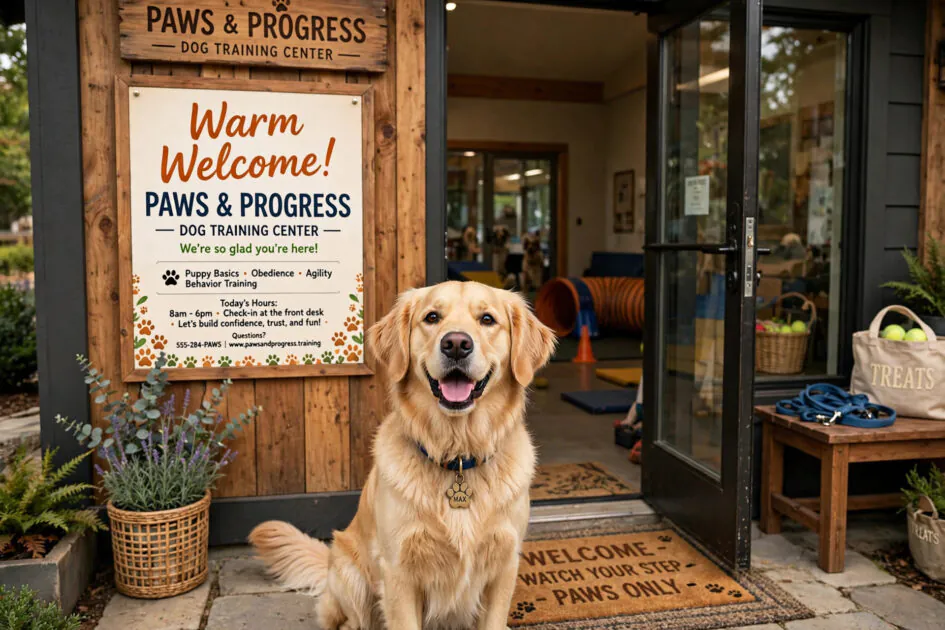
First impressions matter, and your entrance poster is your handshake. A warm welcome poster tells every nervous first-timer: you’re in the right place, and your dog is going to love it here.
Keep the message simple and warm: “Welcome! Great dogs are made here,” paired with a photo of a happy dog mid-training. Include your logo and a one-line version of your philosophy, like “Positive training for real-life dogs.” Avoid cramming in your full service list; the entrance is for warmth, not details.
2. Class Schedule and Rules Posters
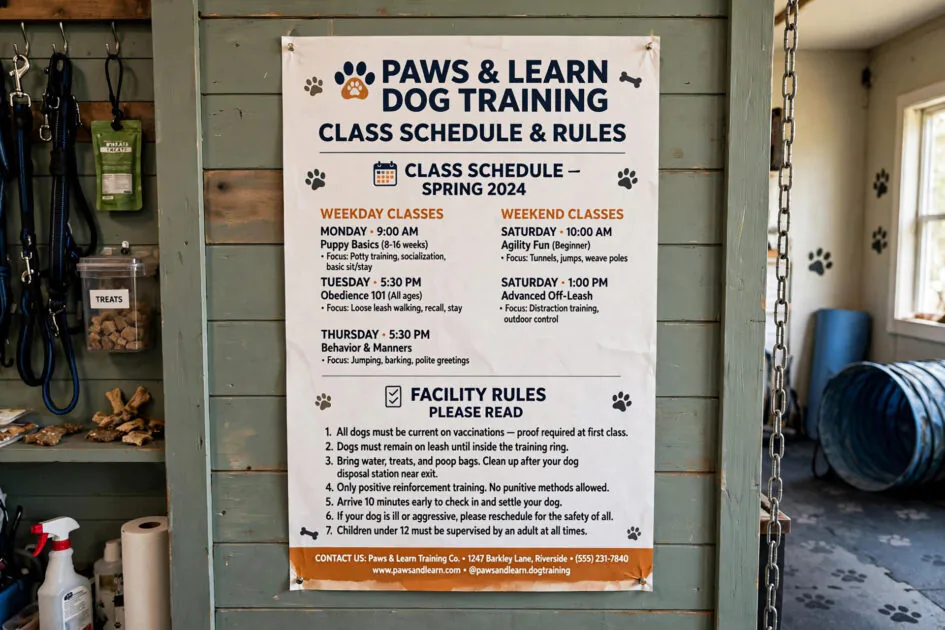
Nothing kills a session’s momentum like ten minutes of announcements. A clear, attractive schedule-and-rules poster on the wall handles the logistics for you.
Design it for scanning: class names in big type, days and times in a clean grid, and house rules as short bullet points (“Dogs on leash in lobby,” “Clean up after your pup,” “No retractable leashes”). Use icons alongside text so it’s readable at a glance, even from across the room.
3. Motivational Quote Posters That Keep Spirits High

Training is emotional. Owners get frustrated when progress stalls, and a well-placed quote can be the difference between someone quitting and someone pushing through.
Choose quotes that are encouraging but real: “Every expert was once a beginner,” “Train the dog in front of you,” or “Progress, not perfection.” Pair each with a striking dog photo. Avoid cheesy cliches; your clients are smart and they’ll tune out anything that feels hollow.
4. Step-by-Step Technique Posters
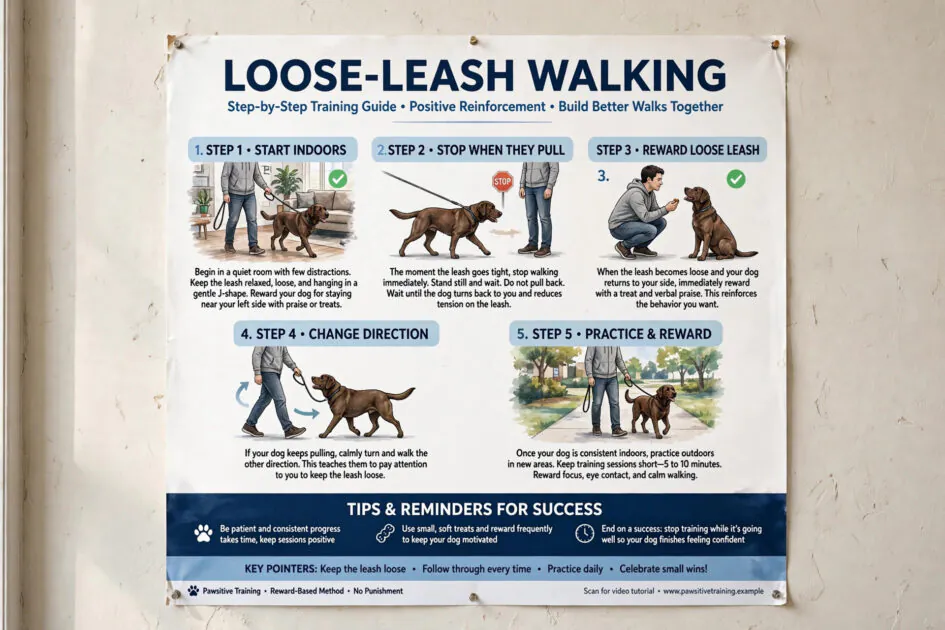
These are the workhorses of your walls. A technique poster breaks a skill into illustrated steps: how to lure a sit, the mechanics of loose-leash walking, or the stages of recall training.
Clients forget most of what they hear in class. A visual reference on the wall reinforces the lesson every single session, and owners photograph them for home practice. That’s free marketing every time a photo gets shared with friends or posted online.
5. Success Story and Testimonial Posters

Nothing sells training like proof. Dedicate a wall to success stories: before-and-after photos, short client quotes, and the transformation each dog achieved.
“Rocky lunged at every dog on the street. Eight weeks later, he walks past the dog park calmly.” — Sarah M. Stories like this do double duty: they celebrate your clients and show prospects exactly what’s possible when they commit to the process.
FAQs
How many posters should a training center have?
Enough to feel inspiring, not cluttered. Five to ten well-placed posters beat thirty random ones. Cover the entrance, training hall, and lobby, and leave breathing room on every wall.
What poster size works best?
24 x 36 inches (A1) is the sweet spot for visibility in a training hall. Entrance posters can go bigger; technique posters near training stations can be smaller, around 18 x 24 inches.
Should I print posters or use digital screens?
Printed posters are cheaper, always on, and survive power outages. Digital screens suit schedules that change often. Many centers use both: print for inspiration, screens for logistics.
Where can I get posters designed?
Canva and similar tools have solid templates, or hire a freelance designer for a cohesive branded set. For technique illustrations, look for pet-industry illustrators with a clean instructional style.
How often should I refresh my posters?
Rotate motivational and success-story posters every three to six months. Update schedules immediately when they change. Fresh walls signal an active, thriving business.
Final Thoughts
Great dog training poster ideas do more than decorate; they teach, motivate, and sell while you focus on the dogs. Start with a warm welcome, clear logistics, daily motivation, visual technique guides, and a wall of wins. Do that, and your walls will start working as hard as you do.