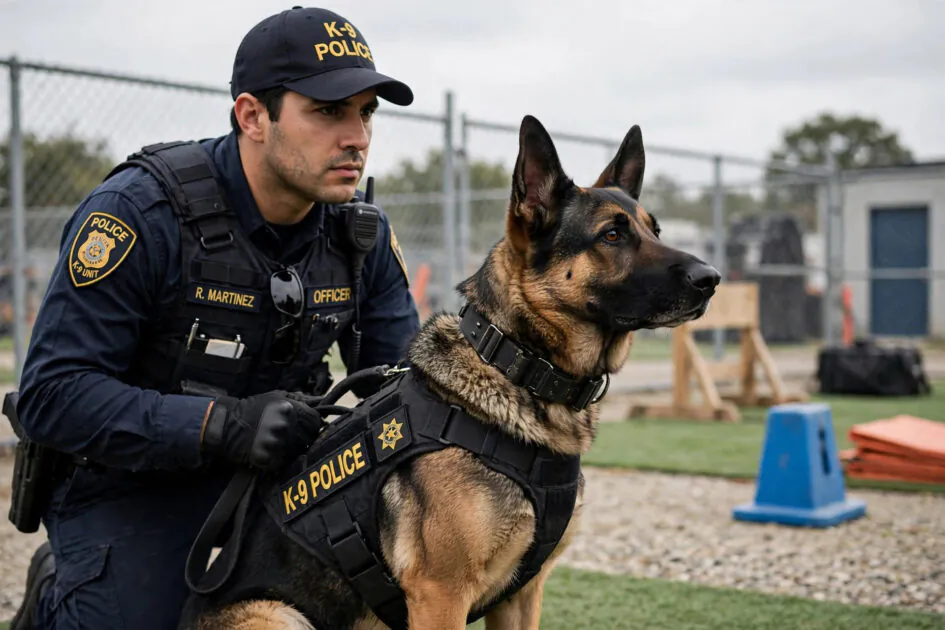

You have seen them on TV and maybe at the airport: the focused German Shepherd moving in perfect sync with its handler, every cue crisp, every response instant. That is the product of K-9 dog training — and while full police or military programs are a world of their own, the foundations behind them are surprisingly relevant to everyday dog owners. This beginner guide explains what K-9 training really is, what it looks like, and how you can borrow its best ideas for your own dog.
No, you do not need a badge or a bite suit. You just need curiosity and a willingness to train with more structure and clarity than most pet owners ever try.
1. What “K-9” Actually Means
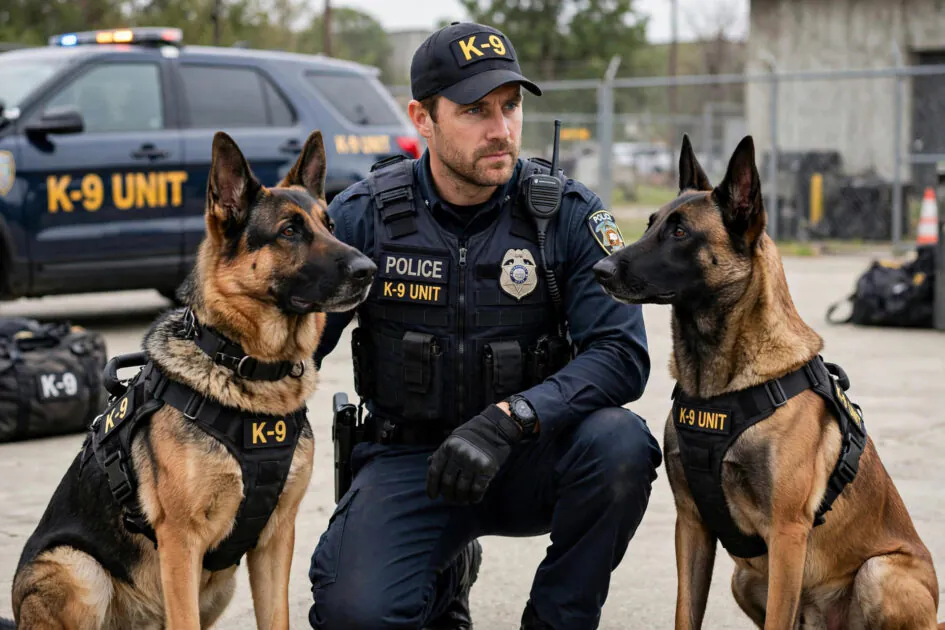
First, the basics: “K-9” is simply a homophone of “canine” and refers to dogs trained for professional service — police patrol, detection (narcotics, explosives, search and rescue), and military work. It is not a breed, though German Shepherds, Belgian Malinois, and Dutch Shepherds dominate the field for their drive, intelligence, and athleticism.
What separates K-9 programs from a typical obedience class is purpose and precision. Every behavior must work under extreme distraction, at distance, and under stress. That reliability is built through thousands of repetitions with crystal-clear criteria: the dog always knows exactly what earns the reward. Understanding this mindset — clarity over volume, consistency over intensity — is the single most useful thing a pet owner can take from the K-9 world.
2. The Core Skills Every K-9 Masters First
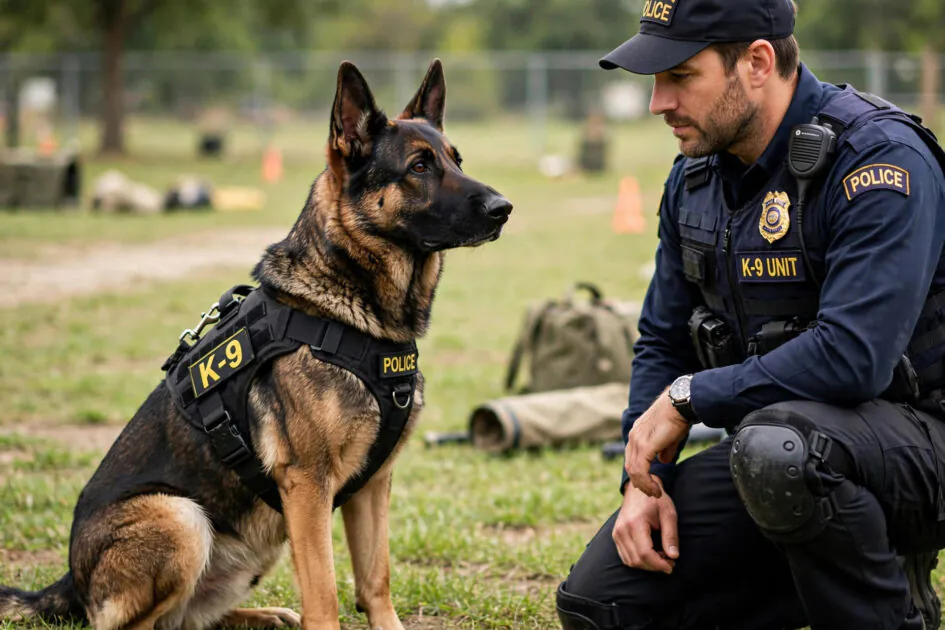
Before any specialty work, every K-9 dog builds a rock-solid obedience foundation: heel, sit, down, stay, come, and a formal retrieve. These are the same cues pet dogs learn, but the standard is far higher. A K-9 “stay” means staying through sirens, crowds, and other animals. A K-9 recall works at 100 meters with competing distractions.
The lesson for beginners is not the distance — it is the progression. K-9 trainers proof each behavior in stages: first in a quiet room, then the yard, then the park, then chaos. Most pet owners stall because they jump from the living room straight to the dog park and wonder why everything falls apart. Borrow the staged approach: master it boring before you test it exciting. Your dog’s reliability will transform.
3. What K-9 Training Looks Like Day to Day
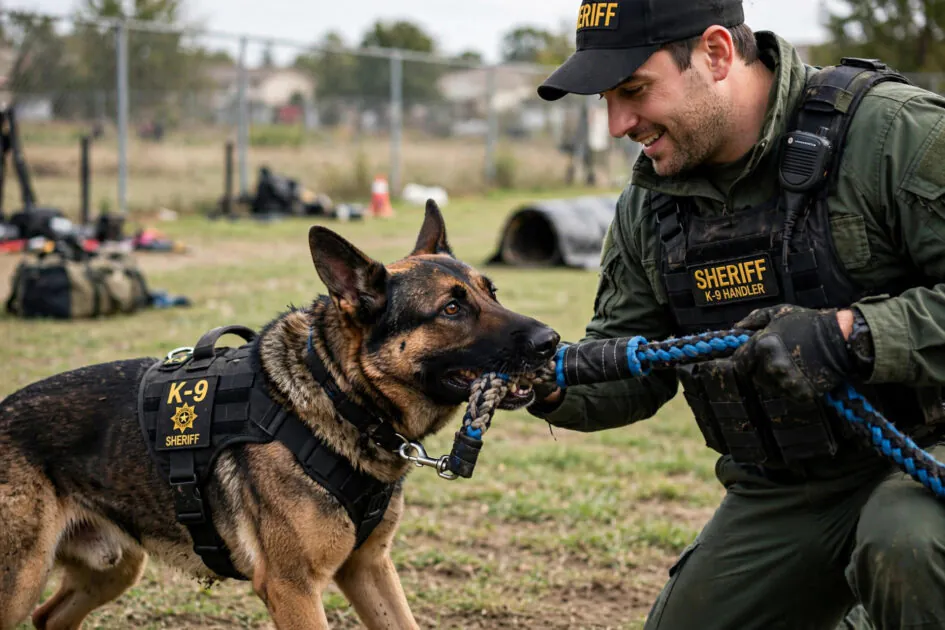
Forget the movie image of stern handlers barking orders. Modern K-9 training is overwhelmingly reward-based, built on the dog’s natural drives — usually prey drive channeled into tug or ball play. Sessions are short, intense, and end while the dog still wants more. A typical day mixes obedience drills, drive-building play, and scenario work, all structured around keeping the dog’s motivation sky-high.
The marker system will feel familiar if you have used a clicker: a precise “yes” or whistle marks the exact instant of correct behavior, followed by the reward. What differs is the energy — K-9 handlers train with animated, almost theatrical enthusiasm because drive fuels learning. Pet owners can absolutely adopt this: shorter sessions, bigger rewards, clearer markers, and quitting while you are ahead.
4. Can Regular Owners Use K-9 Methods?
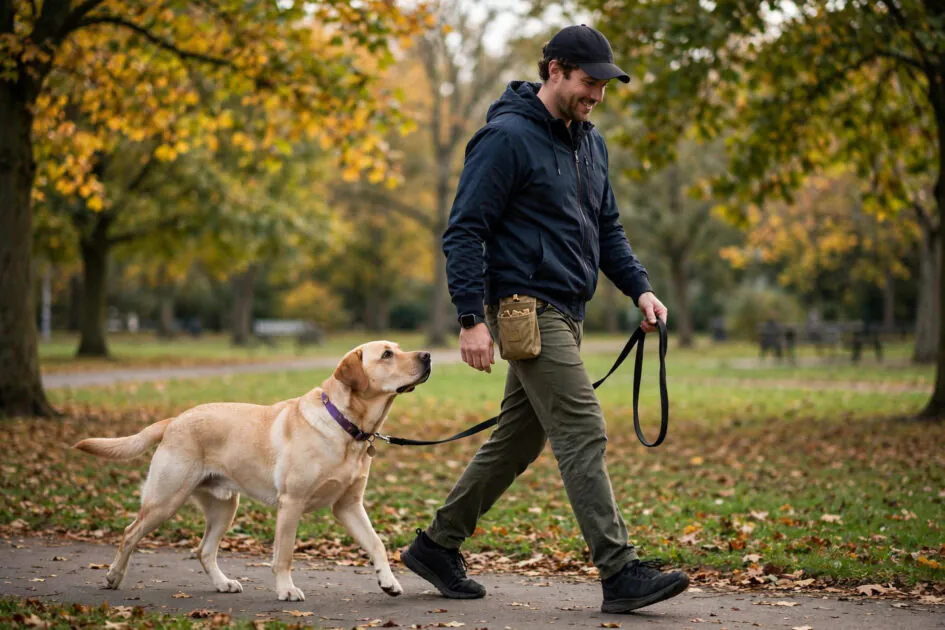
Yes — with realistic expectations. You will not turn a couch-loving Bulldog into a patrol dog, and that is fine. But K-9-inspired structure works wonders for common pet problems: pulling on leash, ignoring recall, overexcitement around guests. The methods transfer because they are just good training: clear criteria, high reward value, staged difficulty, and consistent rules.
Start with engagement games — short bursts where your dog learns that focusing on you is the most rewarding game in the world. Add formal structure to one walk a day: five minutes of crisp heeling with frequent rewards, then free sniffing as the payoff. Many owners report that this “work then play” rhythm alone fixes half their leash problems within weeks. Just skip the parts that require professional supervision, like bite work or protection training — those are never DIY projects.
5. How to Find a Reputable K-9-Style Trainer
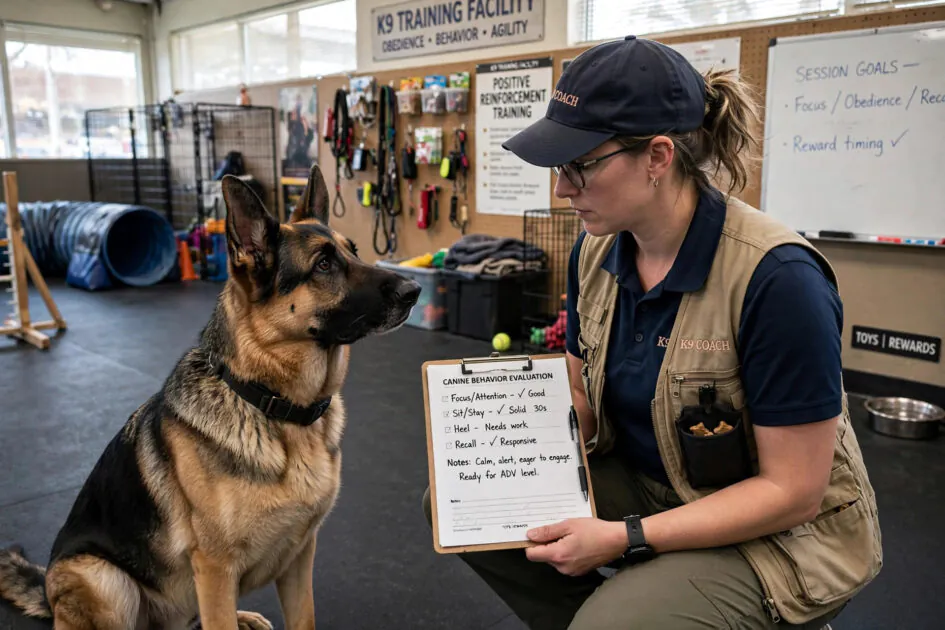
“K-9 trainer” is an unregulated label, so anyone can claim it. A good one welcomes your questions. Ask about their background (working-dog experience? mentorships? certifications?), watch a session before committing, and look for dogs that are enthusiastic, not shut down. Clear enthusiasm is the hallmark of sound methods; a cowering dog is a red flag regardless of the trainer’s résumé.
Expect to pay more than a basic group class — expect structured programs with homework, not magic fixes. Be wary of anyone guaranteeing results, demanding expensive equipment packages upfront, or refusing to let you observe. The right trainer will be as interested in coaching you as in training your dog, because in K-9 work as in pet life, the handler is half the equation.
FAQs
How long does K-9 dog training take?
Full service-dog programs run 1 to 2 years. For pet owners borrowing K-9 methods, expect noticeable improvement in 4 to 8 weeks of consistent daily practice.
How much does professional K-9-style training cost?
Private sessions with experienced working-dog trainers typically run $100 to $250 per hour, with multi-week programs costing more. Group sport classes (IPO, ringsport foundations) are a cheaper entry point.
Can my pet dog learn K-9 obedience?
Most dogs can learn the obedience foundations — crisp heel, reliable recall, solid stays. Specialty work like detection or protection requires specific drives and professional guidance.
What age should K-9-style training start?
Foundation skills can start at 8 weeks with play-based learning. Serious drive development and precision work begin after physical maturity, usually 12 to 18 months.
Is K-9 training harsh or force-based?
Modern professional programs are predominantly reward-based, using the dog’s play and food drives. Avoid any trainer whose methods rely on fear or pain — that is outdated, not “real” K-9 work.
Conclusion
K-9 dog training looks intimidating from the outside, but its core is beautifully simple: be clear, be consistent, reward generously, and build difficulty gradually. You do not need a working dog to benefit — just borrow the structure, bring the enthusiasm, and watch your everyday dog start performing like a pro.