
Introduction
Meet the dog with the biggest smile in the canine world. The American Staffordshire Terrier, known to its friends as the AmStaff, is a muscular, athletic bundle of joy that greets its favourite people with a full-body wiggle and a grin that stretches from ear to ear. Behind that powerful build is one of the most loyal, affectionate and people-loving dogs you will ever meet.
The American Staffordshire Terrier traces its roots to eighteenth-century England, where bulldogs were crossed with old terrier breeds, and the resulting bull-and-terrier dogs came to America with immigrants. Over time American breeders shaped them into a larger, stronger companion, and the American Kennel Club recognised the breed in 1936. The modern AmStaff has left its difficult history behind. Today it is a loving family dog, a keen athlete, and a devoted shadow that simply wants to be wherever its people are.
Characteristics
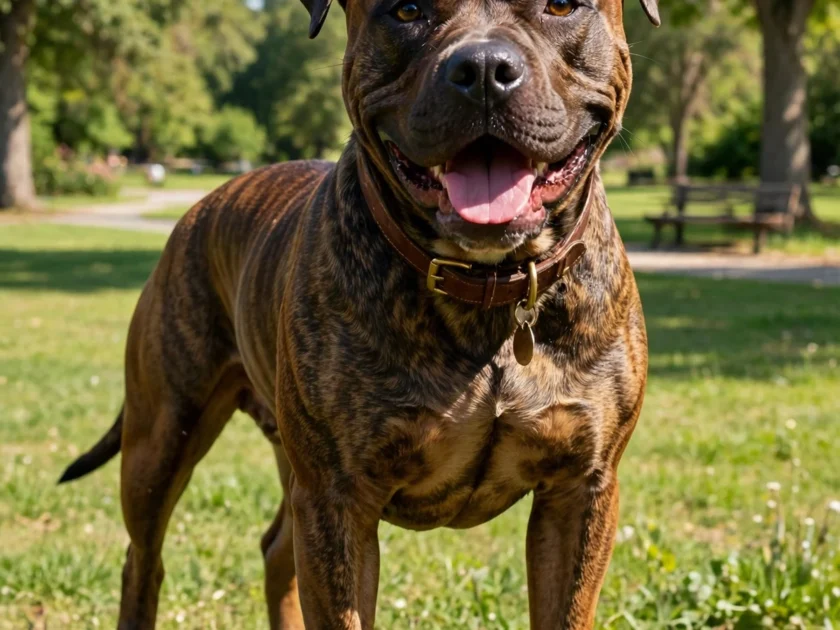
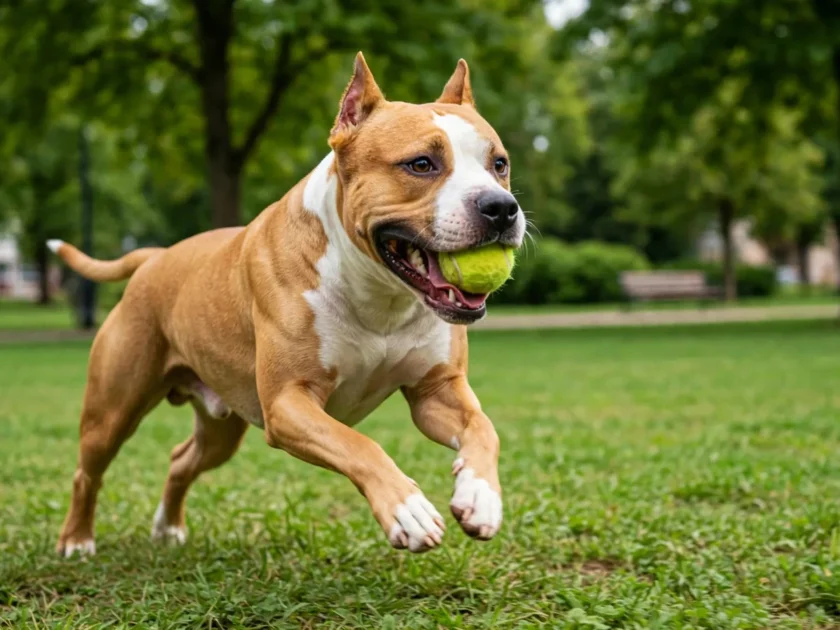
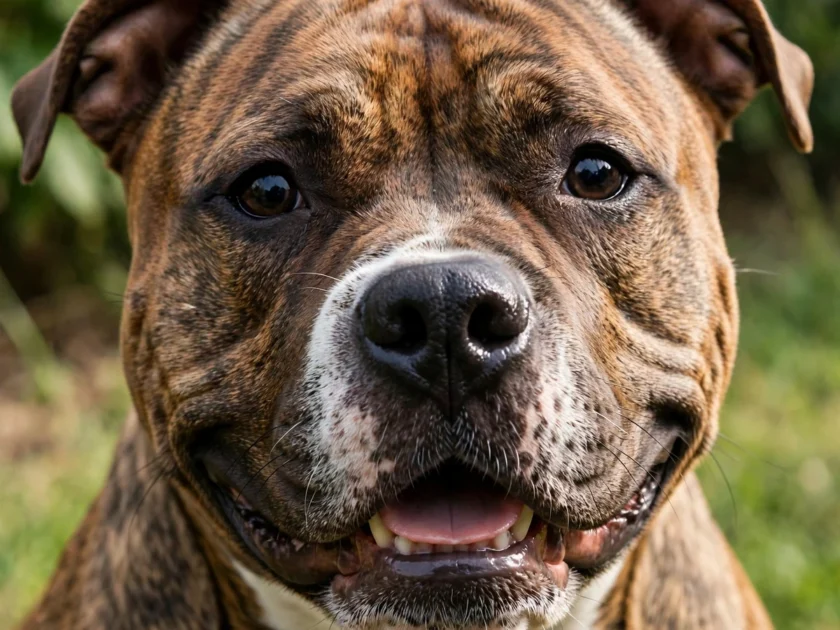
An American Staffordshire Terrier stands seventeen to nineteen inches tall and weighs forty to sixty pounds, a compact powerhouse of muscle and grace. It has a broad head with well-defined jaws, round dark eyes, refined cheekbones and a deep chest, and it moves with a springy, confident gait. The short, stiff, glossy coat lies close to the body and comes in a wide range of colours, including black, white, tan, brown, liver, blue and brindle, in solid or patched patterns. Most AmStaffs live twelve to sixteen years.
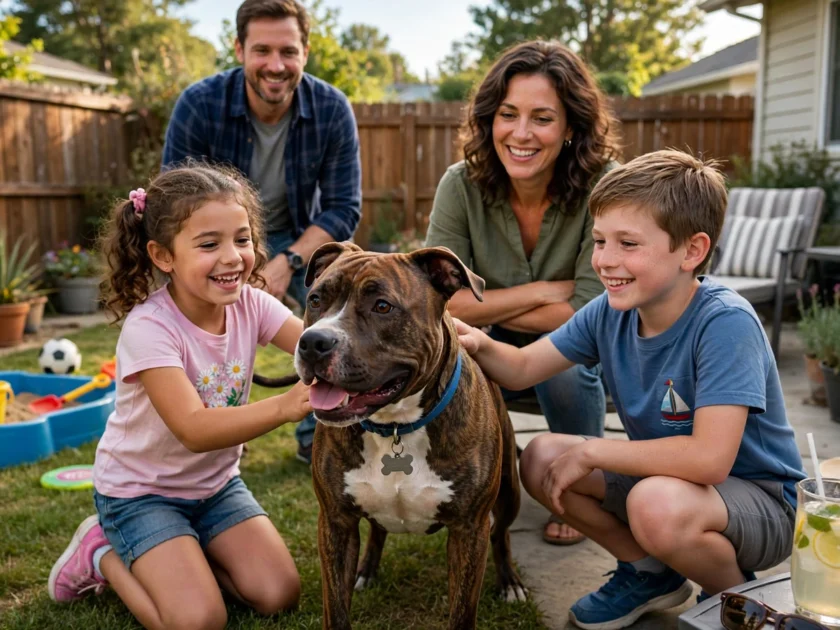
Temperament is where the AmStaff truly shines. It is confident, intelligent and friendly, with a playful nature and a deep devotion to its family. It is famously patient and gentle with children, and it loves mental and physical games of every kind. It can be protective of its home, and it is often less friendly with other dogs, so early socialisation is essential. Like the Bulldog, one of its ancestors, it is a strong, stocky character with a soft and loving heart underneath.
Habits and Behaviour
Live with an AmStaff and you will quickly learn that this is a dog that needs to be involved. It wants to join every walk, every game and every quiet evening on the sofa, and it can grow restless or destructive if it is left alone and bored for too long. It needs at least an hour of exercise every day, broken into brisk walks, fetch, tug-of-war or a hike, and it loves dog sports such as agility, weight pull and dock diving, where its strength and enthusiasm shine.
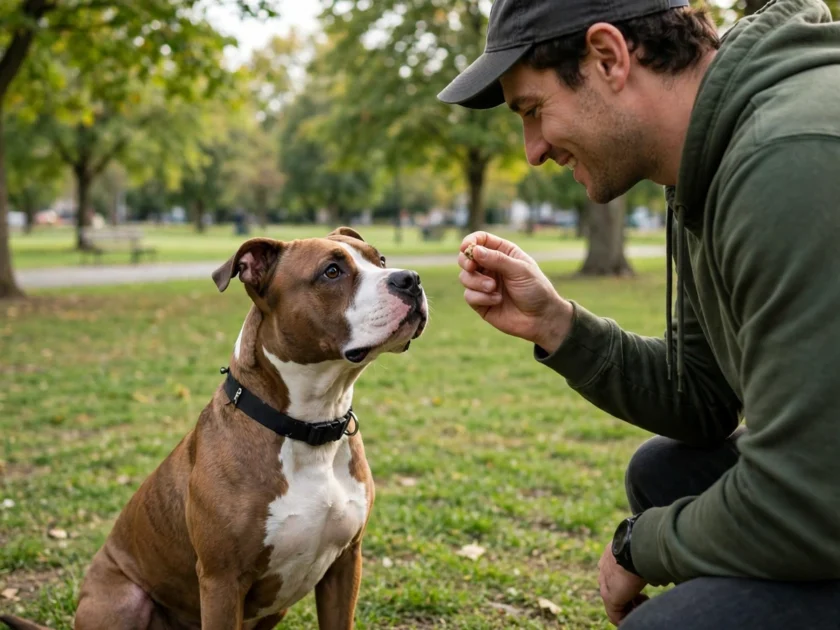
Training an AmStaff is a pleasure when it is done right, because this breed is smart, food-motivated and eager to please the people it trusts. It responds best to short, upbeat, reward-based sessions and gentle, consistent leadership, and it can be stubborn or resistant if handled harshly. Start leash manners and impulse control in puppyhood, socialise widely with people and new places, and teach calm greetings early. Because some landlords and insurers restrict the breed, it is wise to check housing and insurance rules before you commit to bringing one home.
Common Diseases and Health Problems
The American Staffordshire Terrier is generally a healthy breed with a long lifespan, but like all dogs it has some conditions to watch for. Hip dysplasia and elbow dysplasia are hereditary joint problems that can cause pain and stiffness, especially as the dog grows older, and cruciate ligament tears are common in such a muscular, active breed. Progressive retinal atrophy is a hereditary eye condition that slowly leads to blindness, and cerebellar ataxia is a hereditary neurological disorder that has been documented in the breed.
Other concerns include hypothyroidism, in which the thyroid gland fails to produce enough hormone, food and skin allergies that cause itching and sore skin, and some congenital heart problems. Cataracts can also develop. None of these conditions is certain, and a well-bred AmStaff from health-tested parents, with a DNA test for cerebellar ataxia available, has every chance of a long, active life.
Solutions and Prevention
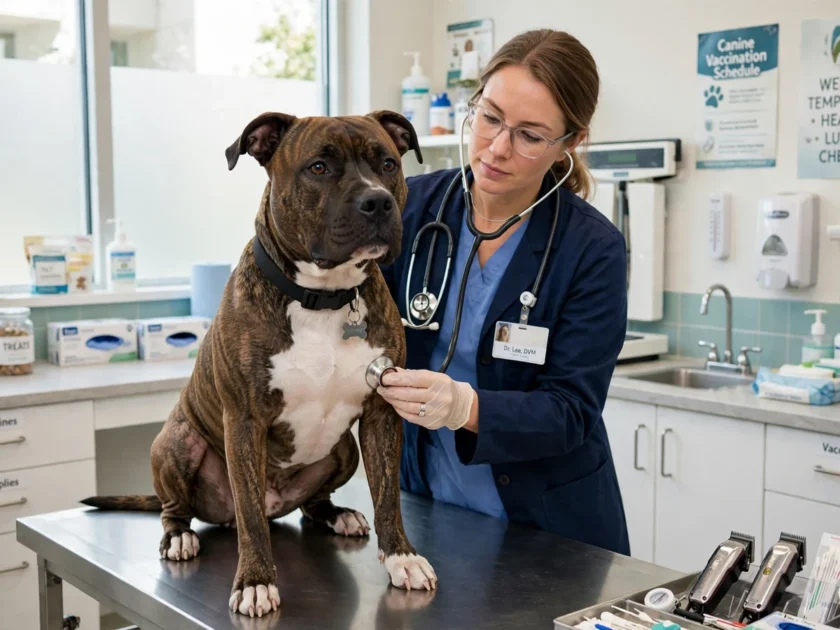
Prevention starts with choosing a breeder who health tests their dogs for hip and elbow dysplasia, eye conditions and thyroid problems, and who DNA tests for cerebellar ataxia, and asking to see the results. Once your dog is home, keep up with regular vet checks at least once a year, keep vaccinations and parasite protection current, and watch for early warning signs such as limping, stiffness after rest, cloudy eyes, weight gain or repeated skin irritation.
Daily life does most of the preventive work. Give your AmStaff its hour of exercise every day, but build strength gradually in young dogs and avoid overdoing jumping while joints are still growing. Feed a high-quality diet in measured portions, because extra weight puts more strain on hips, elbows and cruciate ligaments, and use puzzle feeders to slow down a greedy eater. Keep the skin clean and watch for allergy flare-ups, and never skip dental care, because a healthy mouth supports a healthy heart.
Grooming and Cleaning
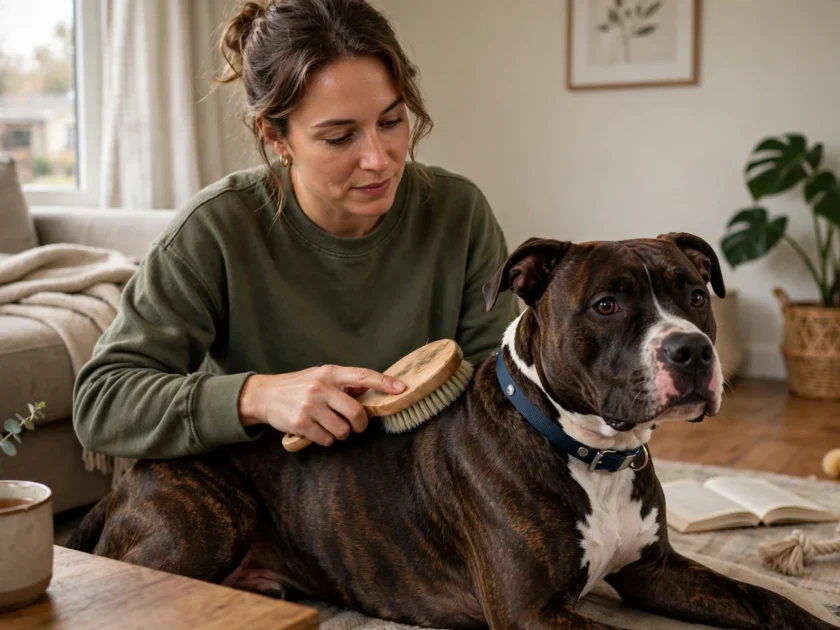
Grooming an AmStaff is wonderfully easy, and that is one of the reasons busy families love this breed. The short, smooth, glossy coat needs only a weekly brush with a soft bristle brush or a rubber curry mitt to remove loose hair and spread the skin’s natural oils. Shedding is light to moderate through the year, and baths are needed only every month or two, or whenever the dog gets dirty, using a gentle dog shampoo.
The rest of the routine is simple but worth doing well. Trim the nails every few weeks, since a heavy dog on long nails can strain its feet, and check between the toes and in the skin folds for redness. Brush the teeth daily with a dog-specific toothpaste and book professional cleanings as your vet advises, and check the ears regularly for signs of infection. In cold weather, remember that the short coat offers little warmth, so a dog jacket on winter walks is a kind touch.
Living With a American Staffordshire Terrier: Care Tips for Owners
The secret to a happy AmStaff is simple: give it exercise, give it structure, and give it your time. Build your day around an hour of activity, a training game and a puzzle feeder, and teach calm behaviour from the very start, rewarding a settled dog as generously as you reward a clever trick. Socialise your puppy widely and keep meeting new people and friendly dogs throughout its life, so its confidence grows in the right direction. Set clear, fair rules and stick to them, because this strong, clever dog tests boundaries.
Remember that this breed plays hard and loves hard, so supervise play with small children and teach everyone in the family to be calm and gentle. Never leave an AmStaff bored and alone for long, or it will find its own entertainment, usually involving your shoes or your sofa. With daily exercise, patient positive training, regular vet care and a family that loves a good cuddle, an American Staffordshire Terrier will repay you with years of loyal, goofy and endlessly affectionate companionship.
Frequently Asked Questions
Are American Staffordshire Terriers good family dogs?
Yes, well-socialised AmStaffs are affectionate, playful and famously patient with children. Their strength means play should always be supervised, and early socialisation with other dogs is important because the breed can be intolerant of unfamiliar dogs.
How much exercise does an American Staffordshire Terrier need?
An adult AmStaff needs at least an hour of exercise every day, split between brisk walks and active play such as fetch or tug. Without enough activity it becomes restless, pushy and prone to chewing or digging.
Are American Staffordshire Terriers easy to train?
They are smart and eager to please, so they learn quickly with reward-based training. They can be stubborn and very physical, so start leash manners and impulse control in puppyhood and avoid harsh methods, which damage the bond.
Do American Staffordshire Terriers shed a lot?
No, they are light to moderate shedders. A weekly brush with a rubber mitt or bristle brush is enough, and baths are needed only every month or two, or when the dog gets dirty.
Are American Staffordshire Terriers aggressive?
No, a well-raised AmStaff is friendly and loving with people, and often friendly with strangers too. Dog aggression is a real breed tendency, so they need early socialisation, careful introductions to other dogs, and an owner who manages them responsibly.