

Introduction
There is a sound that defines the American Foxhound, and it is not a bark. It is a deep, musical bay that rolls across fields and carries for miles, the voice of a dog bred to tell its hunter exactly where the trail leads. For more than two centuries this tall, lean hound has been the voice of the American hunt, and it brings that same honest, hardworking spirit into the family home.
The American Foxhound descends from English Foxhounds brought to America in the eighteenth century, and it was refined by American hunt clubs into a taller, lighter, faster dog built for long chases over open country. George Washington kept a pack and bred them himself, and the breed became so woven into American life that it is now the state dog of Virginia. The American Kennel Club recognised it in 1886, yet it remains one of the rarer breeds in American homes, a working hound waiting for an active family to discover it.
Characteristics
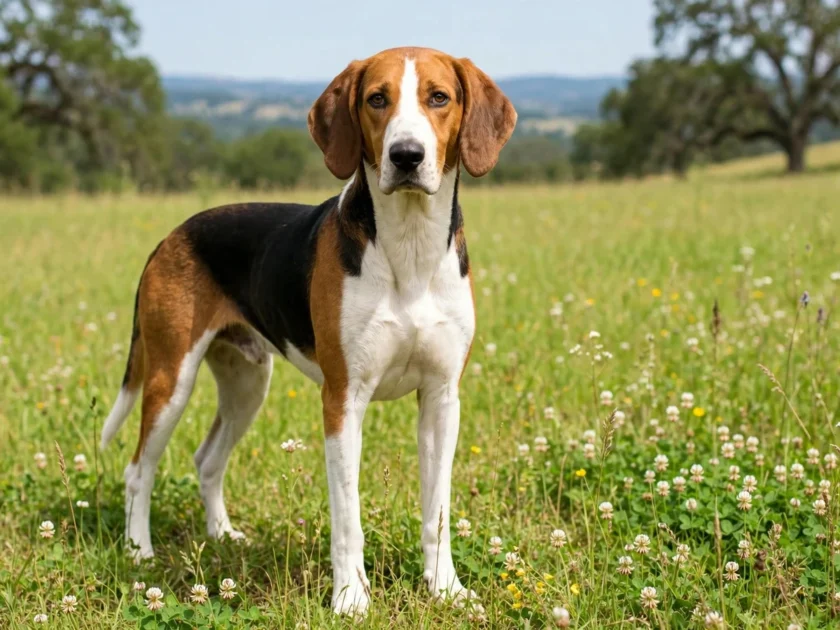
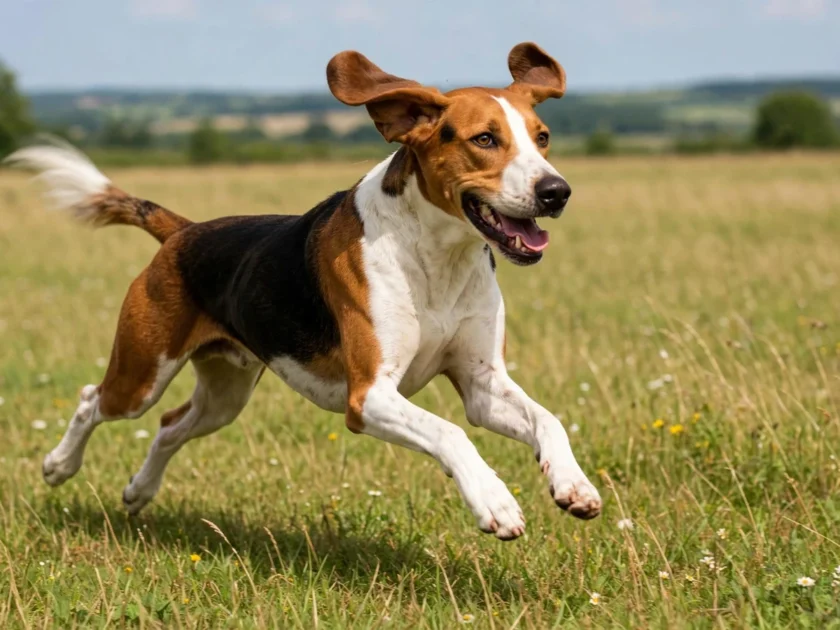
An American Foxhound stands twenty-one to twenty-five inches tall and weighs sixty to seventy pounds, a picture of lean athletic grace. Its legs are longer and more finely boned than those of its English cousin, its chest is deep, its back is slightly arched, and its tail curves gently upward with a small brush at the tip. The coat is short, hard and close lying, and it comes in any hound colour, most often a cheerful mix of black, tan and white. The long, broad ears hang low and flap like wings when the dog runs, and the big brown or hazel eyes give it a soft, gentle expression. Most Foxhounds live eleven to thirteen years.
Temperament is where this hound wins people over. It is sweet natured, easygoing and friendly, greeting visitors with a wag and children with patience. It is a pack dog through and through, happiest with company, whether that means another dog in the house or a family that is usually around. It is independent and sometimes stubborn, and it follows its nose with a single-mindedness that can surprise new owners, but it is rarely aggressive and almost never a guard dog. Like the Beagle, its smaller hound cousin, it is a sociable soul that does best when it belongs to a group.

Habits and Behaviour
Live with an American Foxhound and you will quickly learn that this is a dog with a job in its blood. It needs one to two hours of exercise every day, ideally a long run or a brisk walk in a safe place, and it loves scent games that let it use its remarkable nose. A bored Foxhound is a noisy Foxhound, and it may bark, bay, dig or follow a scent straight out of the garden if it has nothing better to do. A tall, secure fence is not a luxury with this breed, it is a necessity, and off-lead walks in open country are a gamble because a good scent can switch off its hearing entirely.
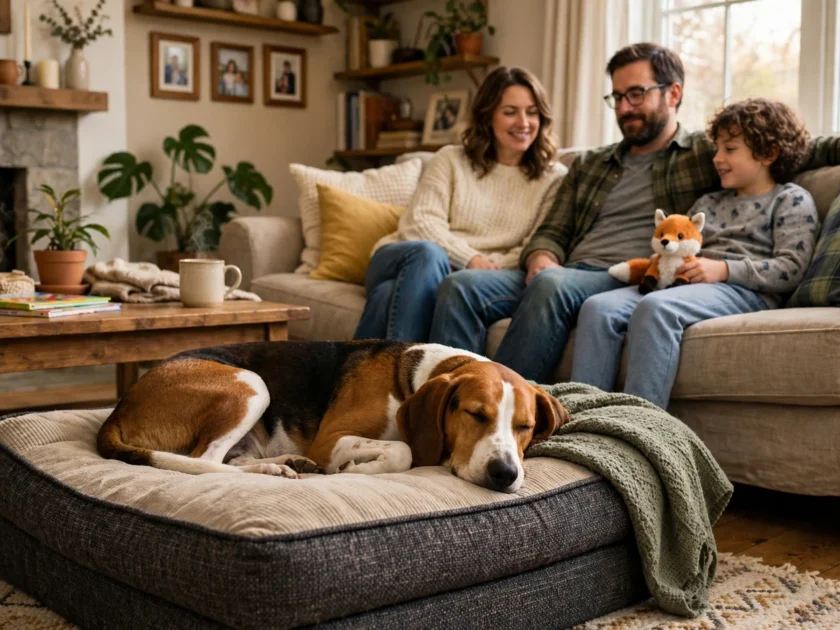
At home the Foxhound is gentle, calm and surprisingly quiet between adventures, happy to stretch out and rest after a good run. It is tolerant and patient with children and usually delighted to share its home with other dogs, though cats and small pets can trigger its prey drive and need careful introductions. Training takes patience and good humour, because this hound is intelligent but easily bored by repetition, and short, upbeat, reward-based sessions work far better than drilling. Early socialisation helps it stay confident and friendly with strangers, and a companion dog often makes all the difference to its happiness.

Common Diseases and Health Problems
The American Foxhound is a generally healthy, hardy breed, and its working heritage has kept it free of many of the problems that trouble more fashionable dogs. Even so, owners should know what to watch for. Hip dysplasia can affect some dogs, causing stiffness and discomfort in the hind legs, and the long, floppy ears trap moisture and wax, making ear infections a regular concern. A deep chest also brings a risk of bloat, a serious condition in which the stomach fills with gas and twists, and it needs emergency care.
Other problems seen in the breed include thrombocytopathy, a blood clotting disorder in which the platelets do not work properly, occasional deafness, and spinal degeneration in older dogs. Inactive Foxhounds gain weight easily, and extra weight makes every joint problem worse. None of these conditions is certain, and a well-bred Foxhound from health-tested parents has every chance of a long, active life.

Solutions and Prevention
Prevention starts with choosing a breeder who screens their dogs for hip problems and blood disorders, and asking to see the results before you commit. Once your dog is home, keep up with regular vet checks at least once a year, keep vaccinations and year-round flea, tick and heartworm protection up to date, and watch for early warning signs such as limping, a head tilt, shaking ears, or a swollen belly after meals. Feeding smaller meals two or three times a day, rather than one large meal, and keeping your dog calm for an hour after eating can help reduce the risk of bloat.
Daily life does most of the preventive work. Give your Foxhound its one to two hours of exercise every single day, because a tired hound is a healthy hound, and use scent games and tracking to tire out its brain as well as its legs. Check and clean those long ears every week with a vet-approved cleaner, especially after baths or swimming, and look over the feet, legs and skin after outings for cuts, ticks and burrs. Keep portions measured and treats counted, since a lean Foxhound puts far less strain on its hips and spine.

Grooming and Cleaning
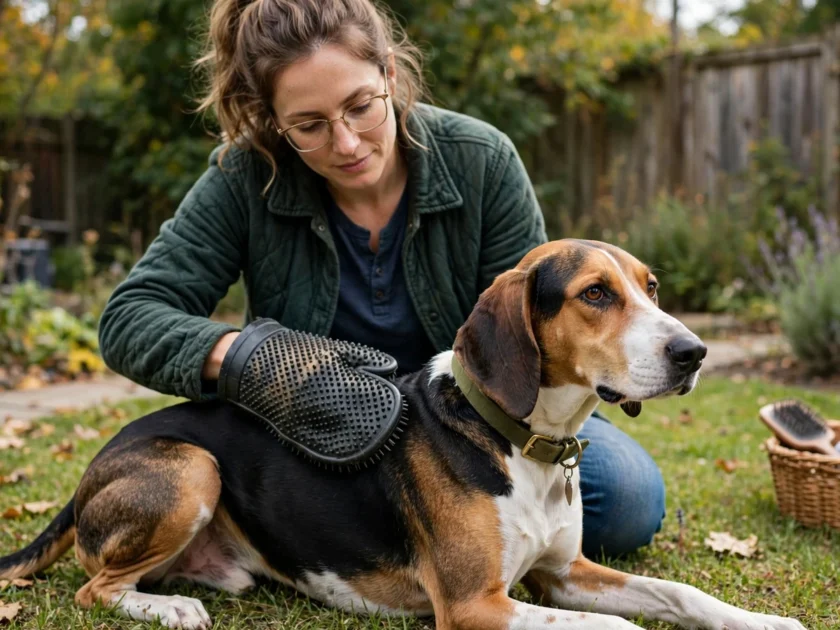
Grooming an American Foxhound is wonderfully simple, and that is one of its great charms. The short, hard coat needs only a weekly brush with a bristle brush, a hound glove or a rubber grooming mitt to remove dead hair and keep it shining. Shedding is moderate and steady through the year, and baths are needed only when the dog gets dirty or smelly, using a gentle dog shampoo and drying it well afterwards.
The ears are the part that needs real attention. Clean them regularly and check them for redness, smell or discharge, because infections love warm, moist, floppy ears. Nails should be trimmed about once a month, teeth brushed often with a dog-specific toothpaste, and the paws checked after country walks for thorns and cuts. That is really all there is to it, a few minutes a week keeps this low-maintenance hound looking and feeling its best.
Living With a American Foxhound: Care Tips for Owners
The secret to a happy American Foxhound is simple: give it room to run, a nose to follow, and company to come home to. Build your day around a long walk or run, add a scent game or a hidden treat trail, and make sure the garden fence is tall and secure before you ever let it off the lead. Teach a reliable recall from puppyhood, but never trust it completely in open country, because a Foxhound on a scent is a dog in another world. A second dog often makes the perfect companion, and it will keep your hound far happier than any toy.
Build up time alone slowly, and never leave a Foxhound bored and alone for long stretches, or it will sing about it to the whole neighbourhood. Keep training short, cheerful and full of rewards, and remember that this hound responds to kindness and patience, not drilling. With daily exercise, a secure home, a companion or two and a family that enjoys the outdoors, an American Foxhound will repay you with years of gentle, loyal and wonderfully musical companionship.
Frequently Asked Questions
Are American Foxhounds good family dogs?
Yes, they are gentle, patient and friendly with children and usually delighted to live with other dogs. They do best in active families with a securely fenced garden, and they can be reserved with strangers until they know them.
How much exercise does an American Foxhound need?
An adult Foxhound needs one to two hours of exercise every day, ideally including a run or a long brisk walk, plus scent games to keep its mind busy. Without enough exercise it becomes bored, noisy and destructive.
Do American Foxhounds bark a lot?
They are famous for their deep baying voice, which they use to announce excitement, a scent, or a visitor. Training and plenty of exercise help, but this is a vocal breed, so it suits homes where neighbours are not too close.
Are American Foxhounds easy to train?
They are intelligent but independent and easily bored by repetition, so training works best in short, upbeat, reward-based sessions. Recall can be unreliable off the lead because their nose overrides their hearing when they catch a scent.
Do American Foxhounds shed a lot?
They shed moderately all year round. A weekly brush with a hound glove or rubber mitt keeps loose hair under control, and baths are only needed when the dog gets dirty or smelly.